Talking at Cross Purposes

digital illustrationMy spouse and I have an intriguing way of discussing our disagreements, and I gather from what I see, hear and read that this is not such an unusual complication but probably more like the norm. We don’t fight about stuff that matters, remarkably, very often at all, being on the same page in our essential beliefs and concerns; if we differ there, we’re pretty comfortable having a rational conversation or two and agreeing, if necessary, to disagree. But the more inconsequential things are where we excel in having our weirdly, even hilariously, convoluted bouts of stubbornly wordy disagreement.

And the vast majority of the time, it’s because of the language barrier. We’re both native speakers-of-English, but it seems we are perfectly capable of saying virtually the same thing to each other in such different ways that each of us hears the other saying essentially the polar opposite. It’s quite miraculous, really. Two seemingly cogent adults, people who know each other rather well after being together for eighteen years and who both know inside that we share the deep core values that make eighteen years together possible, not to mention that we share so many experiences and tastes and interests—and we can’t reason our way out of a paper bag when one thinks the other is remembering something incorrectly or a question has been raised about some puzzling matter of fact.

Of course, I don’t think this is specific to being male-female, age-related, or any other such thing, this is a characteristic of our whole species. It’s a perfect example of how humans talk to each other a whole lot of the time. We think we’re having an epic battle over right and wrong, and both sides of the argument are  looking and hoping for exactly the same outcome, but each of us simply thinks we have put the correct names on the problems and resolutions and the other party is clearly an idiot or heretic until he/she/they will acquiesce and let us superior beings fix everything according to our righteous rightness. Happens in politics and religion and academia and relationships just about equally often. Whether weapons are involved has the most influence over how epic these battles really become, but the basis is hardly all that different.

My beloved and I get in the same ridiculous rut of circular conversation often enough, though neither of us takes it particularly personally or even necessarily sees it as a true argument let alone a danger to our relationship, and it’s easy enough to laugh it off when one or the other of us finally realizes that We’re Doing It Again. But it’s strange that we don’t spot the next episode from afar and simply have a straightforward, rational talk. If the goal or solution is nearly always identical or close enough to it, why do we have to wrestle around so determinedly before coming to that natural conclusion? I can’t guess why we mortal mugs are so quick to waste our energy and peace on pointless posturing, but it’s certainly a collective talent of ours.

I guess I’ll just have to take this opportunity to apologize to my partner for my part in the muddle, and hope I learn to listen—and hear—better. And if anyone with any power or aspirations to power (political, religious, academic, or other) happens to be reading this, would you do me a favor and do the same?digital illustration (B&W)

Attention to Detail in All Things

digital illustrationI’m far from being the world’s best gardener. I may have the perfect skill set as a lazy dilettante, loving the design process and having a tremendous appreciation for all of the non-laborious joys of a garden, whether it’s well tended or not. A bark-boring beetle or a sculptural skeletonized leaf can be as beautiful as any spectacular, pristine lily or a lilac’s heady bloom. A moss-choked stone path is as glorious as a graceful fountain encircled by perfect tea roses and rosemary. And I have had quite the aversion to trench digging, rock picking and weeding ever since I was old enough to be conscripted by my parents for the purpose.

But I also know that if a garden is to have any hope of continuity and flourishing in flower, it needs occasional attention to such details, at the least, from Nature’s seemingly random hand. The gusts and waterings, composting and tillage performed by her weather and her handyman crew of creatures all do their parts in keeping the landscape in beautiful form. Even better chance of thriving if I do my part, too, having noticed what details might better prosper under my attentions, however slight they might be.

I was reminded of it recently as I watched a family make their valiant attempt at getting a group portrait. Flanked by grandparents, the parents stood holding their two little boys: Dad, in back, held the eight month old and Mom, ahead, wrangled the three-year-old. No one seemed able to get the normally placid toddler in front to hold still for even one quick photo, or to understand why he was so unusually squirmy, until someone finally noticed what I could see better from my side angle: that the baby was cheerily leaning forward at intervals and yanking his big brother’s hair. Detail noticed, problem solved. Had that adorable little scalawag been able to keep up the practice, I have little doubt there would’ve been need, eventually, for an expulsion from that particular little Eden.

I, meanwhile, must try to keep after my own gardens, the real and the metaphorical, and make sure the little buzzing creatures and weeds don’t get too far out of hand.digital illustration

Suicide without a Corpse

digital illustrationMichelle, a writer I greatly admire, just offered a post on her blog, wherein she details some of the characteristics of her daily experiences in life as a person with depression. As always, she makes me think. It’s not simply that I, too, am such a person—albeit one whose version of depression is as unique, individual as hers and everyone else’s—but that there are a few aspects of depression that, if not exactly universal, are amazingly common. First of these is that being sad is not depression. Sadness is to depression about like a paper cut is to getting an ice pick stuck in your eye.

I will not belittle the paper cut, real or metaphorical. Pain of the physical and the psychic sorts will always be relative to our own experiences and our own moments, and pain of any kind is inherently unpleasant and undesirable. That, I think, would be hard to argue.

But I might also say that it’s less accurate to equate sadness with depression than to call being sad, however jokingly, being “differently happy”. Sadness is a passing, ephemeral experience of the sort where the last scoop of one’s favorite ice cream flavor has been dished up and handed to the person just before her in the queue. Depression is when she has the dish of that flavor sitting right in front of her and not only doesn’t have the strength to reach over and take a spoonful of it to eat, she thinks she isn’t a good enough person to do so, if she can form such a solid thought at all, and if there were a super-powered sleeping pill that could put her peacefully to sleep forever sitting right next to the ice cream and she longed beyond words to die, she mightn’t have enough strength to reach over and take the pill either.

Suicide is a hideous thing, if you ask me. It’s tough enough that anyone would hate or fear her life and self to the degree that she sees no alternative but to end it, but of course she either knowingly accepts whatever horrible consequences her death will have on the entire rest of the universe, starting with the people who love her or she is no longer capable of recognizing that there are such people or consequences or caring about them. Beyond that, it inevitably is simply messy in the practical and logistical and legal senses. Someone will have to clean up after the fact, and the suicide doesn’t or can’t care that this will require others to deal with her corporeal remains, the legal messes she’s left behind, the tasks unfinished, and most of all, with the incurable suffering that follows when survivors realize that they couldn’t save her, might indeed have been utterly forgotten by her in the abysmal darkness of her depression.

Every individual’s best response to depression is as different as his or her version of the ailment. I am one of those whose unique combination of depression and other physical and emotional characteristics and components resisted all non-medical interventions until despite my vigorous resistance to the idea of chemical treatment I learned that that was the only useful method for me. Rather than diminishing my sense of self, it allowed me for the very first time in my four-plus decades to experience what I now believe is (and yes, probably always was) my true self. It still required being dedicated to a variety of other forms of non-chemical rehabilitation and therapy; talk therapy, meditation, and my practice of various arts and exercises mentally and physically that please and heal me all contribute to my wellness along with my meds.

I was fortunate in a way that many clinically depressed people are not: I never seriously contemplated committing suicide. I would go so far as to say that I considered it as a rather detached philosophical argument, inwardly, but I never reached the point where I so lost my will to oppose the idea of killing myself that I could let go of all the external reasons not to do so, those messy consequences others would have to undo or survive. If I valued myself so little as to want to be dead, I suppose it could be said that at least this made me think it would be that much worse of me to impose so terribly on those around me for something that wasn’t directly their problem. This sort of tautology clearly says to me that I wasn’t in imminent danger; I was busy arguing myself out of something that I didn’t really have the strength to do anyhow.

What I didn’t recognize in the midst of all of this soliloquizing was that I was committing a form of suicide, if an invisible one. True, there would be no stinking remains turning into human soap and sliming the rubber gloves of some poor janitor, no internecine paperwork to be sorted by attorneys and opportunists. But the burden on the world around me would have been just as heavy, the struggle of my loved ones just as inexorable, if I hadn’t rather literally stumbled into the intervening care that brought me to this lovely resolution where I find myself dwelling so comfortably today. Because, in my depressive brain fog and fear and self-loathing and ennui, I was rapidly forgetting how to be alive. It’s quite possible, I discovered, to die without stopping breathing, without even losing all conscious thought. A walking coma, an animate death is entirely possible in the midst of true depression.

And for that reason, I am all the more grateful that by virtue of being surrounded by people who helped to guide me in that direction, combined with being blessed, lucky, fortunate, or whatever combination thereof you prefer to name it, after my years in the dark I fell into the combination of elements that conferred a kind of wellness on me that I’d never known before. I am among you today not just as a happy and contented person, full of gratitude and amazement at what a good life I have, but also as a testament to the unfathomable differences and distances between existing and living, between something indescribably yet terribly akin to sleepwalking through life and waking up every day a little bit more…alive.

Remind Me/Rewind Me

For a person who considers herself happily immature relative to her age, I am sometimes caught off guard when I realize how little of my youthful pleasures I’ve continued to pursue with appropriate enthusiasm into the present. Why on earth would I forego standing on a big plank swing, grasping the chains that hold it and me up, and pumping my legs until I feel like I could fly right on over the top steel bar of the swing set with the greatest of ease? Why not kick off my shoes and socks, abandon them in the dirt, and plunge into the cold river’s slippery, rock-strewn flow without regard for getting the legs of my pants all soaking wet? Is there any law that says a 52-year-old is no longer allowed to slurp her fruit punch noisily through a straw just because it’s so wonderfully refreshing and sugary?

Why, indeed, is the common phrase seemingly always about youthful enthusiasm, yet we tacitly agree to let only actual youths embrace it?

Remind me how being childlike and impulsively happy is so dangerous.photo

Despite being of an age where my childhood version of the high swing was of rock-hard rubber on a steel pipe frame and underlaid with gravel-strewn dirt, I am—well—still alive at this age. I never broke a single bone or chipped a tooth, and my only stitches derived from an indoor activity, a school game of floor hockey. Though I wandered recklessly through many a stream and ocean’s shallows, without regard for my pants or my tender soles, and even drank from the occasional icy mountain brook, the worst that ever came of it was a cut from beach glass, soon enough cleansed with stinging but healing salt water. No clothes were ruined, and I got bit by nothing bigger than a sand- or horse-fly or two. I failed to contract Giardia or E. coli from those wild rivulets I sipped. Even the vast quantities of evil cyclamates in my childhood fruit drink binges failed to kill me off.

So how is it that I lost my ability to plunge ahead without caution to where I seemed, nearly always, to find joyful things? Remind me how always being responsible and mature and playing it safe is better for me.

But write it in a note and slip it under my door. I feel the need to go out and look for a little happy trouble.

Sweets for the Sweet (& All Others, Too)

digital illustration

Remember this…

Long-Awaited Benison

The sweetest sound the human ear has heard
Was not a waterfall or splashing brook
To thirsty thoughts; nor thirsty mind, a book
Read out; nor singer’s voice, nor whistling bird

In spring’s cool song; it wasn’t kittens’ purr
Or baby’s comfortably cooing charms
When resting safely in his mother’s arms
—Though it might then seem wildly sweet to her

It wasn’t the “I love you” of romance,
Nor was the sweetest sound of clinking gold,
—Though to its owner, that cannot grow old—
But rather, barring mystic happenstance,

The miracle of sound most truly sweet
Was Mama’s voice announcing, “Come and eat!”

It’s Always The Other Guy

I prefer not to think of my own guilt or culpability if there’s any way it can be avoided. Surely this is a universal characteristic in my species, but it doesn’t make that admission any pleasanter. It’s lousy enough to think of myself as being quite so continually fallible and messy as I am without having to admit that it’s probably avoidable much of the time, and definitely not something I should just let slide or pretend I don’t have to attempt to amend. Being imperfect is crummy enough in itself, and when I look at my shortcomings and think of what I should be doing to let go of them and, presumably, to repair their damage, it’s more than a little bit overwhelming.digital illustration

It’s all well and good to sit and read a rip-roaring murder mystery novel and cluck with self-satisfied disapprobation at the terrible things those awful people do in it, but if I think I’m all spiffy-clean and untouchably innocent I’m just as deluded as any. I may take some delicate form of self-righteous umbrage should anyone dare to note that I’m not so much better than the petty criminals I love to decry in that movie I just saw, or to think myself piously, wonderfully holier than the lowlifes on the evening news who have done Such Terrible Things I can hardly bear to mention them, but what I conveniently disguise to my own satisfaction as trivial and wholly excusable imperfections might just as well be the crime of the century if they harmed another person or set something in the world off kilter, however indirectly or unintentionally.digital illustration

While it galls me beyond words to see other people painting over their own horrible inward rot with every excuse in the book or, as is the amazingly popular pastime among our kind, by blaming everyone except themselves for whatever’s wrong in the world, I hate to be reminded that I so often do the same. Mea culpa is easier to say than the plain truth of it in my mother tongue: I did it. I was wrong. I am sorry. I will endeavor to make this right. But at some point, whether all of the Other Guy suspects are ruled out or not, my own guilt should find me out, and I should be willing to stand up and confess.

If I don’t, my beloved sisters will eventually remember what I got up to ‘way back when we were small, and will finally tell on me. And I’ll have to admit to everybody that I was really hoping someone else with a slightly itchy conscience would’ve stood up and taken the blame for my stupidity and wrongdoings before I had to come out into the spotlight. Well, I did it. Whatever it is, I’m pretty sure I was the rotten fool that messed up so royally, and I do apologize. The truth of it will surely be revealed. I hope you’ll be gentle with me, as it’s just possible you know how it feels, too.

Yet More Advice-to-Self

text

text

digitally doctored photo

My First Valentine

Long, long ago, in a state far away, there was a small, screaming infant being baptized by her father, a pastor, on the Sunday that fell on this very date, his birthday. I can only assume that my ornery howling was not the most perfect birthday present he’d ever had, but since Dad didn’t toss me in the dustbin either on the occasion or shortly thereafter is testament to a tiny fraction of the loving kindness he showed me then and continued to shower upon me, no matter how fractious I might have been at times, throughout the following years. That sort of tolerance alone is a good reason I’ve been very fond of the fella from the start. I’d say it’s also a good indicator that Dad always tended to have an excellent sense of humor about the silliness of real life.digital illustrationCommemorating that day is likely a good enough sampling all on its own of the man-of-many-parts that is my father, but it’s far from all. His long career as a Lutheran pastor and then bishop was complemented by plenty of stellar adventures as a leader, chairman and member of innumerable committees and boards from university to seminary to hospital and community. He traveled to and worked in dangerous and war-torn places like Honduras and El Salvador and early-1970s Chicago but still managed to come back regularly and be Dad at home to four daughters and help Mom keep the home fires burning while donning his ecumenical-superdude cape for quick service in his myriad day jobs.digital illustrationBetween his understandable popularity with many folk—even, I daresay, thanks to his unpopularity with a small contingent of people who didn’t approve of his frankness or his willingness to stand up for certain causes, a trait of courage and/or foolhardiness I would happily have had him pass to me genetically—and the careful scholarship that underpinned his good-humored to life, he’s always been a major influence on me. You can certainly see why I would consider Dad as fine a first Valentine as anyone could have. Happy Birthday, dear Dad!

My Own Inverted Jenny

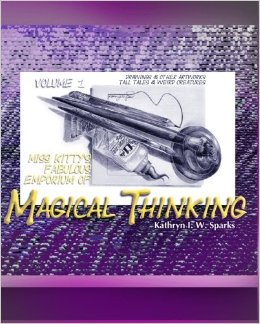
book cover imageI have a little confession to make. My book-publishing debut has a noticeable flaw. It’s not huge enough that the editorial filters of the publisher, or even my own oft-repeated scrutiny, caught it in the preview and proofing processes, but I noticed it, and I’d like to make it better. See, in the hard-copy and digital proofs that I checked before giving the go-ahead to publish, I didn’t manage to spot how low the contrast was between text and background on one of the two-page layouts, and it’s not nearly legible enough for my taste in the final print, even with my relatively eagle-sharp eyes.

So I’ve made a revised version of that page duo and a couple of other pages that were quite acceptable but I thought deserved a boost of readability as well as long as I was at it, and I have requested that the publisher allow an after-publication change. Those of you who have already purchased and received the book (I’m looking at you: family members; Mira, Diane, Gracie, Christine, etc, and a handful of others that I know of thus far) will probably know which typography I’m describing. It’s readable, but it’s an effort, I admit. Those of you who haven’t bought the book yet, I certainly hope you will do so but maybe, just maybe, I’ll be able to give you an even more polished product if you wait until I give the thumbs-up to a tiny revision in a week or so. Now, at least you know the whole story of my neophyte adventure.

If you’d rather hang on to the original version of the book as it stands anyhow, I promise you that all but the one poem—all 165 or so of the others—are entirely readable as the book stands, and while I can’t in any way promise that this, my first foray into unintentional-humor publication (to be fair, the rest of the book is supposed to be amusing) will be my last, let alone likely to accrue the sort of megabucks value given the famous upside-down airplane stamp of my post title, I do hope that when I croak, you might be able to get a bonus by selling off the short run of mistake-inclusive prints to crazed collectors. So if you paid, say, ten or twelve dollars this week (and I see they’re already reducing the price on Amazon, so bargains can already be had) you may be able to sell the book in a couple of decades for thirty-six cents extra. Talk about a fantastic investment! Don’t say I never gave you anything exciting.

But seriously, I hope that you will think buying a book from me is a reasonable investment not only in my happiness and well-being but in your own good spirits, because that’s what the book was intended for in the first place: playful entertainment for semi-grownups in the form of my whimsical-to-wacky drawings and poems. With your patience and a little perseverance on my part, we ought to be able to conjure up such an interlude together one way or another, no? I thank you for your good humor and support. Have a lovely day, y’all, and I promise I’ll keep you posted on my progress.photoOf course, since I’ve already made the revision of my “oops page” to submit, now I’ll be getting started with the conversion of the (reedited) book file to prepare it for a Kindle edition, and will need to decide which of the many other books I’ve got on various ‘back burners’ will be next on my agenda for what will hopefully be mistake-free from the moment of its publication. That’s the plan, my friends.

Hard Boiled Character

I’m very much a child of the Sixties. I was born at the beginning of the decade that brought to a point of confluence such disparate events and ideas and people as space exploration and spaced-out hippies, the Beatles and the Batmobile, suburban composting and the Cold War. Every one of those might be said to have had at least a little influence on aspects of my self and my character, but one of those I particularly remember from preteen days is that the very little I knew of the politics of the day was that my classmates and I were trained in school drills to dive under our desks and cover our heads with our arms as protection against The Bomb. Because we all know that there’s nothing better than skinny little kid arms and a plywood desk to save us from nuclear holocaust.

A corollary of this perhaps, is that even as a shrimp I could recognize the futility and insane ridiculousness of what the world’s Superpowers liked to tell us was inevitable and what, conversely, was going to stave off such things, so I preferred to play the 60s’ iteration of the 50s’ cowboys-and-Indians, that being a game that, as far as I’ve been able to discern, was all about galloping around on invisible horses, making a lot of noise, chasing each other, and brandishing toy guns in ways that would’ve cleared the Old West in an instant by accidental and ‘friendly’ fire had they been loaded. Our upgrade for the sixties was Spies, because as it was utterly clear no politicians in ours or any other country was going to be sensible and deal in saving self and planet by means of either successfully waging a visible war or, even more remotely, by learning to sit at table and negotiate anything like Peace.

So we played Spies, the cowboys-and-Indians or Us vs. Them variant that swapped invisible pinto ponies and buckskins for invisible (or better yet, pedal car) sleek, speedy autos with magnificent tail fins, the ten-gallon hats for fedoras and the chases across the Western plains for slinking around our own houses to peer Unseen into the windows—the ones we could reach—and spying on our own parents who stood in for Commies. And only if we were really lucky maybe really were Communists, though I knew no one who would have said so openly in suburban America in those days. In point of fact, I had no goal of catching anything other than perhaps a glimpse of where Mom kept a box of candy hidden, and certainly no wish to fire my terrifyingly realistic plastic squirt gun at anyone with anything other than a zip of icy cold water, but it was all Terribly Exciting.digital illustrationThat, however, was pretty much the pinnacle of my career as anything racy or dangerous, and I’m quite content with that. But the memory of how thrilling the entirely artificial and manufactured world of child’s play was still charms me, and I still kind of like to revisit the image of self-as-desperado with a laugh and, yes, a tip of my broad-brimmed hat.