Nothing Wrong with Stating the Obvious

That which is ubiquitous in my life, the thing that I walk by every single day or experience every time I am in a particular, familiar setting, can become invisible to me. For good or ill, I can forget to notice anymore those things that are so close they could bite me on the nose before I paid proper attention to them. They might be so near I could change them for the better with little effort or they could, if I’m too foolish to do that, turn on me and make my life or someone else’s immeasurably worse for having been left unchanged; good things, conversely, can be so near that I could be uplifted by the mere thought of them if I only gave them a thought in passing.

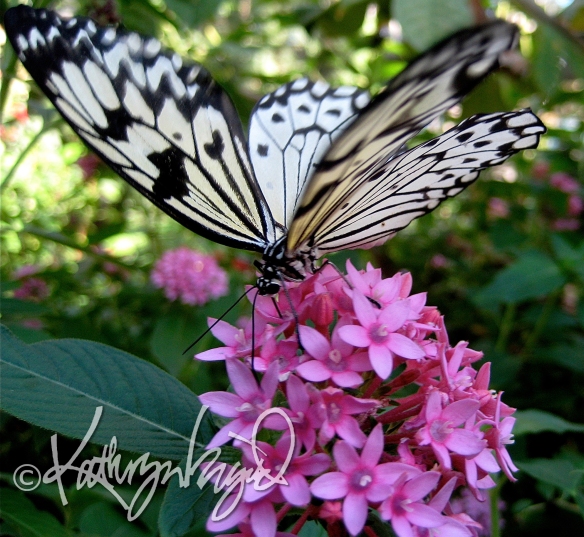
I must pay better attention. My senses should be enough to remind me of all the woe and wealth that surround me at every turn, and my will should follow my convictions enough to make me respond with a hand of aid, a voice of change, or a heart full of admiration and gratitude. The vast majority of the world hasn’t nearly the kind of wealth and privilege that surrounds me in my life—materially, yes, but also in health, safety, opportunity, hope and happiness—and while there is no reason to reject what I have, it should motivate me to take a closer look around me. I ought to take constant inventory and be willing to counter the wrongs and repair those things that I can, or at the least, call upon those who are able to make positive change. And I should be glad at every sign that states the obvious good in my life. Thankfulness is a small enough part of true mindfulness, but looms large in the world of well-being.Photo: Stating the Obvious

The Only Magical World

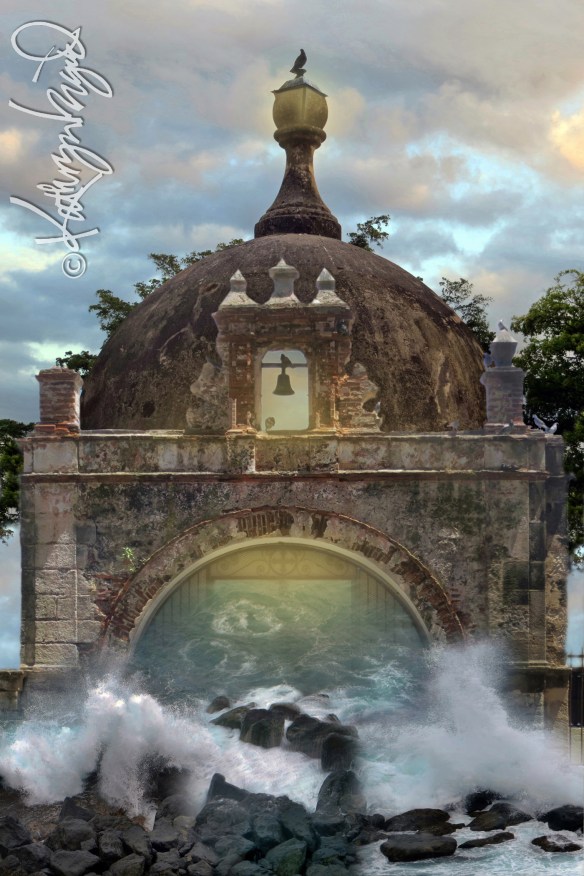
Digital illustration from a photo: Mythic MirrorThere’s only one plane of existence that is guaranteed to seem perfect and right to you at all times, and that’s the one in your dreaming heart. But the place in the real world that will come closest to that kind of mythic perfection is the one where you can dwell in the center of real, constant and generous love. On the third of August, every year of my life, I get to celebrate such a love because it’s the anniversary of my parents’ marriage.

Their love for each other has withstood many tests and trials over time, but because it was genuine and down-to-earth love from the beginning, the tests and trials have tended to be more externally made and less harsh, perhaps, than they might otherwise have been. And in its best and least challenged days, it shines the brighter because it feeds and is fed by a larger love—for life, for those articles of faith and those people they hold dear—and I, as one of their offspring, get to share in that care and affection, friendship, respect and kind generosity.

This is the sort of beauty and distinction that transcends fairytale happiness and is, instead, steady and sure. Better than supposed Magic and miracles, it is so dependable that even when the sun isn’t shining quite right or the cogs of the world aren’t turning exactly as one might wish they would, it’s possible and natural to have assurance that what needs to be will return; goodness will prevail, and we will all get back to the constant and comforting business of loving and being loved by one another. It’s a potent blend of companionship and  concern and hope that aren’t dependent on spells and manipulations but reside in the everyday promise, and every third of August I get to celebrate it anew because my parents taught me what this kind of love can be.

Happy anniversary, Mom and Dad.

We were So Civilized

Digital collage: We were So CivilizedNo matter where I am on the Fourth of July I am likely to think about the country in which I was born and have lived all of my life thus far: the United States of America. The Fourth is the official birthday of the nation, though many of the current states joined the union long, long after that July in 1776 when it was established by its founders. Like so many nations around the world, this country and its history are a tremendously complicated and varied patchwork of fact and fiction, hope and fear, two steps forward and one step back. Over and over and over again.

Imagine this: a pack of refugees from religious persecution left their homeland and sailed into the unknown across an ocean of which they also knew very little except that their passage across it was dangerous and miserable and killed plenty of them before they hit the new shore. When they landed, to their surprise there were already plenty of other people living on that new turf, and did that stop the interlopers from moving in, too? Of course not. I don’t expect it ever occurred to them, to be honest, that there wasn’t room for everybody or that if they took a ton of the resources around them that might just mean there were fewer for the previous residents of the land, folk who had, indeed, already long established a very different relationship with the continent.

That the illnesses and diseases the newcomers brought with them from Home would endanger and kill many of their new unwitting and unwilling neighbors could never have entered these interlopers’ minds, when they were so preoccupied with not only their current survival but their escape from the hardships and sorrows back in their own homeland. That they themselves would suffer privation, fear, danger, loneliness, and the loss of their lifetime homes, belongings, families and friends across the vast ocean they had crossed was a stark enough reality that perhaps they willed themselves not to think too hard about all that they faced next also affecting the long-tenured native peoples across whose lands they moved like human bulldozers.

The establishment of this new home was far from smooth and easy too, as anyone could probably guess, though I wonder if any of them really considered that the goal as much as simple escape from what they’d known before. Still, none of those inhabitants of North America—invaders or original denizens—could possibly imagine at the time, I suspect, quite how vast the whole continent was and what that meant in terms of creating new colonies within it, let alone new nations. In the years that followed, the westward migration confirmed the existence of innumerable tribes and clans of people not before known to the new arrivals, but also of wild creatures unimagined, of terrain unlike any they had dreamed possible, of climates that had been the stuff of legend until then.

In those many decades of carving out new paths and territories, it was inevitable that, just as it had been with the foregoing generations of various indigenous peoples, there would be struggles over who had access to what, who could live where, and who belonged together with or as far as possible away from whom. No surprise that this led not only to separated towns and enclaves and ethnic, religious, political or philosophical communities but also, in turn, to a wild array of accents and ideas that might as well have been different languages and different species altogether.

Amazing that all of this could remotely possibly coalesce into what is known as the United States of America. Today’s states are still so diverse, even sometimes from county to county or one side of the railroad tracks to another, that it’s nearly laughable to call them United. We fight like pesky siblings with each other all the time; it’s a miracle, in my book, that the so-called Civil War, one of the most uncivilized events in the country’s history, hasn’t simply continued from its beginning to the present day. It does, perhaps, at subtler levels. Just because the invasion of the continent by a bunch of frightened Pilgrims who only thought themselves seeking freedom from tyranny didn’t destroy the whole land and kill every one of them off outright, and because the various internal skirmishes that led to, but were far from limited to, the Civil War didn’t complete that annihilation doesn’t mean we’re not still perfectly capable of incredible incivility at every turn. We try, we fail.

On the Fourth of July, I think of how astounding and—generally—good it is that this messy nation has managed to survive this long without self-destructing. But I can’t help also thinking this of most of the rest of the world. Humans just plain are messy. We form and break alliances; we argue over being Right instead of being compassionate or practical, let alone pursuing justice. We blunder around, hog resources, ascribe privileges and powers to ourselves and our chosen comrades that we willfully deny others, or just pretend the others don’t exist, and thanks to our weirdly, wonderfully diverse array of accents, when we do get around to discussing the least of these things, even those who ostensibly share a language can’t understand each other half of the time anyhow.

Just possibly, our life form may have been civilized at a few choice moments. There is plenty of potential in this odd species of ours, I like to think. Even we Americans aren’t entirely irredeemable; we keep bothering and beating up on each other like so many brothers and sisters, and yet most of us still manage eventually to just agree to disagree and, in moments of precious lucidity, even to see each other’s point of view and operate in an environment of respect and hope. As rotten as we can be to each other, we care enough to wrestle it out and try to find ways to go forward. Together, even. If that isn’t a family worth saving, I guess I don’t know what one is. Happy birthday, USA. Go forth and get a little more civilized, if you can.
If My Song could Last Forever

Photo: Well Seasoned 1Hours into Seasons

There’s a sweetness in the morning when the sun has yet to rise

And the blooms lie, still unopened, under sleeping butterflies;

When the stars still wink and glimmer, while the frogs yet softly sing—

There’s a sweetness in the morning that is like the breath of Spring.Photo: Well Seasoned 2

There’s a graciousness at midday when, amid the racing streams,

All arise and put in motion yesterday’s profoundest dreams;

When the past its chains has loosened on the race of all alive,

That in joyful forward motion we, like Summer, grow and thrive.Photo: Well Seasoned 3

There’s a calm amid the evening when the birds come to the trees’

Respite from the day of flying, echoed by our evening ease;

When the cares of noon have lessened as the dusk swept into place—

There’s a calm amid the evening, peaceful as the Autumn’s grace.Photo: Well Seasoned 4

There’s a beauty to the nighttime, glorious and peaceful bliss,

Treasured for the kind renewal of the souls that rest in this

Cradling darkness and this languor, in this place of mending rest

That, like Winter’s dormant healing, lets us wake refreshed and blessed.Photo: Well Seasoned 5

I would take these hours’ presents as my guide through seasons long,

Through a lifelong path that’s pleasant as a choir’s finest song;

I would be a seasoned traveler, happy above everything,

If my song could last forever,

Summer, Autumn, Winter, Spring.Photo: Well Seasoned 6

Communal Keeping

Digital Collage: What Light is ThisWhat Light

What gleaming and pellucid light is this

That dances from the darkness into view,

As gently kind and tender as a kiss,

Drawing the violet warmth out of the blue—

What is this gracious, guiding, welcome light

That, numinous, its blessing shines on me

And bids me then, so warmed and kindled bright,

In turn to shine? ‘Tis Hospitality.

What, then, the lantern lighted as we part

To guide and keep us as we wander on,

No longer cold and dark as at the start,

Though time find us all yet asunder, gone—

What is the lamp that makes each soul a sun

And lights the path to gather us anew

From ends of earth, that beckons everyone

Back home? It’s Love that lights the whole way through.

There’s comfort in the midst of darkest night

Where Love and Hospitality alight.

Alive & Well

photoSing Now & Always

To celebrate at breaking of the dawn

Or close of evening, or the stroke of noon,

There is no sweeter pleasure than a tune

Well sung by everyone, an antiphon

To peace, to sorrow, or to happiness;

No matter what the poetry or text,

It truly matters most that what is next

Is choral concord to renew, redress,

Resound through all the unseen years ahead,

A clarion, an anthem or motet

Grander than any ear has heard as yet,

And run to distant history, a thread

Of melody and harmony so strong

That no one can resist joining in song

Back in Business

photo montage

It may not look like much yet…

Spring has fully returned to north Texas. That means repeated visitations from wind and tornado warnings, thunderstorms that lead to flash floods, and threats of baseball sized hail. More often, though, it means warm temperatures and plants seeming to grow 50% taller in a day. And it brings on bud, leaf and bloom with a flourish that reminds me how showy and productive a Texas garden can be at its—however brief—peak.

photo montage

Will you think me impertinent if I show you my bloomers?

A Saturday outing is splashed with roadside waves of Showy Primrose, Paintbrush and Bluebonnets, and the trees are bursting with a dense, cheering liveliness that belies the likelihood of a relatively short span of such intense lushness.photo montage

Our own garden is reawakening, sending up promises left and right of everything from capsicum and tomato, parsley and kale to the same primrose standard-bearers ushering in roses, Salvia and Echinacea. The saplings garnered of the city’s largesse in the annual tree giveaway—redbud, Mexican Plum and Texas Ash, to date—are awakening as well. Though the odd temperature fluctuations and ice storms this winter hindered their bloom, they are leafing out in style. And as much as I’ve been known to vilify and slander all of squirrel-dom as thieving rats, I will grant them all manner of amnesty for their one generous act of planting acorns across our property and providing a welcome lagniappe of oak seedlings in my planters for the increase of our little backyard grove.

photo montage

I’m up to my irises in spring bloom…

photo montage

Can you blame me for being dazzled?

For shorter-term flair, it would be hard to argue with iris as my chief fancy at this time of year. Always a favorite flower for both my partner and me, it was the centerpiece of our wedding design, courtesy of Mom’s garden, and an indulgent purchase last fall in the form of a self-gifted bunch of fans for the garden here. Along with the classic lavender bearded and highly perfumed variety given us by a dear friend, the newcomers are flourishing in their bed in the front corner of our lot, and I am wholly enamored of their flashy, curling flounces and the radiant tendrils of their beards. The graphic drama sustained by their swordlike leaves after the flowers pass is a pleasing bonus of irises’ appeal, but the magnificence of a bed in full bloom will always be one of my most beloved signs that this season of nature’s great exuberance is in full swing, a grand hurrah in floral form.photo

Suicide without a Corpse

digital illustrationMichelle, a writer I greatly admire, just offered a post on her blog, wherein she details some of the characteristics of her daily experiences in life as a person with depression. As always, she makes me think. It’s not simply that I, too, am such a person—albeit one whose version of depression is as unique, individual as hers and everyone else’s—but that there are a few aspects of depression that, if not exactly universal, are amazingly common. First of these is that being sad is not depression. Sadness is to depression about like a paper cut is to getting an ice pick stuck in your eye.

I will not belittle the paper cut, real or metaphorical. Pain of the physical and the psychic sorts will always be relative to our own experiences and our own moments, and pain of any kind is inherently unpleasant and undesirable. That, I think, would be hard to argue.

But I might also say that it’s less accurate to equate sadness with depression than to call being sad, however jokingly, being “differently happy”. Sadness is a passing, ephemeral experience of the sort where the last scoop of one’s favorite ice cream flavor has been dished up and handed to the person just before her in the queue. Depression is when she has the dish of that flavor sitting right in front of her and not only doesn’t have the strength to reach over and take a spoonful of it to eat, she thinks she isn’t a good enough person to do so, if she can form such a solid thought at all, and if there were a super-powered sleeping pill that could put her peacefully to sleep forever sitting right next to the ice cream and she longed beyond words to die, she mightn’t have enough strength to reach over and take the pill either.

Suicide is a hideous thing, if you ask me. It’s tough enough that anyone would hate or fear her life and self to the degree that she sees no alternative but to end it, but of course she either knowingly accepts whatever horrible consequences her death will have on the entire rest of the universe, starting with the people who love her or she is no longer capable of recognizing that there are such people or consequences or caring about them. Beyond that, it inevitably is simply messy in the practical and logistical and legal senses. Someone will have to clean up after the fact, and the suicide doesn’t or can’t care that this will require others to deal with her corporeal remains, the legal messes she’s left behind, the tasks unfinished, and most of all, with the incurable suffering that follows when survivors realize that they couldn’t save her, might indeed have been utterly forgotten by her in the abysmal darkness of her depression.

Every individual’s best response to depression is as different as his or her version of the ailment. I am one of those whose unique combination of depression and other physical and emotional characteristics and components resisted all non-medical interventions until despite my vigorous resistance to the idea of chemical treatment I learned that that was the only useful method for me. Rather than diminishing my sense of self, it allowed me for the very first time in my four-plus decades to experience what I now believe is (and yes, probably always was) my true self. It still required being dedicated to a variety of other forms of non-chemical rehabilitation and therapy; talk therapy, meditation, and my practice of various arts and exercises mentally and physically that please and heal me all contribute to my wellness along with my meds.

I was fortunate in a way that many clinically depressed people are not: I never seriously contemplated committing suicide. I would go so far as to say that I considered it as a rather detached philosophical argument, inwardly, but I never reached the point where I so lost my will to oppose the idea of killing myself that I could let go of all the external reasons not to do so, those messy consequences others would have to undo or survive. If I valued myself so little as to want to be dead, I suppose it could be said that at least this made me think it would be that much worse of me to impose so terribly on those around me for something that wasn’t directly their problem. This sort of tautology clearly says to me that I wasn’t in imminent danger; I was busy arguing myself out of something that I didn’t really have the strength to do anyhow.

What I didn’t recognize in the midst of all of this soliloquizing was that I was committing a form of suicide, if an invisible one. True, there would be no stinking remains turning into human soap and sliming the rubber gloves of some poor janitor, no internecine paperwork to be sorted by attorneys and opportunists. But the burden on the world around me would have been just as heavy, the struggle of my loved ones just as inexorable, if I hadn’t rather literally stumbled into the intervening care that brought me to this lovely resolution where I find myself dwelling so comfortably today. Because, in my depressive brain fog and fear and self-loathing and ennui, I was rapidly forgetting how to be alive. It’s quite possible, I discovered, to die without stopping breathing, without even losing all conscious thought. A walking coma, an animate death is entirely possible in the midst of true depression.

And for that reason, I am all the more grateful that by virtue of being surrounded by people who helped to guide me in that direction, combined with being blessed, lucky, fortunate, or whatever combination thereof you prefer to name it, after my years in the dark I fell into the combination of elements that conferred a kind of wellness on me that I’d never known before. I am among you today not just as a happy and contented person, full of gratitude and amazement at what a good life I have, but also as a testament to the unfathomable differences and distances between existing and living, between something indescribably yet terribly akin to sleepwalking through life and waking up every day a little bit more…alive.

The Last Place on Earth

digital collageIn Profundum Maris

Deep in the ocean, fathoms far,

Beyond the reach of the brightest star,

In the abyss of the secret sea—

Seemingly past where life could be

Sustained—lies a billowing bed of kelp

That waves in the dark, where sleep, where help,

Where mystical mending music calls

As the tides turn back and the current falls,

As the storms above relent, abate,

Becalm, bring peace—it is not too late

To dive in the depths with delight, embark

On the garden path of the ocean’s dark,

Miraculous beauty, unseen, immense,

Suffusing the soul in every sense,

To lie in the rush as the seas roll by

And think it a joy too fine,

To die…digital collage

The Longed-for Sound

digital illustrationAwakening

Whose is the voice that speaks my name, Aloud or silently, the same,

In gentle speech or radiant song, Unspoken care, forgiving wrong?

Whose is the loving, laughing voice That makes my waiting heart rejoice,

That wakes my hope and lights the sky With stars, to which my sole reply

Is humble gratitude, delight That such a voice breaks through the night

To search me out, my heart in two, And make it whole?

Your voice. Yes, you.