Endless Sleep that Needs No Dreams

Cadence at Evening

Slow as the settling of the sun
Upon the western shore and lees
Where nightingales call from the trees,
Watching the honeyed daylight run—

Slow as the shifting motes of time
That sift and spin in lamp-lit rays,
Fall lazily to dust and haze
And love, ineffably sublime—

Slow as the sleeping breath when dreams
Have ceased, and thought receded to
The farthest corners, shaded blue
To inky black, to flow in streams—

Slow as the silently locked door
Was, to admit all at the last
Where wonder waits that, long held fast,
Now pulls us inward evermore—

Slow as the parting of that night
Which closes day with one last kiss,
Night languorous with hymns like this,
Draws us toward slowly growing light—photo

Questionable Behavior

I will never deny that much of my behavior, if not my very being, is in highly questionable taste. I am uncouth. And I’m certainly unsettled, if not unsettling.digital illustration

Generally, though, I would prefer to attribute this to having an ongoing and dedicated case of childlike curiosity. It seems to me it’d be a pity not to have this particularly happy mental condition. Why on earth would anyone want to stop being filled with wonder and awe at the astounding and miraculous and unpredictable world around us? How dull and tedious would that world be if everything were explainable, understood, known and codified! And if my only response to it all is a mere shrug of casual acceptance, what excitement or new pleasures can I expect?

Far better to make a fool of myself by being thrilled with the strange, attracted to the odd. Far more marvel and delight in believing that every door opened, every corner turned is a very thin barrier, a fine veil, between my present state and an unexplored or unimagined place of sweetness and inspiration. So I hope you’ll pardon my manners if I get a bit overworked and can’t quite contain my enthusiasm. A kid’s gotta dream.

Not Much of a Mascot

The dove is not an entirely obvious choice as the perfect symbol of Peace, but it’s held that status among many nationalities for a mighty long time. Me, I found it highly annoying to think that such a tiny-brained creature was elected as representative of the state so revered and desired by so many. Peace, I thought, shouldn’t be personified by a little avian of fairly grubby habits with, arguably, one of the more proportionally miniscule skulls in the company of birds.

But on second thought, it’s quite a good fit, and kind of encouraging on top of it. If peace is to be even the slightest possibility for humans, then it had better be achievable by the truly, wildly less-than-perfect. That’s one way in which the vast majority of humanity is not only well equipped but generally overqualified: we’re guaranteed to be flawed. So to think we might have even a tiny shot at meeting, finding or bringing peace is heartening. Like the dove, we bipeds are a bunch of weaklings; even among those with actual muscle, it’s rare to find folk with strength of character and will and wisdom to match, so it’s up to the rest of us much more ordinary louts and fools to get the job done. What do you say? Shall we not tumble out of the nest and give it a try?

digital illustration

*Dove sei?* [Where are you?]

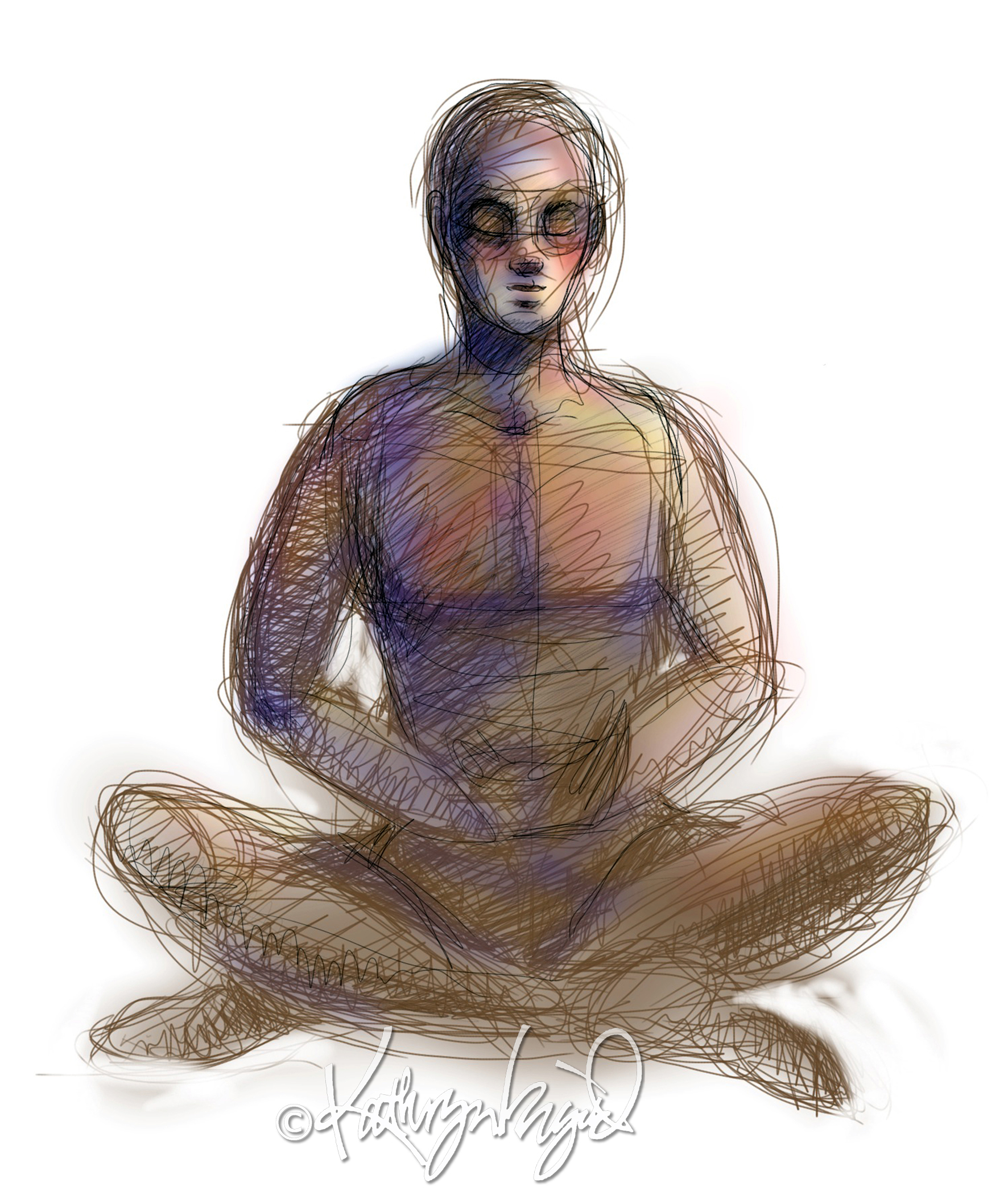
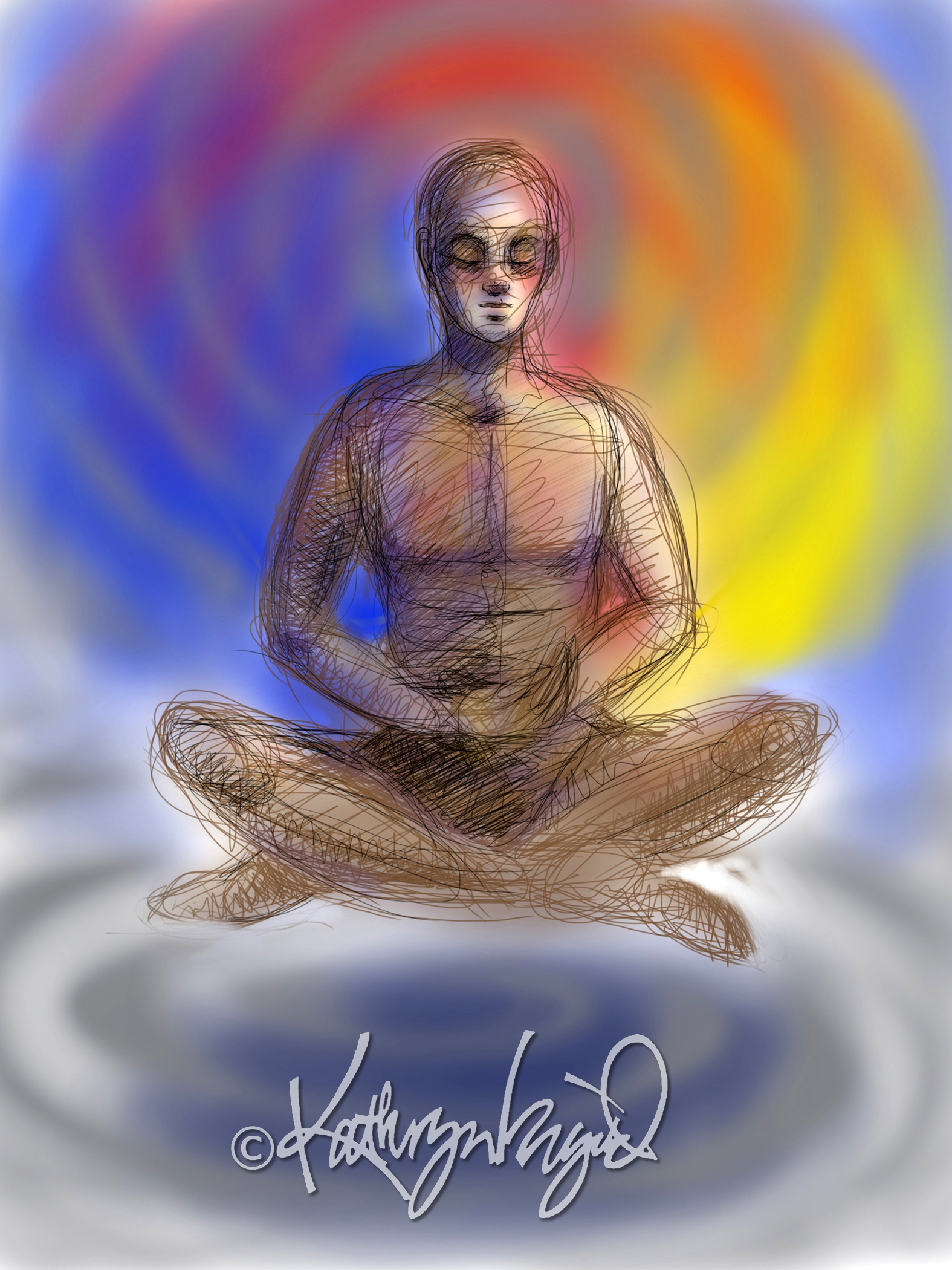
Meditation Medication

digital illustrationHealth is a wildly, weirdly, wonderfully complicated state. Both physical and mental health are astoundingly omnidirectional networks of intersecting matrices and random points; genetics, environmental influences, accidents, allergies and so much more come together and continue to change over the life of any one person. Furthermore, these meet in an intersection of the two networks (mental and physical) in every single person, that it’s nothing short of miraculous that any of us human conglomerations actually survive and have relatively good health.

It’s completely unsurprising, then, when something or other does break down or fail to be really perfect when it comes to health matters. Thank goodness there are more and more answers and helps for us when it comes to such moments of concern. But for every solution, there are shortcomings and side effects, and we still have to make choices and experiment, test and try and hope.

I’m one of those relatively rare creatures blessed with generally outstanding and reliable good health. I’ve never had a broken bone; I’ve had all of three stitches in my whole life, and I’ve never worn a cast or a brace unless you count the kinds I could buy in a neighborhood pharmacy for an achy hyper-extended knee or a fiddly fingertip whose little cut made a mockery of my hale-and-heartiness when I was whimpering over the pain every time I’d bump it. My various moles, cysts, and bumps have all thus far been benign and manageable. Even those more significant elements that might affect my function and longevity are so far pretty reasonable to deal with and don’t require enormous amounts of care just yet.

The essential tremor, noticeable since I was about ten or twelve, has never gotten so obtrusive that I have had to do anything for or about it. The mitral valve prolapse (heart murmur) is so mild that it went unnoticed until I had a regular physical exam from a person who, as pure chance had it, was conducting a study of that specific condition and so was attuned to its unlikely presence. Very minor hypothyroidism like mine is easily kept at bay with very little medicine (mostly pretty common ones at that) or monitoring. I am especially grateful that thus far there is no indication that the Parkinson’s Disease that poses as the only true black sheep of my family has not to date taken up residence in my body.

This is not to say that I have no inkling of any of the irksome and unpleasant effects of imperfect health. I’ve come to recognize the recurrent, and in some cases, chronic, annoyances and inconveniences that come with allergies. While mine have remained moderate and turn out to be treatable if not controllable, I figured out after getting some help that they had had a far greater control over my daily life and well-being before that time than I had realized. And as I’ve said here before, I have had my adventures with Spasmodic Dysphonia, clinical depression, and anxiety; these had larger influences on me and, therefore, those around me, by a magnitude of difference.

What arises every time I contemplate these things, all of which are in my own life more survivable and treatable than I know that they can be for others, is the notion that as a typically complicated human health exemplar, I still have to work continuously to discern what combination of the tangible and medical kinds of interventions and treatments with those more intangible approaches of meditation, activity, and trust—call it faith, hope, prayer, optimism, or attitude adjustment, it’s all fodder for feeling, and possibly, getting, better—will suffice to keep any of my anomalous conditions in check.

Thus far, the answer for me has been a shifting combination of the tangible and the intangible; I think that’s how it works for most people. My personal recipe for success is neither absolute nor permanent, any more than my personal state of being is fixed or unchangeable. Health, both physical and mental, changes rather constantly over a life span, and the longer one lives the more cycles and spikes of change are likely to occur during the stretch. What, then, can I do?

Keep trying. What combination of body-chemistry-altering substances serves my needs at the moment? They might well be outright commercially made and sold and officially, doctor- or nurse-administered drugs, but they can also easily be homeopathic or folk cures, foods or herbs or numerous other things that I’ve discovered through trial and error suit my physical and mental well-being. The same can be true of physical therapy: it might be specific exercises recommended to me by my doctor or other trusted medical and health experts, or as is often the case, it can be a set, series or group of activities that simply make me feel closer to my optimal conditioning. Nowadays, as always, I find myself using quite the mixture of these helpers to suit my specific needs and wishes for better health and happiness. For me, that means a full combination of what could be loosely classified as medication and meditation.

I can’t begin to tell you how that works or is explained scientifically. Some of it I’d bet good money can’t be clarified in scientific terms. But experientially, that I can tell you: I feel pretty good. I get the occasional sneezes or headaches, and there are times when it irritates me, yes, that my vocal cords are recalcitrant and unreliable. I’d definitely prefer if the shadow of Parkinson’s hied itself off my family’s shoulders, most especially Mom’s, and would never try to sneak up on me later despite any efforts on my part to ward it off if possible. But let’s be honest. Right now I feel pretty good, and that makes me happy. Whatever I’m doing or not doing, taking or not taking, it seems to be working.digital illustration

Green Means Go

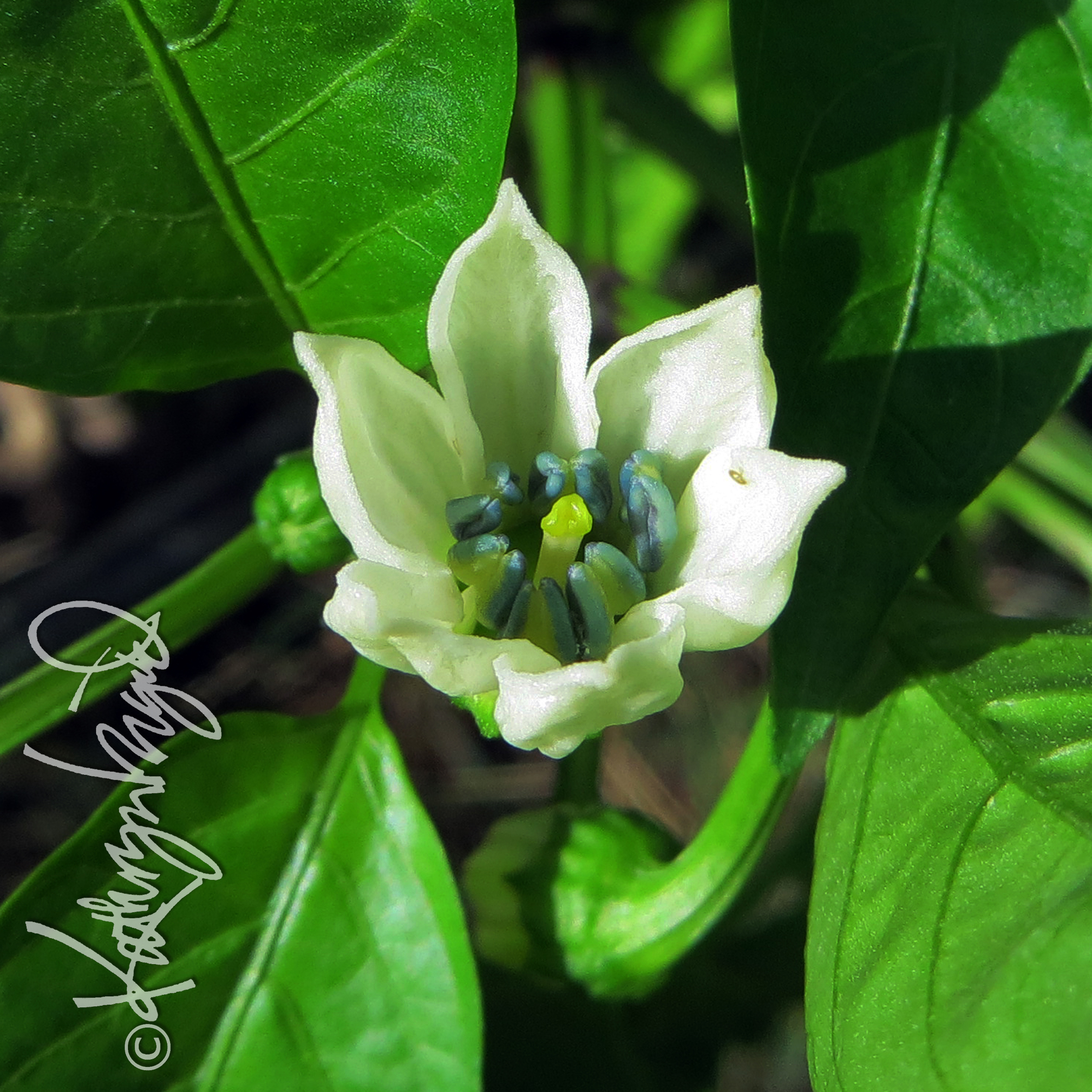
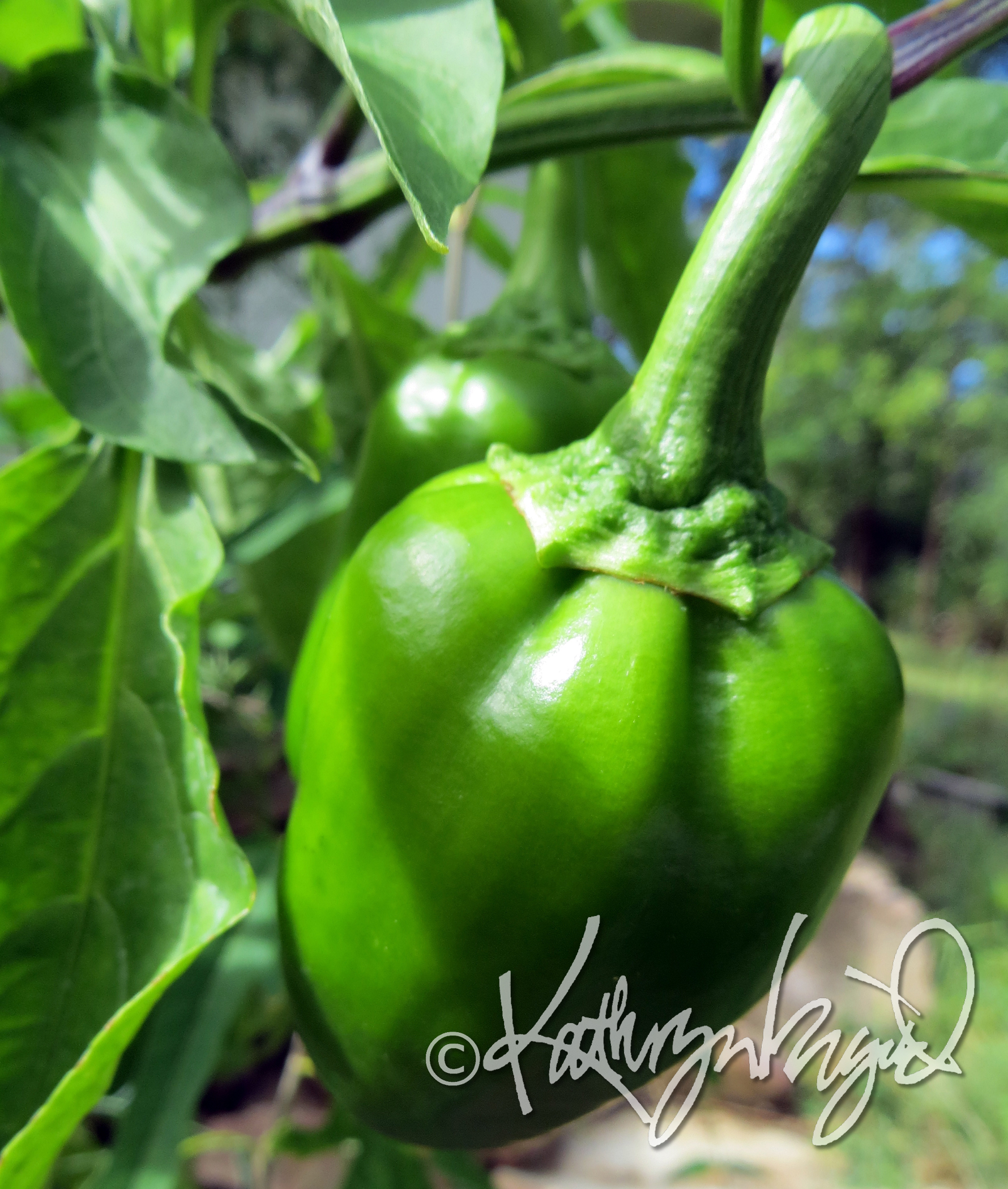
It’ll be a while yet. Spring and its sprouts aren’t making any particular headway even here in Texas just now, and I don’t expect to see any more than tiny hints of promising green until the current cycle of typically unpredictable and radically changeable temperatures settle into their usual late-February-into-March kindliness. But I can’t help thinking ahead.photoAfter all, there’s such a compelling sense of momentum that comes with those first tiny glimpses of something ever so delicate and yet determinedly pointy that forces its way out of hard ground and harder branches. The very fact that they can emerge from such unwilling sources tells me that once they’ve driven through those barriers, not only is there little that could stop them, they will pick up speed as they go, unfolding, uncurling, swelling, bursting into bloom, and finally, enlarging into the full fruits of the season. Such a suffusion of newness and energy and purpose!photoI look forward, in the same way, to some of my many projects coming to fruition, as I so rarely know what the final outcome will be, really. What seems like a perfectly lovely little green bell pepper can grow up into a dramatically bold but even sweeter scarlet capiscum, if nurtured and tended along its sojourn of development; in the same way, what may have begun as a quick little one-line idea sketch with pencil or pen while I sat in the back of a rehearsal hall or in the waiting room before an appointment could well grow up, over time, into a digitally enhanced illustration full of color and texture and layers that I hadn’t planned at the start. Whatever the result, it begins with the green bud or the green light of an idea, and I cannot resist the allure of that color, beckoning me with its promises and possibilities.

We Wait for Change…

…when we should be agents of change. We wish for rescue when we should be out seeking ways to aid others. We huddle fearfully in the late summer, already conscious that the autumn ahead will lead inevitably to winter’s dormancy or killing frost, when what we could be doing is plotting the way to make use of the transition to position ourselves to take fuller advantage of the ripening and plenitude ahead.digital illustrationWe are, after all, only human. But the exemplary people of generations past have proved, and those of our own time are still showing, that as long as we exist to worry about them the ages and seasons, the events and goings-on do indeed go on, cycle and change, and that if we choose to do so—if we determine to do so and act on it—we can make the changes better and the growth so much the more meaningful and joyful. If we wait for change, it will happen, all right, but it will happen however and whenever the universe or others in it decide. Ours is the calling to engage in the world, no matter how intimidating it is, and move toward what we desire. It may seem like plowing on foot through chin-deep snow, but trusting that there’s a thaw ahead and behind it, renewal, we can stay the course.digital illustrationAt the other end of it is potential that surpasses even our fondest, wildest imaginings, if we dare to move instead of lying waiting.

It’s interesting to me that I wrote the foregoing portions of this post a few weeks ago and set it aside for this very date, not knowing that it would follow immediately on the heels of my publishing my first book, something I’ve longed to do for years but never had the nerve until now. Funny how we sometimes put things in motion without even realizing what we’ve done; it’s a saving grace of our race, I think. O happy day, when we stumble into our dreams because we kept seeking them despite all sense!

Not Just Another Pretty Face

At some level, most of us—no matter how disdainfully we might pretend to look upon those Others who obsess over appearances—wish to be thought beautiful. We want to fit in with others, to belong in the pack, to be loved.photoOf course, we know that even those who do fit in do so if and as the hierarchy of the pack allows. We are put in our places and told who we are, where we belong, what we’re supposed to be doing, and why we should accept that fate as though it were a natural law. After all, we tend to believe that nature is fact-driven and therefore we, who are mere specks in its vastness, must play our little roles as prescribed in the absolutes of existence. We sit here and take it. In many ways, that’s a useful approach to life, because, well, nature does drive a lot of what is and what happens, and bucking that can be counterproductive or even quite dangerous. And worse, perhaps, such refusal to accept the norms others have agreed upon as right and correct and natural puts us on the fringes and at risk of rejection. Someone along the way is sure to reject the rebel or misfit. Someone will think I’m unfit or, yes, Ugly.photoIt’s a wonderful thing to remember that besides all of the weird and dangerous and unpleasant and otherwise negative possibilities in stepping outside of the normal and expected course of events or refusing to be other than myself in order to seem to fit in better where I really don’t, there are also a vast array of glorious and splendid maybes waiting out there for me to dare to reach for them. Much of what is good and beautifully new in the world happens because one person dared to think, do, and exist differently from the pack, the mass of ordinary people, and brought about an increment of change. How wonderful if I can shed my fears, my need for conformity borne of desire for universal acceptance, and become ever so slightly more notable, one little nth more dazzling, than I was when I was only hoping to be like all the other creatures that I knew.

Leave the Lights On!

digital illustrationWhile I’m closing out an old notebook that I kept in blog form a number of years ago, I found yesterday’s post and this companion one. So what the hey, I’ll share this one with you, too.
It’s Thanksgiving Day [2005!] and I am particularly thankful this year for having celebrated a whole year of emergence from clinical depression. For anyone out there who has been mired in it, or still is, I send out a fiercely made wish for your recovery and new joy in life, along with this meditation I wrote after realizing not only how far and how long I had been away from my true self, but the cultural setting in which it is possible to get there without realizing it or even having others see it clearly.And with deep thankfulness that it is possible, with help, to be revived.* * * * * * * * * * * * * * * * * * * * * * * * * * * * * * * * * * * * * * * * * *

Let’s stop all this rubbish about Depression as a romantic notion.

The myth of suffering being necessary to ennoble the spirit or, more commonly, to shape creativity and artistry and the personalities that foster them, is an inaccurate and unhealthy construct that belies the potential power of sanity and contentment. The idea that much of the great art that has sprung from the work of troubled or diseased artists throughout history would have been impossible, or the artists Not Themselves, if they’d been well or happy is simply a gross assumption of the inflexibility of the human spirit at best, and an insult to mortal intelligence, invention, and character at worst.

In a telling moment of literal as well as figurative turning-on of the lights, participants in a 2004 Canadian study on Deep Brain Stimulation as a possible treatment for otherwise-untreatable depression noted that the world became a visibly, physically brighter place when “area 25”, or the central zone of depression response in their brains, was stimulated to relieve depression. Many of the patients described a distinctive, even poignant, instant of pleasurable shock when the electrode stimulation, suitably placed, flooded them not only with unaccustomed sensations of contentment and ‘rightness’ in their world but also a clearly discernible brightening of their visual perception. It was as though, one commented, he had suddenly remembered a whole range of colors and values and sensory impulses and emotions that had been locked away for decades.

Nowhere in this was there any indication that the participants in the study experienced a negative change in their self-concept when their depression was eased. No mention is made of the patients losing their creative impulses or intellectual depth. Not a note of regret or sense of personal diminution.

The breezy optimist, on the other hand, is not by definition dimwitted or shallow or uninspired. While cultures that have embraced a darkly Romantic mythos of the suffering genius tend to dismiss brilliance that emerges from happier sources as a fluke or as slick, glib cheapness that won’t withstand the value-test of time, many stars and their accomplishments defy those definitions.

Yes, depressed, manic, even twisted and tortured souls with the deepest of psychological, physiological, or chemical-addled warps and wounds have been the vessels and sources of high art and equally high drama, but they are far from alone in that. To say that they only achieved their greatness because of their damaged state is a cruelty, an insult, and a cop-out that says we all could not be greater than we are, if not equally “gifted” with darkness. If being let off the hook ourselves is what we seek, then let’s just be honest and say we don’t relish the burdens of effort and experimentation and get on with other things. I have a suspicion, as it is, that if there’s a notably higher percentage of mental illness among persons who could be classified as particularly ‘creative’, then the cause/effect relationship is one of persons being used to having to problem-solve their way out of unusually difficult circumstances on a regular basis, and so developing stronger problem-solving (read: creative) skills.

Meanwhile, cheer up! Look at the dazzle that being joyful brings. See the energy and wit that, when not wasted on grief and moroseness and morbidity, can be devoted to pursuing greatness instead, and run after it with childlike delight.

The Ordinary Romantic

I’ve not re-posted anything from my own blogging before that I can recall, but happened upon this (admittedly lengthy) piece I wrote a number of years before I even started this present blog and was reminded of a few things I’ve said here but in quite different ways. So I share it with you now, lightly edited to update it, just because it piqued my own interest once again. Cheer up, my friends: I love that this is written from something like an outsider’s view of the experiences of depression and deep melancholy, after all these years!digital illustration from a photoI highly recommend reading the book I just finished reading [when I originally wrote this post], Peter D. Kramer’s ‘Against Depression‘. He’s the author who wrote ‘Listening to Prozac‘ – a book that, surprisingly, wasn’t really about depression or even Prozac, per se, but due to its bestselling status raised those two specters so frequently that he finally had to respond with this book. He has some sections in it dealing specifically with the effects of depression on arts and creativity, intellect and education, and vice versa. But there’s also a ton about the physiology and pathology of depression, the affect and effect and the impact on self and others. Very thought-provoking for me.

If you want a really scary companion-piece before, during or after the reading of that book, one that for me confirmed the urgency of wellness by any–no pun intended–sane means, look up ‘My Lobotomy‘ – it was a presentation on NPR that horrified me more than umpteen war- and disaster-stories (including true ones) and makes stories by Edgar Allan Poe and Stephen King sound like skipping through a copse picking violets. ‘Lobotomy’ is the harrowing memoir of a lobotomized man who, at 56, finally got up the courage to investigate and explore what happened to him when he was operated on at 12, why it happened, who else was affected, and much that followed. Incredible. Terrifying. I can barely even think about it. But it did make me feel all the more intensely that I want to stay in charge of my own mental health just as much as I should my physical health.

For the moment, since I’ve so often been asked, I will say that when I call myself Ordinary, what “ordinary” means to me is wide-ranging and a bit variable, but in the sense I’m using here in the land of my blog, it covers all of what seems possible, believable, normal or otherwise expected in the universe of human experience. More significant, perhaps, is defining what it doesn’t mean for me: things found at the extremity of experience: brilliance or genius or unearthly, once-in-a-lifetime skills, talents, and insights. Me, I’m not interested in being a supernova. They tend to burn out fast anyway.

What I really pride myself on is taking the simple raw material of being a middle-of-the-road mortal and managing to pull out of that clay my own few moments of dazzle – an outstanding artwork here, a worthy kindness there, and a few sprinkled bon mots or glorious deeds in between – these shine all the more in the setting of my ordinariness. People take note of them precisely because they are deserving of note–because coming from a typical luminary or wunderkind they would be the expected thing, no matter how exciting, and from me they are not. There’s no intrinsic negative value to ‘ordinariness’ for me, no implication of self-abnegation or false modesty, just the sense that only a few in history are genuinely set apart as spectacular examples of either desirable or undesirable traits and gifts, and we in the main herd can still go on and live rich, full, complete lives just as we are. With maybe a little less pressure to perform, too, so that anything extraordinary we do actually shines that much the brighter. Surprise! Aren’t I fabulous!

Why do we see ten tortured geniuses for every happy one? I think it’s primarily a function of taste: the culture that covets over-the-top emotion isn’t interested in supporting and reporting anything that doesn’t have that dangerous gleam. Good news is no news. If the artwork is upbeat, it must be tacky and shallow. If the artist is happy, she must be an air-headed clown. Prettiness and simplicity and everything that pleases the mainstream must, by definition, be playing to the lowest common denominator.

I’m actually a dyed-in-the-wool Romantic myself, but I have been contemplating that old adage “write what you know” and decided that it lends itself to far too tiny a concept of possibility. In the first place, if taken strictly it would mean that we should automatically dismiss as useless falsehood any attempts at empirical or even historical writing, because practically everything that has been once believed absolute has taken on different shadings over our cultural lifetime, if not been disproved. Never mind how we should treat the authors of murder mysteries and crime novels! The aphorism may be a needless dictum or even a myth: one doesn’t necessarily have to BE suffering to appreciate what suffering is. And perhaps anyone who has suffered in the past can be considered to have earned the stripes of exactitude anyway and can rely on recollection rather than continuing to wallow.

There is certainly a bit of truth when people insist that others can’t know what they’re going through; in its most complete sense, I’m sure that’s accurate. But anyone with a little life-experience and the ability to sympathize or even–if imperfectly–empathize, can puzzle out in his or her own way an approximation that makes communication of it possible in art. And, frankly (this goes back to that idea of an Ordinary person doing something Extraordinary), if I can make someone slap his palm to his forehead and go, “YES! That’s what I’m talking about!” when they recognize a shared feeling or insight, then I think it’s all the more memorable and impressive, not the predicted brilliance of some savant.

So thanks to the perpetual discussions of such topics with colleagues and friends and given my understandable interest in depression and its effects as well as more strictly Romantic artistic concepts, focus on the impressive influence and hold of Romanticism on all our lives, I continue to search. If Romantic ideals glorify and sympathize with a dark world-view, with sorrow, cynicism, pain, suffering, and so on, and if arts and beliefs that support those ideals are valued, then how can we respond to things that defy or fail to uphold them? How can we wish to be happy and healthy if what we love is, really, decidedly neither? Since the prevalent taste for Romantic qualities has been in vogue for a number of generations, and cultural memory is dangerously short, few recollect that being In Love with Darkness is a relatively new trend in recorded human history; an externally imposed one at that. As with so many of our beliefs that we take not only for granted but as eternal, immutable fact, all is not necessarily as it always has been or will be. There are larger patterns in the life and development of art, history, healthcare, personal experience, politics, and religion that act and cycle broadly, often inducing in each other significant change as they intersect along the way.

As Dr. Kramer notes in his excellent polemic against depression, even tuberculosis used to be idealized. People who had Consumption were presumably consumed by the unusual intensity of their inner being: larger than life passions, intellects, artistry, love and spiritual astuteness were all attributed to these dramatic sufferers. When it was finally seen that that oh-so-sexy tuberculosis was in fact not only a genuine physiological disease but also a degenerative, communicable, and difficult to treat pathology, and that it would not only kill the patient eventually but also deprive the rest of us of those idols, the tide began to turn toward the desire for palliative care and cure. Depression, also arguably a disease of at least equally destructive dimensions, and demonstrably damaging to such physical attributes as brain tissue and adrenal glands, not to mention to social structures surrounding the patient, is certainly deserving of the same considerations.

So what do we do with our Gothic worldview? Give up our love for the dark? Hardly. Strip it of its value and depth? Not likely. Perhaps, though, we can rebalance the scales a little and say that it’s no longer chic, let alone necessarily accurate, to assume that all things pretty and pleasant and uncomplicated and cheerful are stupid, dull, vacuous, or shallow. Realistically, we’ve all seen attempts at art that cling to the Romantic ideal and yet manage to be stupid, dull, vacuous, and/or shallow. And, as I constantly remind[ed] my beginning art students, one of the hardest things to accomplish well is simplicity. When you take on the task of making a work that appears simple, you make yourself vulnerable to every would-be critic who can find the tiniest flaw as it stands out against that backdrop. Because you have tackled the familiar, it takes far more sophistication and subtlety and inner resource to make the work distinct and worthy, not just a good imitation of what has been done before. Anything can be badly executed, art or otherwise. Anything has the potential to be scintillating and brilliant.

The difference should lie not in one element alone, especially not some preset element like whether the theme is Dark or Light, but in the miraculous confluence achieved of content and intent, medium, methods, and moment. Is it beautiful? Is it successful, deep, lasting, influential, meaningful? We will, and should, continue to make value judgments and assessments and be willing to revisit them from time to time. Because beauty and meaning, whether you believe they’re strictly in the eye of the beholder or not, can change as the beholder’s eyes are changed by a life full of adventures, by time and tide and every nuance of history that washes over us. It should be equally visible in full, bright Light or in cavernous Romantic darkness.

Imitation Flamingo

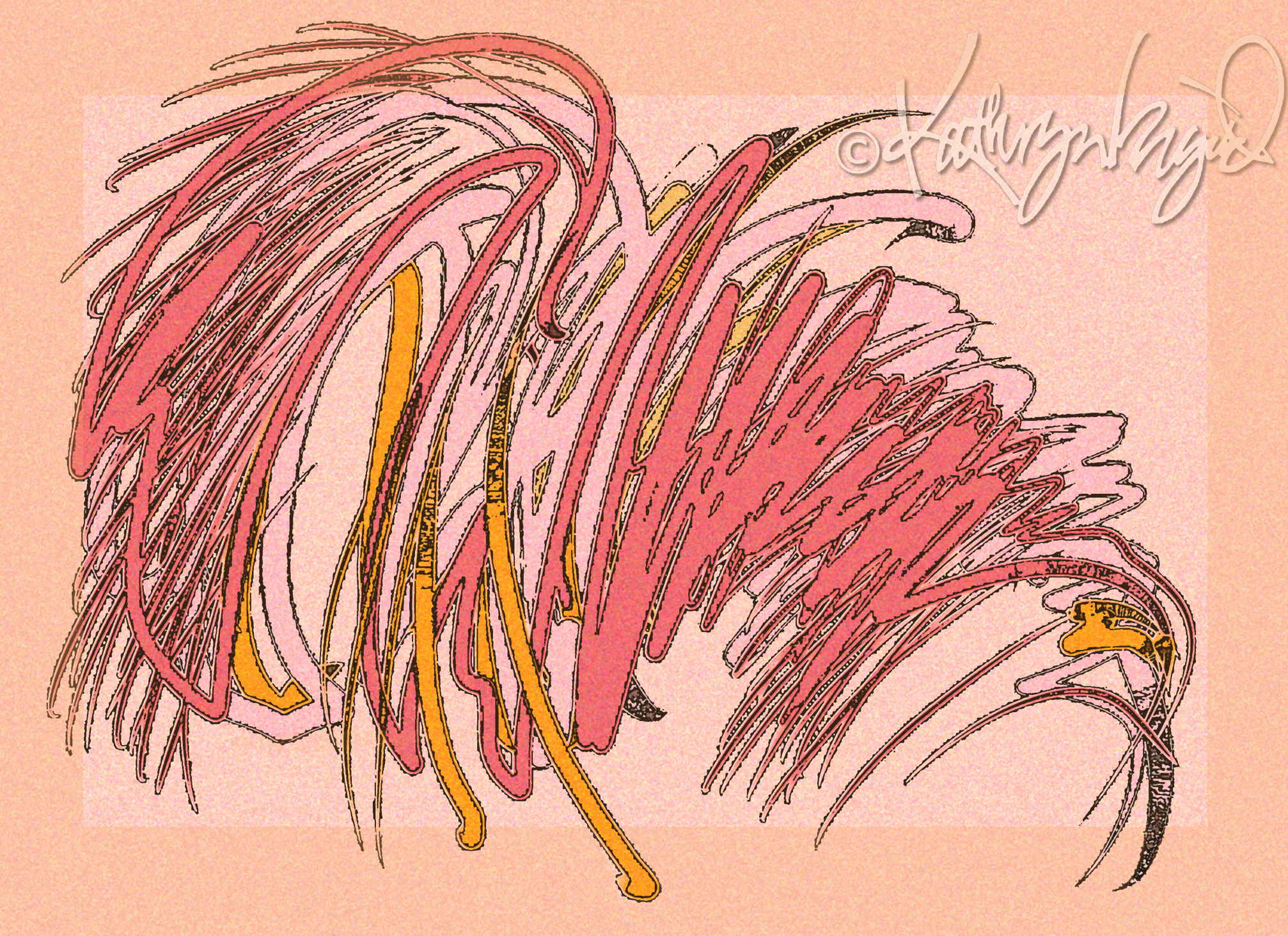
digital illustrationHere’s the thing about flamingos: they’re living contradictions. They’re some of the least altered descendants of the dinosaurs, yet in the twentieth century they became icons of modernism in art and design in large part for the very strangeness that ties them so closely to their ancestors. In the span of that surge of popularity, they also had both the high-cultural cachet of favored subjects in Art Deco’s glamorous creations and the lowbrow delights of trailer park plastic lawn decorations. The elegant long necks, graceful broad wings, and that magical coral hue of their plankton-painted plumage are counterbalanced by rather gawky squawking voices and oh, my, what an unattractive smell.

Here’s another thing: we human-types tend to have a certain ambivalence about many things in our lives and appreciate that the world is far from simple. So it’s not surprising that many of us should find flamingos fairly intriguing and compelling. They’re kind of weird. They’re sort of good metaphorical stand-ins for us.

I’m fond of and amazed by birds. I’m particularly drawn to raptors and songbirds, but truth be told, I wasn’t so taken by flamingos, and when I got to spend a tiny bit of quality time in their presence in zoos or parks, I was amused by their seeming clumsiness and more than a little taken aback by their stink and noise. Guess you won’t be surprised, then, to know that when I had a little time to reflect on it–well, it was my own reflection I saw. I’m still thankful I’m not an actual flamingo, since people mostly don’t laugh openly at my foibles when in my presence, and hardly ever tell me to my face that I’m stinky. All the same, having that little picture stored in my mind is useful. I may still be slightly ridiculous, in my stumbling, silly way and with my imperfect voice and showy but eccentric ways, but I guess if flamingos can be such wonderful and iconic beings with all of their oddities, why shouldn’t I, too? Flawed and goofy I may be, but I’m an amazing creature of my own kind.