


 I Sing for Love
I sing for love of singing, For music, sweet and strong
That carries me from joy to joy, Amending every wrong—
To hear clear voices ringing Across the dawn of day
Makes purest gold, without alloy, My every waking way—
As day approaches evening, A lullaby, at last,
Gives night delight, believing As I do that in the vast—
Infinite—constellation Of voices in the night,
I will find deep communion With the song that sets me right—
I sing for love of singing, For in the choir’s heart
Is all the song of blessing That I longed for from the start.
 Hours into Seasons
There’s a sweetness in the morning when the sun has yet to rise
And the blooms lie, still unopened, under sleeping butterflies;
When the stars still wink and glimmer, while the frogs yet softly sing—
There’s a sweetness in the morning that is like the breath of Spring.
There’s a graciousness at midday when, amid the racing streams,
All arise and put in motion yesterday’s profoundest dreams;
When the past its chains has loosened on the race of all alive,
That in joyful forward motion we, like Summer, grow and thrive.
There’s a calm amid the evening when the birds come to the trees’
Respite from the day of flying, echoed by our evening ease;
When the cares of noon have lessened as the dusk swept into place—
There’s a calm amid the evening, peaceful as the Autumn’s grace.
There’s a beauty to the nighttime, glorious and peaceful bliss,
Treasured for the kind renewal of the souls that rest in this
Cradling darkness and this languor, in this place of mending rest
That, like Winter’s dormant healing, lets us wake refreshed and blessed.
I would take these hours’ presents as my guide through seasons long,
Through a lifelong path that’s pleasant as a choir’s finest song;
I would be a seasoned traveler, happy above everything,
If my song could last forever,
Summer, Autumn, Winter, Spring.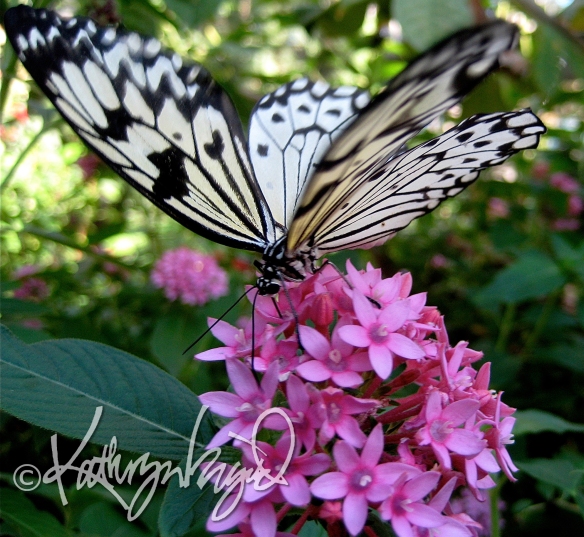
High Holy Hilarity
Those who learn to love with laughter
Will best live Happily Ever After.

Kids have an amazingly flexible sense of time. The week at the lake, playing with cousins, is so shockingly short that the suggestion of leaving there provokes crying fits of desperate sorrow over its unbearable brevity. The twenty-minute regular doctor’s appointment, with a quick squeeze from the blood pressure cuff and a thermometer swiftly passed across a healthy forehead, well that might as well have taken ten years, because the same child is now certain she’ll die in a matter of seconds from the prolonged trauma of it all.
But to be fair, isn’t this exactly the way we see time as supposed adults, too? I may not want anyone to catch me whimpering over the end of a holiday or the beginning of a doctor visit, but generally, I’m not less inclined to feel that way than I ever was in youth. The real difference, for adults, is that we have the perspective and experience to recognize the true brevity of our lives within the broad arc of time. We have, if anything, a deeper desire to cling to and attenuate all of the good moments and avoid the bad. It’s not childishness for a kid to abhor pain and sorrow and crave ease and pleasures, it’s an innate wisdom that tells us the clock is ticking.
I won’t tell you to stop wasting your precious time reading my blog posts, no, I am far from that angelic and selfless. But I hope that time thus spent is indeed a refreshment and pleasure, however small. And that, in the larger scheme, it serves to remind both you and me, if gently, to value our limited time of life enough to choose those things that reduce the ills of life and expand upon the joys—for self, for others—forever. Or as close to it as we can manage to stretch.
 Sing Now & Always
To celebrate at breaking of the dawn
Or close of evening, or the stroke of noon,
There is no sweeter pleasure than a tune
Well sung by everyone, an antiphon
To peace, to sorrow, or to happiness;
No matter what the poetry or text,
It truly matters most that what is next
Is choral concord to renew, redress,
Resound through all the unseen years ahead,
A clarion, an anthem or motet
Grander than any ear has heard as yet,
And run to distant history, a thread
Of melody and harmony so strong
That no one can resist joining in song
Honey Badger is not alone. Dead people don’t care, either. Even if they’re going to be reincarnated, they couldn’t possibly care less, I assume, about what anybody thought of them in life. The past is a lock.
What matters, if anything does, to the dead as much as to the living is what’s yet possible (if that includes reincarnation). The only way to get to the future, furthermore, is to be present in the present. All of the yesterdays that ever were can only be altered—at least without a time machine, which, of course, must be built in the present or future since there isn’t one yet, other than the hard to find Vernean one or the wonderful TARDIS of course—by improving the outcomes of those yesterdays in the present and future. Funny how that all works.
But what it tells me is that while I can (I very much hope) learn from the past, there’s no benefit in dwelling on it. And I don’t even think there’s much to be gained from living exclusively for the future. I’m not guaranteed one, after all. I could be caught unawares by a fatal disease, slip on a blot of mud and fall off a cliff, or be eaten by aliens tomorrow. And I can’t be sitting around knitting my brow and fretting over whether anyone will express admiration and gratitude for the wonderfulness of me after that happens.
I’d like to be way too busy until tomorrow, or whenever that cutoff time arrives, to expend any real energy conjuring up what grand eulogies I’ll get and what perfect art will be applied to my tomb, when I’ll be much too dead to care. Not to mention that whether I’m cremated [post-mortem, thankyouverymuch!] as I intend or it’s because there’s nothing left of me but my socks and hat after the aliens ingest me, there won’t be any need for a tomb. In any case, joy and contentment should be usurping all of the space that any such thoughts would aim to occupy. I prefer to think that I’m living out my eulogy, and lest it be of any interest to anyone but me, the most fitting one I can imagine would be that I was too busy living to sit around for a funerary portrait.
I know that I am loved. That is the best of all possible epitaphs I could possibly desire. And it’s a cheering enough thought to keep me occupied for as long as I get to be in the Here and Now. I guess my job is to pass it along to those in my immediate vicinity, my small orbit, so that they might be able to make the same claim.
 Boon Companions
When shadow steals across my eyes, when chill sits in my soul, when cries
Of hopelessness and bitter cold would turn me hard, regretful, old,
I turn my memory to when I cradled happiness, and then
Remember that what shaped me so was love, the kind I came to know
From those great luminaries whose wisdom it was to seek and choose,
From the remotest needful place, pursuit of happiness and grace,
Who told in kindly, teaching voice that peace and joy are bought by choice,
That when the frozen dark descends, we’ll find our light
among our friends.
 To the Astonishment of Angels
Where in the wilderness of life an adumbration points the way
From our benighted place, our strife and sorrows, to the sun of day,
A banner flares out on the breath of some great strength to give reprieve
To wearied lung and heart, from death to lift us to where we believe
Once more that goodness lies within, that kindness is courageous love,
That generosity’s akin to calling stars down from above
And handing them to needy souls to light their way to higher ground,
And that small songs pierce blazing holes in prison walls with their mere sound—
Here in the bitter night and cold, when such a beacon lights a spark
To guide us forward, as of old, let us rise up and leave the dark
And carry all our fellows, too, to those bright, grand palatial places
Where in the wilderness the true angelic joy renews its graces.
 While I’m closing out an old notebook that I kept in blog form a number of years ago, I found yesterday’s post and this companion one. So what the hey, I’ll share this one with you, too.
Let’s stop all this rubbish about Depression as a romantic notion.
The myth of suffering being necessary to ennoble the spirit or, more commonly, to shape creativity and artistry and the personalities that foster them, is an inaccurate and unhealthy construct that belies the potential power of sanity and contentment. The idea that much of the great art that has sprung from the work of troubled or diseased artists throughout history would have been impossible, or the artists Not Themselves, if they’d been well or happy is simply a gross assumption of the inflexibility of the human spirit at best, and an insult to mortal intelligence, invention, and character at worst.
In a telling moment of literal as well as figurative turning-on of the lights, participants in a 2004 Canadian study on Deep Brain Stimulation as a possible treatment for otherwise-untreatable depression noted that the world became a visibly, physically brighter place when “area 25”, or the central zone of depression response in their brains, was stimulated to relieve depression. Many of the patients described a distinctive, even poignant, instant of pleasurable shock when the electrode stimulation, suitably placed, flooded them not only with unaccustomed sensations of contentment and ‘rightness’ in their world but also a clearly discernible brightening of their visual perception. It was as though, one commented, he had suddenly remembered a whole range of colors and values and sensory impulses and emotions that had been locked away for decades.
Nowhere in this was there any indication that the participants in the study experienced a negative change in their self-concept when their depression was eased. No mention is made of the patients losing their creative impulses or intellectual depth. Not a note of regret or sense of personal diminution.
The breezy optimist, on the other hand, is not by definition dimwitted or shallow or uninspired. While cultures that have embraced a darkly Romantic mythos of the suffering genius tend to dismiss brilliance that emerges from happier sources as a fluke or as slick, glib cheapness that won’t withstand the value-test of time, many stars and their accomplishments defy those definitions.
Yes, depressed, manic, even twisted and tortured souls with the deepest of psychological, physiological, or chemical-addled warps and wounds have been the vessels and sources of high art and equally high drama, but they are far from alone in that. To say that they only achieved their greatness because of their damaged state is a cruelty, an insult, and a cop-out that says we all could not be greater than we are, if not equally “gifted” with darkness. If being let off the hook ourselves is what we seek, then let’s just be honest and say we don’t relish the burdens of effort and experimentation and get on with other things. I have a suspicion, as it is, that if there’s a notably higher percentage of mental illness among persons who could be classified as particularly ‘creative’, then the cause/effect relationship is one of persons being used to having to problem-solve their way out of unusually difficult circumstances on a regular basis, and so developing stronger problem-solving (read: creative) skills.
Meanwhile, cheer up! Look at the dazzle that being joyful brings. See the energy and wit that, when not wasted on grief and moroseness and morbidity, can be devoted to pursuing greatness instead, and run after it with childlike delight.
 Art-Colored Glasses
