Nothing Wrong with Stating the Obvious

That which is ubiquitous in my life, the thing that I walk by every single day or experience every time I am in a particular, familiar setting, can become invisible to me. For good or ill, I can forget to notice anymore those things that are so close they could bite me on the nose before I paid proper attention to them. They might be so near I could change them for the better with little effort or they could, if I’m too foolish to do that, turn on me and make my life or someone else’s immeasurably worse for having been left unchanged; good things, conversely, can be so near that I could be uplifted by the mere thought of them if I only gave them a thought in passing.

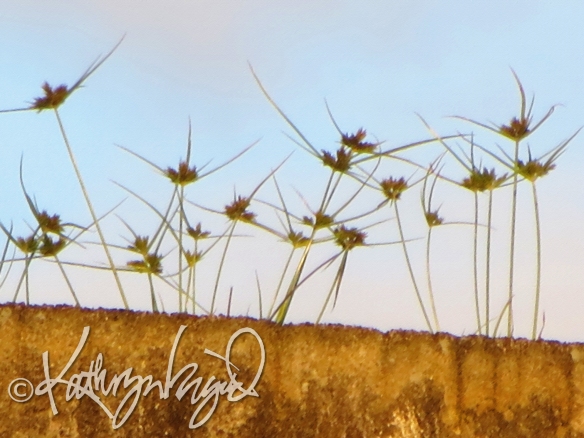
I must pay better attention. My senses should be enough to remind me of all the woe and wealth that surround me at every turn, and my will should follow my convictions enough to make me respond with a hand of aid, a voice of change, or a heart full of admiration and gratitude. The vast majority of the world hasn’t nearly the kind of wealth and privilege that surrounds me in my life—materially, yes, but also in health, safety, opportunity, hope and happiness—and while there is no reason to reject what I have, it should motivate me to take a closer look around me. I ought to take constant inventory and be willing to counter the wrongs and repair those things that I can, or at the least, call upon those who are able to make positive change. And I should be glad at every sign that states the obvious good in my life. Thankfulness is a small enough part of true mindfulness, but looms large in the world of well-being.Photo: Stating the Obvious

Discretionary Fun

Digital illustration/drawings: Mood & 'TudeI get the impression that some people treat non-work times as the only times when they’re allowed to be happy. I do understand the need for income that can drive one to spend time in a job that doesn’t fulfill any other need or desire in life, and many of those are in the least-compensated positions at low-paying employers’ as it is. Been there, done that.

But I can say, too, that the greatest misery in my work life was attitudinal, and the more I did to discover and avoid the things that made me unhappy in my work, the less miserable I was. The more I sought to learn what I enjoyed in work and chose ways to magnify that, the closer I got to contentment both at and out of the workplace.

I grew more cognizant, at the same time, of not wanting to waste precious time on work that challenged my inner playfulness or threatened my general sense of joy and purpose. I was given a great gift in being able recognize the longing and accept and pursue it by choosing a much lower-paying job (on paper, at least) with a great happiness-quotient. I’ve seen, over the years, that many of us are easily misled when we try to calculate what we think we need for our daily expenses, and how much it costs us to earn that. Yes, we get those paychecks, but if the job requires, say, clothes that we wouldn’t wear other than at work, child care, transportation, professional training and memberships, and that sort of thing, how much pay on an annual or monthly or hourly basis does it really cost to go beyond paying for those, at least far enough to keep a roof overhead and food on the table as well?

Nobody knows this awful kind of math better than the working poor. I’ve been in that category more than once in my life, but have always had safeguards others lacked—like friends or relatives from whom I could rent living space more cheaply than I could even a minuscule, run-down apartment in a scary part of town—so I also know that I am luckier than most. Now, when I am married to a person who is not only able to make enough income to support both of us but is willing to do so, I am among the most privileged and fortunate of creatures, and I know that, too.

But one of the best things I learned along the way when I was living on a very slender, sometimes sporadic, income, remains valuable to this day: if I spend so much time and energy on just ‘getting by’ in life and don’t put forth equal effort to enjoy, live, and love my life along the way, all of the pennies I earn are of little value at all. And while I can’t always afford the most thrilling and glamorous ways of keeping myself amused, especially when I do need to be working at any task or job, I had better find the simpler and cheaper ways and the most reliable ones to fill my life with happiness and contentment, I know by now that surrounding myself with people I love, admire, enjoy and respect is the very best solution. And if my job doesn’t allow for that kind of happiness and contentment, then it is costing me more than it pays, in the end.

Sometimes It’s Hard to Tell Who’s Giving the Gift and Who’s the Recipient

I have been taught that it’s polite to accept generosity with good grace: say Thank You, show proper appreciation, and humbly know that even when you think you don’t need or want the gift, it is your turn to show kindness by recognizing its significance to the giver. That doesn’t mean I’m terribly shy about ‘re-gifting,’ or passing the gifts along to someone I think will better appreciate and use them, eventually. It also doesn’t guarantee that I’m entirely alert to when I’m being presented with something valuable and meaningful. Even when I’m fully aware of my undeserving, I’m not exactly a genius at generosity myself, let alone fully attuned to how much I am given and how often.

Take the times when I am being thanked with gifts for doing things that I should have done as a matter of course, and often have done very grudgingly at that. I have always been a poor excuse for a visitor, supporter and caregiver, being intimidated and squeamish and easily unnerved by others’ needs and ailments and trials. I was terrified of visiting my own grandparents when they were old and shut-in, unable to be the people I had known in their healthier and more mobile and cogent days, and could rarely face the strangers that they had become, let alone the alien and frightened person I was myself in their presence.

Long before those times, even, I was both younger and less experienced or brave, if you can imagine anything yet more craven. My parents had always taught me by example that care and compassion, generosity and hospitality and respect, all of these were essential life skills and characteristics that should be nurtured and cultivated through consistent use. And I never got good at any of that.

Once, when Dad was making a hospital call on a parishioner who was dying of cancer, it happened to be when Mom and I needed to be along with him for something later in the day and it wasn’t convenient for anyone to be shuttling back and forth multiple times, so Mom and I rode along. Somewhere on the trip I realized or was persuaded that I should join both of them in visiting this man who was a stranger to me, rather than sitting and waiting in the car on a cold, damp day in the first week of December. I’m quite certain that I was both reluctant and frightened to make this visit, parental support notwithstanding. I’d never seen a person so near to death, and his being unknown to me did nothing to ease my fears; if anything, my perpetual social anxiety probably spiked to all-time highs at the thought of meeting someone new just when he was about to die. I’m quite sure that I wasn’t mature enough to recognize that this was a clear instance of the occasion being ‘about’ him, and not about me at all.

I remember rather little of the actual visit, only little bits. I had met this man’s wife once or twice, so I suppose we exchanged some small talk about that acquaintance. He asked me about my interest in art and shared that, while he’d had some entirely different sort of day job, he’d always had a creative urge and had made many small stained glass pieces as a fond hobby, something I gathered he sold to make a little pocket-money at times. His inquiry about what was happening in my own life just about then eventually revealed that the anniversary of my birth was approaching just as the end of his life was to come.

He was a pale, yellowish creature after cancer had defeated most of his bodily systems and all of his treatments, bloated but in an empty way; an airy husk of the man that had been, now nearly ready to blow away. His hospital room smelled just like hospital rooms have always smelled, overlaid with the added imaginary pall of looming mortality. I wasn’t a baby—I understood well enough that his sort of death wasn’t contagious—but I couldn’t help itching to escape all the same.

When this pallid wraith offered me his dry, cool hand I took it in mine and held it for a while as he and my parents continued to talk softly about more needful things. I did my best to give the appearance of better bravery than I had, if not compassion, and still he showed me more sympathy than I expect I did him. He thanked us all quietly for the visit as we left, and I was too immersed in trying to console myself over the sadness and discomfort of it all to realize that it was he who had done the kindness.

I heard in just a few days of his death and thought with some melancholy of how sorrowful it must have been for him to face it, and for his loved ones to cope with its eventual, if expected, arrival. Only a couple of days later, I thought of him again.

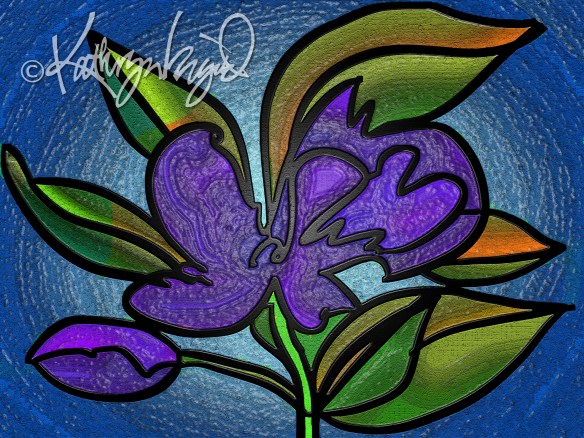
It was my birthday, and among the presents I received was one small package that was not from a family member. My parents told me that my acquaintance had asked his family to see that I be given this gift as a token of his gratitude for my visit. It was a table-top stained glass flower he had crafted sometime back when he still had the strength and skill to make such things. The little blue flower bowed gently on its wire stem, and I was abashed and moved by it.

This was a delicate token of real grace. It made a fine representation of that goodness, its glass petals and leaves letting light filter through, its slender stem so fine, yet resilient enough to spring back upward when pressed. It was a flower that stubbornly refused to wilt, even when it was a post-mortem gift from a virtual stranger. I don’t know, after all of these years, precisely what happened to it or when and where it disappeared, but I kept it for a very long time indeed and found in its simplicity a constant reminder that the little things even a reluctant and weak person might do in the name of duty or expedience or, however hesitantly and ineptly, for kindness’ sake, might in the end have some power. That this power is not our own matters less than that it can change the course of the moment, or sometimes, perhaps, even make a difference in matters of life and death.Digital illustration: Stained Glass Flower
My Misfit Brain

Digital illustration: My Brain is an Alien

Unknown's avatarA Holistic Journey

One sunny afternoon I went to a family and friends’ celebration, and I wanted the earth to swallow me whole. I’d that very week been diagnosed with clinical depression and anxiety; nobody there knew. Those at the gathering were celebrating religious and political beliefs that were virtually opposite to my markedly less conservative views. I was invited as a relative, and never knew if they really thought I shared their views or if it just didn’t matter. There was a lot of Bible reading, text interpreted to support favorite right-wing politicians. Many emotional speeches on the rightness and beauty of the group’s beliefs also implied that divergent views were stupid, evil or both. I wished I could disappear.

Mental health problems are inconvenient, messy, embarrassing. Incompatible philosophies and tastes, maybe even political or religious views, are sometimes socially acceptable as matters of personal leanings. But being exceedingly depressed or anxious?…

View original post 325 more words

I am Moved

Photo: Where the Wind Takes MeTransportation

These days, a gentle breeze is quite enough to take me down,

to knock me senseless to the curb, to blow me out of town,

or out of countenance, at least—but if I am astute,

I’ll let the breezes blow and take me down a different route.

Why should I let a breath derail my happiness like wrath,

if I can take it in my sail and find a different path?Photo: The Winds Bend but Do Not Break Me

No Surprises Here

Digital Illustration from a Photo: Baby Carriage

Kids have an amazingly flexible sense of time. The week at the lake, playing with cousins, is so shockingly short that the suggestion of leaving there provokes crying fits of desperate sorrow over its unbearable brevity. The twenty-minute regular doctor’s appointment, with a quick squeeze from the blood pressure cuff and a thermometer swiftly passed across a healthy forehead, well that might as well have taken ten years, because the same child is now certain she’ll die in a matter of seconds from the prolonged trauma of it all.

But to be fair, isn’t this exactly the way we see time as supposed adults, too? I may not want anyone to catch me whimpering over the end of a holiday or the beginning of a doctor visit, but generally, I’m not less inclined to feel that way than I ever was in youth. The real difference, for adults, is that we have the perspective and experience to recognize the true brevity of our lives within the broad arc of time. We have, if anything, a deeper desire to cling to and attenuate all of the good moments and avoid the bad. It’s not childishness for a kid to abhor pain and sorrow and crave ease and pleasures, it’s an innate wisdom that tells us the clock is ticking.

I won’t tell you to stop wasting your precious time reading my blog posts, no, I am far from that angelic and selfless. But I hope that time thus spent is indeed a refreshment and pleasure, however small. And that, in the larger scheme, it serves to remind both you and me, if gently, to value our limited time of life enough to choose those things that reduce the ills of life and expand upon the joys—for self, for others—forever. Or as close to it as we can manage to stretch.Digital Illustration from a Photo: Carousel and Other Horses

Tough as Nails

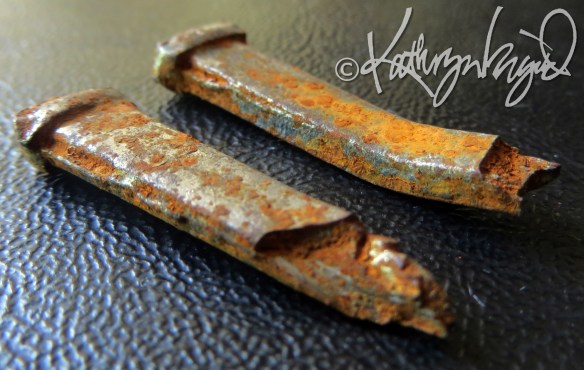
Photo: A Little Rusty, Maybe

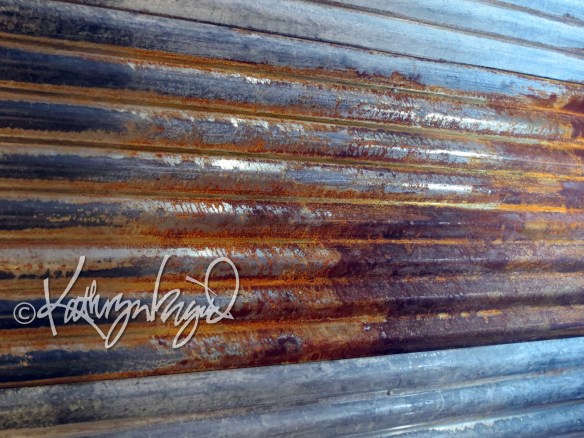
I may be getting a little rusty and weathered, but I’m just happy to be aging.

I’m managing to age. I’m glad. Though I’ve never had such a deep fall into my depressive and anxious episodes as to become suicidal, I’ve had times when I feared it might be hard to keep living, instead retreating into agoraphobic hiding in perpetuity. Those times, I am so very thankful, have been rare. They’re long past, too.

A couple of months ago, though, I had the first of some subtle indications that my longtime sense of shining wellness might have some tiny cracks forming in its foundations. A creeping unease entered into my confident good cheer. When I was first diagnosed and treated back then for my anxiety and depression, I had the strange sensation of learning what it felt like for my symptoms to recede, one by one, and as they did, I realized that the way I’d felt and the whole way I’d understood myself for all of my life before then, was in large part a collection of symptoms. Underneath it all was a different, happier and healthier self I have relished getting to know as I was unmasked by this progress.

I won’t lose that self again readily. I made tracks for the doctor’s office to talk about my options, because I don’t ever want to be held prisoner in that not-me state again. We’re checking my general health, the doctor and I, and plotting a course for reinforcement of the new-and-improved me while combating those things that threaten in any small way.

My greatest reassurance comes from living with the life partner who never ceases to love and support me for better, for worse, in sickness and in health. Backing him up in the task are the many relatives and friends upon whom I also depend. But I’ve come to realize that I have another resource on which I’ll be depending in this adventure. Surprisingly, that defender is me.

See, I understand now what I didn’t and couldn’t back in the day: I could never have made it to my first depressive crash and subsequent healing if I weren’t pretty tough inside. I have always thought of myself as shy, timid and easily cowed, but the truth is that if everything that seems ordinary and normal to other people in the everyday scheme of things—meeting a new person, answering the phone, taking a class—seems infinitely harder to a person with anxiety disorder or the chemical imbalance that causes chronic depression, then I must be stronger than I thought.

I’m planning to win. I don’t expect it’ll happen overnight, let alone permanently, but with my personal army at my back and the right attitude and resources of my own, I think I have a good shot at it.

Photo: Tough as Nails

For a marshmallow, I’m actually tough as nails.

Remembering Them All

Memorial Day is a US holiday begun after the American Civil War to recognize and honor the service and sacrifices of soldiers killed in the line of duty.

I have an immeasurable horror of war and every single thing associated with it.Photo: Memorial Day 1

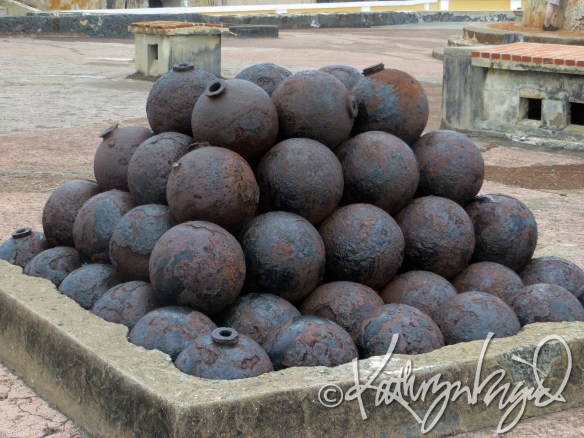
But on our recent visit to Puerto Rico, as we were walking around the museum ruins of  a fortress in San Juan, the Castillo San Felipe del Morro, looking at the remains of its heavy battlements, at its cannons and their tracks in the gunneries, at the sparse quarters of the soldiers who served there, and at the museum signs telling the stories of El Morro’s past, I remembered too that the vast majority of the people who are involved in wars hate them as much as I do. War is chosen and declared by a tiny minority in even those bands or nations that instigate the wars. The rest, soldiers included, pretty much have it thrust upon them, and I can’t imagine anyone who dies in battle had any desire to do anything other than to defend or capture whatever or whomever he or she was sent to defend or capture, and go home peacefully. Even some of those who declare the wars and enlist willingly to fight in them probably often have done so with a sense of rightness, if not righteousness, in the cause.Photo: Memorial Day 2

I looked around the Castillo and, for all of its historical interest and the beauty of its locale and weathered stone walls, the birds and iguanas and wildflowers decorating it quaintly, what I saw was a memorial to the many lives lost, soldiers and civilians, natives and outsiders, adults and children, the good and the bad alike. All because humans aren’t famously good at sharing their world with each other and resolving conflicts without violence. I will always have a horror of war and all the loss of life that it brings.Photo: Memorial Day 3

But I am, honestly, grateful to those who have—willingly or not—paid with their own lives for the lives and welfare of others, and I remember them not only on this designated day but every time I pause to reflect on the high cost of peace for our oxymoronically named species, man-kind. Seems to me that there’s no better way to honor soldiers for their service and sacrifice than to end the potential for any more such work and eliminate all wars forevermore.Photo: Memorial Day 4

Ripple Effects

Community is a pool, a lake, an ocean. Having people around me means that every little atom of what I think, feel, say and do has the power to touch all of the lives peripheral to mine. That is immense responsibility. Unspeakable power. I may feel small and even rather insignificant in the scheme of the greater universe, but I know from the way that little things thought, felt, said and done by others move and shape me, regardless of whether their sources are famous or not, well-known to me or not.Digital illustration: Ripple Effects

Now that I’ve sensed the probability of my slipping toward a new round of depression and anxiety, I know full well that it’s important to me to arrest the slide and reverse my direction in order to sustain my own health and well-being. But I know, further, that it matters for the good of others whose lives intersect with mine, and that is a set of challenges and needs that should matter to me at least as deeply as my own. Yes, it matters to me if it matters to you. I’m nowhere near perfect or heroic, but I’d like to be as decent as I can manage. Even a small stone, skipped across the surface of the water, can create quite the motion in the stillest pond.

Bring It On

There’s that old saying about how ‘it never rains but it pours,’ and while I often think it’s true that troubles and trials seem to come in number rather than singly, I also tend to think that’s the sense we get because everything subsequent event’s difficulty is magnified by the one that preceded it. And of course, in a more literal sense, since moving to Texas five years ago during a period of general drought in the region, I would be inclined to say that it seldom rains enough here, let alone pours. Much as I might find minor inconveniences and even annoyances brought on by a rainy day, the more so if it’s stormy, I am glad enough of the needed moisture that I don’t hang onto any grudges against nature’s outpourings. Even on that persistently blinding, bleary day of storms when I took my turn driving toward home at the end of last year’s summer road trip I was more grateful than hateful regarding the dousing we received, and that’s going some for a nervous driver like me.Photo: Rain Storm on the Road

I am reminded these days, though, of the original frustrated character of the proverb and am working not to get sucked down into such a mode myself. There have been little hints from my mind and body that perhaps the decade-plus of grand good health and wellness I’ve enjoyed upon being treated for and generally freed from depression and anxiety and the nasty physiological symptoms thereof may be, like the moon in a spooky campfire tale, on the wane. I’ve avoided thinking about it much not only because it’s an unpleasant prospect in itself but also for superstitious fear that just contemplating such a thing makes it more possibly true. And at first, it was just those little, nagging bits of something that I couldn’t quite define as backsliding: a hint more tension when riding in the car, a touch more touchy about unimportant problems in the day-to-day, a stomach-ache when I get worried about a deadline….

But when we were at the airport the other day, waiting to board a perfectly ordinary flight to go to the familiarity of our own home after ending a week of (for me) unfamiliar and exciting travel that should have been the tough part of the equation if there were any, I had the horrible experience of an emotional meltdown in a panic attack. It’s been so many years since I had one that I almost didn’t realize what was happening and thought I had simply gotten a sudden illness of a more ordinary kind, and that would be irritating enough in its own way, but when I did connect the dots and know that I was losing all sense of control and well-being, the drop down that well was swift and obliterating. I am relieved that it was a relatively short-lived event, and I doubt many around me knew anything untoward was happening, but inside, I was a morass of terror, unable even to speak in quiet gratitude to my spouse for his patience. In the end, I got on the plane and, once there, cocooned with my scarf and went to sleep as quickly as I could, and that was that.

The speed and intensity of the attack, however, were enough to convince me that it’s now time to see the doctor and discuss what to do before I fall as far, and for as long, as I had in the past. I have no use for being that powerless and miserable shadow of myself ever again. I hate feeling almost perpetually nauseated, often breathless or dizzy, ice-cold and then broiling hot and then ice-cold again. I loathe feeling like I will burst into absolutely unwarranted uncontrollable crying at any moment. I abhor feeling like a useless baby. I despise feeling so sick and enervated and exhausted that I can barely lift my arms, no, can hardly croak out a word without wanting to keel over. I reject that version of me!

During our lovely week in Puerto Rico, it rained one day in the intense and intimidating and glorious way that a tropical shower can do. It was pouring thoroughly enough that we waited until the hardest pounding let up a little, popped open our umbrellas, and headed out knowing we’d get good and wet. I was glad of wearing both quick-drying summery clothes and open, flow-through sandals, because even with our umbrellas in full bloom and the rain somewhat lessened, within about two blocks’ walk we were seeing rivers race down the street and right on up over our feet. By the time we stopped in a coffee shop not so many minutes later, we were pretty damp all over and soaked up over the ankles. It was warm weather, and the rain dried very quickly indeed, and of course we long for that sort of bounty for our Texas landscape, so we rather enjoyed the novelty of it all. But I’ll admit that even knowing that the rain’s a tiny price to pay for the generous greenery of the tropics, I was delighted to see the sun again as soon as it arrived.Photo: Rainfall in San Juan

I can’t say what is the benefit of going through the floods of depression and anxiety. I can only hope that at least it teaches me to be more mindful of the many blessings I do have and to fight my way back up and out toward them as quickly as I possibly can. Perhaps, if I’m lucky, I will also be more sensitive to others’ struggles when I have been reminded how hard it is to keep perspective when one’s own brain and body absolutely refuse to bow or to cooperate with the tiniest and simplest, most logical of requests. All I can say for certain is that I am not planning to lie back and take it. You’re gonna rain on me, eh? Bring it on. Getting out my umbrella, yes. Digging up every resource I can find or imagine, done and done. Climbing up the side of the well with my own fingernails if I have to, rather than falling farther into it, see ya on the other side, pal. Bring it on.