The Character in the Sharkskin Suit

Intriguing, isn’t it, how what we admire in one we might fear in another; how sometimes a single characteristic becomes so entwined with our perception of the whole being that we are unable (or at least unwilling) to see the subject except through that distinctive filter.digital illustration from a photo

Take the shark, for example. We anthropomorphize its curved, elegant mouth and its very pointy dental array as a wicked grin because they form so ironically (we think) bloodless a ‘smile’ for an ideally designed killing machine, and subsequently we are content to identify those people whom we find wicked, bloodless, or murderous as Sharks. Never mind that the shark itself is simply being what it is naturally meant to be and doing what it is created to do. Never mind that, often enough, the person we are happy to affiliate with that same stereotyped vision may also be doing what s/he is naturally inclined, expected, and/or paid to do. If the person in question is good at carrying out dispassionate or relentless action, we’re likely to find a convenient metaphor in the shark.digital illustration

I have long thought, myself, that the mere mention of a character as being dressed in a sharkskin ensemble gave him an air of sangfroid that I suppose must have been similarly associated with the archetype of the coolly relentless shark. I, too, am apparently guilty of stereotyping the creature, and very likely in turn, the person. So it is: we are always looking for shorthand ways to describe and understand those around us.digital painting from a photo

But I would hope that I can also remain cognizant of those positive and laudable qualities that might also be anthropomorphically applied to a shark, and credit similar ones to my fellow bipedal creatures as well: swiftness, strength, tenacity, fearlessness, and a driving desire to move forward at all times. These are characteristics to which I can only aspire for the most part, never mind being as handsome and sleek as a shark can be in appearance. While I doubt anyone will tend to equate me with the supposedly shark-like attributes of cruel indifference or cold-bloodedness, perhaps I would do well to pursue association with those better ones and see if I can’t be identified with such admirable aspirations after all.

Bland Like Me

photo montageThe marvelous Diana of A Holistic Journey has been writing posts asking about the influences of race, culture, national origin, education, and so forth and the ways that they shape who we are and how we perceive ourselves. This series of hers is proving an outstanding eye-opening and thought-provoking exercise for me, too. I have spent most of my life living amid and being part of The Majority—middle-class, white, English speaking, native-born, educated, boringly predictable, etc, etc. There were a few touches of diversity around me here and there, of course, this country of the so-called United States being what it is, but those were relatively small and isolated, so mostly I grew up sheltered and unchallenged in nearly all ways.

Yet as an individual I came to know myself as being different in one way or another from most of what I thought of as the ‘norms’ of my own environs, and even learned over time that what I thought was my Majority milieu was mostly just my very narrow path through it in life. While a lot of my classmates, immediate neighbors and friends when I was a kid, for example, were also little pasty white critters like me, the friends I remember best as seeming most interesting to me were ones like Eha, the Estonian girl, or Karen, one of my few black classmates, or the Japanese friends who shared exotic treats from their lunches and who performed classical Japanese dance in a miniature celebration of the Cherry Blossom Festival at school. I have hardly any memories so suffused with longing as that of watching the girls flutter their fans, while dressed in exquisite kimonos and dancing their stately, courtly dance to the strains of the tune ‘Sakura’, which melody in turn still fills me with delicately melancholy love.

My ideals of human physical beauty, as my husband and I have often noted musingly, are nearly all attached to non-whites or mixed-race people, not something I think of as a conscious or intentional choice but a persistent reality for me ever since I can remember. My superficial list of Most Beautiful People would probably have a paucity of caucasian members among its top fifty. While I have never been either very adventurous or flexible in my choices and tastes and experiences, I suppose I have always been fascinated by what seemed different or even exotic to me. I am a fantasist and a romantic in the cheap, popular versions of those ideas, I guess.

I have even wondered, in a broader sense, if part of my very nature is simply to feel like an outsider for no very specific reason. I was always shy, and learned as an adult that this expressed not only a naturally introverted character on my part but also demonstrated lifelong social anxiety and probably the incipient state of my developing depression that didn’t come to full fruition until later. Those, along with undiagnosed dyslexia, tremors, the dysphonia that came into play in my forties, and who knows what other quirks of my unique persona and biological makeup, could perhaps explain why I never felt I fit in with any particular group or was especially central to its character. But I still can’t say I felt consciously sad or was overtly unhappy or removed or, certainly, ostracized for any of this.

What was odder was that as I reached adulthood and gradually began to find a more comfortable sense of self and direction, I have a feeling I may have chosen to put myself into groups where it was plain that I didn’t quite match the norm, specifically because, if I knew there was no possibility of my being an exemplar in its midst of the highest standard, I might unconsciously feel safe from being expected to be so by anyone else. This might be complete nonsense, but it gives me pause. In any event, I spend a great deal of my ‘quality time’ nowadays in the company of people who are immersed in and even expert at music, pedagogy, administration, and a number of other topics in which I have no training whatsoever and only a very little observational knowledge, and I am very happy in this environment.

Conversely, I tend to keep my company of good visual artists and writers and others with training or knowledge more likely to be similar to mine at the seemingly safer arm’s-length of cyberspace, and that probably doesn’t reflect well on my personal fortitude. I never did, at least, make any claims of being any better than a big ol’ chicken. Being a scaredy-pants is probably not race-specific. Or attached with any particularity to culture, social stratum, nationality, educational accomplishment, religion, language, income level, or anything else in question. Being a scaredy-pants is just part of being myself, and the unique combination of qualities and characteristics that make up the wonderfulness of Me.

On the other hand, being attracted to, frightened by or otherwise connected to or dissociated from people who are Not Like Me is a central consideration of understanding how the human species works. Or doesn’t. And there’s no doubt that all of those things influenced by proximity (physical or metaphorical), the aforementioned race, culture, social strata, and so forth, are very potent indicators and influencers of how we will experience the concept of Self and Other at any level.

So what does that ‘solve’ about me, about how I feel about those who are or seem in any way different from me? I’m still not at all sure. Perhaps the best I can say is that my feeling of being, in a value-neutral way, unlike those around me makes me unwilling to assume much about them, in turn. I would generally rather let personalities and individuality be revealed to me and my understanding of my surroundings at the moment unfold in their own sweet time than that I jump in and make any precipitous assumptions. I’m perfectly capable of finding lots of other ways of being wrong and making a fool of myself without constantly worrying over whether I’m being judged, rightly or wrongly, as a stereotype of either the majority or the minority on hand.

Most of my blogging friends and acquaintances are significantly different from me in nearly all of the aforementioned identifying categories, and yet I feel remarkably at home among you. So I’ll let you decide if sameness or difference affects how you see me. I feel at home, and that’s good enough for my part of the bargain.photo montage

It’s Always The Other Guy

I prefer not to think of my own guilt or culpability if there’s any way it can be avoided. Surely this is a universal characteristic in my species, but it doesn’t make that admission any pleasanter. It’s lousy enough to think of myself as being quite so continually fallible and messy as I am without having to admit that it’s probably avoidable much of the time, and definitely not something I should just let slide or pretend I don’t have to attempt to amend. Being imperfect is crummy enough in itself, and when I look at my shortcomings and think of what I should be doing to let go of them and, presumably, to repair their damage, it’s more than a little bit overwhelming.digital illustration

It’s all well and good to sit and read a rip-roaring murder mystery novel and cluck with self-satisfied disapprobation at the terrible things those awful people do in it, but if I think I’m all spiffy-clean and untouchably innocent I’m just as deluded as any. I may take some delicate form of self-righteous umbrage should anyone dare to note that I’m not so much better than the petty criminals I love to decry in that movie I just saw, or to think myself piously, wonderfully holier than the lowlifes on the evening news who have done Such Terrible Things I can hardly bear to mention them, but what I conveniently disguise to my own satisfaction as trivial and wholly excusable imperfections might just as well be the crime of the century if they harmed another person or set something in the world off kilter, however indirectly or unintentionally.digital illustration

While it galls me beyond words to see other people painting over their own horrible inward rot with every excuse in the book or, as is the amazingly popular pastime among our kind, by blaming everyone except themselves for whatever’s wrong in the world, I hate to be reminded that I so often do the same. Mea culpa is easier to say than the plain truth of it in my mother tongue: I did it. I was wrong. I am sorry. I will endeavor to make this right. But at some point, whether all of the Other Guy suspects are ruled out or not, my own guilt should find me out, and I should be willing to stand up and confess.

If I don’t, my beloved sisters will eventually remember what I got up to ‘way back when we were small, and will finally tell on me. And I’ll have to admit to everybody that I was really hoping someone else with a slightly itchy conscience would’ve stood up and taken the blame for my stupidity and wrongdoings before I had to come out into the spotlight. Well, I did it. Whatever it is, I’m pretty sure I was the rotten fool that messed up so royally, and I do apologize. The truth of it will surely be revealed. I hope you’ll be gentle with me, as it’s just possible you know how it feels, too.

Yet More Advice-to-Self

text

text

digitally doctored photo

A Couple More Things I Tell Myself

…since I seem to be in the mode of self-improvement. Or, more likely, just talking to myself as usual…photo + text

text

Best Day Ever

There are lots of jokes and stories that capitalize on the idea that dogs, in their seemingly endless optimism and enthusiastic belief that practically every moment of their existence is the best of its kind. I’ve never lived with a dog as my consistent companion, but I’ve been around other people’s dogs, and seen the people owned by some additional dogs, and it all tends to confirm that quality of canine character. And frankly, that seems to me to be a perfect attitude to emulate, whether you belong to a dog or not.digital illustration

I may not have the sort of tail that lends itself to wagging with happiness at life’s goodness and I certainly am not the kind to show my appreciation for such things by jumping up to lick anybody on the ear, but I should at the very least state my admiration for what is fine and good and pleasing so that they can know how highly I esteem such gifts. Life, no matter how a dog might enthuse over it, isn’t perfect, and it has its flaws and less than ideal moments. So when the great and admirable happens, I should jolly well share the happiness and let others in on it. Short of barking and running around in circles dizzily, I think that can be appropriately expressed in ways that let other humans in on the secret.digital illustration

Happiness, whether doggy or human, is best shared, after all. And from what I’ve seen, when dogs and humans can be happy all together, that can be quite the extravaganza of joy indeed. If you feel like it, go ahead and lean back and let out a nice little howl or two of celebration right along with me, and I’ll race you to the sidewalk and back!

Things I Tell Myself

photo + text

photo + text

photo + text

photo

…and whatever you do, think of your glass as half full. You’ll tolerate your self-criticism better, put it to more positive use, and still remain thirsty for truth, goodness and happiness.

Kick Up Those Heels and Run

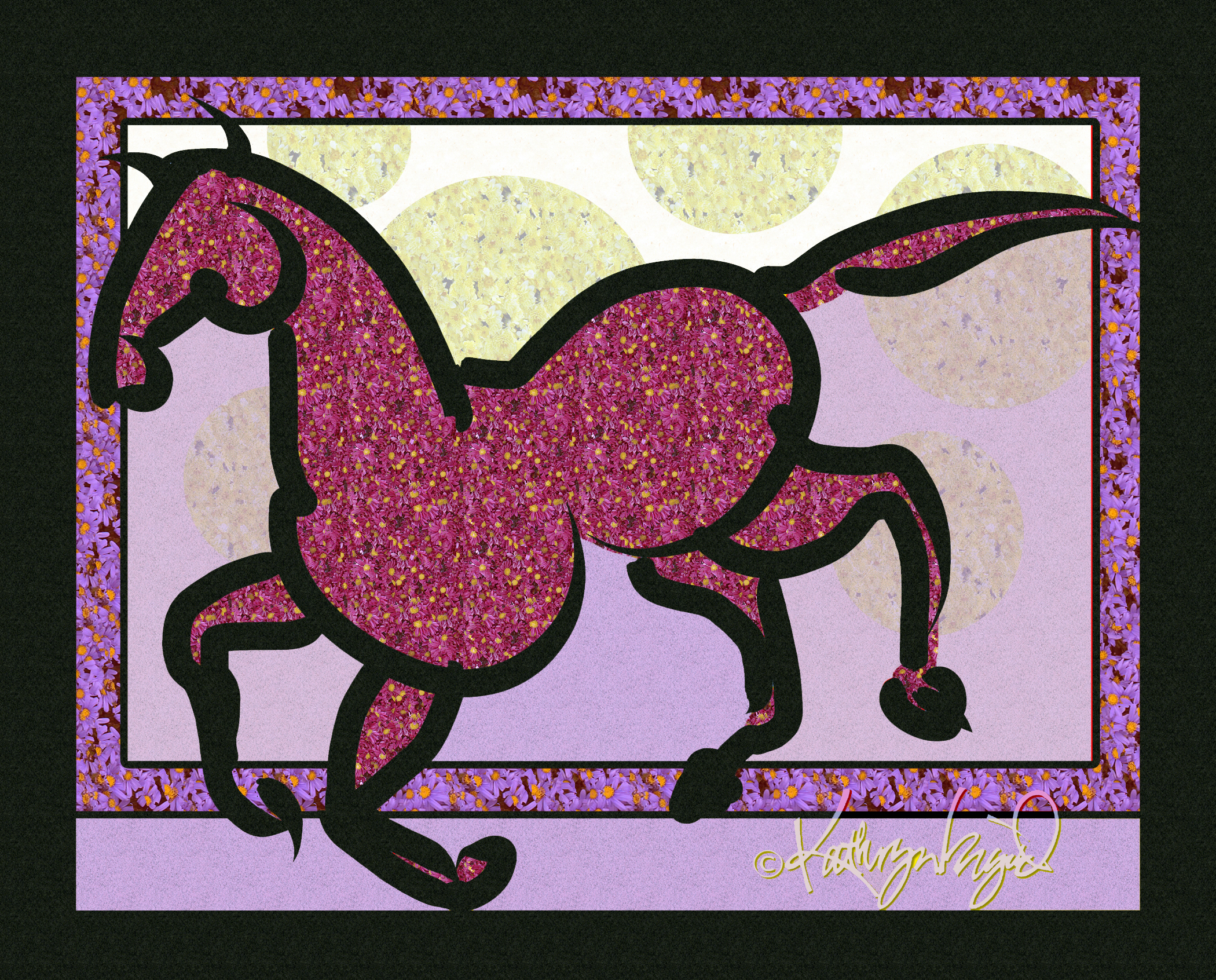
I was watching a television interview with a couple who had just come in from horseback riding on their beautiful Montana acreage. The man was walking his horse to the gate the woman rode up, dismounted and pulled off her horse’s tack. Both horses were beautiful, healthy and contented looking animals, and clearly had bonds with their riders. But when the woman took off that bridle, the mare kicked up her hooves and ran into the pasture at top speed, rocking like a foal over the tussocks with her tail streaming behind her.digital illustration

There was no sense that she wanted, let alone needed, to get away from her Person. Still, she seemed to relish the unencumbered moment and revel in what she could do all of her own volition in it. And that, I think, is a wonderful thing.

Shouldn’t we all remember, from time to time, to throw off the traces of what we must do, throw our propriety and responsibility and all of the trappings of expectation and normalcy and Requirement and just cut a little caper? Isn’t there a reason we are capable of being free, adventuresome, unpredictable and happy? I’m pretty sure that the earth will not stop rotating on its axis if even the most high-powered and busy, the most seemingly essential and useful people on it, actually get out of harness once in a while and take pleasure in the moment with childlike innocence. And I’m even more sure that once anyone has taken the break that offers such a sense of independence, ease and simple happiness, he/she can return to work as a healthier and more productive person; whatever might have been missing or diminished in the time of absence is caught up and refreshed, right along with the person who does it all.

What could be better than to return to our day-to-day Normal life refreshed, renewed and recharged because we dared to demand a moment of freedom and playtime! Yes, we do have to demand it. It’s almost unheard-of that anyone would hand any of us a one-hour holiday, let alone a day or two. Why should they? Every one of us has a whole list of things we need, or at least want, others to do for us, so we aren’t likely to cut each other a break from supplying our wants and needs unless and until they buck their bonds, too.

It won’t do to be rude and selfish about it, but I would advocate for our all keeping our eyes open and ears pricked up so we can notice any opportunity to stand up for our good health and happiness. And take it. And take off with it!

Out of Context, Out of Luck

digital illustrationIt’s no secret that I’m ‘bad with faces’. I struggle with what I know is only the mildest of cases of Prosopagnosia, but even my minor jot of that pestilential face-recognition inability causes me occasional discomfiture. More importantly, it has occasioned a moment or two of awkwardness for others when they approach me, knowing that I know or have at least met them, and I fail to recognize them or even register that I saw them quite recently.

I went to a family wedding once and, seeing a cousin I’d not seen often in our adulthood but knew very well in our youth, effused to her on reconnecting. And then I proceeded to do exactly the same with exactly the same cousin at the reception, not an hour later. I knew that I knew her and that she was my cousin, thanks to the occasion and other basic clues, but literally could not see that she was the same person with whom I’d just rejoiced in renewing contact. Even in this obvious setting I failed to see what was as plain as the nose on my face, never mind the should-be-familiar one on hers. My own cousin.

I am enormously thankful that there are people whom I have little or no difficulty identifying and recognizing no matter when or where, but they are not necessarily in the majority. Remove whatever clues to identity my peculiar mind relies upon for identifying a person—that distinctive mustache (especially reliable in the case of a woman!), a man’s unique carriage when walking, that heirloom necklace someone has worn since she inherited it at age twelve—and I am meeting the face attached to that person for the very first time once again. I suppose there might be a touch of the humorous in such a ridiculous predicament, if the person I fail to recognize knows about the situation and isn’t insecure about any failings on my part, but I would rather not have to muddle through the struggle of bridging that synaptical gap, especially in instances when I would rather be friendly and welcoming.

Even the fully operational brain doesn’t always work perfectly in this regard, as witness the lovely and very bright friend I encountered in the grocery store recently. We both took our time staring and sizing up whether the approaching person was indeed known as well as our brains were urging us to know. I, with my Prosopagnostic niggling sense that I needed to place her in a different context to recognize her as a friend from church, school and work paths crossing, was puzzled by my failure to connect the facial proportions and eye color and such with her identity; she, as it turned out, didn’t realize who I was because after knowing me only with my 20-years-established short haircut, she couldn’t place my features now that they’re set in this chin-length swath of hair. So many reasons we might struggle, and it’s rather common after all, but we still rail against the frustration.

But isn’t that just the way life works in general? Whatever our flaws and shortcomings, however valiant and well-meaning our attempts to ameliorate them and better ourselves and at least appear to be improving with age, there are bound to be gaps and mishaps. All I can say is that I’m mighty glad people are generally so patient and forgiving with me no matter what the situation or occasion, and I—well, I will just have to keep trying to put the best face on it.

Here I am. Now.

Honey Badger is not alone. Dead people don’t care, either. Even if they’re going to be reincarnated, they couldn’t possibly care less, I assume, about what anybody thought of them in life. The past is a lock.

What matters, if anything does, to the dead as much as to the living is what’s yet possible (if that includes reincarnation). The only way to get to the future, furthermore, is to be present in the present. All of the yesterdays that ever were can only be altered—at least without a time machine, which, of course, must be built in the present or future since there isn’t one yet, other than the hard to find Vernean one or the wonderful TARDIS of course—by improving the outcomes of those yesterdays in the present and future. Funny how that all works.

But what it tells me is that while I can (I very much hope) learn from the past, there’s no benefit in dwelling on it. And I don’t even think there’s much to be gained from living exclusively for the future. I’m not guaranteed one, after all. I could be caught unawares by a fatal disease, slip on a blot of mud and fall off a cliff, or be eaten by aliens tomorrow. And I can’t be sitting around knitting my brow and fretting over whether anyone will express admiration and gratitude for the wonderfulness of me after that happens.

I’d like to be way too busy until tomorrow, or whenever that cutoff time arrives, to expend any real energy conjuring up what grand eulogies I’ll get and what perfect art will be applied to my tomb, when I’ll be much too dead to care. Not to mention that whether I’m cremated [post-mortem, thankyouverymuch!] as I intend or it’s because there’s nothing left of me but my socks and hat after the aliens ingest me, there won’t be any need for a tomb. In any case, joy and contentment should be usurping all of the space that any such thoughts would aim to occupy. I prefer to think that I’m living out my eulogy, and lest it be of any interest to anyone but me, the most fitting one I can imagine would be that I was too busy living to sit around for a funerary portrait.

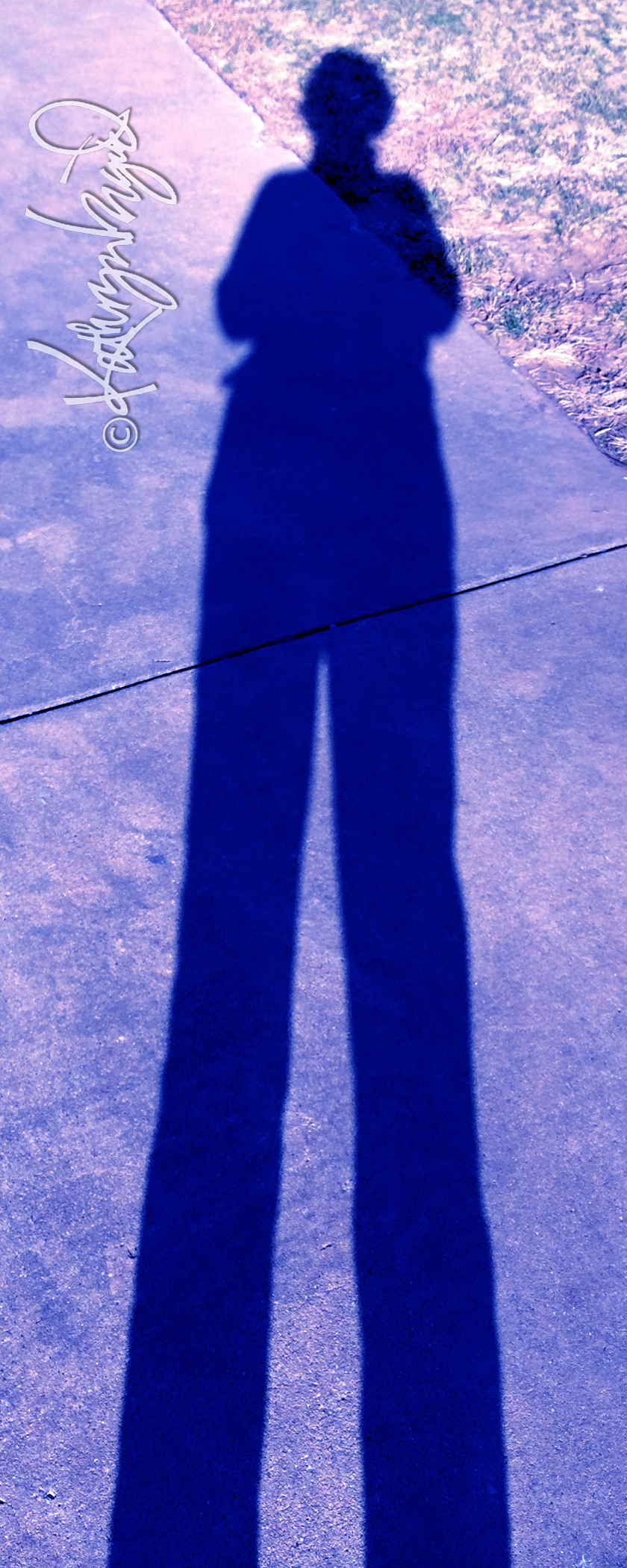
I know that I am loved. That is the best of all possible epitaphs I could possibly desire. And it’s a cheering enough thought to keep me occupied for as long as I get to be in the Here and Now. I guess my job is to pass it along to those in my immediate vicinity, my small orbit, so that they might be able to make the same claim.photo