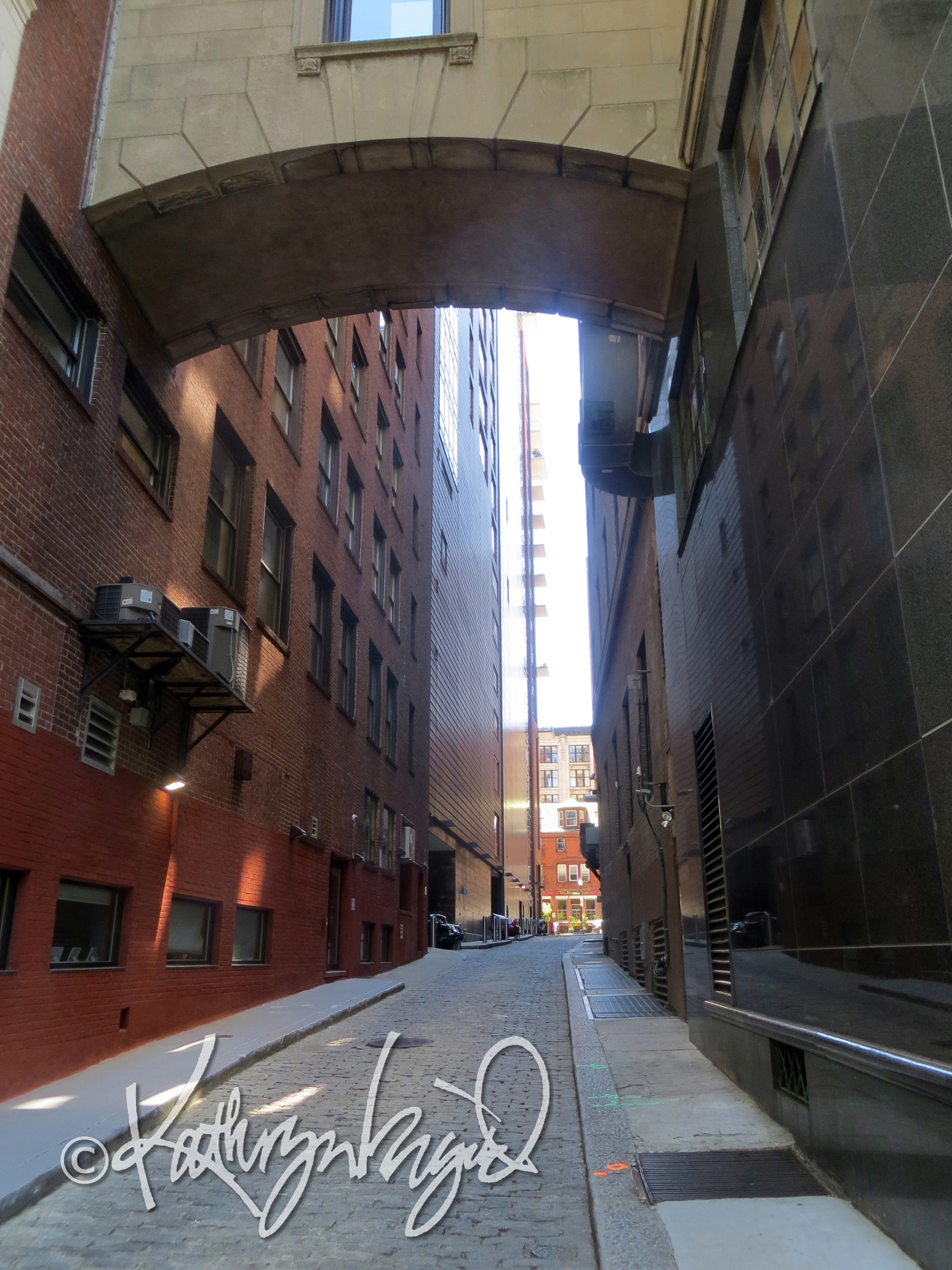
Light in Dark Places

photoWhat possible purpose can Daylight Savings Time serve in this day and age except perhaps the most mercenary sort? I really dislike the artificial shifting of the daily schedule (time itself being quite independent of our constructs meant to explain and regulate it), with one small but significant exception. That little thing?

Knowledge of the power of the tiniest speck of light against the dark.

When the days become naturally short, night long, because of the turning of the earth on its axis and the change of the seasons, the sense of being trapped in almost-perpetual darkness inevitably begins to creep upon me; add to that the government-mandated spin of the clock to steal yet another hour of sunlight, and I begin to wither and feel a little like sorrow and solemnity, gravity and groaning will also steal my sense of belonging to the day at all. This spell of coldness and heartless eternal night could certainly drive a person mad.

And yet, the smallest spark renews my will and hope. One little star piercing the indigo sky becomes a beacon bright and powerful enough to pull me from the dark and back to day. That winter’s also the season when so many cultures, faiths and kinds of people find new reason to light more than a candle, more than a fire, and call upon the grandest graces of their inner best is no mistake or accident. The contrast with that terrible beauty that is felt and seen in lightless space is something far beyond the sun of day–against the coal mine dark, a pinpoint is all it takes to seem a seam has opened into warmth and goodness once again. And in my little heart, I do believe that any one of us determined enough can learn to be that tiny, so-essential fleck of light.photo

The Curvature of the Earth

You know, and I know, that if one can see far enough to and across the horizon, one can see the curvature of the earth. It’s also common knowledge that this is a perspective hard for the ordinary earthling to achieve.

photoWhat is perhaps a little less often considered is how difficult it can be to find and maintain the smaller perspective of the magical and beautiful in our world and our lives. I think I am fortunate both to realize how incredibly beyond-microscopic I am relative to the broad arc of my home planet and, oddly, how this same unfathomably huge place can hold me in the crook of its metaphorical arm, embracing me with such delicate kindness and comfort and generosity.photoWhen I think on this, I begin to see echoes of the vast rim of the third planet from the sun in smaller and smaller graces curving up right in the heart of the everyday.

Self-Annihilation

P&I drawingWhat does it mean to repress or suppress others? We humans have found so many awful and horrific ways to abuse and torment each other, to subjugate and enslave, belittle and diminish and depersonalize them, that homicide and genocide seem afterthoughts, if not almost a mercy at times.

What do we demean or demolish when we do so to other people? Community. Diversity. Complexity. All of those things that enrich our own lives. Things, indeed, that make our survival possible. We become trees hacking at our own roots and branches, all the while drinking toxic rain and poisonous streams.

If we lessen or lose one life, the whole tribe hangs in the balance. If we lose one tribe, we risk the loss of all humanity.

Under the Arches

I walk into the room after the rehearsal has begun, and the men are working on a slow passage of Handel. Choirs I and II sing the same tenor, baritone and bass parts at this part of the piece, and they have unified their pitch and the round warmth of their Latin vowels so that despite having only ten of them singing a relatively soft phrase, the sonority is beautifully intense and sweeps me into the room on an almost ecstatic wave.photoI sit and finally have a look around. The doctoral student assistant is conducting, and one of the voices raised is my husband’s, from where he’s joined Choir II. I close my eyes for just a moment to listen to the lilt and roll of the men’s voices.

When the women rejoin and the full ensemble begins to move forward, picking up speed and volume as the text becomes more buoyant, I feel myself lifted further on the waves, transported far from this concrete box of a room and its cold fluorescent lights.photoSuddenly I am under the morning light pouring through a cathedral’s oculus, gazing up into the curves of the arched nave and dome. I am pacing sedately through the arcade of a cloister, the afternoon sun warming my heels as it peers into the intervals between the pillars. I am in the garden, watching the sun set on the curled canes of the roses climbing there,the bows of the water leaping in the fountain, the draped arms of the willow as it leans out to embrace the day’s last rays of light.

This is the sweetness of music, and in this wash of light and dark, cool and warmth, joy and meditation I can gladly lie for a thousand years.photo

Feed the Birds

I loved the movie Mary Poppins when I was small, and surely will still love it whenever I see it again. The charm of the story combined with such a well-cast ensemble and the magic of cinematic technology are hard to surpass. I loved the sweetness and buoyancy of the tale and its jolly playfulness and the marvelous escapism of it all. Those were surely the characteristics the filmmakers intended to capture children’s hearts and attentions.

But perhaps more than any other thing about that movie, I think, I loved the song Feed the Birds. It seemed such a small thing in the scope and scale of the whole production, but that, in fact, may be precisely what makes it still stand out in my mind. That, of course, must have been part of the grand plan as well. Clearly, it worked on me. As little and secondary as it may have appeared in the grand scheme of the cinematic version of the story, that song’s piquant minor melody and, especially, its very allusion to the importance of the seemingly insignificant stay with me and move me even when little else of the film’s specifics remain in my memory. I’ve read that this was precisely the intent of the piece and its inclusion in the film. Clever, that Mr Disney and his professional storytelling cohort.

Clever, and they weren’t wrong either.

The beggar urging passersby to trade their tuppence for her packets of bird seed, as well as the birds hungering for it in the hardscape of the city are both easily avoided, neglected or despised by the better fed citizens who might rather brush them off than admit to their existence. That little vignette reminds us, and rightly so, just how much those persons, creatures and events we’d often prefer to ignore or deny really mean.

Their loss or abandonment creates a much more profound emptiness than their seemingly small stature could possibly imply. It’s the barrenness of spirit, of humaneness and hospitality, of compassion and grace in the rest of us, that is the real cost of failing to tend to the weak and small. And it can be the smallest gesture, tiny as a handful of bird seed, that opens the way for healing and humanity and hope.photo

Above and Beyond

digital illustrationSky Candy

Stars, sun, comets, moon and planets; rain and lightning, clouds and mist;

Birds and butterflies and rainbows; dragonflies by morning kissed:

What a sparkling declaration of the minutes passing by,

What a joy, this constellation of sweet treasures in the sky!

Though I hunger in the silence of shut-in days, sleeping, blind,

I keep constantly the radiance of these jewels in my mind,

Hoping, dreaming, moving, soaring–real, or the internal, eye

Loves the beauties so alluring of sweet treasures in the sky!

It’s Still Life

Little is as desirable in day-to-day life as peace and quiet. Rest, respite, calm–I crave them. There’s so much invitation and welcome in the sweet marvels of time off, time out and down time that I never feel I have too much of, well, not-too-much.

But busyness is ever so much more common in our everyday existence in this century, certainly in this household. It’s no still life, to be sure; any silence found in this way of living is more of the deafening sort. But yes, it’s still life.

So I have to manufacture or steal my moments of rest and relaxation. Isn’t that how most of us end up finding our tiny increments of space and time and sanity anyway? I have to learn how to tune out the white noise, hide from the constant demands and burrow into hidden corners when and wherever I can, to choose deliberately to decompress and unwind. If I don’t make room for my own peace of mind, who’s going to give it to me? The world may rattle on around me at a furious and eardrum-shattering rate and all I know may change in the ten minutes I’ve stolen to renew myself, but I will return to those realities soon enough, and hadn’t I better do so in a fortified state than otherwise?

Better to sit down and tell myself soothing tales undergirded with lullabies, to draw myself a little old-fashioned still life arrangement in the calm unruffled grey of graphite, and breathe deeply without regard for the bustle and bash of the universe, if only for a moment or two.graphite drawing

The Garden Rejoices

photo montageRespite is the thing we all crave at times. Too much of a good thing is still, when all’s said and done, too much. Having spent the majority of my life in climes of plentiful cloud and rain, I was quite pleased to experience the practically perpetual sunshine of north Texas, but learned that with it can come garden-blighting and spirit-dampening heat and even drought, so when it rains, as much as it might make a few things more inconvenient or messy, it can also make my heart glad.

And the way that the leaves plump up, flowers loosen and uncurl their fists and stalks and stems stretch instantly taller toward the sky, it’s also easy to see that the garden rejoices. It’s as though all of nature around me is sighing and relaxing every tensed-up, coiled tight thing with grateful relief.

A moment of quiet in the heart of a rushed day or a busy week is rain for my spirits as well. Whatever the cause of the busyness, however pleasurable the things that do clamor for my attentions, I find that a brief pause to lower the speed of thought, to quiet the relentless insistence of life’s siren calls and cool the heat of its demands–this one small thing–has wonderful power to relieve and renew me, too.

This is how I remember the kindness of the rain in the midst of unyielding heat, the shelter of low clouds that break the relentless glaring sun. And I look for my tiny bits of solace in a meditative mode, feeding my roots and encouraging me to let go, expand, release the tensions I am in and carry on, better able again to bloom and grow.

Imagine, If You Will…

digital illustrationFantastic Phenomena

Rare as hens’ teeth, so they say,

the bird I saw the other day;

barely known, less often, seen,

and in the spaces in between,

not found but once, then flown away–

But rarer still, and here’s the thing:

that I should see it on the wing

and landing, perching in a tree

that most folk living never see,

abloom in Fall, as it were Spring–

For what I’ve learned is that this kind

of special magic that I find

can only happen if the heart

is open to the sort of art

where things are made so in my mind.

Night’s Benison


photoNight into Day
In the sinking stillness of the evening,
After birds have ceased to flit and call,
Silence comes to rest as day is leaving
And dark draws down the shade where night will fall;
The smallest breath of wind stirs from its sleeping,
For after dusk another world takes flight,
A world with gleaming secrets in its keeping
That give the constellations dazzling light,
Fill up the moon with shining opalescence,
Fill up the heart with dreaming of the day
And how its powers overcome senescence
When sun returns to chase the night away.photo