The Gilding of the Gliding

That magical time known as the Golden Hour seems to give everything, not just color, an extra fillip of beauty. Colors do, indeed, become warmer and more saturated when the sun is at such a low angle to the horizon as its place near dawn and dusk, but there is so much more to the mystical powers of those fleeting moments that it is a great treasure to be still in them and let the wonder fill me. At such times I feel more connected to nature and everything around me seems more in tune, better adjusted, and I feel that I am, too.
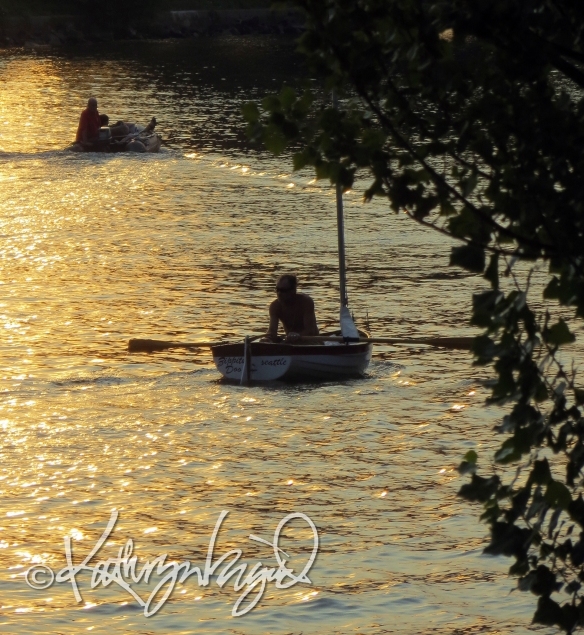
Photo: The Golden Hour

How can the mere angle of the sun turn a scrubby lawn into finely cut velvet? The touch of gilt on the scene makes every ounce of it seem that much more precious and valuable. The bejeweled day, in turn, makes the simplest action in it take on significance it never had before: the chattering of birds in the trees becomes a miniature angelic choir; the dipping of oars in the water turns from a quiet splashing to the whispering of poetry; the evening breeze that gently stirs shore grass becomes a delicate communiqué from the harmonic internal logic of the universe, and I am at one with it all. As the golden hour ripples through my environs and begins to permeate me, I almost feel as if I am gliding along their silky way right in sync with the rowboats nearby, waving fluidly as the grasses on the verge, tipping my wings with the evening birds to slide onto the branches of the trees. I am at peace with the world, and the world, with me. That is golden indeed.
Stars Everywhere

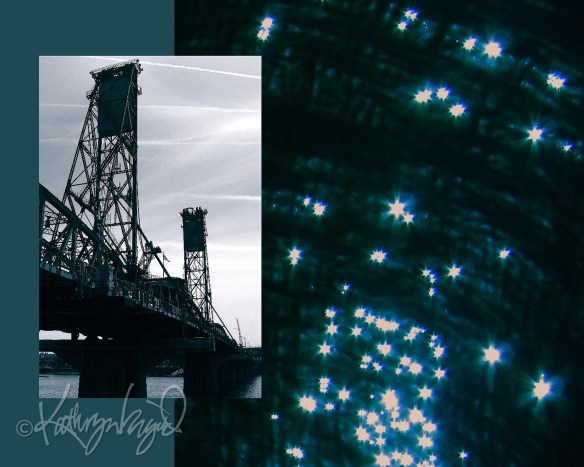
Photo montage: Stars in the DarknessThis world is a dark place. War and strife, fear, hunger, hatred, greed, self-righteousness, and poverty gnaw the bones of suffering people on every continent at every hour. And all of these menaces are, in accordance with early expressions of the idea of Tragedy, nearly entirely the making of our own species.

Little hope, at least in my mind, of that sorrowful truth changing as long as our species continues to dominate the planet. We are deeply flawed. Even the finest among us tend to forget themselves and their mortal limits at time; regardless of how educated, high-minded and genuinely well-meant their attitudes and actions may be, it’s sadly true that underlying those attitudes and actions is a firm belief in their rightness. Only natural that it’s hard, from that perspective, to allow that others might have an equal possibility of being right, or at least as wise and well-meaning, as they themselves are, and to show them the full respect of that acceptance.

What, then, of accepting life among my fellow flawed beings in this imperfect world? No comfort is found in denial or in persistently, aggressively resisting what may not have the possibility of ever changing. But to accept this grimness as an eternal truth and let it lie like lead on my soul is no help, either.

I look to the stars.

Physical stars exist in a surprising number of places, many lower and commoner than the depths of the sky, and I look to them and rally as I realize that they stand, every one, as beacons reminding me of what is good not only in the nature in which we imperfect beings live, but what is good within us as well. Small as our fineness may seem, individually and corporately, at times, it does exist, and if there is to be any hope of overcoming the dark, it must come from the nurturing of every little glint seen starring that darkness.

I look to the stars in the indigo distance of the sky, sparkling like promises of better things as they look back at me. I look to the lesser stars of reflected light that dazzle on earth, the  diamond dashes on every body of water and glimmering in every eye, never mind among real gems and the many things made expressly to be beautiful and good and positive. I look, more than anywhere else, at the multitude of stars that shine from the hearts of good and true people, people who are thoughtful and generous, merciful and hardworking, and kind and loving, sometimes despite and against the dark things of this world, and often, wonderfully, for the sole reason that they were made to be such earthly stars.

It was Only a Dream…

Photo: Waking UnderwaterA short meditation: The Oarsman

When I opened my eyes, I saw a cedar boat ahead, a craft of sleek and patinated wood; I was ashore, looking, watching without knowing why, standing on the verge with the clear salt sea touching my feet and on its cold breath casting up an offering of tide-polished stones and shells moved into patterns like a prayer shawl.

The cedar boat drew near, and in the boat, a man whose solemn joy preceded him and made my thoughts lie still.

Only the scent of cedar broke the salty air. I waded out to catch the prow and saw the oarsman watching me, and I was humbled but not afraid. He said nothing. I didn’t think to say a word, myself, but caught the boat and slowly pulled it ashore.Photo: The Scent of Cedars

The oarsman wore a long superlative braid that rose and fell on his breast; I made fast the boat to a spike of driftwood at the verge, tying the painter in a braid as like his own as I could make it.

When he stepped from the boat, the oarsman put his broad hand on my head, wordlessly, and I felt, too, his solemn joy.Photo: Solemn Joy

Water Babies Athirst

There was a whopper of a rainstorm in Dallas recently. We were at our friends’ home, enjoying a little birthday party, and heard a few low growls of thunder in pauses between the chatting and laughter but had no great confidence rain would follow. It’s been overcast or cloudy often enough lately without granting so much of the hoped-for watering as it seems to promise, so we never take it as a given that we’ll be watered nicely. Not, in this instance at least, until the front door smashed open under the force of sideways gales and blasts of firehose rain. Bashed open once, and closed; then, a second time. And latched tight; the neighborhood was pelted well and truly until just a little before we left for home.
Photo: Drinking-Fountain Fountain

At home, it appears, no rain had come at all. Our gardens and spirits remained thirsty. I’m quite certain that a coastal-born person of my Washington upbringing and Scandinavian roots is a little more water-conscious, if not obsessed, than average. But the hints of rain that do arrive here, whether in sky-splitting gouts that last but an afternoon or in a steady series of lightly sprinkling days as we are sometimes blessed to see, are a fairly universally admired gift. And I find that north Texas is hardly alone in this.
Photo: Swan Like

The traveling we did this summer in Europe had very few rainy days among the many sun-soaked ones, and while we neither regretted the warmth and light of the sunshine nor bemoaned the drizzling times, we saw plenty of people in Budapest, Vienna, Prague, Stockholm, Port Angeles and Seattle who relished their rain-baths and their waterfront or fountain-side relaxation every bit as much as we did. Even the swans, geese, ducks and waterfowl seemed all the more pleased with their daily peregrinations on the days of and after the rains.
Digital illustration from a photo: Falling, Falling

I think that there might be in all of us a certain kind of thirst that mere water only reinforces and reminds us is different from the sense of desire and hope that can fill our spirits. River or fountain, a strong and cleansing rain, ocean or streaming tears of joy, the only water that can quite slake our longing for wholeness and growth and hope is the remembrance that we are primarily made of water ourselves, and as such, will always seek a way to the well or the shore that reassures us we belong.

The Last Rose of Summer

The Thomas Moore poem that gives this post its name has lent its melancholia to many a song and story to follow it in the years since Moore first honed the image into such an iconic form in 1805. He wasn’t the first to recognize the symbolic substance of decaying, wilting blossoms at the end of the growing season, or to apply it to tales of longing and sorrow, not by many long and mournful years. And the idea is so ready and apt that I can only assume there will be endless instances of such fading bloom representing the grief and sadness of life.

When I see real roses at the end of summer, though, I tend to see another kind of meaning in them myself. For what could stand better as an emblem of perseverance and strength than a fragile, delicate tissue of a flower that clings boldly to life when all of its companions have given up the ghost, when the elements conspire to kill it, when all of the art of Nature dictates that it should not be able to survive? Is there an image more fitting for resilience and bravery and the hope of beating all odds? Certainly there are few representatives more perfectly suited that appear in as beautiful a guise as the rose.

The idea of being that kind of a last rose of summer appeals to me. I would like to defy the expectations of the world that I should cower in the face of death and its precedent cruel disintegration, and instead age gracefully into an ever stronger, wiser and more beautiful being. This is impossible if I depend wholly on myself and my own resources. But having chosen to surround myself with the generous gardeners whose kind tending can nourish and enrich me along the way, I think I might have a chance of flowering over time, too.Rose in Bloom

Smooth Operator

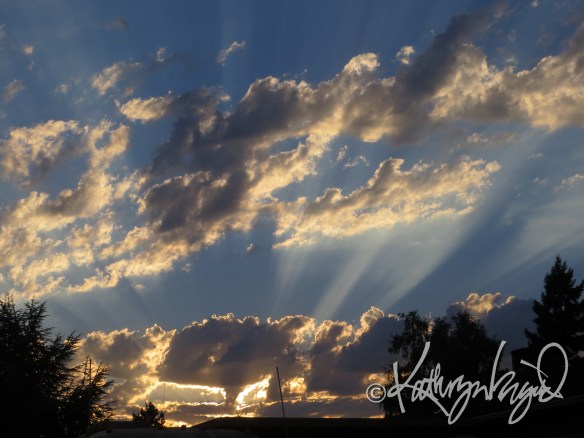
Photo: Silken Skies

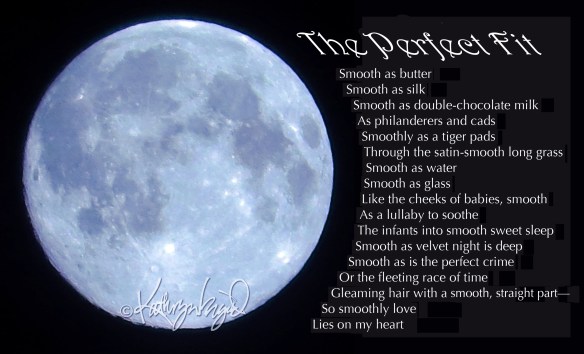
Photo + text: The Perfect Fit

Photo: Smooth

The Hours of the Day

Some pieces of music have an especially profound affinity with particular times of day. Those composed deliberately for such hours are of course likelier to fit so well, but even among them there are certain works that are so miraculously fitting they almost seem impossible to separate from their appointed times. Much music composed for the divine offices and devotions of the Roman Catholic church recognizes such affinities because, like many prayers and devotions in other faiths, these practices are meant to be performed at specific times of the day and evening. Like the muezzin‘s call to the mosque, a moving chant or song suited to the hour sets the heart and mind in just the right place for the meditations and oblations of the time.

I wrote this poem long ago and came across it again, remembering that it was written while listening to a specific Angelus played on the organ—Marcel Dupré’s, if I’m not mistaken—and being struck by that wonderful meeting of sound and spirit in it.Painting + text: The Angelus

Be that Light

Photo montage + text: Mirror for Contemplating Possibility

Photo + text: Toward Light

Photo + text: Solrosbarna

Photo montage + text: Solrosbarna 2: Greatest Gift

Sing Comfort to Me

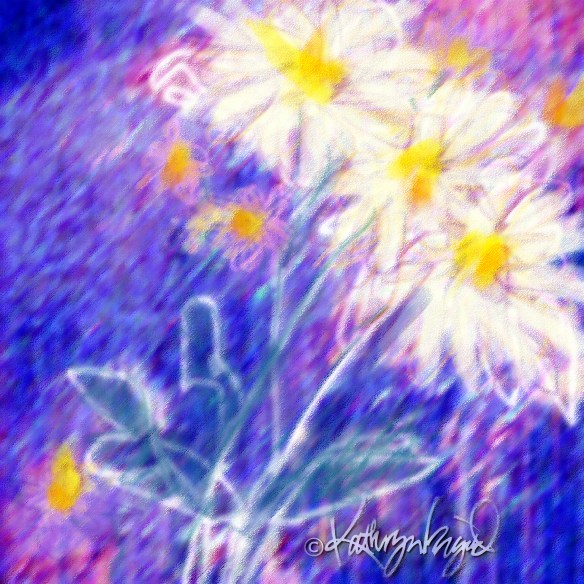
Digital illustration: Wild Daisies 1Sweet is the Song

However cold and sharp the wind may be,

As wild and deep as darkness ever falls,

From utmost edges of the storm still calls

A song that stills, that draws and comforts me—

Though battles rage, the world in sorrow drowns,

And trials threaten life and hope and light,

That gracious call still guides me through the night

As long as I will listen to its sounds—

No danger is so great, no ill so dire,

Nor pestilence and terror so extreme,

That it cannot be mended by the stream

Of melody from that angelic choir—

Now when amid the depths of dark and pain,

I’ll listen for that heavenly refrain.Digital illustration: Wild Daisies 2

Fixity

“Why?” is a beautiful question, even though it terrifies most of us. A wise soul once said that the opposite of faith is not doubt but certitude. When we grow too attached to a belief and its perfect correctness, we disallow not only our own reexamination of that belief, which if it’s so perfectly correct should pose no threat to us and if it’s not, should allow us to become wiser and more faithful to our convictions; we also fail to show respect for the belief itself, if we are so fearful of its being exposed as wrong.

Standing fixed in a position of faith is only impressive if that belief can be defended in a calm, intelligent, reasonable conversation with someone who doesn’t yet share the same convictions. A shouting match or the refusal to discuss respectfully is as likely to convince and convert an unbeliever as punching someone in the nose is to prove that you’re smarter than she is if anyone’s questioned it. It’s more useful to ask, whenever any disagreement arises, whether one is genuinely defending one’s belief or just feels personally threatened. Egos so often get in the way of rational, logical conversation when we reflexively mistake the call for proof or persuasion of our beliefs for personal insults. It might be useful to remember that when someone asks for evidence of something we cherish as fact, we could give them the benefit of believing that they really want to know why we accept it as truth. A genuine discussion might actually lead to common ground.

It might also, if we let it, lead to greater insight on our own part. The dispassionate process of a logician is aimed not at debunking everything in sight but stripping away falsehoods and irrelevancies and fallacies to expose the facts in the matter. Truth can withstand all questioning. It trumps politics, rants, bullying, diversionary tactics, disinformation and pure human foolishness, if we dare to examine all of the input carefully and patiently and with respect for those who may have so far missed the mark. A reasoned and quietly stated truth will finally have more power than all of the smoke and mirrors that deniers propagate and cling to, or we will have to admit we’ve lost more than our own convictions.Digital illustration from photos + text: Zoanthrope