Urbanity

There is a huge difference between the merely impressive and the expressive when it comes to modern cities. Rotterdam, once one of the glories in the European architectural crown, was bombed to dust in WWII and, given the poverty of post-war resources, was rebuilt in the following decades as a horrifyingly soulless, boxy blot of concrete on the face of the Netherlands. There is no comfort in knowing that the firestorm that destroyed the city was probably not planned as it happened but resulted from a perfect storm of another kind in miscommunications; the horrors of war are a long testimony to the potential for such devastation. In any even, it took Rotterdam ages to be revitalized into the place of energy and beauty that it is today. Why? What made it such a heart-stopping graveyard of a place when it had once been full of life and loveliness, and how could it ever come back to be something gracious and potent again?

There is no obvious single word that can express the massive destructive toll the bombing took on that city; annihilation is perhaps a close approximation, since it’s clear even from faded photos that the thoroughness of the attacks left very little evidence there had ever been a Rotterdam. I find it nearly impossible to imagine even when staring at proof. When my spouse and I visited the city for a conference even less than fifteen years ago it was still a sad shadow of its former glory, still dominated by 1950s-vintage blocks of affordable and utilitarian harshness that made me want to scream when I saw them in juxtaposition to the few tiny remnants of the beautiful architecture that had once filled the place.

The main reason that Rotterdam is beautiful once again, and that many other cities have, and some have never lost, such beauty is simple: architectural thought and distinction. Building what is cheapest and easiest to construct is a poor solution to lack of structure anywhere. Places that have never experienced the ravages of war, urban decay and other forms of damage and neglect in such extremes can retain the beauty and patina of urbane culture in their urban settings far more easily. Take Boston, Massachusetts, a city that has seen its share of ups and downs over time, but as one of the older cities in a young and generally untouched-by-war country, still has many of its older–even oldest–and most prized, elegant, distinctive buildings. Despite the expected problems of social unrest, economic up- and downturns, spots of urban blight and misdirected city planning that Boston has faced like any modern city, the knowledge that the architectural strengths it does have are worthy of protecting and preserving means that it was built as more than mere indoor space in the first place and that the character of the structures has as much value in shaping the city’s identity as do its great denizens.photoIt should be obvious to those of us wishing to see all of the world housed and sheltered in humane and useful structures and towns and cities that simply throwing up whatever is cheapest and most readily available is hardly more useful, in the long term, than just plain, well, throwing up on people. If we want others to live educated, healthy and therefore productive and admirable lives, we can’t stuff them into trash bins of buildings that, even if they don’t collapse under their own flawed ugliness, will never encourage their occupants and users to flourish. If we don’t intend to fill others’ lives with the vomitous garbage we ourselves would reject and flee, we must find ways to make good, practical, appealing design a mandate and not an afterthought or an unaffordable dream.

That approach not only makes living and working in tolerable shelter possible but nurtures the human spirit and pushes us all to better ourselves, our cities and our world. photo

The True Breakfast of Champions

digital illustrationIn Praise of English Breakfast

Here’s to the English breakfast, dears,

That’s brought, for lo these many years

Sustenance to both health and heart

To give the day a proper start,

The source of warmth and vital grace

Beginning the day with our needs in place:

A rasher of bacon, an egg or two,

Some toast, some tea, some tomatoes; who

Wouldn’t love some beans, some mushrooms? Nay,

Don’t start without English breakfast, pray!

Clouding My Thoughts

As a cloud-gazing aficionado, I know I’m in good company. It’s hard not to be intrigued by the astounding amount of information, meteorological and otherwise, that one can read and guess and even predict from close observation of clouds; it’s easy to become rather obsessed with watching them and seeing what’s found in them beyond the mere factual.

And you know I am drawn to all things that invite invention.photoOur summer peregrinations offered vast quantities of opportunity in this lovely form. As passenger on 99% of our 6000 mile road trip (just as I am in our everyday life) I was free to stare into the sky whenever I wasn’t on intensive watch duty for a specific exit or landmark, and the sky when seen from the vast American plains is a grand theatre indeed. While ‘Big Sky Country‘ is one state’s nickname, and Montana is indeed a region of wide open views of the sky, even from the rugged-not-flat high plains, the US has millions of acres of land that lies relatively flat under the heavens and allows views across the miles that rival the telescopic.

I would be hard pressed to agree with those who find extensive mid-country travels boring from a viewing standpoint. The landscape may, in places, be no more varied than one kind of wild grass giving way gradually to another over wide sweeps of seldom changing topography, one tumble-down farm very much like the next, but besides that even these have their subtle differences, they are all capped by this apparently limitless height of sky. Mostly, I find this mesmerizing, even meditative. When the weather is cloudless, the intensity of the hot blue depths above, looking as though they never did and never could have anything in them change, have a kind of cobalt stolidity to them that can be oppressive but, when broken by the least irruption–a crop dusting plane coughing out its own skinny clouds, a crow chasing a hawk straight up out of a stand of mowed weeds–suddenly becomes backdrop for high drama. Indeed, as one who grew up before the special effects masters of film took to using the more popularly familiar green screen to allow the insertion of infinite inventions in CGI, I was accustomed to chroma key blue screens, so now the sky has become mine.

Still, as much as I love the clear beauty of a bold blue sky and the endless space for spectacle that it represents, when clouds come into the picture the possibilities are multiplied exponentially.

Not only do they serve as messengers of what sort of travel conditions lie ahead when I’m on the road–especially when observed from so many miles away as is possible in an open landscape–they tell stories and evoke romances tirelessly, keeping my mind a-spin with the permutations and portents I read therein. Much as I find driving in the most intense storms, day or night, a stressful challenge to my technique, never mention my eyes, the colors and textures and patterns in the clouds rarely cease to amaze and delight me, even in the center of the maelstrom. And when things settle down and the clouds begin to part and thin and allow through them those fugitive rays that remind me more truly of both the size of the clouds that it takes to fill such a hyperbolic height of sky and of the power that mere collations of mist can have when they converge for battle? Then I see again the beauty of clouds altogether, and I am on cloud nine.photo

I Went to the Shore

photoI was born near water. I am not an avid (or skillful) swimmer and I don’t enjoy lying on the beach sunning myself, what with the high probability I’d burst into vampiric flames, pale as I am. But oh, my, I do love being near the water. Specifically, I crave the sound and spray and the whisper-and-crash sounds of moving water. Lakes and ponds are all well and good, but when I’m here in my present digs in north Texas, I’m not often close enough to the lakes and rivers to get as attached to them as to I am my bloodstream as it flows in the million waterfalls of the Cascade and Olympic ranges and pours back into the heart of the Pacific Ocean.

So this summer’s travel was a homecoming in that way as well: returning to some of those places where I feel the most connected and whole. The people who fill my life come first, of course; wherever my great friends and loved ones are will always be home. The places I love to go, visit, work, play and stay anywhere in the world have their merits that designate them home when I’m there as well. But few things have the same depth of attachment that, ironically perhaps, does not ebb and flow but remains strong and steady at all times in me, the same compelling passion, as the sea.

It was good to be at the docks, the marinas, the edge of the ocean–on the shore again.photo

The Hooey Decimal System

photoWhen I sort and edit photos, it helps if I can create categories and subcategories that will help me to find and use them after the fact. If an event or occasion is short and simple in the relative sense of such things, the name of the event or occasion itself may suffice as filing ID, but what of things like our summer road trip that encompass 5 weeks, 6000 miles, a dozen states, 2 countries, 3 music conferences, a dozen members of the immediate family, a half-dozen motels and hotels, and ever so much more?

What I tend to do is create an all-encompassing title that all photos will bear, identifying them as part of the larger expedition, and then putting them into files and sub-files that clarify the who-what-when-where-why-&-how of them. This helps me have at least a slight hope of locating any single shot or group of shots from among the multitude that remains even after I’ve culled a multitude more. It also reminds me of what things became, either because of my continuing interest in them or by natural default of recurrence on the way, thematic in the event.

Not surprising, then, that this extended road trip would have obvious and substantial files of many very familiar subjects. To be sure, there are a quantity of such old favorites of mine that any moderately frequent or attentive visitor to this blog could easily guess. Given my blog header, I can start with my fondness for rusty, rustic old things (like me, naturally), mechanical bits and industrial loveliness. There are hints in that image, as well, of my magpie adoration of all things shiny-metal, glass, water, jewels, plastic and any other thing that glints to catch my avid eye.photoMy many obsessions also appear in nature: flora, fauna, sea, sky and stone. If there’s a noticeable cloud formation or special kind of light I am lured to admiration of it. Insects draw me like, well, the proverbial flame-drawn moth. I’m an ignorant admirer of all sorts of vehicles that strike me as different or novel when it comes to my everyday experience, so there are always photos in my stash of cars and trucks, boats and trains, heavy equipment and the slightest, lightest personal transport other than feet. Feet, for that matter, can make perfectly entertaining objects of my camera’s affections, since people in general are also on my list, and character-full feet or quirkily clad ones or ones that by position tell a story ought to make marvelous image sources any time.photoIn the case of human subjects, I do have something of a restrictive love, however. When I know the subjects of my documentation, I’d usually rather be interacting with them, so often, the camera sits idle and forgotten unless I have some sort of mandate to shoot. If I don’t know the people, I am bound by respect for their privacy almost as much as by my shyness not to photograph them at all. So aside from crowd shots and unidentifiably altered distant views, I’m not likely to include too many people in my panoply of for-art photographs.photoWhere people congregate or what people have left behind, that’s all fodder for my imagination, though. I love buildings–the older or odder, the better–and their endless details, and whether they are homes or hospitals, offices or auditoriums, farm sheds or factories, they all have stories to tell. Ultimately, I suppose, that’s the overarching guide to my photographic peregrinations just as much as to my poetry and essays and drawing and every other expressive form of art I attempt: I am trying to discern, guess, or invent the stories behind those things I’ve seen.

There are, you know, endless stories just waiting to be told.photo

Messengers

I admire real journalists and documentarians. Now, I do think that they are a very rare breed among news-people, the rest of whom are too driven by their corporate sponsors’ and their own biases by a long shot, no matter where on the spectrum of politics, religion, personal philosophy or other conviction they fall, but there are those honest characters who, if they do consistently let their beliefs steer their messages, at least recognize those prejudices and are quite open about them and still manage to give air time to opposing or differing points of view.

Still, the ones I really find compelling are a different sort of message bearers. They are harder to recognize, because they can be quite ordinary seeming mortals or wholly incorporeal, quotidian or fantastical, intentional or entirely, serendipitously accidental in their delivery of important news in our lives. Are they strangers we meet by happenstance and happy crossing of paths, like the townspeople in Germany who saw my older sister and me debarking a train after dark and looking around to orient ourselves? The kind couple approached us, told us that Celle (however lovely) was a very small town indeed and that there were few places for visitors to stop overnight but they’d help us find one, gave us directions and set us on the path to a very cozy little bed and breakfast before disappearing into the dark like a mist.

Are the messengers those outstanding teachers who have acted not only as educators in our lives but also as inspiration, as mentors, counselors, guides and friends? Mrs. Willis, Mr. Cunningham, Prof. Keyes: I salute you! Teachers have done as much to bring light to my life as to the dim corners of my mind over the years, and I am grateful for the news and stories and messages they bring. Are there other beings among us able to protect and direct us without our even being aware of it? Of course there are. Some of them are simply gracious fellow humans whose good deeds and kindness will never be seen or fully known and recognized in our lifetimes, either because we are too dim-witted and self-involved to notice as we should or because they merely do their mitzvahs without fanfare, without expecting or needing any recognition and recompense. These we should imitate and their message should be spread further by our going out in turn to do kindnesses for others and requiring no attention or glory.

And I think that–given how beautiful and rich life can be when we do pay attention–there must be others in our midst too; angels or aliens, I don’t much care what we name them, but there must be Love looking out for us to make even the tiniest good possible, let alone the many graces that fill our days if we only look. Their message, I suspect, is nothing more or less than that we are being well looked after, and our little lives recorded no matter how small they may seem to us.pen and ink

Signs & Portents

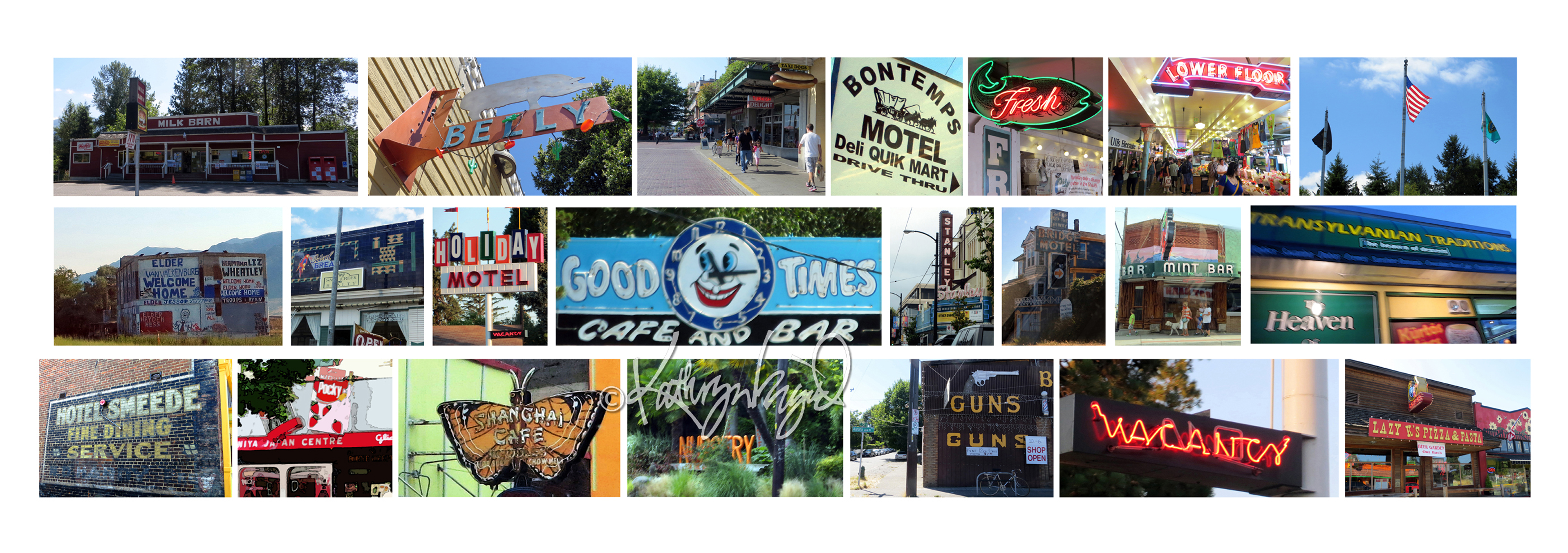
Every trip tends to have its unique interests, but they all share certain qualities, too. One, for me, is the abundance of intriguing, useful, surprising, puzzling, inviting and sometimes downright amazing signs of all sorts that mark the way. Our summer road trip was chock full of them, too; many whizzed by too quickly at highway speed to be commemorated by me with my trusty little camera, but some served well to mark a few of the highlights and oddities of our pilgrimage west and back.

photo montage

Some signs made me wonder if we’d suddenly gone far astray from our intended route, to another state, country or (occasionally) planet. [Remember to click on the images if you want to see them in greater detail.]

photo montage

A few signs were rather provocative, and many simply amused me greatly for one reason or another.

photo montage

Vintage signs often outlive their original purposes by being moved–or read–out of context. Unless, perhaps, the message has a more cosmic meaning…

photo montage

Some of the most welcome signs are those very familiar ones not seen in a very long time. It doesn’t matter so much that I’ve frequented the place or embraced the item as that the sentimental landmark each represents of other persons and places is called to mind.

photo montage

I’m especially fond, though, of those signs that seem to have lives of their own, through age and adventures unknown. I like to imagine what they denote beyond their mere artful decorations and texts.

On this particular escapade of ours, all signs pointed to a grand tour and many colorful memories. And led me, of course, to think ahead to all of the travels and signs yet to come in my life.

A [Mostly] Black & White Photoessay from the Road

digital photo art montage

Farm Frames.
I loved the sweet repetition of gorgeous farms of all sorts, in parts of every state.

Some of the images yielded by five weeks and six thousand miles’ worth of rambling cross-country seemed to want expression in my old favorite black and white imagery. And, not coincidentally, this set particularly showcases my obsessions with seeing patterns, repetition and commonalities.

digital photo art montage

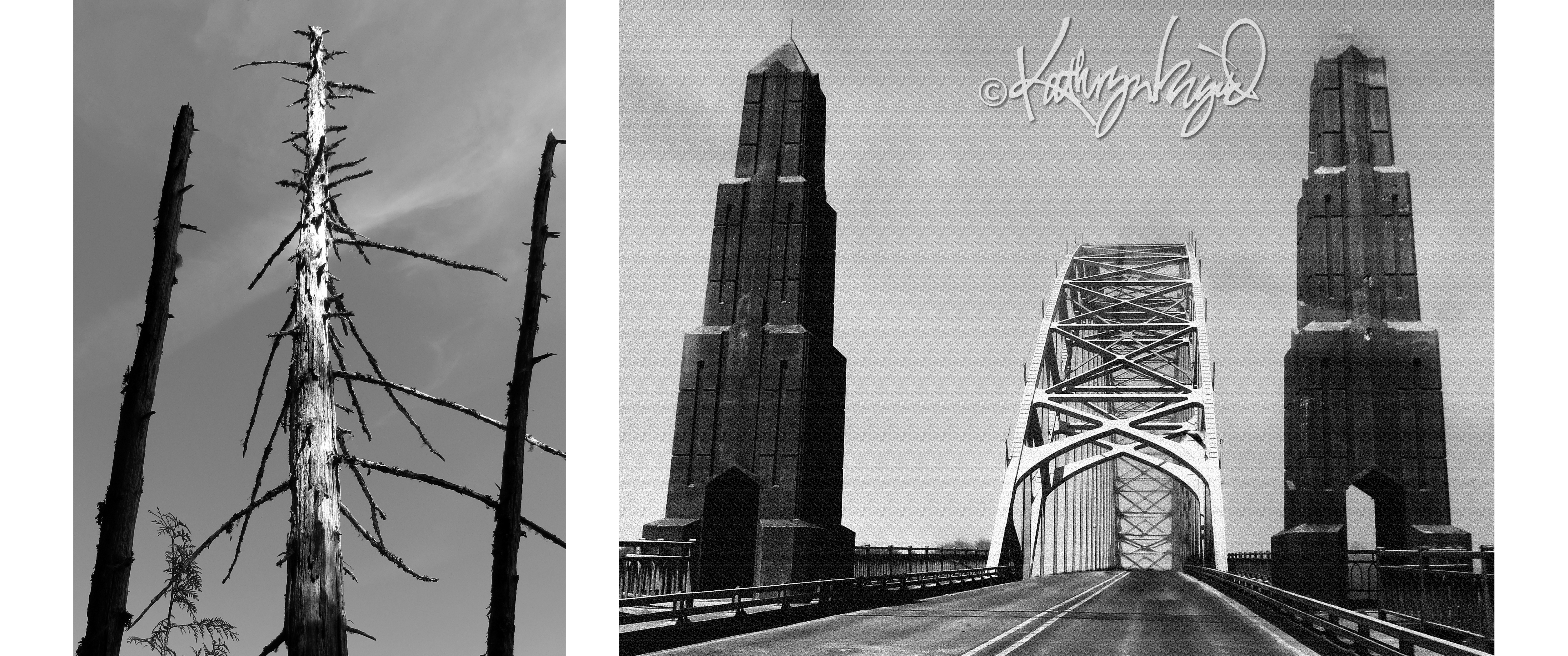
Towers
Monolithic bare trees and sculptural bridges seemingly imitate each other.

digital photo art montage

Twisted Trees
Driftwood. A helical trunk amid Douglas-fir and vine maple companions.

digital photo art montage

AmeriCars the Beautiful
Car culture in the US may have long grown old, but it hasn’t stopped being a classic.

digital photo art montage

Boarded Up
Fruit growers’ packing crates. A burned house.

digital photo art montage

Shake Your Tailfeathers
Hawk? Maybe. Mallard, definitely.

digital photo art montage

Sunday School
The old shed behind the parsonage, the inner workings of a portative organ, and a vintage church.

digital photo art montage

God is in the Details
Small stuff, large impact.

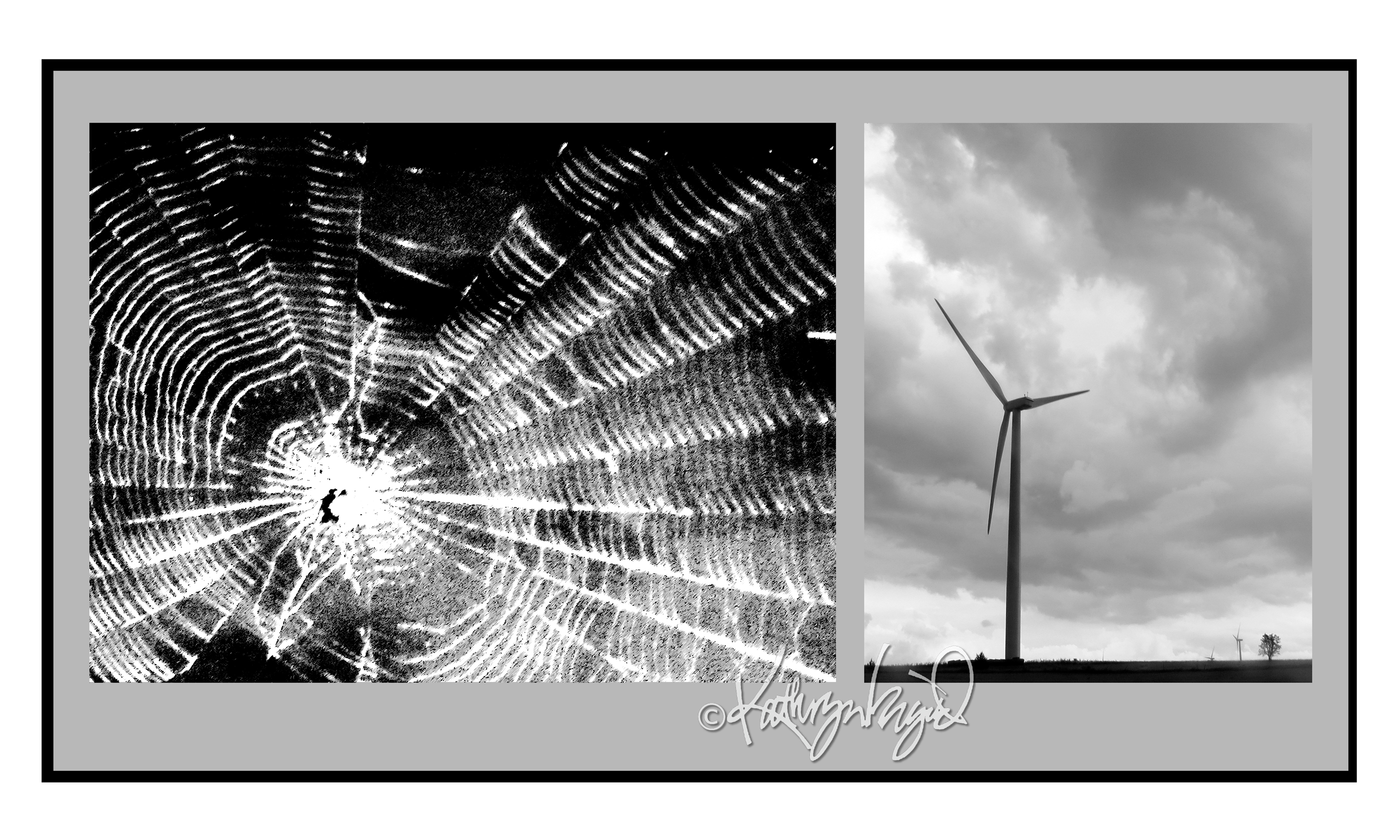
digital photo art montage

Radii
Spokes that speak for themselves.

digital photo art montage

Elephants
An older model pachyderm and an older model Packard? (Nah, I think it was a Rolls.)

digital photo art montage

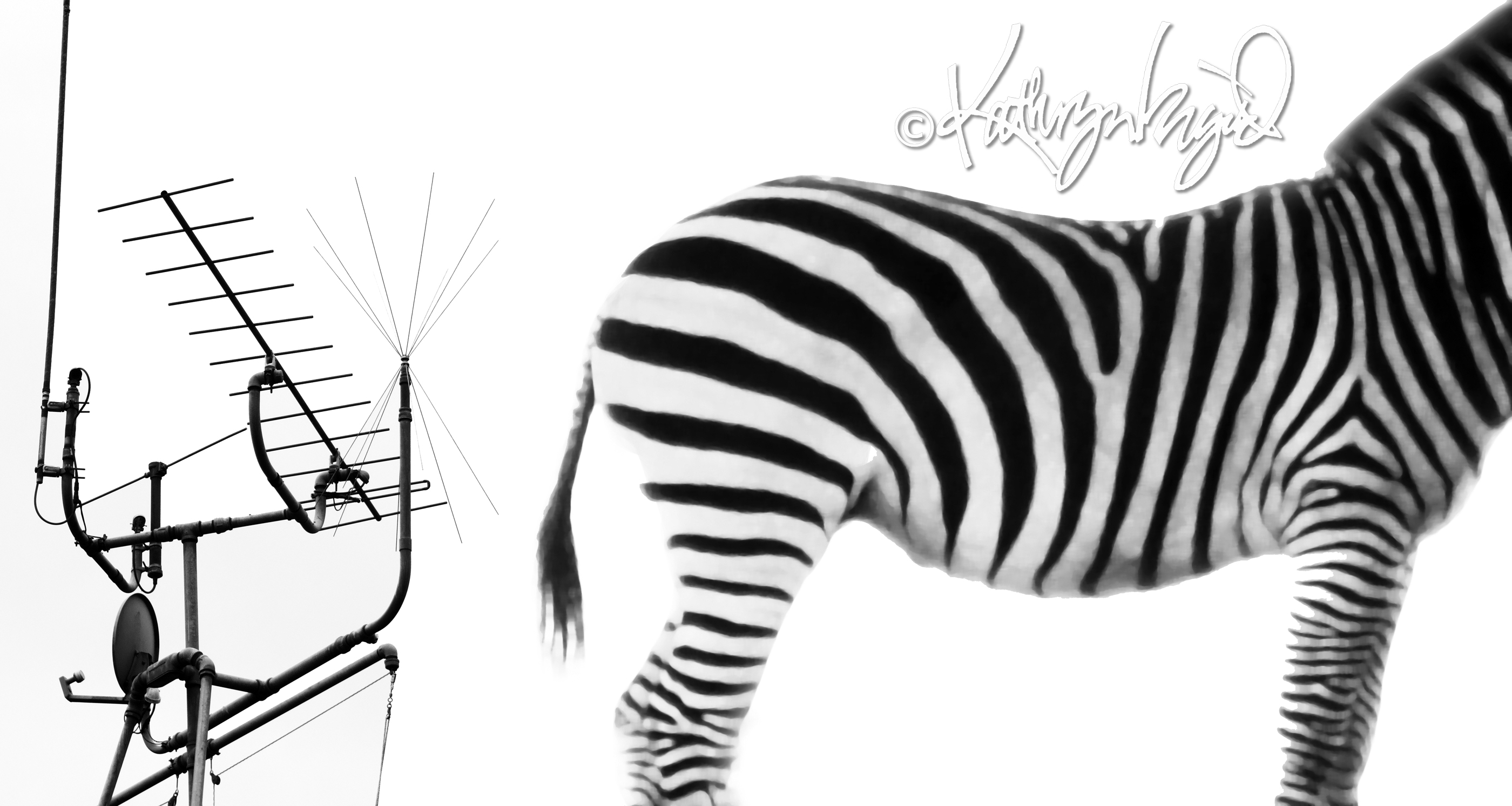
Strange Geometries
The wonder of a weird homemade aerial and the magic of a zebra.


Peace as the New Superpower

It was a wonderfully happy anniversary yesterday. The birthday of one of our nephews.

It was also a horrible anniversary, as far more people know: that of the infamous terrorist attack on US soil in September of 2001. You understand my intense desire to have the former event wholly eclipse the latter. I don’t demand that all the world celebrate our nephew’s birthday (though our niece and any one of our nine nephews would all be well worth the attention), but I would absolutely recommend that the whole planet get a lot less warlike and a lot more humane overall.

If grey is the new black, we should be mature enough by now to play well together.

Americans, first and foremost. We may be barely over 200 years old as a country, but we’re old enough to know better than to tear around the planet saber-rattling and messing around in every other country’s business whether they like it or not. Aren’t there enough things to keep us occupied in more peaceful pursuits? Many such valuable actions could probably be funded on the strength of one month’s national military expenses, things that might not only make the country better educated, healthier, more scientifically advanced but also better able, even, to improve conditions for other people, other nations.

Call me naive.

But first, here’s a nice little bouquet, from me to you. It’s a small thing, I know, but I’d like to start somewhere. You’re welcome. Pass it on, please.digital illustration

Foodie Tuesday: Some Things Never Change. And Why Should They, Eh!

It’s unclear where the phrase ‘if it ain’t broke, don’t fix it’ originated (though it can easily be believed attributable to Texans before its wider popularization), but the precept is in my mind particularly apropos when it comes to foods and eateries that reach a particular stage of development that makes them Classic. Every town seems to have a diner, joint, cafe or pub that has essentially congealed into a certain form and is revered to the point that its regulars and even unattached fans will gladly rally in defense of its remaining unchanged forever. Where else would we go?photoGreatness is not essential, but being the paradigm of whatever it might be that the place or food represents gradually becomes codified as something very nearly sacred. The comfort in being able to revisit one of these places any time and find the familiar favorite food, drink, decor and ohyespeople, people is pretty much a saving grace in the midst of a dull or dark spot in life, whether it’s been a bad day or a bad decade–or just a time when you’re hungering for something more than just calories.photoMe, I’ve got a passel of favorites from all of the phases and places my life has crossed thus far, and doubtless I’ll find new ones as long as I do live. That speaks less to my personal obsession with food, good food, lots of food and equal amounts of fun and atmosphere than it does to the wide availability of tremendous cooks, distinctive and colorful rooms, buildings and locales, and fantastically personalized recipes for nearly everything imaginable. The fundamental dish, drink, dining space or clientele need not be genuinely unique or even world-class (not that that hurts!)–it’s about the combination of them and the way that the parts all strike one on the occasion that lures her back. And then back again.photoAll I should really say on the occasion of such fond reminiscences is that if you don’t already have favorite spots that you’ve visited often enough for the people running them to recognize you, exchange information about life outside the eatery, and then bring your order with all of its weird customized combinations and/or deletions without batting an eye, you had better get moving and find one or ten.photoAnd further, I should say Thank You, Tea Leaf and Harbor Lights [here, if you read the critic’s linked review of the recent renovation and its early results, is living proof of my thesis, should you be interested], Ranchman’s and Miko Sushi, Anglea’s and Mi Ranchito and 42nd Street Cafe & Bistro [an example of a place that has kept a fantastic balance between changing over time and maintaining high quality food and great people]; Thank You, Dave and Hallie, Francisco and Tony, Blaine and Cheri, Teresita and Allessio and Abuelita and all of you other wondrous souls who have been keeping the rest of us contented and coming back over all these years. Yeah, you too, you people over there in England (ohhh, that fabulous Chinese hole-in-the-wall with Sizzling Lamb, and the suave Indian place across from the V&A) and Sweden (I’m looking at you guys making us shrimp pizzas in the wood fired oven in the Stockholm train station and the people creating amazing steak frites with cognac and green peppercorn sauce in Gamlastan) and Panama (Italian salmon pasta in Central America? Oh, yes! Oh, boy!) and so many, many more. Thank You.