Foodie Tuesday: Gallimaufries and Slumgullions

photo

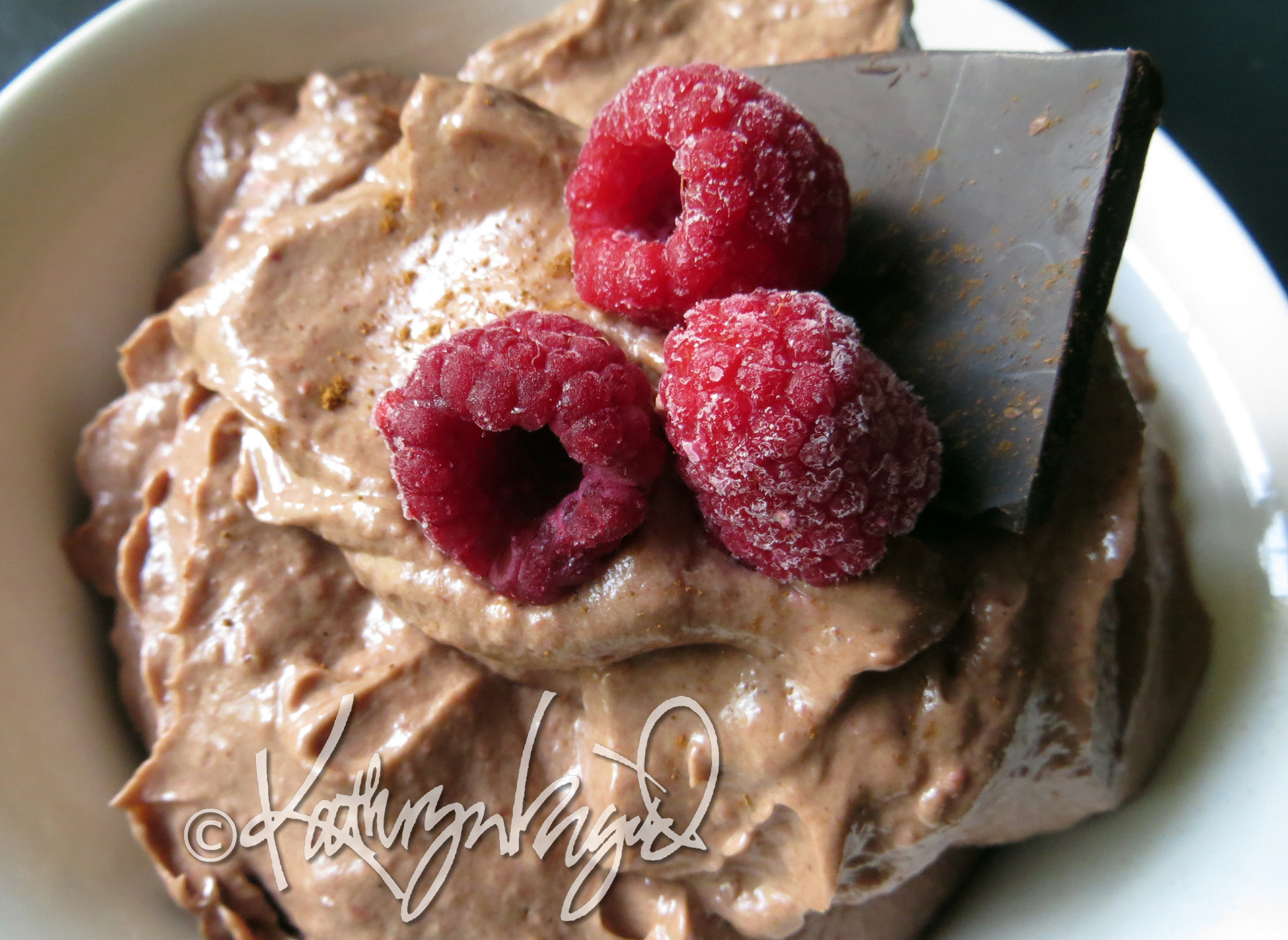
Easy Chocolate-Raspberry Mousse, made with 1 avocado or the equivalent in pre-made avocado mash, 2 ripe bananas, 1 cup frozen raspberries, 1/2 cup almond butter, 2 tablespoons clarified butter, 1/4 cup Dutch processed cocoa powder, 1 teaspoon vanilla paste, 1/2-1 teaspoon real almond flavoring, and a pinch of salt, all pureed together until smooth and chilled thoroughly.

I’ve soliloquized on leftovers here many a time, because few of us don’t have, and use, them with a certain amount of frequency. It can be, as I’ve mentioned, something that lives on only as the humorously known YMCA (Yesterday’s Muck Cooked Again), or with a little thought and effort, it can be a whole new being. It can be a watery mishmash of tasteless goo, a slumgullion, or with some inventiveness and luck, a tasty new experience in and of itself. My recent post on rethinking the remains of broth-making is one example of happily finding the latter.

In addition to making use of the extant collection of remains on display in the museum of the refrigerator and cupboards, one can always prepare those foundational foods that become ingredients for a gallimaufry of further dishes and meals. It’s a sort of slower or longer-term version of mise en place. One that has proven particularly useful to me is the simple fix of mashing a few ripe avocados with lemon or lime juice and a pinch of salt and keeping them in the fridge in a zipper bag. In a two-person family that lives in a warm climate, it’s hard to keep whole avocados fresh for any length of time, so since this particular family is also a one-car family and I don’t wish to finagle grocery shopping almost daily, this simple avocado mash stores, unchanged, in the icebox for a fair length of time while I take out daily bits, squeeze the air out of the bag and seal it, and chill it again until the next use.photoThat easy fix for my avocado problem (you can decide whether that means spoilage or addiction in this case) has presented a whole world of possibilities not previously quite so accessible. Straight out of the bag, the mash can go directly into any number of dishes, both savory and sweet: add a little cumin and chipotle and cilantro, and it’s guacamole; mash in a ripe banana and some cocoa powder and vanilla and honey, and it’s chocolate pudding. Or the avocado can just go directly into my mouth, because lemony avocado mash is a delicious accompaniment to all sorts of good meals.

The broth-offspring remix turns out to be pretty versatile, too. The second time around, instead of making separate dishes of carrot pudding and beef pate, I combined the two ingredients into a different sort of pate that gave me nearly two weeks of very flavorful protein that I could eat in a wide variety of ways. The first time, I ate it simply as a room temperature mousse, sprinkled with a little cinnamon, and it was very satisfying not only because I liked the taste and the creamy texture but because I knew it was a reasonably good source of protein and a great way not to waste–you guessed it–leftovers. Unfamiliar to my palate and yet instant comfort food. Easy to fix even the first time around, too; the broth itself, while it takes a little forethought to stock up the slow cooker with the mix of veg and bones and spices that I like, just tends itself for the long cooking, other than the occasional stir to keep all of the ingredients dunked in the liquid. Straining the finished broth and picking out the parts takes some time, yes, but the process of recombining those parts into the new mousse iteration is really pretty easy and fast work, and getting a couple of weeks’ eating (or one big party’s hors-d’oeuvre spread) out of it is a rather fine payoff.photoBeef Ginger Mousse
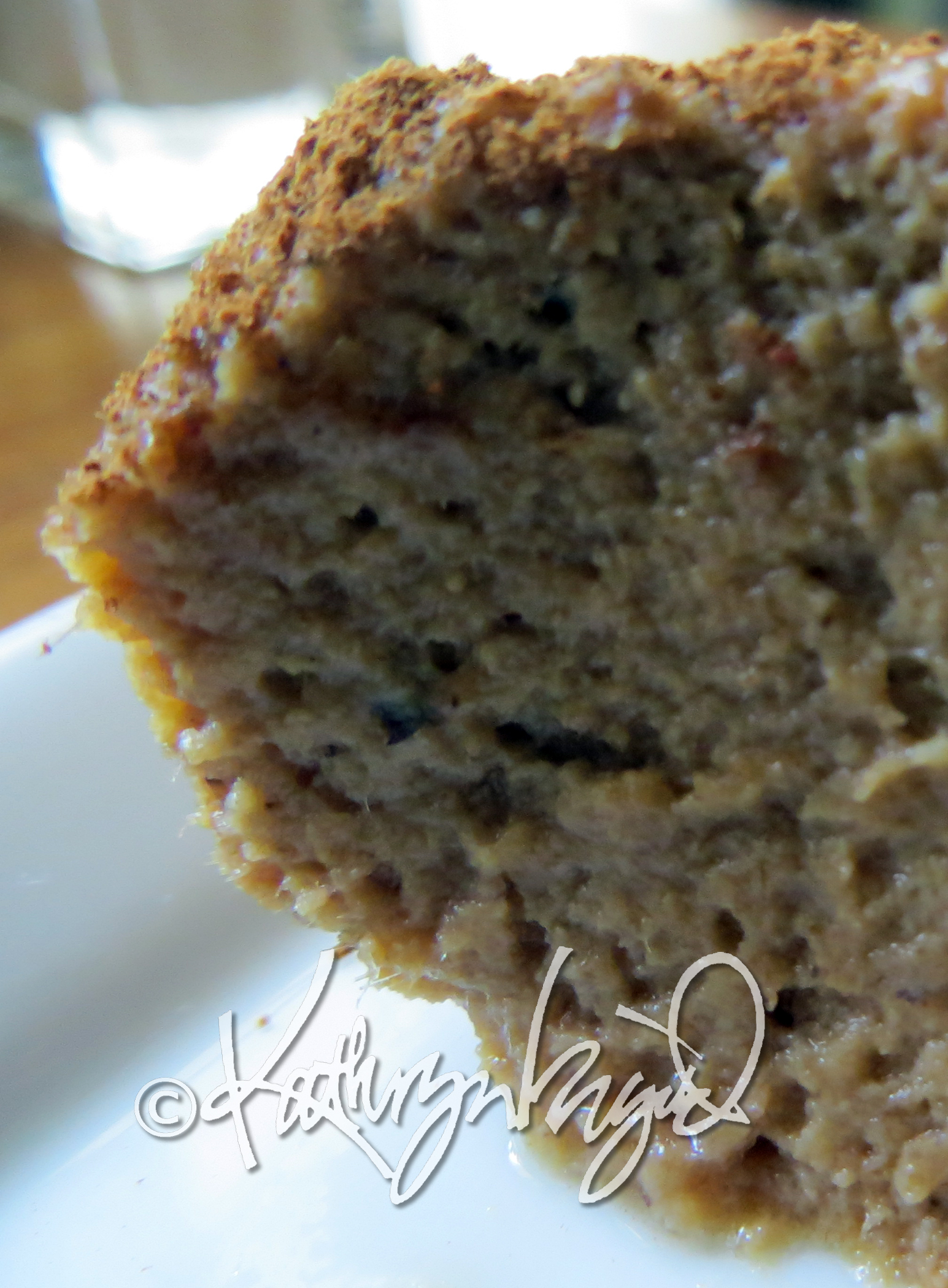
This, given the leftover-centric nature of the concoction, was a truly approximate recipe. I used about 1 cup each of leftover beef bits/marrow and carrots from beef broth making, 3 tablespoons of clarified butter, 1/2-3/4 teaspoon of ground cinnamon, 3-4 eggs, a sprinkle of salt, 2 tablespoons of ginger juice and 1/2 cup of the beef broth. I pureed it all thoroughly until it was the consistency of a creamy pudding, spooned it into buttered small casserole, set that casserole on top of a clean dish cloth in a larger casserole, set the rig on the middle rack of the oven, filled the larger pan with an inch of water, and baked it like a standard custard. Given my oven’s unconventional concept of temperature, I recommend to anyone attempting replication of this ‘recipe’ that you use your own time-and-temp standards for custard making and just watch the progress until the mousse responds properly when the pan’s given a slight jiggle. Lightly set, neither wet nor dry. Serve room temperature, or chill for future use.

photo

And soon, my friends, I will show you how you can use this mousse further in such repasts (the only term truly appropriate for feasts of leftovers, don’t you think?) as Ploughman’s Lunch and Cavegirl Quiche. I’m nice that way.

Foodie Tuesday: Autumnal Comforts

You know that I love the Fall season, even though it’s very late and short here in Texas. Perhaps it benefits from my love of seasonal change in general, but I think the romantic leanings that come in autumn, that sense of impending death softened by the comforts with which we pad ourselves and by the death-defying renewal of the beginning of school and art seasons, have their own peculiar attractions. And of course, there is the bounty of foods that are best appreciated as we slide from the fall equinox to the winter.photoThe World in Autumn

Thin branches caging up the sun

In willow-wavy lacelike hands,

All skeletons and ampersands,

Hold clouds together in the one

Unreadable yet literate

Equation of the interstices

Whose elated season this is,

Crisp and quite deliberate

In tracing every moment in it,

Hour, year, and state of mind

Among the bones of humankind,

As though these things were infinite.

photoOne of the delights I most admire in this season is earthy flavors. An abundance of root vegetables and mushrooms signals time for soups, stews and sauces whose savory riches warm body and soul and recall me to the embrace of home and childhood in many ways. A simple creamy soup loaded with mushrooms is hard to beat for succor on a grey and blustery day. A bouquet of cauliflower roasted with nothing more than a quantity of butter and salt and pepper until just-right is heavenly; adding sage leaves to the butter and a handful of shredded Reggiano to the top of the cauliflower just when they’ll have time to crisp and brown lightly moves the easy dish to a higher floor in the heavenly skyscraper.photoRoasted vegetables of any kind are especially welcome in the cooler seasons, and so easy to toss together with a little olive oil or butter in the oven while everything else is being prepared for the table that it’s almost a crime not to put them in the oven. Throw a chopped lemon in to roast with them and they are sauced in their own juices. Put the remains (if any) the next day into a bowl with a cup of hot homemade broth and a poached or soft-cooked egg or two, add cooked rice or noodles if you like, and, bibbidi-bobbidi-boo, (or bi-bim-bap!), you have a bowl full of nutritious, delicious, and not at all ambitious goodness right in your own little corner of this magical autumn season.

The True Breakfast of Champions

digital illustrationIn Praise of English Breakfast

Here’s to the English breakfast, dears,

That’s brought, for lo these many years

Sustenance to both health and heart

To give the day a proper start,

The source of warmth and vital grace

Beginning the day with our needs in place:

A rasher of bacon, an egg or two,

Some toast, some tea, some tomatoes; who

Wouldn’t love some beans, some mushrooms? Nay,

Don’t start without English breakfast, pray!

Foodie Tuesday: Culinary Iterations

You know that one of my favorite things in cooking is when one meal or dish is flexible enough for the leftovers to be transformed into a different version for the next meal or dish without too much difficulty. Cooking once for two or more meals is preferable! This time it was easy to use several parts of the meal and tweak them into a couple of different modes for the following days.

photoDay One’s version was a steak dinner. The beef steaks were cooked sous vide with plain butter, salt and pepper and then pan-seared for caramelization, the pan deglazed with red wine for jus. Asparagus was steamed and refrigerated before a quick last-minute sear in toasted sesame oil and soy sauce and tossed with a sprinkle of sesame seeds for serving. Russet and sweet potatoes were cubed and oven roasted in butter, salt and pepper. And a room-temperature salad of sweet kernel corn had crisped bacon bits, diced and seeded tomatoes, butter and lemon juice and lemon pepper seasoning it. Dessert was a soft lemon verbena custard (just eggs, cream steeped with a big handful of fresh verbena leaves from the patio plant, vanilla, honey and a pinch of salt) topped with fresh strawberries in honey.photo

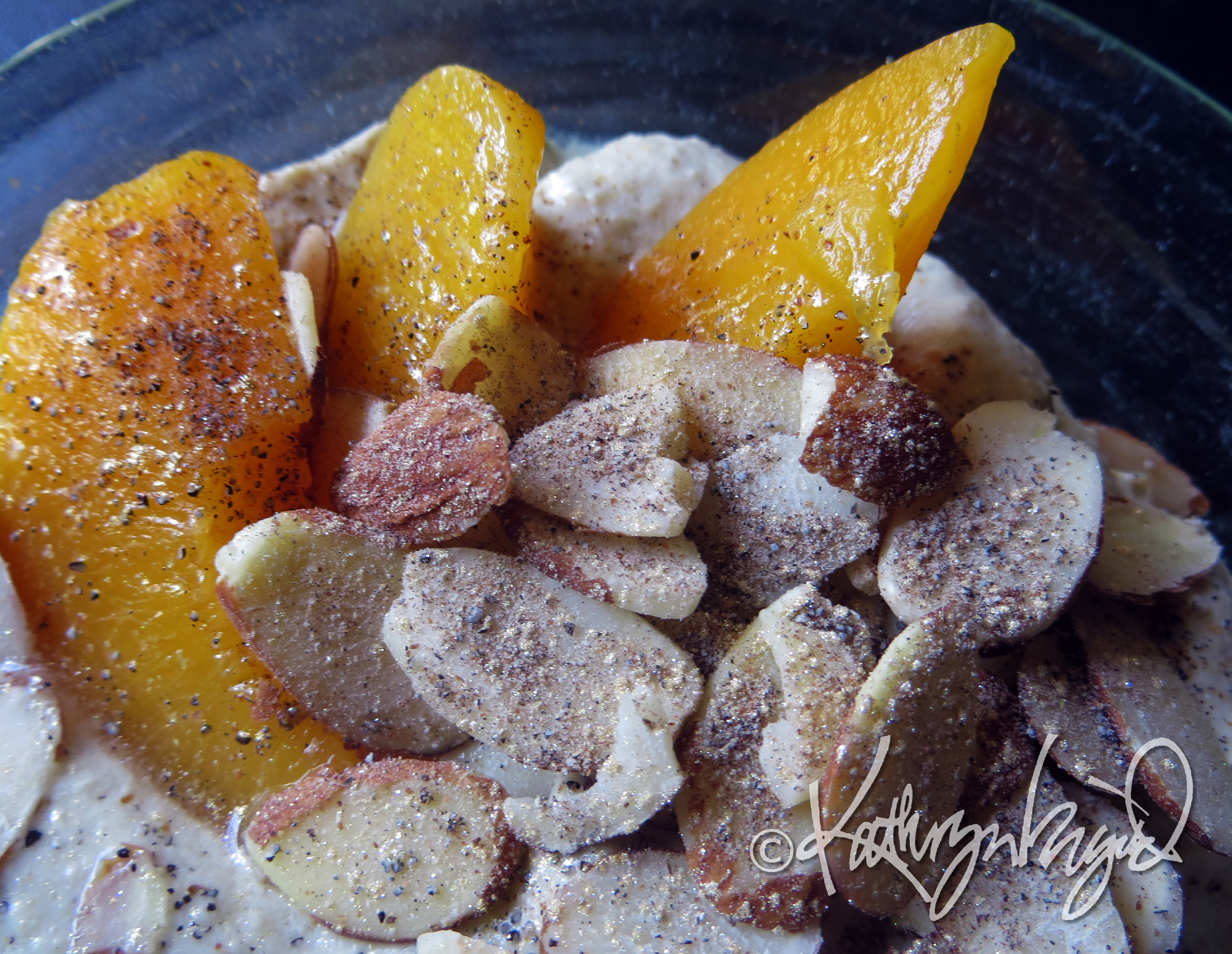
Next morning’s iteration: chop the remaining asparagus into small pieces, mix it with the leftover corn salad, stir in two eggs, pour it all into a buttered microwave-proof bowl, put a couple of small squares of sharp cheddar cheese on top, cover it to prevent spatter, and microwave this instant-omelet on High for about 4-6 minutes (‘waves vary) until done. Fast and tasty. photoDessert, later that day: another dish of lemon verbena custard, stirred with a tot of almond extract and a little ground cardamom and topped with sliced almonds and peaches. The beef was all gone at the end of the first meal, but even a few roasted potatoes of both kinds were left and made a fine mash with just a little extra butter and cream, and kept in the fridge for another meal yet. All this from one main preparation. Food is good. When it’s good enough, even better to get second helpings with ease.

photo

Foodie Tuesday: Quick Fixes & Peach Treats

I enjoy a good paella, when I can get my hands (and teeth) on it. But it’s not one of those things that in its truer forms can exactly be thrown together in a trice just because I happen to get an urge for it. But, being a fan of fried rice as well, I have been known to think to myself that there might be a hybrid incorporating a bit of both processes that gives me a plate full of paella-like food in a hurry and at least tide me over until the occasion for the real deal arises again. Having so often kept a batch of cooked rice at the ready in our refrigerator, not to mention the gifts of freezer, dried goods and canned foods, I had at least a reasonable chance of putting a faint facsimile of paella on the table at speed.photoPretend Paella

For this highly simplified variant, I made the batch of rice with a blend of broth and dry sherry and a pinch of saffron (should have used a bigger pinch, though). On top of it I put a very simple combination, which while it didn’t replicate paella closely, was reminiscent enough of that grand dish that it served as a reasonable place-holder until I can once more indulge in a beautiful slow-simmered paella. This time, I chose to saute a half cup of diced celeriac (celery root) and a cup of roughly chopped carrots in bacon fat, add a generous cup of sliced chorizo, heat that through, and add about a dozen or more large peeled, cleaned uncooked shrimp, adding water or broth or sherry as needed to keep everything plump and moist while cooking through and caramelizing a little. I didn’t season this further because the bacon fat and well-seasoned chorizo gave everything plenty of flavor. At the last moment, I stirred in a good three cups or so of the cooked rice and a cup of frozen peas, blending it all together just until the peas were heated through. One pot meal, with a touch of nostalgia, and as ever, infinite possible variations depending upon what’s in the kitchen waiting for me.

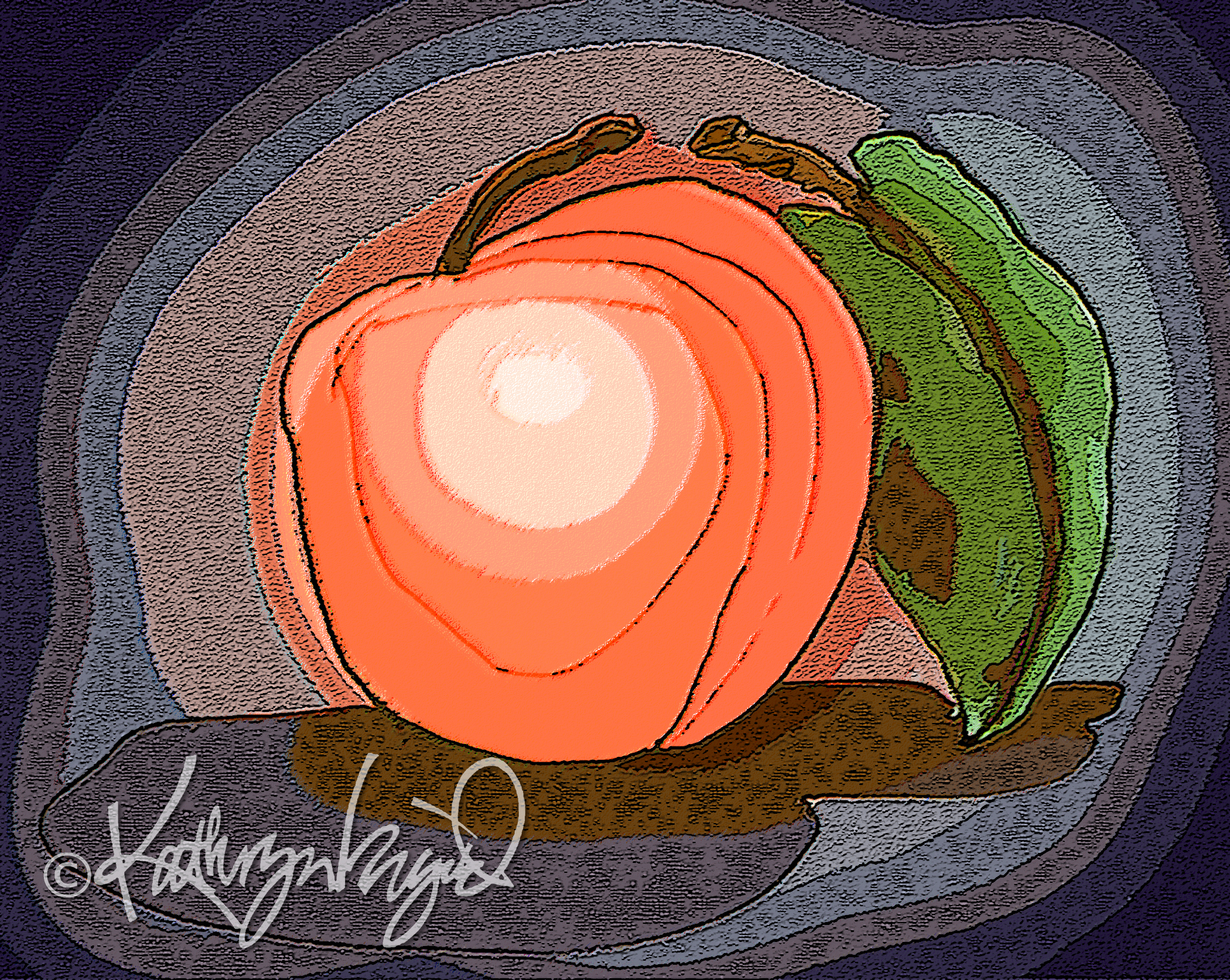
Having eaten this light and refreshing meal in warm weather, we didn’t need much except some cool drinks (icy water and a bit of cold sangria and chilled Sauvignon Blanc worked well for us three on the particular occasion), but we weren’t so over-filled that we weren’t of a mind to have dessert as well. A one-dish meal, after all, has a reasonable chance of not making diners feel coma-proximal. The afternoon trip to the grocery store, the one wherein I ascertained that there was no giant inspiration that steered me away from my thoughts of insta-paella, did inspire me with the produce section’s wafting scents of fresh fruit, and the image of underripe peaches made me salivate for the late-season ones not yet on hand.digital artworkSo I shamelessly fell back on preserved peaches for dessert shaping. The strawberries in the store had come into seasonal ripeness, but had clearly already been snapped up by earlier shoppers, so although the slightly over-aged ones remaining smelled sweet enough, the flies perched on them were a deterrent as well. Those, then, were substituted for by some freeze-dried strawberries. A ragtag pantry is not a problem in nearly the way that a lack of pantry would be, after all.

Coconut Soft Custard with Peach-Berry Coulis

While we sat eating our Pretend Paella, I had a cup of freeze-dried strawberry slices macerating in the liquid from a pint of canned-in-juice peach slices in the fridge. Also in the refrigerator waiting was a soft custard: one can of coconut milk, three eggs, two teaspoons of vanilla paste, and a half cup each of dark rum and dark maple syrup, and a pinch of salt, then whipped up and heated until slightly thickened, cooling and setting up in the fridge to thicken more fully. After supper, dessert finalizing was simply a matter of pureeing the strawberries in their liquid plus a cup of the peach slices into a smooth coulis, spooning the puree and custard in layers into dessert dishes, and topping them with a sprinkle of toasted sweetened coconut. In theory, this will serve five or six people, but we three are not theoretical exemplars by a long shot, so I’ll just say the dessert was as completely gone after our attacks as the rice dish had been earlier. Proper portions? You be the judge.photo

Foodie Tuesday: Con Mucho Gusto

So many meals, Latin-inflected or not, are best enjoyed with a nice cold glass or two of sangria. Particularly helpful is the knowledge that sangria has so many tasty potential variations that it can be made the perfect complement to nearly anything. Or substitute for it, if such dire need should arise. But I’ll concede that the many magnificent flavors of the Latin cultures are also, often, what make the sangria so wildly delicious.

In addition, the simplicity of combining the marvelous ingredients for either the food or drink portion of such a meal adds the appeal of quick preparation. While a number of recipes, including many for sangria, are improved by a little time spent melding their flavors together with heat or chilling, the actual labor time might not be terribly lengthy nor the effort especially challenging. Just gather the supplies, put them together in a dish or bowl, and wait for them to come to full fruition. Fruit being, of course, a hallmark of a refreshing batch of sangria.

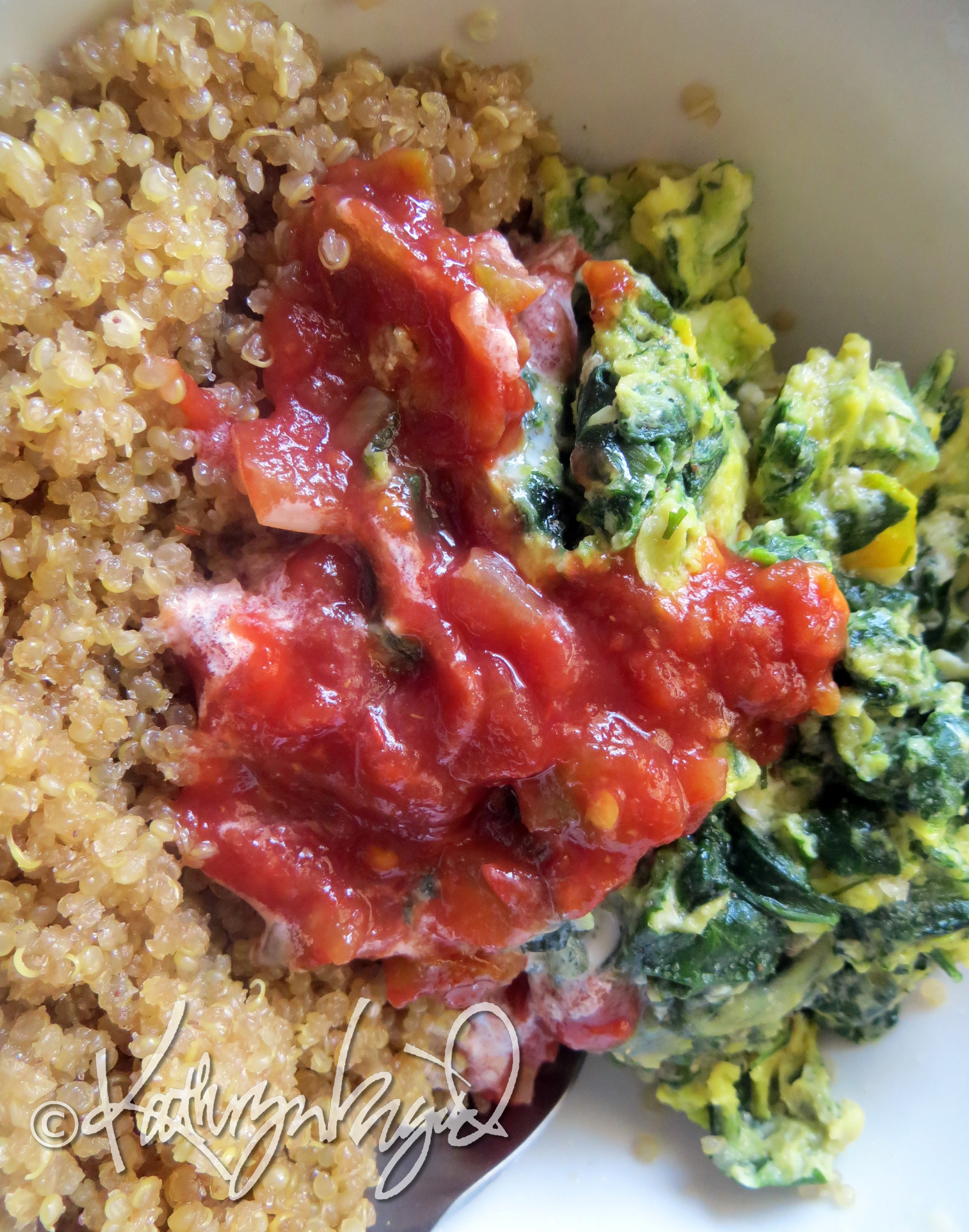
The dish of the day is so easy it can be assembled and heated in minutes. Even the slowest portion of the prep, the cooking of quinoa, can be accomplished with little trouble, particularly if like me you have a rice cooker. I use a brand of quinoa that requires no rinsing or soaking, and it works easily to prepare it in my rice cooker by combining cooking liquid (usually my ubiquitous homemade broth) with the grain in a 2:1 ratio. I do this in larger batches, refrigerating all but the day’s portion for later meals.photoNestled Eggs [one hearty serving]

In a microwave-proof bowl, put a cup of cooked quinoa and make a hollow in the center of the grain. Break two eggs into the nest and puncture the yolks a little; cover and heat the dish on High for two minutes. [A nice optional variation: stir eggs with steamed fresh spinach leaves that have had the liquid pressed out of them.] Remove the bowl from the oven and top the eggs with a handful of cheese (cotija, queso blanco or sharp cheddar, for example), re-cover, and continue to cook on High for another minute or two, until the eggs are lightly set. Spoon some nice chipotle salsa [see my semi-handmade chipotle salsa hack here] on top, add a tablespoon of cilantro-tequila pesto [just a bunch of fresh cilantro finely pureed with tequila] and some crunchy salt, and serve with a glass of cold sangria.photoCherry-Peach Sangria

Combine a Jeroboam [four bottles] of Cabernet-Merlot blend wine with a magnum [two bottles] of Riesling, one 32 oz bottle of Just Black Cherry juice, 2 cups of dark pure maple syrup, one orange, thinly sliced (including peel), and one 23.5 oz jar of sliced peaches in juice; stir gently to blend, chill, and serve.

Foodie Tuesday: Orange Foods for Your RDAF*

[* Recommended Daily Allowance of Fun]

I guess you know by now that I have a Thing about orange. Among the many orange-obsessions in my color-hungry psyche, and far from least, is the love of orange foods, whether naturally that way or made that color by virtue of their preparation or combined ingredients. Oranges, tangerines and kumquats, for example, have the advantage of already being that eye-catching hue, as do carrots and cantaloupes, peaches and apricots and a long list of other vegetable and fruit delights. Then there are the lovely delectables tinted with turmeric, annatto, saffron, onion skins and other strong yellow dyes combined with various companion colorings to create all of those edible paints that make cheeses and egg dishes and breads and cakes and so many other desirable comestibles burst out in alluring orange flame. It’s often a bonus attraction of particularly succulent foods that they call to us first with this beacon of color.photoMirepoix, for example, is not only a magnificent contributor of flavor and texture to a vast palette of palate pleasers but brings the come-hither warmth of the carrots’ orange to add visual appeal to those dishes. It takes very little besides to make, for example, a simple omelet or frittata both delicious and pretty, and they can be further customized with many ingredients that will further both the orange coloration and the flavor with a happy boost, as in the case of the one seen here that added only a pinch of dill and a toss of finely diced summer sausage (a.k.a. beef stick), whose fat when heated usually oozes with orange glory.photoMany orange-colored foods are not only intensified in flavor but also in their punch of sunny hue by the concentration of the drying process. Dried apricots benefit in both ways from gentle dehydration. The brand of boxed chocolates I grew up enjoying (See’s), includes in its roster of stellar treats a juicy little bite called Apricot Delight that is so good it actually deserves a place in a box of chocolates–and you know my religious beliefs about chocolate: that’s a massive concession–so recently I bethought myself to attempt a sort of replication of its goodness. I think I did a pretty fair job, but will leave it to you to decide. I think these could be made by hand mincing, crushing and chopping, but by far are best made in a food processor or powerful blender.photoApricot Slice Candies

Equal parts of plump dried apricots, toasted sweetened, shredded coconut and roasted and salted pistachio nut meats–in this instance, about a cup of each–go into the processor with about 2-3 tablespoons of butter (or, if you prefer, solid coconut oil) and a handful of candied citrus peels. Whirled together until the solids become a coarse sandy mixture, they should have enough butter in them to become a tender but malleable dough (add more butter if needed) that can be formed into a log (about 2 inches in diameter), rolled into parchment and refrigerated until serving time. To serve, simply slice the chilled dough into 1/8 inch thick coin slices. I found these addictive enough as they were, but surely there would be no harm in adding candied ginger to the peel or throwing in a pinch of cayenne, a little splash of rose- or orange-blossom water or almond extract, or some sesame seeds, to name a few possibilities. Why, even some dark chocolate mini-chips thrown in after the blending or melted to coat the coins might not be amiss and could conceivably satisfy the diehards who mightn’t be as forgiving as I’ve been about finding these beauties in the box of chocolates, but I’m content to let them shine in all of their orange cheeriness, after all.photo

Foodie Tuesday: The Daily Grind Need Not Grind Us Down

When I did a bit of checking on it, the name of my variant of Shepherd’s Pie seemed to be, by rights, ‘Pastel de Carne y Patatas’–but you know me, I can’t stick to proprieties very well. So I named it the more mellifluous sounding ‘Pastel al Pastor’, thinking as I do that shepherds get very short shrift in this day and age and can use a little flattering attention. What the dish is calls for it anyway, for it’s a rustic Mexican-tinged take on the comfort-food standard Shepherd’s Pie. In any event, like many longtime popular recipes, it got its start partly by using ground or minced meat, a hallmark of well-fed poor people’s diets since the cheaper cuts of most meats can become tenderer and allow much more expansive fillers and the disguise of plenteous seasonings in order to be palatable while still being relatively affordable.

Rustic and comforting it may be, but the simplicity of the end result in this recipe belies the multifaceted process by which it’s made. Don’t let that put you off, though, because it can be made in large quantities and frozen in smaller batches between times, so it can easily become a quick-fix dish after the first preparation. Shepherd’s Pie, in the vernacular, derives from the longtime concept of Cottage Pie, which in turn originated when cooks began more widely using potatoes to stretch those more expensive ingredients of the meal, the meats. Typically, these pies (and there are versions of them in an enormous number of countries, cultures and cuisines) are simply meat dishes, often made with the ‘lesser’ cuts or a mixture of leftover meats, with a potato crust. Probably the most familiar of them here in the US is the minced meat (and often, vegetable) mixture topped with mashed potatoes that is served in many a British pub and home kitchen and that we co-opted in our own American ways.

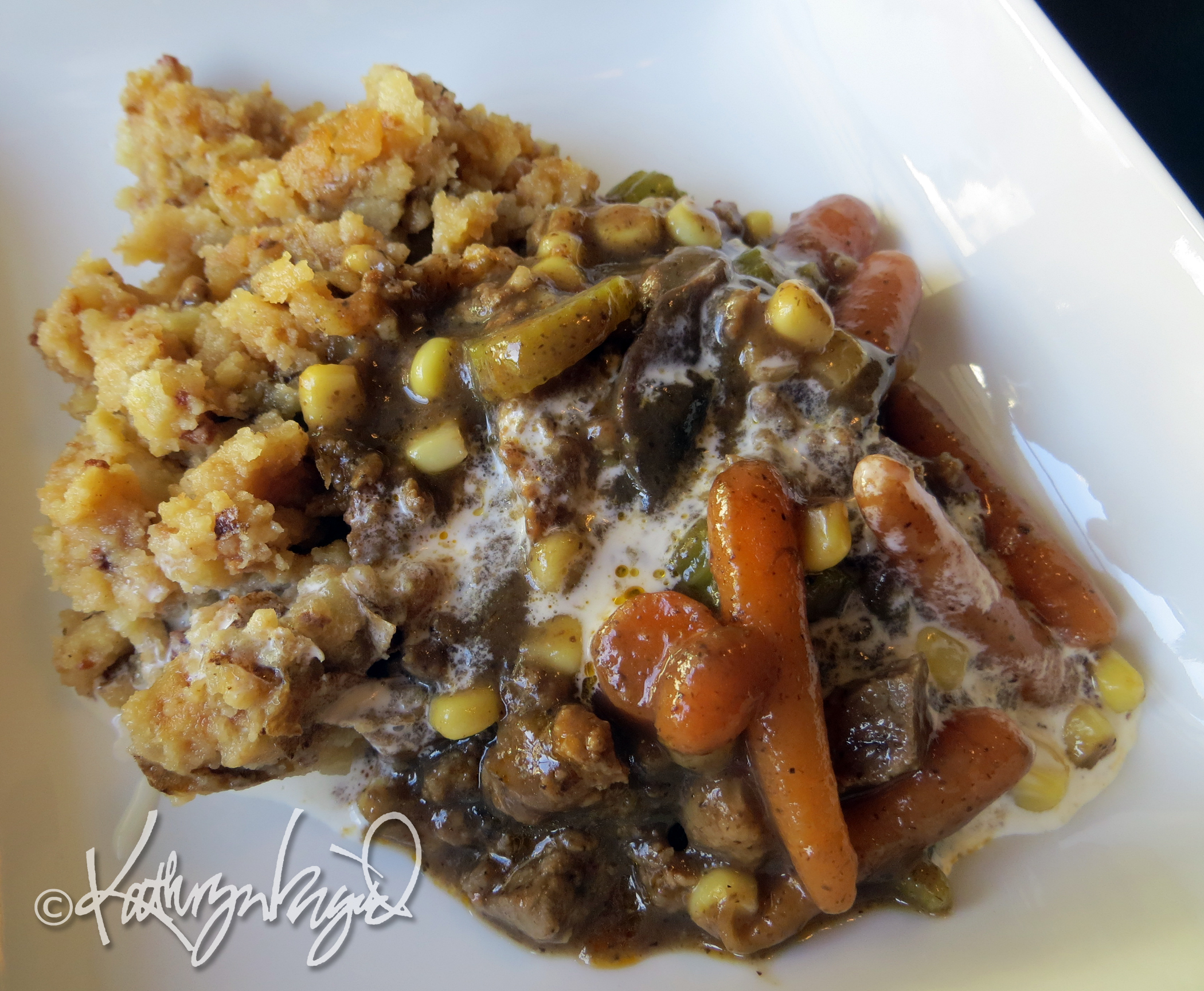
Mine, on this occasion, was to veer as I often do toward Mexican seasonings and enjoy my own little twist on the dish.photoPastel al Pastor

Seasoned minced or ground meats, topped with vegetables and mushrooms and gravy and served over smashed potatoes make altogether a hearty and countrified dish, not at all difficult to make but taking a little bit of time because of its individual parts. I make this in a generously buttered baking dish both because it’s easier to clean afterward and because–you guessed it–I love butter.

The bottom layer of the dish is made by frying a mixture of equal parts ground beef, pork and lamb, seasoned freely with salt, black and cayenne peppers, chili powder, smoked paprika and lots of cumin. Those without supertaster spouses will likely want to add some garlic powder as well, though it’s not essential. A splash of rich chicken broth or a spoonful of good chicken bouillon adds a nice layer of flavor, if you have it. Next, add a heaping spoonful of tomato paste and enough good salsa to make the meat mixture very slightly saucy, and just as the meats begin to caramelize, you’re done. [My go-to, if I’m not making my salsa by hand, is Pace’s mild Chunky Salsa with a prepared chipotle en adobo blended in thoroughly–I see on their web page that they’re reintroducing their chipotle salsa, so that’s probably fine too.] Drain the fat from the meat mixture and spread it in the bottom of your baking dish.

While the meat’s cooking, you can be preparing the vegetable-mushroom layer. I mixed about equal amounts of small cut carrots, sliced celery and sliced brown mushrooms, covered them with some of my ubiquitous chicken broth and cooked them until tender. Then I pureed half of them with a stick blender, adding a heaping tablespoon each of chipotle en adobo (that’s about a half a pepper), unflavored gelatin and potato flour for flavor and texture, mixed that with the remaining vegetables, and poured it all over the meat. I topped this with a cup or so of frozen sweet kernel corn and got ready for Potato Happiness.

Today’s version of this meal, Ladies and Gentlemen, was potato-fied with leftovers. I had half a baked potato and about a cupful of good french fries in the fridge, and they worked wonderfully when warmed with some cream and a touch of salt and smashed roughly. It would have been just fine to do the typical Shepherd’s Pie treatment of spreading the potatoes over the meat-and-veg before heating the dish through in the oven, but since this was all concocted of things I had around (taco meat I’d made and frozen, salad vegetables and leftover potatoes), on this occasion we just put nice heaps of mash on our plates and spooned the rest over them like meat-and-vegetable gravy.

For the more normal approach, I’d roast, boil or bake potatoes, season with salt and pepper, and combine with cream for the mash and then top the casserole, possibly adding some nice cheese either on top before browning it in the oven (a mix of shredded cheddar and Monterey jack, for example) or as a fine garnish, a serving-time crumble (cotija on top, anyone?). But ‘normal’ is overrated, and the dish was mighty, mighty tasty even deconstructed in this way. And it’s still flexible–yes, even a dish concocted of multiple leftovers has variety left in it, my friends. Add some peas (so many tasty cottage pies have peas in them), cauliflower, green beans, or any number of other vegetables. Make it spicier. Soup it up into a stew, with potato pieces incorporated. Change the seasonings to Indian and make it a post-Colonial curried version. You get the drift.

Thing is, of course, that this is precisely how the dish was conceived: as a loose general structure into which any number of variables could successfully be introduced, depending upon what was on hand. Save time, save labor, save money. Eat delicious potatoes and whatever flavorful wonders you can afford and imagine to combine under them.

Well, get along with you now, you know how it works. And you can be pretty sure that it’s going to taste good. That’s how folklore ‘recipes’ survive–on flexibility and reliability. Oh, yeah, and great fillers.

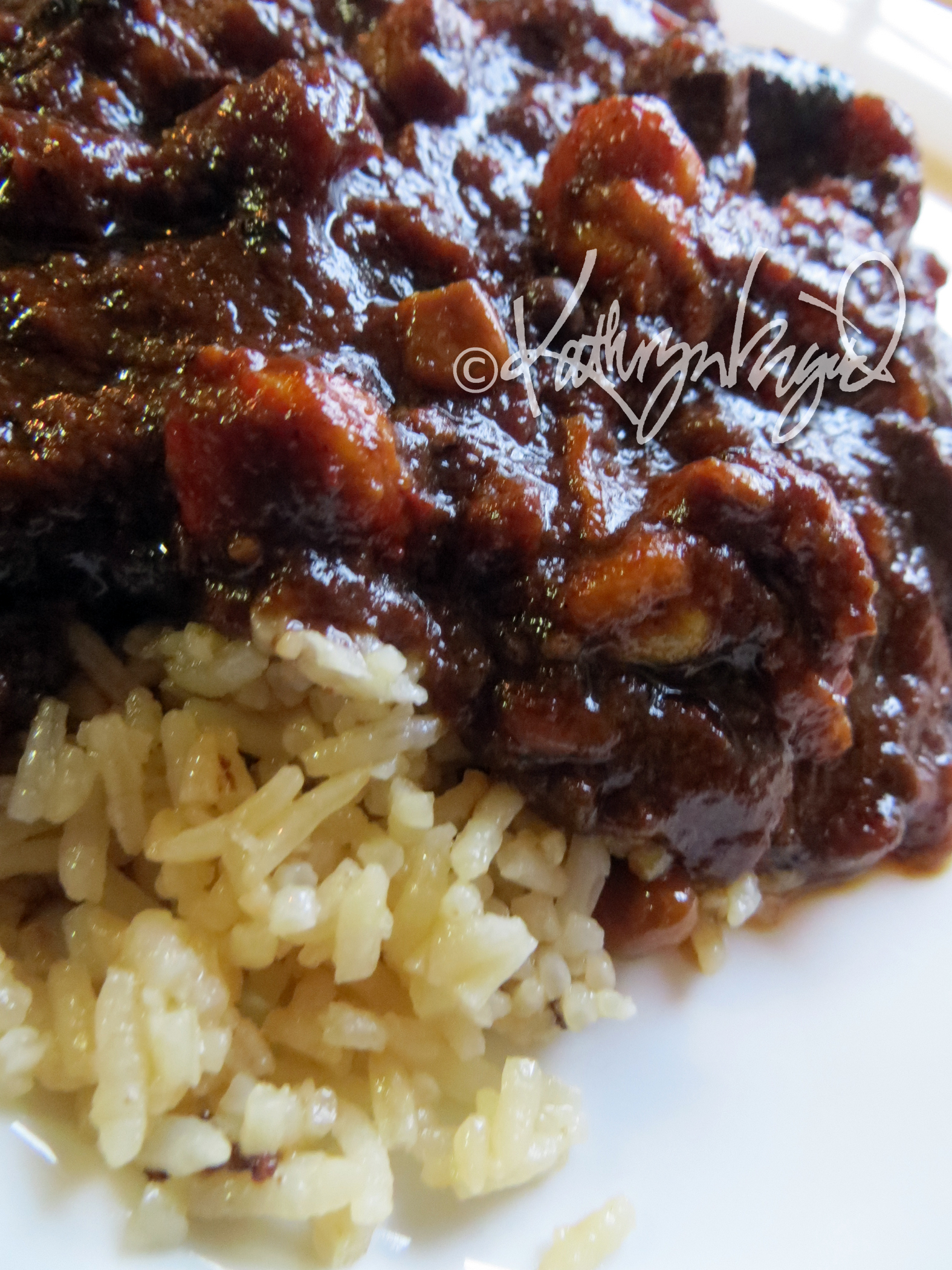
Even chicken, which sometimes gets short shrift when it comes to minced meat dishes because it’s left too unseasoned or cooked in ways that make it too dry, can make lovely ground meat dishes with a little effort. In the latest instance, I chose to precook mine in a sort of meat loaf sous vide, keeping the juices and additions in and on it until it was fully plate-safe, but this could easily be chilled in its loaf form, sliced and pan-fried without the intervening hot bath, I’m sure. And a food processor makes the loaf prep a snap, but it can be done with a knife and a pair of hands for mixing, too. In any event, I veered more toward Italy this time with my glorified chicken meatloaf concoction.photoCotolette di Pollo e Pancetta

[About 6 servings.] Mince and mix together the following and shape into a compact loaf: 6 boneless, skinless chicken thighs (dark meat stays moister), 3 ounces pancetta, 1/4 cup shredded Parmesan cheese, 1 teaspoon thyme, 1/4 teaspoon ground black pepper, 1/8 teaspoon powdered lemon peel, 2 eggs, 4 tablespoons cold butter and 1/2 teaspoon minced dried shallot. Wrap and chill the loaf until ready to fry it, or do as I did: vacuum pack it, cook it sous vide like a confit (low and slow–I let it go overnight), and then refrigerate until ready to use.

When it’s time to fix the meal, cut the loaf into slices about 1/4 inch thick and fry them over medium heat until lightly browned. With a well seasoned iron skillet or a nonstick pan, the butter in the loaf is quite sufficient to keep the slices from sticking, and they get a nice little lightly crispy crust outside their tender middles. I served mine with slices of fried cheese (any slow-melting mild cheese would do for this after-the-fact application, or you can top the meat slices with faster-melting sorts like mozzarella or provolone as the meat cooks) and a simple sauce cooked down from jarred passata (simple tomato puree–I like the Mutti brand passata I used, pure tomatoes with a little salt) mixed with the loaf’s excess juices, salt and pepper and oregano to taste. On the side, little ramekins of rice and buttered green beans are plenty, though of course there’s always room for invention on the plate. The whole assembly, since I’d put up both cooked rice and the confited loaf in the refrigerator beforehand, took not more than fifteen or twenty minutes to prepare.

¡Buen provecho! Buon appetito! Now, stop mincing around and get eating!

Foodie Tuesday: Savory, then Sweet

Dinner and then dessert. That’s the way I was raised, and I think a zillion other people had the same, despite the urge most children I know have always had to eat dessert first–and possibly, to stop there. Now that I’m wonderfully old, I can do that, and don’t hesitate to indulge now and then. But along with my well-known love for combining the sweet and savory together, whether it’s merely by adding a bit more salt to desserts or it’s designing a meal to have a wider range and greater balance between the savory and the sweet, there are plenty of times when a semblance of conformity to the old norm is perfectly satisfying to both my empty stomach and my sweet tooth.photoThere is much that I love about the simplest of meals, not only because it pleases me that they’re easy to prepare but because they also allow–nay, invite–the savoring of their few and uncomplicated parts. A chicken-and-noodles dinner, for example, can be barely more than those two ingredients and fill me comfortably and contentedly. Chunks of roasted or baked or fried chicken tossed in with fresh fettuccine that has been cooked in rich chicken broth (this time until the broth was thickened to sauce, but other times, just as a dandy bowl of chicken & noodle soup) need little but a helping of vegetables or two alongside and they become both welcome nourishment and a little trip down memory lane. My hunger is sated and I am reminded of many a happily simple meal gone by.

But then I succumb, more often than not, to thinking that if this meal is a little like those my mother made, why then it ought to end in dessert as well. And as citrus so complements chicken in nearly any guise, why not make a citrus dessert to follow a chicken dinner? I could certainly opt for the ever-lovely lemon bars that brighten many a table, yet I am not exactly known for coloring inside the lines when it comes to an entire menu, so on the most recent chicken-noodle dinner occasion, I took a slight deviation from that norm. I made what you could callphotoSimply Lime-Coconut Bars

[I took my first cue from a recipe for ‘instant’ lime curd made in a Vitamix so I could skip the slow and attentive cookery most curd recipes require. Our household blender is nothing so sophisticated–or expensive–as a Vitamix and doesn’t reach that machine’s level of heat, but since I was using the curd mostly for these cookie bars where it would subsequently be baked (and because I have no fear of eating raw eggs anyway), I went ahead with the blender I have. Needless to say, besides my alteration of the process I changed the ingredients to the point that you’re now getting my recipe, not that lovely published one I found elsewhere.]

Lime-Coconut Curd (Makes 6 servings.Theoretically.)

In the blender, whiz 3 whole eggs until frothy, adding ½ cup sugar + 1 hefty pinch of salt and ½ teaspoon of vanilla as you go; add ½ cup melted, very hot coconut oil in a thin stream, followed by a stream of ½ cup fresh lime juice, and keep blending it until it’s good and smooth or you think your blender and you will both swoon from overheating.

Set the curd in the refrigerator if you’re taking very long to prepare the rest of the cookie bar recipe, but if you’re like me, it’ll already be in the fridge from a couple of days ago when you made a double batch and spooned out a few helpings of the curd, plain, to snack on between times. As one sometimes must do. And I think you do know what I mean. Meanwhile, let us return to our cookie bar recipe.

Lime-Coconut Bar Cookies

[I am told I will be a complete failure as a human being if I don’t add the curd to a warm, just-baked crust layer, so I conform to the Rules at least that far. And I lined the bottom of the 9″ x 13″ pan with a single piece of baking parchment so that I could easily lift out the bars when ready.]

photo

Okay, I can’t resist adding a dash of additional crunchy salt on top some of the time. Whether I eat them in any particular order or together, I do love both the savory and the sweet.

To make the crust, blend 1 cup flour (I used gluten-free flour), 3/4 cup coconut flour, 2/3 cup confectioners’ [powdered] sugar, 1/4 cup cornstarch, 3/4 teaspoon salt, 1/4-1/2 teaspoon ground cardamom and 1/4-1/2 teaspoon almond extract. Cut 3/4 cup [yes, really! What, you think I’d lie about adding lots of good fat?] of cold salted butter into this dry mix until it becomes a crumbly, sandy blend and then press it evenly into the pan. Refrigerate this for 30 minutes. Preheat the oven to your equivalent of 350°F [as you know, my oven has its own ideas about what that means, so I adjust accordingly]. When the crust has chilled, pop it into the oven for about 20 minutes or until it’s beginning to brown lightly. Out of the oven it comes. Reset the oven to 325°F, stir up the curd

, spread the curd over the crust, and pop the pan right back into the oven, for about 20 minutes or until the curd has set when gently touched. Almost done, now. Turn off that oven of yours before you forget, let the pan cool on a rack for about another half hour, and then you can take a quick swipe around the perimeter of the bars with a knife tip to loosen any stuck things before lifting them out in their parchment sling. These, like any citrus curd topped bars, are pretty to serve with a final dusting of powdered sugar on top, but any you’re saving for later should get dusted directly before serving, as it’ll absorb into the bars in the meantime. If, however, you’re going to devour the entire pan in one sitting, who am I to blame you? Powder up, my friends. Life is short and dessert is long-awaited.

photo

Or there could be pomegranate and pistachio, for a change . . .

The second time around, I decided to try the bars with a little north-African influenced twist: substituted salted, roasted pistachios (ground to flour) for the almond flour in the crust, decreasing the added salt to 1/2 teaspoon; made the curd with pure pomegranate juice and butter instead of the lime juice and coconut oil, and because the curd wasn’t quite as bright in either flavor or color as the original recipe, made a little layer of zing from 1/4 cup each of pomegranate juice and ginger preserves, pureeing them together completely and softening a tablespoon of gelatin in them to thicken slightly, and finally topping the bars with whole pistachios and a dusting of powdered sugar and edible glitter for a dash of, well, dash. Messy, yes. Edible? Oh, yes. You people do know how I like my variations on a theme! And if we’re going to have dinner first, then I’m not opposed to two desserts to make up for the waiting . . .

Foodie Tuesday: Best of the Wurst


photoLong before anyone imputed a less well-mannered meaning to the phrase ‘sausage-fest’ there were plenty of people who appreciated the finer points of delicious minced and seasoned meats in casings (or patties) enough to not only dine upon them but celebrate them as well. Among those people, families and cultures where sausage is known and admired, it may begin in early childhood with tasty little links at breakfast or frankfurters, better known in much of the US as hotdogs, served up for lunch or supper, and from there it’s off to the races.photoWhat goes with sausage? What doesn’t? But I have to ask as well: does good sausage really have to have anything go with it? Okay, maybe it’s got to have an accompanying drink to be at its best, and a good beer is hard to beat as a way to wash down a good sausage, whether it’s a fine adult beverage or an outstanding root beer. All ages covered by serving different versions of one libation!photoNow, if I’m hungry for a good southern-style sort of sausage, say perhaps a savory hunk of Andouille or a juicy smoked Texas sausage, a piece of skillet-baked cornbread is a perfect taste to enjoy on the side and ideal, too, for sopping up the sausage’s drippings. Did I say smoked Texas sausage? Oh, yeah, maybe a whole bucketful–nothing like a classic Tejas BBQ joint with a tub full of smoky rings of hickory-scented sausage to get the salivary juices flowing just as fast as the hot-links‘ juices.photoOf course, the American south is far from the only place on earth producing miraculously delicious kinds of sausages. I have devoured plenty of fantastic ones on foreign turf, and gladly. Another accompaniment that nearly always appeals is the ever-welcome potato. From plain boiled, baked or mashed potatoes to crisps and chips and all sorts of fried ones, there are endless wonders that can be wrought from potatoes to enhance to beauty of sausages. One of my favorites, both in the German-speaking lands and at home, is Rösti, a crispy-tender variant of what we know as hash browns in the States, and since it’s so quick and easy to fix and sausages are too, it’s not an uncommon meal hereabouts.photoSometimes having an exclusively meat-and-potatoes meal isn’t entirely enough, and a bright vegetable addition becomes a delightful contrast in texture and flavor and a palate cleansing lightener of the occasion as well. Often, a simple, quick salad like a melange of Mandarin orange segments and cut sugar snap peas, toasted sliced almonds and pine nuts, and light lime-honey-ginger vinaigrette makes just the right complement to the fat happiness of sausages and starch.photoAnd sometimes the sausage is most welcome incorporated into a well-loved main dish. It might be Italian sausage in a classic red sauce; could be chorizo in a glorious paella; may be a welcome casserole of Cassoulet. Last week, it was Gumbo loaded with minced ham, crawfish tails and both pork and beef sausages all playing along nicely with the okra, corn, carrots, celery, onions and bell peppers cooked for a long, low, slow simmer in homemade bone broth and store-bought fire-roasted tomatoes and a bottle of Czech beer, seasoned with bay leaf, cloves, black pepper, cumin, smoked paprika and premixed Cajun spice and thickened at the last just a little further with the traditional filé (sassafras powder) before being spooned over broth-cooked rice. Next week, it might be time for bangers and mash, kielbasa and noodles, or possibly just some marvelous eggs, scrambled until custard-like and served with sage-scented breakfast sausage.photoAnd no, all of this goodness is not reserved for those of the manly persuasion (slangy phrases notwithstanding). This here girl-type person, for one, will fight for her share of the feast, so I guess it doesn’t qualify as a total sausage-fest, if you know what I mean.