Get Ready to Get Scared

Autumn is a strange time of year, isn’t it—the season when the evidence of the end of all living things surrounds us in greater than ever abundance is also when we’re imbued with the sense of newness as the school year and performance seasons begin. One month turns into the next over a period of ritual remembrance for the dead, a time that has managed to segue in modern times into a monstrously (pun intended) popular holiday rife with commercialism and partying that have in most cases long since obliterated any sober or spiritual content that once attached to the occasion. Confusing, perhaps, this odd mix of the haunting and the hilarious, the grotesque and the goofy.

I rather like this time of year for that very reason. The bizarre and the beautiful make such interesting partners, don’t they. It’s so perfect, the way this sort of thing reflects the natural intersections of the true and the terrible, the gruesome and the glorious—of life and death.

Me, I’m scared of practically everything. I’m not all that enamored with the more popular forms of terror-tainment, the horrific haunted houses and splatter movies, never mind the creepy cults of murder groupies and the like. But I’m human; I’m not immune, either, to a good, cathartic thrill and chill. So I get my kicks in the particular ways that allow me to feel a modicum of control, usually because I made up the scary stuff myself. As puppet-master I can enjoy the frissons until I’m, well, not enjoying them, and then put the story on hold until I’m ready to face my own death again. Mortality is such an adventure. I know you think about it, too, whether it’s Halloween month or not. Meanwhile, sleep well.Digital illo from photos: Let's Get Scared

Keeping Watch with Love

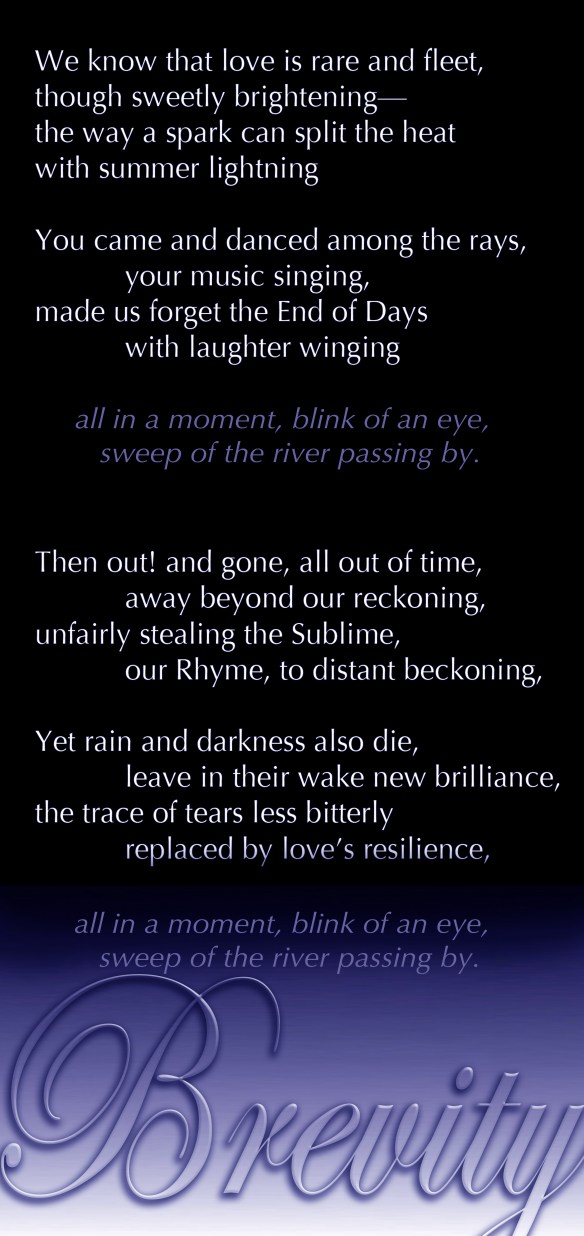
Text: BrevityJust because there are designated days (All Saints, Memorial Day, Defence Day, Anzac Day, Volkstrauertag, Poppy Day) for recalling those we’ve lost doesn’t mean in any way that we restrict our respectful, loving and admiring remembrances to those days. Those whom we hold in our hearts remain there, living or not, forever. That’s our path to peace.Digital illustration from a drawing + text: May We All Rest in Peace

The guarantee that we will die, and that all of those we hold dear will die too, means we will do best by finding ways to embrace and recall, most of all, the good and the uplifting things from their lives and ours, and expand on such things for the sake of our finest predecessors’ honor, if not our own.

Hot Flash Fiction 13: Eternity Beckons

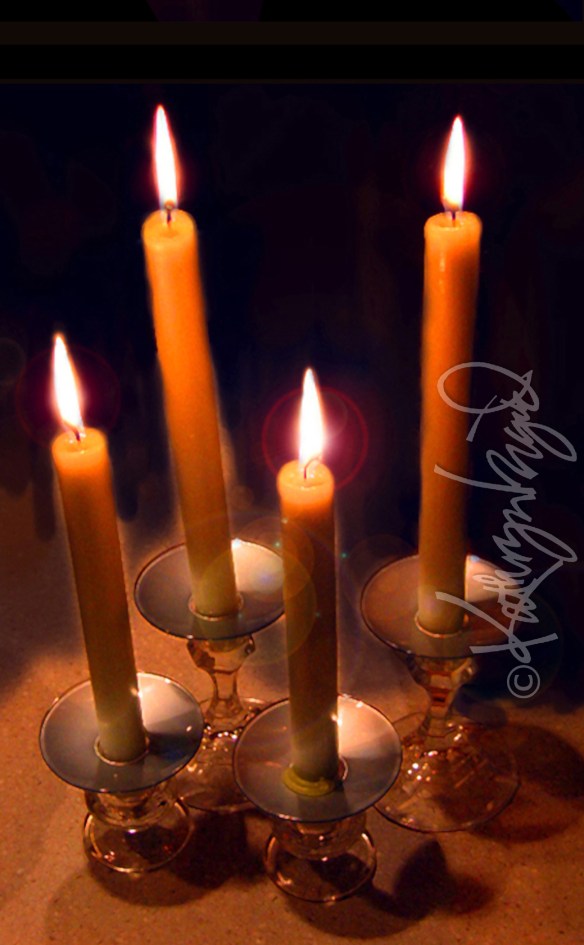
Photo: Science by CandlelightEternal life has always been the masters’ magnificent goal; no wonder that great magister and alchemist Osteodaimon was also determined to solve this elusive mystery himself, to plumb the Stygian depths of knowledge collected by the most piercing minds and intrepid souls ever to walk this dangerous earth. He began with years of reading, apprenticeship, exploration, privation, and experimentation. What Osteodaimon learned most quickly was that the process of becoming immortal was in fact incremental; it was a long series of tiny steps and grand leaps, of fallings-backward and soaring upward, all of which took him through both his long and arduous life of study and also a few strange periods of stasis, in which, all told, he began this mystical transformation of his into one truly able to transcend death. Many and terrifying were the missteps and passages, rites and elixirs, incantations, and the heart-shaking, wrenching feats of bravery and agility required of his profound intellect and the ever-disintegrating body that sought answers from that abyss.

One winter’s night, when he had traversed the grueling routes both between his birth and the ninety-two cycles of the seasons that already marked him as uniquely time-defying by his ancient era’s reckoning, and between the smoothly un-furrowed innocence of youth and his avidly acquired brilliance, he recognized in the ice crystals forming along his lashes the last increment required to complete his journey. Carrying the tinctures and potions that would preserve his last bits of mental and physical strength for the ritual, he set forth in the falling snow and moonlight to go farther into the frozen wilderness than he, or anyone, had ever plunged before. He began to notice as he went forward that the slower he moved, the faster the vastness of ice seemed to recede before him, until it was clear that his pace of progress was directly opposed by the increasingly swift passage of time. He knew that his own final breath was hardly a hairbreadth ahead of him, racing both toward him and away, and that only by letting the speed of it catch up with the glacial slowness he himself was approaching, at exactly the right juncture, and by taking the last dram of his precious medicine at exactly the same instant, could he affect the perfect circumstances for his final transformation.

Osteodaimon finally marked the spot. He lay down on the bottomless swath of blue-black ice, took the last draught of his alchemical magic into his gaunt grey mouth, and stopped. He became fused to the ice there instantly, his eyes made into a pair of wide, dull mirrors for the relentless moon and faded stars of perpetual polar night.

When he returned to himself and forced his eyes to focus again, his vision was oddly fragmented, and he sensed that he had drifted from his last stopping place far more than he had imagined he would have done. But the new place, also moonlit and cold, was pleasant enough, and he knew that soon his vision would clear and the slight buzzing in his ears would pass as he regained his strength. His sense of physical power, indeed, astonished him immediately as it returned; it was not only as though he were young again but as though he had new and exhilarating powers that would easily surpass those of his remembered early years, when he had labored so mightily in his pursuit of conquering death. This new Osteodaimon was a super-being to be reckoned with, and he took off at great speed to see what he could now accomplish in this next passage of his life.

It startled him how quickly he was able to go from place to place, how he seemed now to see things from so many new perspectives and rarely wearied of dashing about, looking, stopping to sup cold water or wine, or have a little food when he chose, but endlessly pursuing the delights of his renewed life. We cannot be sure, for history has failed to record all of the details perfectly, but it may be that it was only a matter of days, or at most weeks, before he realized that he could no longer read.

This proved a surprising disappointment that he would attempt to address soon enough. Not quite soon enough, perhaps, that he was ever able to learn the story of how, in A.D. 1867, a small group of botanists on the steppe discovered a perfectly preserved man encased in ice at the edge of a receding glacier. How the intrepid scientists chiseled their magnificent find out of his tomb in a manageable block and labored to drag it back to their fledgling university by sledge and wagon and train. How they built an ice-house museum room for the express purpose of preserving and examining this amazingly lifelike ancient man. How, one awful night in 1871, the city and that little-known museum in it were consumed by fire. How the ice-entombed mystery man had been spared cremation himself only because the conflagration had taken so long to melt his ice block that he remained weirdly, wonderfully intact, his eyes dully mirroring the moon once again.

Surely Osteodaimon could not have learned how to read again even in time to make sense of the tale that followed, of the chaos after the city’s destruction that prevented anyone from having further sightings of this miraculous time-traveler that had so clearly been the earthly form of the great magister and alchemist himself. Even if he had been able to read again, there would be no document to explain that his ultimate disappearance meant neither that he had finally ceased to exist nor that his old ideas of perpetual life being possible were entirely incorrect, for in the days and weeks immediately following the Great Fire, there was far more concern for removal of dangerous debris and rescue of injured and homeless known victims than for tidying up the remnants of an obscure museum. Had there been a witness to record it, there might have been something that Osteodaimon could hope to learn to read, something telling him that his thawed remains had rotted in the post-apocalyptic drear of an abandoned building, showing no more activity than the usual decay and natural recycling would show.

He might also, of course—had he been able to read it—thought that perhaps the early philosophers and proto-scientists were not entirely wrong but only slightly misdirected in their belief in spontaneous generation. For he would have found in the documentation of the ice-man’s progress that feeding on his mortal remains had been the usual generation or two of avid creatures that led to his emergence, eventually, as revivified carbon in the form of a blowfly. Once alive, always alive, but not, perhaps in precisely the way he had long imagined it.Digital illustration from photos: From Here to Eternity. Maybe.

Memento Quod Vivitis

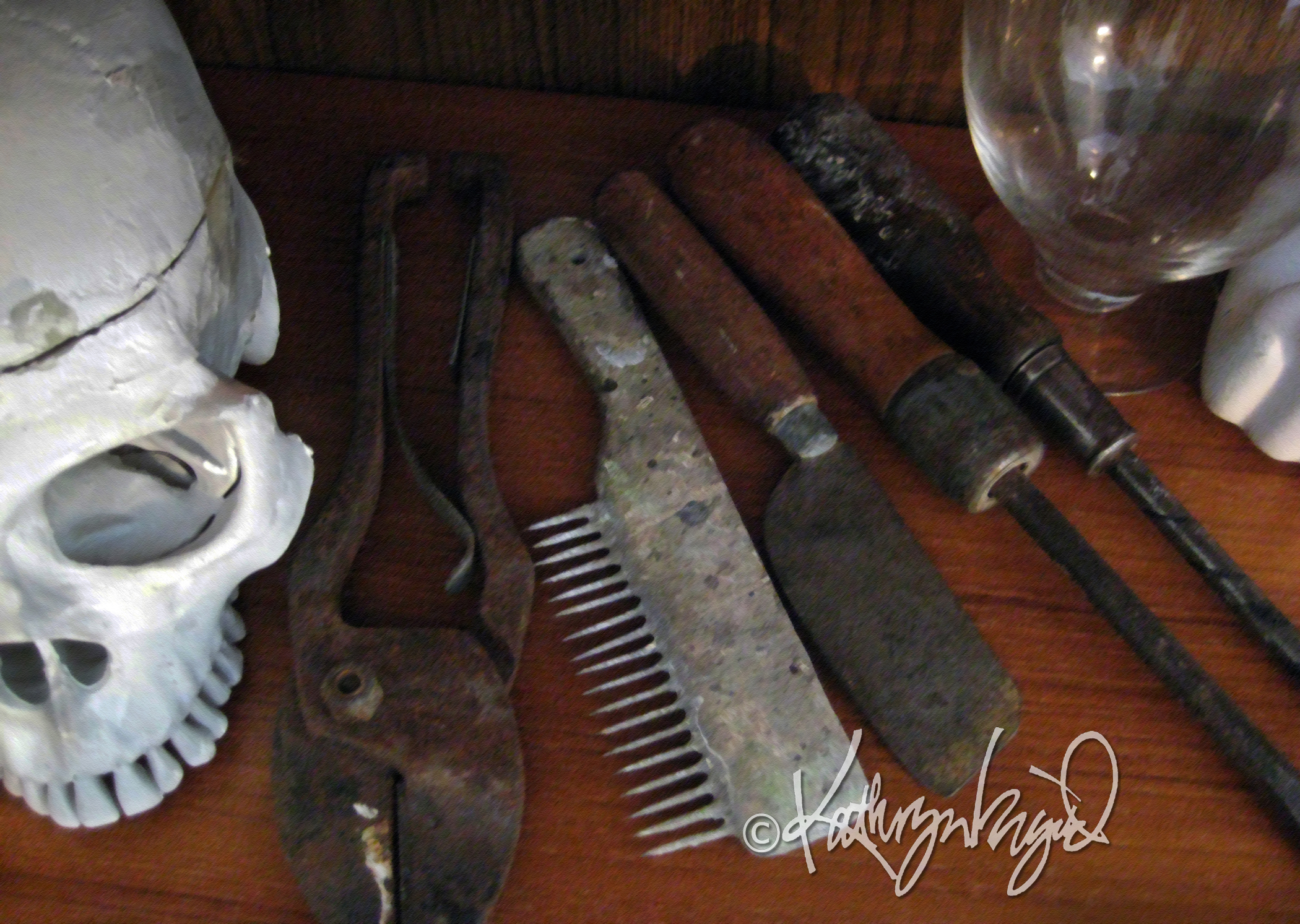
The longtime artistic tradition of the ‘memento mori‘ has always appealed to me. I think it’s valuable to recognize our mortality and the limitations of our time on this plane to devote to earthly enjoyments, the better to value them fully. Not to mention that I love skeletons and a lot of that stuff so often used symbolically in these works. I’m not disheartened, horrified, or unsettled by death and the subjects surrounding it, under everyday circumstances, in the way that some people are.digital illustration from a photoThe main thing is, I think it’s even more important to (as my guesswork-Latin post title suggests) remember that you’re alive. It’s not enough motivation to live a full, meaningful, rich, purposeful life just to know that you’re going to kick the bucket one day; everybody knows that, and it’s probably not even a majority of our kind that actually give serious thought to being fully present in their lives and making the most of their life spans. I know for certain that I haven’t always been especially good at such things.photoSo I’m rather happy to have an eye-opening, soul-tweaking glimpse of my little collection of death-defying totems, kept in view around my home and work spaces, at any moment when they happen to some into my field of vision. Not a bad way to refocus me and make me feel especially alive.

The Price of Innocence

Wye Not

Wye was an impoverished man

Because he didn’t know

The answer to all questions was

‘Because I told you so’—

Wye was a pauper and

He lies in Potter’s Field

Because he tried to find the truth

That others kept concealed—

Wye lived in such poverty

And died alone, unmourned,

Because he kept on asking things

Well after he’d been warned—

Poor Wye was a mortal fool

Despite being a hero:

In heaven, truth makes you a saint—

On earth, it makes you zero.graphite drawing

Meditations

digital collageStillness at the Edges
I
We stood along the shore at break of day,
The water lapping gently at our heels,
And heard the distant crying of the seals
At gulls for stealing all their fish away–

The dawn was chill and misty, palely blue,
Our hearts in morning shadow just as cold,
And bone and sinew feeling early old
As soul and body waiting day will do–

The sea was restless, slowing at the last
To push up foam as streaky as the clouds
And gather shells and pebbles in those shrouds
Around our feet, we statues standing fast–

All this, because our spirits captive are
Until revived by sun, our morning star.
digital collageII
So lifeless, silent, still and cold are we
When gold has yet to tinge the morning sky,
So empty is the world but for the cry
The seals and gulls raise up in minor key–

So heartless is the morning chill ashore
We stand like stone and cannot take a breath
Until the sun releases us from death
And brings the flame of sentience once more–

At last the light of day draws us to wake,
And we’ll bestir ourselves to act and thrive,
Rejoicing to discover we’re alive
Until the world’s foundations start to shake–

We know the night will come again, and fast,
And so must live each day as if our last.digital collage

Not All is Crystal Clarity

Heart’s Metronome I

Each breath I draw could cauterize my lungs,

The ice in it a straight geometry

Of arrows pointed, or a ladder’s rungs,

Down to the inmost shrinking core of me–

I fear, I fall–I, frightened, inly veer

To shy away from such an icy blast,

And slipping on its planes, so disappear

From my entire future and my past–

And hang suspended in this present cage,

Unstuck from time and yet stuck in it too,

As cold as winter, death, despair or rage,

And all for fear I’ll not be loved by you–

There is no deeper loneliness than this–

That I should feel unloved amidst your kiss.photo

Heart’s Metronome II

One moment in an icy terror’s grip,

And yet the next, I’m bathed in jeweled flame;

How can it be that I may swing and slip

Between two distant worlds whose blazoned name

Engraves in me with equal force and pow’r

Identical, yet attributes apart

Change me by seconds much as by the hour,

Into a whole or broken kind of heart–

Because unfounded did I find my dread

That when you kissed me, elsewhere was your love,

And when I feared it must be null or dead,

It was the spark that made our hearts both move–

So on the instant turn both life and death,

When love enlivens this one dazzling breath.digital painting from a photo

Rainmakers

Now that super storm Sandy is mostly past, those in the wake of the destruction are left to dig out from under all of the mayhem. As all natural disasters do, Sandy left behind not only massive damage brought on by the high winds, flooding, snow, fire and explosions that were part of the storm and its immediate effects but a whole swath of financial, social, political, logistical and definitely not least of all, emotional and personal damages that will take years to be mitigated, let alone resolved. Besides the losses of life and health that are such obvious costs of a massive storm ripping through, we all know–those who have been through this grinder before, anywhere in the world most especially–that there are innumerable other things once held dear that have been slashed away in a few hours’ time and many of them will never be recovered.digital painting from a photo

The homes blown down, stripped away by violent waters, or burned were filled with people and lives and the Stuff of those lives–in many cases, all gone. The businesses closed for a few days, often in crucial periods of their peak season, are eclipsed by those whose doors, if they still physically exist, will close forever and by the many owners and employees and customers who will have to find other resources for making a living or acquiring the services and goods they count on to shape their ordinary lives. They will all find, as my spouse said very quietly to me when I came down the stairs to find him waiting palely on the 11th of September in 2001, that ‘the world as we know it has changed.’digital painting from a photo

But we also know from long experience that disasters, whether natural or human-made, can bring unexpected goodness trailing in their wake. The immediate selflessness and generosity and heroism shown by those who rush into the maelstrom to save others and who pull the stricken into their waiting arms of safety and warmth and shelter and healing are, when we others take a lesson from their shining examples, only the first wave of light and hope to follow the darkness and despair. If we all, whether by the nebulous but potent means of offering support in our hearts, minds, prayers, and invention or by the more concrete ways of donating, digging, driving; of building stronger buildings to replace those lost, remembering those who have died with forward-looking perpetuation of their virtues, and taking up whatever tools we have to recreate a more closely knit community that can expand exponentially to bring in every person with every need and every gift that can fill that need–then every storm is not an irremediable horror and every battle is not the one that will end safety and sanity forever. We are bigger than the storms. We can be the rainmakers who rise up out of ordinariness and even destruction to build something real and new and extraordinary.

Treasure Knows Neither Time nor Place

photo

A memory-driven image by my great-uncle Rolph Bolstad . . .

I have been scanning and digitally restoring a number of photos out of our family’s trove, a heap that resembles the disorganized and neglected stores of many other families. I make a small dent in the stack from time to time, then get distracted by everyday life and often don’t revisit the project for quite a while again. While many of us obsess over parting with beloved memorabilia of any kind, the truth is that the majority of us don’t do much with it when we have it.

All good things are that way, I suppose: love, joy, peace and happiness of both the material and the intangible sorts are seldom given their full respect when we have them, only mourned when we think they’re out of reach. And from what I’ve seen and heard from friends around the globe, this is a foolishness that transcends all sorts of differences and makes us more alike than not–no matter what our location or culture, our beliefs, hopes, and dreams, we all seem to wrestle with this forgetfulness about appreciating what we truly value that we have right in hand, and the minute that we suspect we’re about to lose our grip on those gifts, whether by our own decisions or perforce, we get panicked and become certain that it’s a sign of apocalypse. Surely the end of our own self and sanity, and very possibly, that of the universe as we know it.

I come across that box of yet-to-be-scanned photos from time to time and get a pang: what if I don’t get back to this project before I forget who’s in the photos, where the shots were taken, before the images are too faded or decayed to be rescued at all?

Well, what if?

Honestly, I know full well that it will not be the end of the world. Not even the end of my pleasurable revisiting of those memories–what’s more significant than retaining this flimsy physical repository of memories is whether I use the versions of them in my head and heart while they last (head, heart and memories, all three). Once gone from there, the data held in a picture is only cold, meaningless data after all, and it never contained the warmth and soul of anyone or anything depicted in it. It’s merely a shadow-play version of the husk that is my human form and will no longer be me when I die.

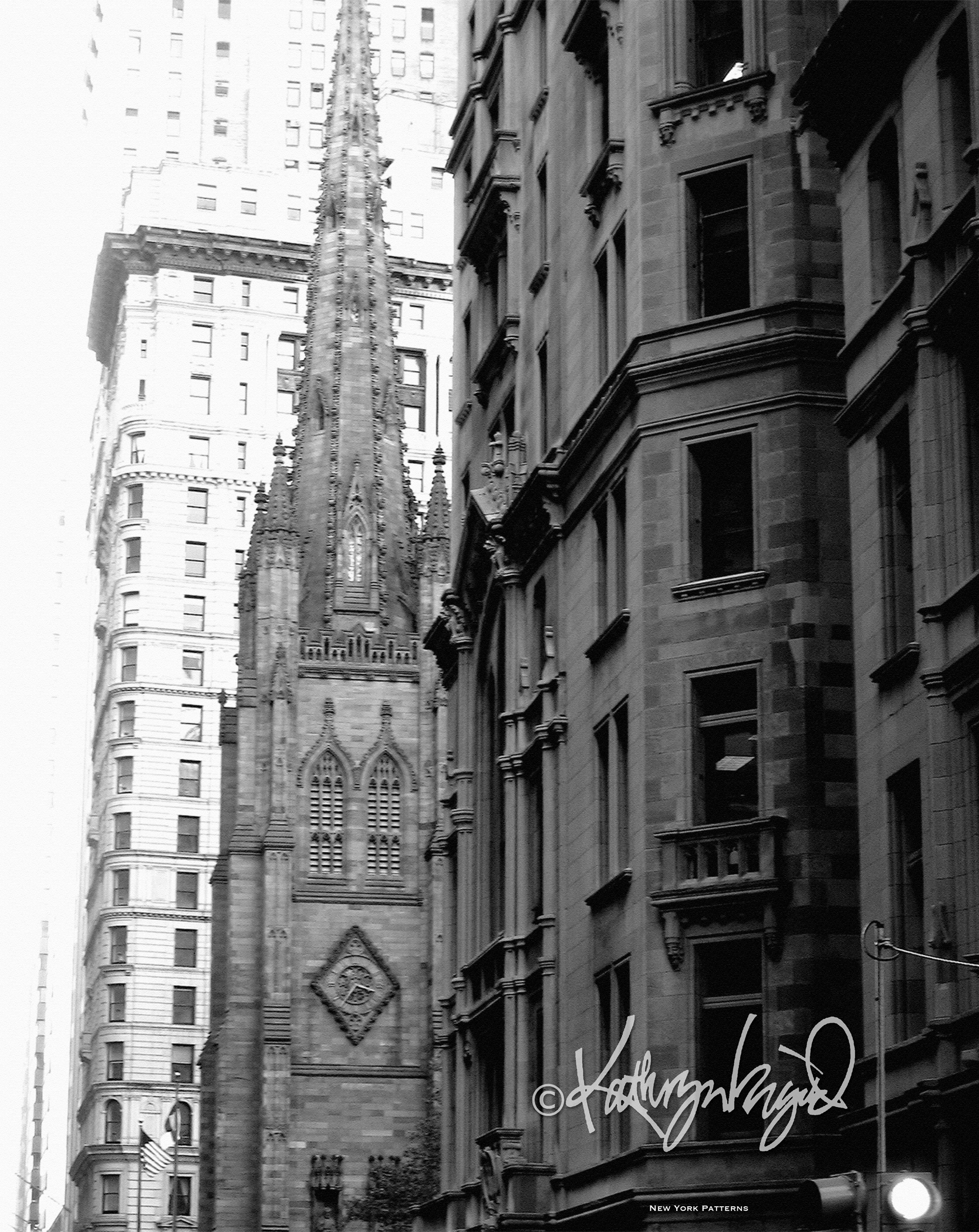
So I’ll keep leafing through these paper and binary mementos of mine as long as it pleases me to do so, remembering mostly that what is seen therein is always more beautifully carried inside me. Change is indeed the only constant, yet in the photograph my great-uncle took, probably in Johannesburg, around sixty years ago there is the ephemeral prototype of the photograph I took in New York less than a decade ago. Fifty years or fifty centuries, it matters little if we learn to respect and rejoice in what remains true and crosses the boundaries of place and time as long as we keep it alive inwardly.

photo

New York City lives in my own memory as much as in a physical place . . . its beauties, like all things loved and valued, lies in me, in others’ hearts, far more than in itself or any image we can conjure of it . . .

A-Hunting We *All* Go

graphite drawingThe Blue Lacy

He’s of a faithful breed, my dog, a hunting hound, a clever beast,

a lean and hungry Cassius, but faithful all the same–

He races me to the rotting log and runs to ground the boar at feast

who’ll soon be ours–Alas for us, the boar knows his Wild Game!

He lunges up in fear and rage: his tusks are aiming for my throat,

and I have tripped into my grave on roots as strong as sin–

But Blue has taken center stage, leaps on the boar’s mad, bristly coat,

gives me the breath my knife to save, hangs on as it plunges in–

The boar falls back with a bloody scream but turns on me his fiery glare,

and then, in an instant, strikes once more, for he means my dog to die–

I yank the roots, trip him into the stream! and Blue and I tear away from there–

and we relish our supper of beans–no boar–my faithful hound and I.digital paingting from a graphite drawing