 Boon Companions
When shadow steals across my eyes, when chill sits in my soul, when cries
Of hopelessness and bitter cold would turn me hard, regretful, old,
I turn my memory to when I cradled happiness, and then
Remember that what shaped me so was love, the kind I came to know
From those great luminaries whose wisdom it was to seek and choose,
From the remotest needful place, pursuit of happiness and grace,
Who told in kindly, teaching voice that peace and joy are bought by choice,
That when the frozen dark descends, we’ll find our light
among our friends.
I do appreciate stuff that is not only easy to fix but lives on past the fixing. By that I mean the sort of kitchen trick that provides more than one episode of eating and/or drinking, and the more the merrier. It might be something that, while it can be somewhat time-consuming while in the process (I’m looking at you, lasagna!) can be portioned and frozen for multiple meals, so the subsequent preparations are ever so much easier and faster than the initial one.
Or it might be more like what I did the other day. It doesn’t take terribly long, and requires virtually no brilliance or skill on my part to do it, but when I expend the effort to chop and then puree a goodly quantity of fresh ginger root and preserve it in vodka, it keeps for ages in the refrigerator and the mash is instantly accessible for any of my myriad edible loves. If I manage to drain the puree slightly when using it I might even score a small quantity of high-octane ginger-infused vodka at the end to enhance a sauce or a party drink that will more deservedly gain the title of Punch.
On this particular occasion, it provided me with the reasonable excuse to do a quick side-by-side taste testing of two Texas vodkas, as I knew I had none either for drink mixing or for the ginger preservation, let alone for the second set of ‘preserves’ I intended to make that day. So I bought the two bottles, one of Tito’s (a brand I’ve mentioned here before as I had discovered it is quite smooth, mellow and even drinkable straight, which is saying some for vodka in my book) and one of Western Son (a brand I’d not tried, but since it’s produced less than half an hour from where I live I thought I ought to give it a fair shake). I found Tito’s still more to my taste and less hard-edged, but both were perfectly pleasant. It’s always interesting and informative to read others’ reviews of these or any other alcoholic drinks (see the links through their names above for just a quick example) to be reminded that everything has its fans and haters, and often the most extremely opposite opinions can be backed by the exact same characteristics.
My purpose in this was pretty uncomplicated, though: I only wanted to decide which I’d rather keep some of for making the occasional spiked drink and which I would put to use as the preservative in my day’s longterm mise en place prep. Tito’s stayed in the freezer for drinks; WS got voted into eau-de-vie duty. That title is apropos not only because it will lengthen the life of the two flavorings I was treating, but also because it may become a bit of ginger firewater if the use of the root leaves enough liquid behind, and it will certainly become some beautifully flavored stuff after a good long mingling with the other flavoring agent I paired it with this time.
That, my friends, is vanilla. Store-bought vanilla beans at the grocery are often tragically bad facsimiles of their former selves, being shriveled and dry and bland and pathetic from poor packaging and over-long sitting on grimly over-lit shelves. Real, well prepared vanilla bean pods, on the other hand, are as sleek and fat and glamorous and moist as the sweet orchids that bear such beautiful fruit. Buying in bulk, with the quick turnaround of today’s online ordering and shipping, can be a much more productive and cost-effective way to bring that beauty home. So I bought a handful of nice, heavy vanilla beans and, like Jack in the fairy tale, got instant bounty from them. All I had to do was to take the WS vodka bottle that had had some liquor removed for the blending of that ginger root (now safely tucked up in a clean jam jar in the refrigerator) and the bottle had, conveniently, just the right amount of space for me to spear all of the beans down its neck into the vodka for immersion. Now all that’s left is to wait while the vanilla steeps into its full glory.
I can, in the meantime, take out a bean or two to cut and scrape and otherwise use to infuse and flavor any number of kitchen wonders. I can, very shortly, use the booze as a perfectly unadulterated vanilla extract, knowing that a little proper cooking or baking will remove the alcohol and leave the voluptuous flavor in its wake. And last of all, I can look forward to using the heavily perfumed vodka to jazz up drinks of the adult variety if I should so desire.
All of this from a short stint at the chopping board with nothing more than a knife for peeling and chopping the ginger, a couple of little saucers for testing the vodkas’ smell and taste characteristics side by side, and a bag of magic beans. And so much good should come of it in the days and weeks ahead.
 I am prejudiced. It seems logical to me that any garden grown for beauty should be grown for utility as well, and any garden grown for use ought to be pretty to look at and full of great sensory experiences well before it gets put to work. Why shouldn’t gloriously pretty edible and functional plants be shown off in all parts of the landscape, and why shouldn’t we take better advantage of what we have growing around us anyway?
Thankfully, these biases of mine are becoming more widely put into practice all the time. While kitchen gardens have a grand tradition of being ornamental and landscape design has long had its elements of utility inserted, those approaches have tended to be rather exceptional than the norm. So I’m thrilled to see such a proliferation, a flowering, if you will, of the whole concept that these belong as integrated into a delightful whole.
My friend Christopher’s interest in starting the garden personalization of his next home with herbal inclusions and infusions (not to mention his appreciation of adventuring in the kitchen) got me thinking about my own past and present herbal operations. What do I consider a good framework for inserting my own preferences, herbally speaking, into the garden nowadays? And what, in turn, is actually happening in that way here? Not surprisingly at all, this thinking turned into a lengthy exercise in list-making. Herewith, my mental inventory of herbal ideas. Foremost among them: that I plant every and anything in my garden where I think it will thrive best, then opt for where it will provide the most splash and panache in complement with the nearby plants, and finally, tuck in some elements of surprise wherever I think they can inspire even the casual visitor to the place. Herbs, fruit, vegetables, common or exotic. So long as I’m not trying to subvert the laws of nature too far, let alone encourage an invasive alien species anywhere, it’s all fun.
For the moment, though, I’m focused mainly on herbs and a few similar animal (human or otherwise) friendly options.
Easiest to keep as perennials or self-sowing annuals are some of the best kitchen basic herbs and also some of the prettiest flowering or border texture plants, so they’re what I’d call genuine bargains in the herb dept:
Parsley (curled and flat-leaf); both can get pretty large over time, but are also pretty easy to cut back if necessary. Be prepared for gigantism, since parsley can easily top two meters in height when it’s stretched out in bloom.
Chives (common and so-called Garlic Chives); both give that nice light oniony flavor, and of course the ‘garlic’ variety has a hint of garlic in it as well. The purple pompom-like head of the common chive is attractive in the garden or as garnish and also edible, but I’m especially fond of garlic chives as a garden plant–they don’t look at all like the common chive, having a flattened stem and clusters of tiny white lily-like flowers in place of the purple variety’s.
Rosemary comes in a wide variety of shapes, sizes and leaf lengths, most tasting similar. It’s a woody, shrubby plant in general, but some are upright, some trailing. The blooms vary: white, pink, lavender, purple, even quite blue, depending on the variety. Pretty and fragrant even while still in the yard, and bees and butterflies tend to like it too.
Thyme also comes in a ton of forms. Its types vary slightly in the pink-to-violet bloom range (quite tiny flowers) and quite a bit in the leaf type: white- or yellow-edged green, solid green, silvery; some, like Lemon Thyme, have mildly differing flavors as well, and some, like Woolly Thyme, are more strictly ornamental. Me, I’m quite happy with common thyme (Thymus vulgaris); it’s really quite easy to grow, even as a sort of ground-cover plant in borders, easy to control, has those cute little blooms, and is a very versatile herb for cookery. My favorite with chicken.
Sage is pretty easygoing, too, and also has numerous colors. I like growing the purple-leaf and variegated yellow- or lime-and-green varieties for what they bring to the flowerbeds. They can get big and leggy and woody, so sometimes sage plants require some good pruning, but it’s not hard to do with them, and sage is so lovely with poultry and winter vegetables, not to mention that their fried leaves are fabulous with lots of dishes!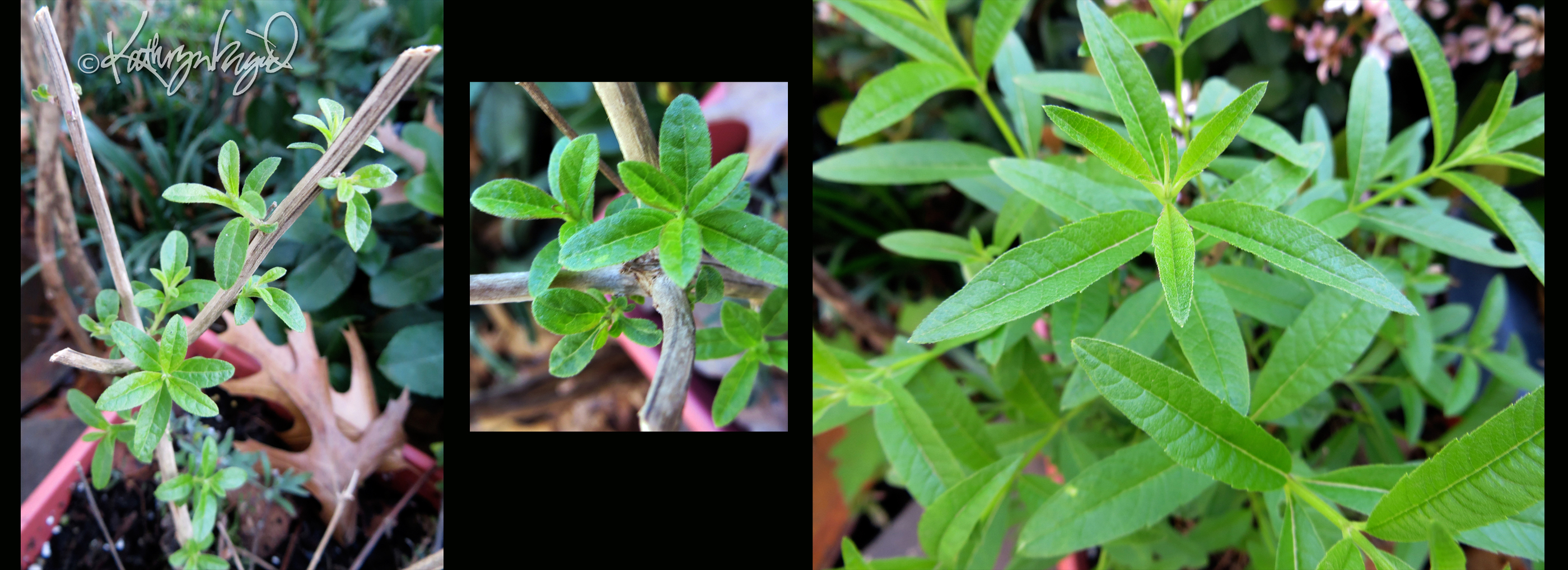
Some of the less common ones I love are well worth mentioning, too:
Lemon Verbena is better started from a live plant than seed and is fragile. I suspect it could work as a kitchen-window dweller for longer life, though I’ve not tried it indoors. I got lucky with it wintering over last year! As I said, great to add to tea (hot or iced), and would be dandy in anything where you want a less astringent lemony, kind of perfumy, flavor. There’s a lemon verbena ice cream recipe on epicurious.com that is sheer HEAVEN.
Borage is an annual, but I got lucky last year and it self-sowed from the previous season. It’s a kind of straggly and tall plant and has hairy, even lightly spiny, leaves and stems, but the hairs actually look kind of pretty in daylight, adding a lacy aura to the plant, and they don’t outright hurt when you touch them at all. Both leaves and flowers have a lightly cucumber-like flavor that’s nice in salads or cold drinks (chop the leaves finely or smash ’em to keep the fuzziness from being an off-putting texture in food), and the blooms are gorgeous, starry, true-blue dainties.
& Sweet Bay, if you have the room for an actual tree, is a pretty one and exudes a faint resinous perfume on a windy day as well as providing bay leaves for all sorts of cookery. In a former home I had a 4 foot tall lollipop shaped semi-bonsai one I grew in a big galvanized tub and wish I could’ve taken it with me.
& Saffron is both useful and a glorious choice for the garden, being the dried stigmas of a very pretty kind of crocus. These bulbs don’t naturalize readily like some crocus, but are of course worth the effort and expense if you can get them.
& Sorrel‘s bright acidity makes it a welcome herb with which to spike a salad, my favorite use for it. The zippy sourness comes from oxalic acid, so it’s not something you want to eat by the bale, but it’s not so potent you can’t safely make soup or just eat it raw in small amounts. The flower stalk is slightly weedily aggressive, and the leaves are very popular with munching insects, but since it’s not a virulent spreader the flowering isn’t hard to nip, literally, in the bud, and those insects are often butterflies and moths, so I’m happy to share with them.
Some herbs are big on flavor but not worth trying to grow in the wrong climate or simply too short-lived for my lazy wishes:
& Cilantro: I love it, but it bolts (goes to seed) so fast that unless I grew a huge patch of it for one-time harvest and freezing or kept planting it repeatedly through the season, it’d be sprouted and dead in no time, so I’m happy to pay farmers to grow it for me.
& Kaffir lime leaves and lemongrass and ginger (okay, that’s a rhizome, not an herb) are exceedingly delish in all kinds of Asian foods but require more tropical conditions than I’ve lived in for their happiness!
Some annual herbs are worth the effort, even if they don’t tend to self-sow:
& Basil is one that I have been known to plant in a couple of varieties a season for different purposes: the purple leafed types are pretty as well as decent tasting; Thai Basil gives a specific and welcome familiar spice to Thai and Vietnamese cookery; Sweet Basil is the most versatile flavor king among them. They all have nice blooms, though not showy; if you let them bloom, though, they tend to wind down as their work is done, so you want to keep beheading at least some if you plan to keep using it through the whole growing season. Then basil tends to keep proliferating. Cruelty pays! 😉
& Lettuces are of course lovely, but cabbages too are often forgotten as ornamentals, but as you know, I like planting them for their leaf color and texture, can cut occasional leaves for food or garnish, and when I leave the rest to do so, they bloom in very hummingbird-friendly ways and are a fun novelty in the flowerbed as well. Another lettuce cousin I like a lot is chard (silverbeet), whose leaves are tasty spinach imitators (raw or cooked) and whose varieties include some with great colorful stems that make them look like rhubarb or Pop Art versions of it in yellow and orange. Mine wintered over this year in the front flowerbed, surprisingly. Radicchio is a great member of this whole group, too: edible and showy burgundy colored leaves, and if you let some or all of them go to flower, they’re tall blue daisy-like things. Quite delightful.
& Shiso, or Perilla, is a less commonly used leafy herb in the US, but the popular Japanese treat comes in a number of often quite attractive leaf shapes, textures and colors. I grew a gorgeous one some years ago that had a slight scallop on the leaf edges, a gracefully veined texture, glorious purple and green-black hues, and a spectacular metallic sheen. I confess I didn’t use it much for food because I couldn’t bear to snip it.
& Garlic and Onions, on the other hand, have distinctive and fun flora, and can survive longer term if you don’t choose to dig all of them up to eat.
Some herbs are potentially invasive pests but I still like them for their beauty and/or culinary gifts, so I’m willing to keep massacring them occasionally to keep them in check:
& Oregano spreads fairly easily but is a pretty bloomer as well as a tasty leafy herb, and not awful to control.
& Mint is a genuine monster that wants to take over the world, especially my favorite commonly named ‘apple mint’ (huh??? I’ve never figured out what’s apple-y about it) that’s so incredibly versatile, but I try to plant it in places where it can spread without turning into square-stemmed kudzu. There are a number of interesting and fun varieties of mint ‘flavors’ available, but I stick with my old reliable despite the allure of Chocolate Mint, Orange Mint, and even true Peppermint and Spearmint, since one aggressive invader variety is enough for me. Wintergreen is a beautiful plant but, besides not being a mint variety at all, is pretty hard to find. It’s a broad-leafed evergreen with small white flowers and big pinky-red berries, and the crushed leaf is wonderfully fragrant, but it’s not commonly found, isn’t a snap to prepare for edible uses like most of these others, and has a picky attitude in climate and growth requirements. Still, I did grow it once in Washington because of its peculiar attractions. Maybe I feel an affinity with it by virtue of my husband’s having chosen me for my peculiar attractions. Ha.
& Dill is sometimes known as Dill Weed for good reason, as it can run rampant in friendly climates and it’s a large, blowsy plant despite its delicate thread-like leaves. But its starburst flora and subsequent seed heads are pretty among the leafy lace, and it’s so danged delicious in so many meals that even if your climate is conducive to such running amok it’s worth the trouble. Besides, in that case you can at least put in some of the dwarfish kinds of dill. Pretty unbeatable with fish, and indispensable in deli pickling!
& Fennel is similarly a member of the uncontrollable-toddler plant type, moving aimlessly but at speed all over the garden and being a big showoff of a thing, but even if you’re a little hesitant about the licorice-y hints it gives food, it too has a nicely delicate look for such a tall plant, and you can bring some nice color into the beds by planting bronze fennel. Just chop it ruthlessly when it wants to flower to keep it in check. I’ve never tried growing bulb fennel myself since as rarely as I use it, it’s easier to buy it and give the garden space to something else.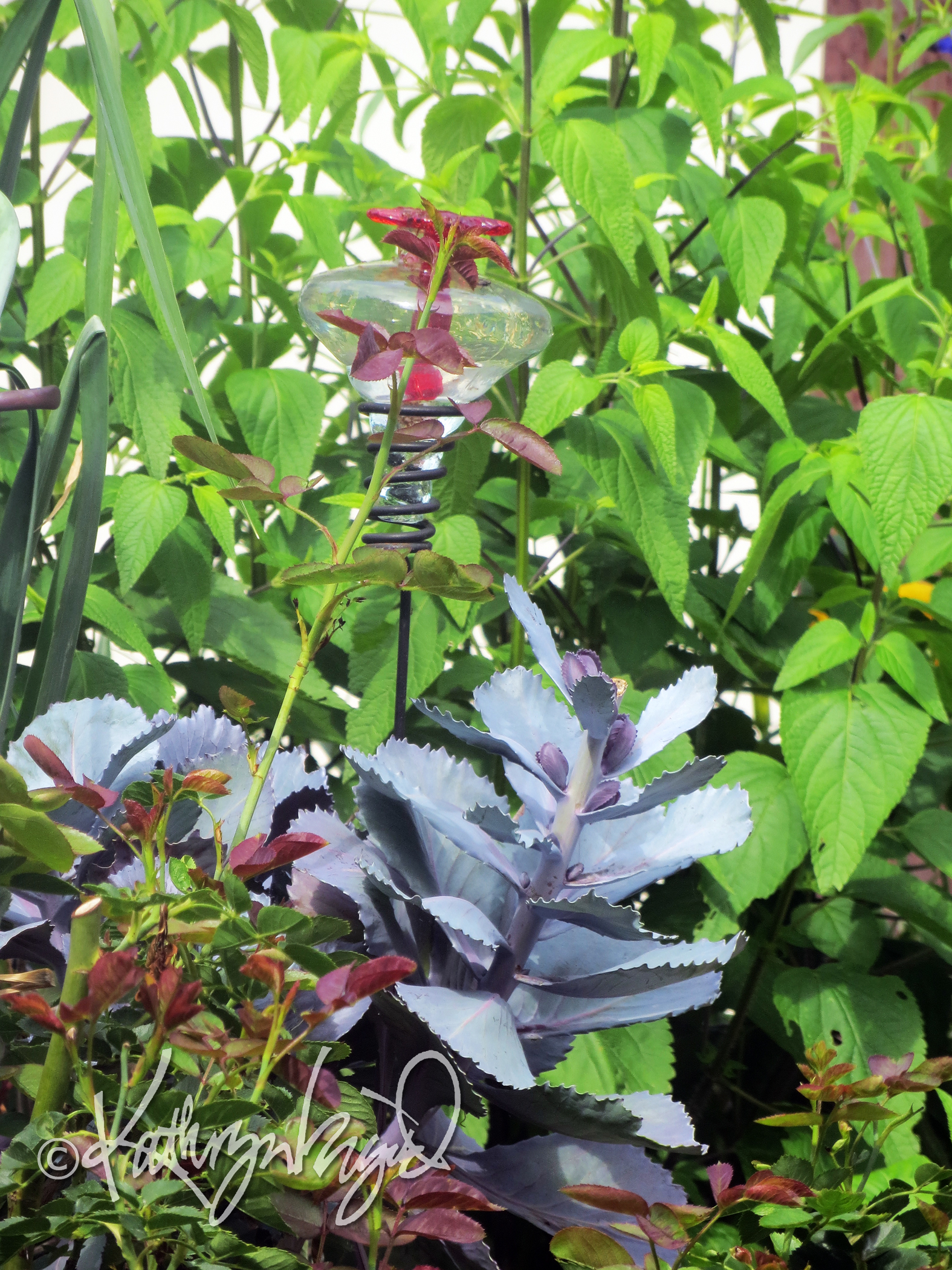 Clearly, I could wander on like this for ages. My experimental wildflower mini-meadow out back has behaved modestly well in its first half-season last year and appears to be letting a few sprouts emerge for a good beginning again now. I will go out in the next few days and give it a thorough haircut with the weed-cutter so that it has its own mulch through the remaining unreliable chills of late winter and early spring, and have been feeding it a kind of pre-compost over the winter by tossing the chopped and blended remains of the kitchen’s dregs in and letting them freeze and decay gradually as they would have in a regular garden, and will add to that with some other treats as the patch begins to revive. I am very curious to see what of the multitudinous kinds of seed I’ve planted out there now makes an appearance and what will take hold for the long term, as much of what I put in was intended to be naturalizing perennial feed for the birds and insects as well as soothing wildflower beauty. The bonus, if all goes well, will be lots of herbal fun for my dining companions and me. Only time and Mother Nature will tell.

What if we memorialized every great person who ever existed with a monument? Would there be a spectacular array, an endless crowd of museums and statues, or would it be a pitifully paltry showing?
We are accustomed, most of us nowadays, to thinking of people celebrated for simple excellence as entertainers of various kinds as being iconic or heroic. Does this last? Of course it does–in some small few out of the thousands. Mostly, though, at some point it becomes easier to see through the facade of greatness to recognize natural, ordinary mortality, albeit often tinged with real excellence.  And what recognition and reverence do we afford the true human treasures among us? The teachers and nursing home attendants, the hard-working janitors and the patient and nurturing parents who all work without expectation of worthwhile recompense for the true betterment of the world? Imagine the world decorated with art and architecture honoring the dedicated fireman who didn’t die in a dramatic explosive fire while saving orphans but instead served faithfully as a firefighter in his town for twenty-six years before quietly retiring to a modest split-level where he keeps his two young grandkids under his loving, watchful eye after school until their mother gets home from work. Picture statues commemorating the great deeds of the quiet lady who owned the small neighborhood grocery and after a hundred-year storm opened it and gave away everything on the shelves to the neighbors so they could survive until the needed services could be reestablished.
 The collection of dedicatory art might be a lot less flashy and showy. But if every real great among us were recognized in this way, there would surely be a whole lot bigger and more meaningful museum of marvels among us, wouldn’t there.

Big News, Everybody! Read all about it!
I stopped by Michelle’s blog at The Green Study, because the other day I managed to find an unexpected four minutes glued together that weren’t jammed with must-do things and there’s nothing I like better than wandering around the inspiring nooks and crannies of my friends’ homes in the interwebs. I just went there for the great reading and brain-jolting goodness that seems to be forever hovering at Michelle’s fingertips, and as I went through the post at hand I was busy enjoying the anticipation she created in me to visit some other blogs she described along the way. That’s how I’ve found nearly as many good blogs to read and follow as I have through connecting with commenters on my own blog: looking at others’ suggestions and finding new ideas and interests and friendly ‘study groups’ and kaffeeklatsches of endless variety in so many unexpected lanes and forests and classrooms everywhere.
I certainly wasn’t expecting to meet myself there. But thanks to her open door policy, there I was in black and white. I hope I at least had my fly zipped and the lettuce brushed out of my teeth when I appeared in The Green Study. In any event, I am delighted to flounce further [farther? I’m unclear about whether the applications of these two cousin words differs from ‘earth’ grammar when met in the binary world…] around in cyberspace and explore yet more new worlds. You, on the other hand, if you haven’t already met Michelle, should pop by her place and have a look around as well. I never come away from there without some new and piquant angle from which to view my reality, and the fact that she can make me collect and inspect such intriguing items with such a perfect brew of intelligence, outrage, insight, hilarity and compassion means I can promise you won’t be sorry for going there either.
Meanwhile, she has encouraged me to shine a little light on a few other bloggers I’ve perhaps neglected to introduce to you here before or at least recently. Herewith, in no particular order—starting, appropriately enough, with Random Rose.
&&&&&&&&&&&&&&&&&&&&&&&&&&&&&&&&&&&&&&&&&&&&&&&&&&&&&
Random Rose’s Blog: http://wordpress.com/read/blog/id/17201311/ —This lovely Rose brings everything around her into bloom with intuitive artworks and magical prose and poetry. I sensed sisterhood the minute I stepped into her blog space, yet never find her the least bit predictable, so it’s always a joy to pop in and see what’s new in her garden.
Meticulous Mick: http://meticulousmick.wordpress.com —A day spent with John in Ireland is a holiday, no matter what he’s up to at the moment: chasing The Hound, his hilariously handsome companion, over hill and dale or exploring the everyday beauties of the nearby towns and parks or musing, gently, on what is important in life.
Dreams to Reality! http://afsheenanjum.wordpress.com —My instant-little-sister Afsheen blogs family affections, artful crafts, inspirational contemplation, and numerous other forms of happiness that prove her education, her Muslim roots and great upbringing give her a heartfelt appreciation for what binds all of us together in joy and love.
Belsbror: http://belsbror.wordpress.com —Another contemplative fellow, Bror Blogger has a heart for what inspires, a mind for contemplating what can make us better, and an eye for inviting imagery that makes me want to visit and linger at his place.
My Life as an Artist (2): http://jcrhumming.wordpress.com —Janet’s sumptuously dainty (yes, that’s possible; just go and see!) artwork is blended skillfully with tales of fact and fiction, and some fact, like the stories of her idyllic former home in Wales, almost too pretty and charming not to be fiction, too.
David Emeron: Sonnets: http://davidemeron.com —Don’t be deceived by the title and subject of this blog; David’s sonnets are full of more widely varied and deeply felt content than many less vehicle-focused authors ever dream up in their worldly wanderings. His beautifully realized sonnets each (and in their pairings) evoke endless musing.
Shivaay Delights: http://shivaaydelights.wordpress.com —Her blog is a marvelously warm place where the beautiful Dimple shares recipes and stories from her Indian heritage and family love, making me feel very welcome and very, very hungry every time.
The Ancient Eavesdropper: http://tylerpedersen02.wordpress.com —Besides being in awe of the enormous quantity of Tyler’s output in photographs, prose and poetry, I am always amazed to find that not only does he do all of that stuff well, he has apparently got several other parallel lives of work, love and play that are equally artful and impressive.
A Holistic Journey: http://holisticwayfarer.com —Diana’s deep compassion and endlessly patient dives into the central topics of our humanity and our ability to expand humanity’s horizons keep me coming back for more and lead me to think about things in ways I’d not yet explored about how I fit into the universe and whether there’s anything I can do to make that more meaningful.
The Vibes: http://thevibes.me —Far more than simply managing, as if this weren’t enough, to be a top-shelf graphic artist and insightful traveler, Mark is also a music aficionado and expert, thoughtful critic, garden enthusiast, cat wrangler and all-around delightful guy.
Curls and Carrots: http://shannaward.com —If it isn’t enough to gaze upon her duo of exceedingly adorable children (and it is, trust me) or to learn some of the heartfelt history of modern Judaism at the elbow of a gifted sharer (and that’s true here, too), then go over for big helpings of fantastic cookery in Shanna’s inviting kitchen.
DreamPrayAct: http://dreamprayact.com —A Methodist minister who challenges us to shape our mortality with humane graces, Mark uses his gently persistent voice to advocate for justice, hope and peace, individually and between us all.
Blue Jelly Beans: http://bluejellybeans.wordpress.com —The beautiful Giovanna shares cultural and personal history, all cooked into magnificent recipes in both English and Spanish that make me want to eat them all day long, no matter what the language.
Photo Maestro: http://photomaestro.wordpress.com —Specializing in, but far from limited to, location photography, Rhys has a gift for capturing the ephemeral Moment that makes each place, each person and each subject in his work uniquely appealing.
Journey into Poetry: http://journeyintopoetry.wordpress.com—Sharing Christine’s journey isn’t merely poetic, though that is pleasurable and insightful enough indeed, but it’s also a journey alongside the gracious, thoughtful and good-humored Christine, who embraces a life-affirming and open-handed hospitality with great intentionality.
Vultureşti: http://atdoru.wordpress.com —Doru reminds me with every post how universal are some qualities of human existence. I am immersed in the stories implied in the human-interest photos, the sense of history contained in details of buildings and hidden alleyways, and the attractions of minute details of frost and bloom.
Hot, Cheap & Easy: http://hotcheapeasy.com —Like the gorgeous recipes she posts, Natalia is certainly Hot, but the cheap and easy aspects she adds on to her cookery make it particularly useful and appealing to study and imitate her ways in the kitchen. Add on a great sense of history and sense of humor, and you’re in a great place ‘over there’.
Earthquake Boy: http://earthquakeboy.wordpress.com —David has a seriously keen eye for fantastic subjects and the skills to make them into photographic art, but it’s often his clever titles that take them over the top to truly outstanding levels.
The London Flower Lover: http://thelondonflowerlover.wordpress.com/about/ —The deep-hearted Team at TLFL brings thoughtful grace to exploring the immense impact that something as seemingly simple and relatively small as a flower, or a bouquet of them, can have. Their musings and artful arrangements never fail to remind me to think about how something as seemingly simple and relatively small as an individual person can have immense impact by being equally thoughtful and kind.
Spiderpaw’s Blog: http://spiderpaw.wordpress.com —I’m particularly in awe of the way Lionel uses the character of light and patterns sharpened by contrasting values to create enormous depth and richness in his views of what might otherwise be missed in the local and personal landscape of home and hometown.
Veggiewhatnow: http://veggiewhatnow.wordpress.com —If you’re a vegetarian, great, you won’t have any excuse for being bored or limited by what you can make under the tutelage of this delightful blogger. But if you’re a meatatarian of any kind, go on over to discover that you don’t have any excuse for avoiding vegetable deliciousness either!
Amazing Pictures by Michael Taggart: http://amazingpicturesblog.com —Clearly I have a soft spot for fabulous photography. But Michael, along with the other photobloggers I admire, has a gift for bringing us far more than mere photos. Even when he’s showing us SOOC kinds of images he’s got a terrific eye, but I’m especially drawn to his inventively processed story images, which really are Amazing.
&&&&&&&&&&&&&&&&&&&&&&&&&&&&&&&&&&&&&&&&&&&&&&&&&&&&&
And that, my dear reading friends, is what I love about blogging in general. Each of us, though we may share some personal roots or points of view, explores our existence in truly distinctive ways that become art and inspiration. And at the same time, these unique voices and ways of expressing ourselves show over and over how much we really have in common, and that fills me with both hope and happiness.
Thanks again, Michelle, for reminding me of it so often and so powerfully.
I will never deny that much of my behavior, if not my very being, is in highly questionable taste. I am uncouth. And I’m certainly unsettled, if not unsettling.
Generally, though, I would prefer to attribute this to having an ongoing and dedicated case of childlike curiosity. It seems to me it’d be a pity not to have this particularly happy mental condition. Why on earth would anyone want to stop being filled with wonder and awe at the astounding and miraculous and unpredictable world around us? How dull and tedious would that world be if everything were explainable, understood, known and codified! And if my only response to it all is a mere shrug of casual acceptance, what excitement or new pleasures can I expect?
Far better to make a fool of myself by being thrilled with the strange, attracted to the odd. Far more marvel and delight in believing that every door opened, every corner turned is a very thin barrier, a fine veil, between my present state and an unexplored or unimagined place of sweetness and inspiration. So I hope you’ll pardon my manners if I get a bit overworked and can’t quite contain my enthusiasm. A kid’s gotta dream.
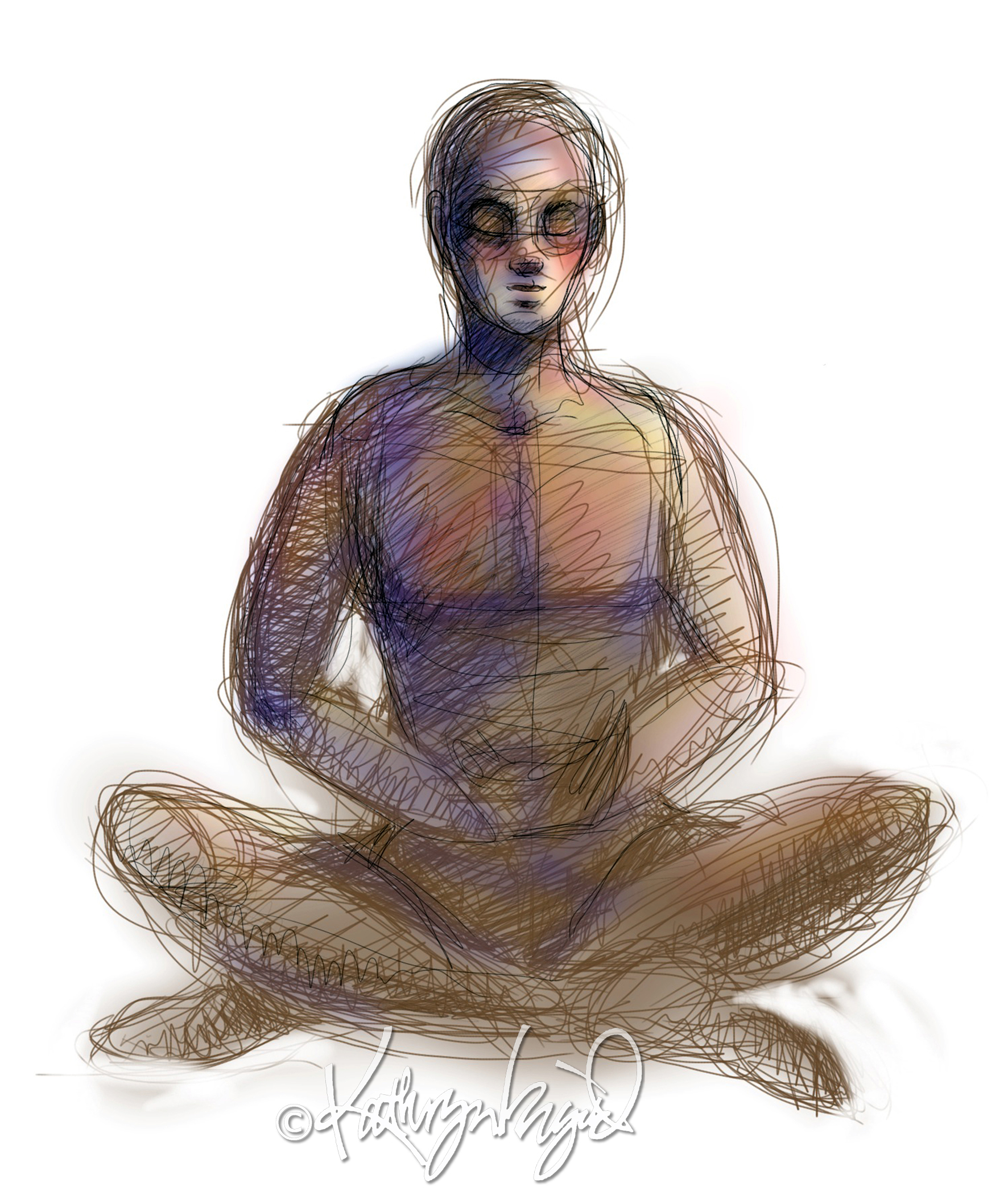 Health is a wildly, weirdly, wonderfully complicated state. Both physical and mental health are astoundingly omnidirectional networks of intersecting matrices and random points; genetics, environmental influences, accidents, allergies and so much more come together and continue to change over the life of any one person. Furthermore, these meet in an intersection of the two networks (mental and physical) in every single person, that it’s nothing short of miraculous that any of us human conglomerations actually survive and have relatively good health.
It’s completely unsurprising, then, when something or other does break down or fail to be really perfect when it comes to health matters. Thank goodness there are more and more answers and helps for us when it comes to such moments of concern. But for every solution, there are shortcomings and side effects, and we still have to make choices and experiment, test and try and hope.
I’m one of those relatively rare creatures blessed with generally outstanding and reliable good health. I’ve never had a broken bone; I’ve had all of three stitches in my whole life, and I’ve never worn a cast or a brace unless you count the kinds I could buy in a neighborhood pharmacy for an achy hyper-extended knee or a fiddly fingertip whose little cut made a mockery of my hale-and-heartiness when I was whimpering over the pain every time I’d bump it. My various moles, cysts, and bumps have all thus far been benign and manageable. Even those more significant elements that might affect my function and longevity are so far pretty reasonable to deal with and don’t require enormous amounts of care just yet.
The essential tremor, noticeable since I was about ten or twelve, has never gotten so obtrusive that I have had to do anything for or about it. The mitral valve prolapse (heart murmur) is so mild that it went unnoticed until I had a regular physical exam from a person who, as pure chance had it, was conducting a study of that specific condition and so was attuned to its unlikely presence. Very minor hypothyroidism like mine is easily kept at bay with very little medicine (mostly pretty common ones at that) or monitoring. I am especially grateful that thus far there is no indication that the Parkinson’s Disease that poses as the only true black sheep of my family has not to date taken up residence in my body.
This is not to say that I have no inkling of any of the irksome and unpleasant effects of imperfect health. I’ve come to recognize the recurrent, and in some cases, chronic, annoyances and inconveniences that come with allergies. While mine have remained moderate and turn out to be treatable if not controllable, I figured out after getting some help that they had had a far greater control over my daily life and well-being before that time than I had realized. And as I’ve said here before, I have had my adventures with Spasmodic Dysphonia, clinical depression, and anxiety; these had larger influences on me and, therefore, those around me, by a magnitude of difference.
What arises every time I contemplate these things, all of which are in my own life more survivable and treatable than I know that they can be for others, is the notion that as a typically complicated human health exemplar, I still have to work continuously to discern what combination of the tangible and medical kinds of interventions and treatments with those more intangible approaches of meditation, activity, and trust—call it faith, hope, prayer, optimism, or attitude adjustment, it’s all fodder for feeling, and possibly, getting, better—will suffice to keep any of my anomalous conditions in check.
Thus far, the answer for me has been a shifting combination of the tangible and the intangible; I think that’s how it works for most people. My personal recipe for success is neither absolute nor permanent, any more than my personal state of being is fixed or unchangeable. Health, both physical and mental, changes rather constantly over a life span, and the longer one lives the more cycles and spikes of change are likely to occur during the stretch. What, then, can I do?
Keep trying. What combination of body-chemistry-altering substances serves my needs at the moment? They might well be outright commercially made and sold and officially, doctor- or nurse-administered drugs, but they can also easily be homeopathic or folk cures, foods or herbs or numerous other things that I’ve discovered through trial and error suit my physical and mental well-being. The same can be true of physical therapy: it might be specific exercises recommended to me by my doctor or other trusted medical and health experts, or as is often the case, it can be a set, series or group of activities that simply make me feel closer to my optimal conditioning. Nowadays, as always, I find myself using quite the mixture of these helpers to suit my specific needs and wishes for better health and happiness. For me, that means a full combination of what could be loosely classified as medication and meditation.
I can’t begin to tell you how that works or is explained scientifically. Some of it I’d bet good money can’t be clarified in scientific terms. But experientially, that I can tell you: I feel pretty good. I get the occasional sneezes or headaches, and there are times when it irritates me, yes, that my vocal cords are recalcitrant and unreliable. I’d definitely prefer if the shadow of Parkinson’s hied itself off my family’s shoulders, most especially Mom’s, and would never try to sneak up on me later despite any efforts on my part to ward it off if possible. But let’s be honest. Right now I feel pretty good, and that makes me happy. Whatever I’m doing or not doing, taking or not taking, it seems to be working.

What’s good for my heart might be as much a spiritual question as a nutritional one, even at table. Mmm, BBQ!
I am one of those silly people who don’t think the title’s terms are mutually exclusive. Call me a cockeyed optimist (because, well, I am), but it also happens to follow a certain logic if I tell you that not only do scientists and nutritionists and doctors sometimes concede that what was once thought the epitome of healthful behavior and ingestion is now believed to be quite the opposite, or that things we once considered horrendously dangerous and likely to contribute to the destruction-through-dining of the entire human race might not be quite so terrible after all. Not to mention the recognition that each person’s body type, genetic makeup, chemistry, environment and so forth all make him-her-me unique in the ways we suffer or benefit from our diets.
So I will refrain from posting—on Tuesdays or otherwise—ruminations on what is Always or Never good for anybody. Besides which, as you well know on visiting with me even twice on a Tuesday, even my own two-person family household has vastly different ideas and tastes and preferences when it comes to what we simply like or don’t like to eat and drink. Thankfully, we can work out those differences in many ways, so the reality of our widely divergent food loves has relatively little impact on our love of being together.
This is, among other things, a reason that it’s nice to have something to amuse each member of the party at table, and let each choose his or her own combination of dishes, drinks and delectables. I am well aware that having no children in the family may be seen as a dodge of the most difficult issues in this regard, because as a supposedly responsible adult one might be expected to see that every child present is getting reasonable nutrition at all times, and hopefully, also building practices and habits that will lead to her continued healthy living. But of course one can point to numerous folk who have in various ways had the ability to subvert the rules and live and thrive. And of course, I live with an adult who has managed to do so despite having been raised to eat ‘right’ yet arriving at adulthood with a general dislike of much of what is, was and perhaps ever shall be considered ‘right eating’: he doesn’t like very many vegetables at all, and could probably survive on pizza, mac and cheese, hamburgers and fries, and those with little deviation from their simplest forms, especially preferred without annoying vegetable side dishes or icky sauces. While I enjoy nearly all of the foods he does like, I’ll also eat lots of other things gladly, including the veggies and sauces and many more things he would far rather not.

Cucumber, all by itself, is refreshing; as a simple salad made with rice vinegar, honey, fresh dill and black pepper, it’s also delicious.
Does this in any way make him less intelligent or well-bred or good or admirable? It most certainly does not, any more than it confers sainthood upon me. It may be true that ‘the heart wants what it wants’, but baby, I’d say with ten times the conviction that the gut has powerful reign over our existence—stomach, tastebuds and brain in concert, that is. And I’ll bet you dollars to sugary, fat, wonderful donuts that this alone will not determine who among us lives well, survives long and dies contented. So I eat my vegetables, more often than not, alone even when eating at the same table as my beloved. He will order the same classic meat-and-potatoes food a bit more frequently than I will. We will both worry about our health and weight and shapes from time to time and each of us, occasionally, do some little thing or other to alter them, together or individually.
All I can say for certain is that I hope neither of us will ever lose interest in food and drink altogether or, especially, lose the ability to eat and sip much that we enjoy, because those tastes and those communal activities and shared experiences give us pleasure that is as beneficial to health and happiness as the nutrients themselves can ever begin to be. That makes Foodie Tuesday here a perfect day to celebrate a very special cook, hostess, family member and dear friend, whose birthday is upon us. Happy birthday, Mom Sparks! Your good cooking and your graciousness, both at table and all around, make you a Sweet Treat yourself—and helped to shape, unquestionably, the marvelous man with whom I am privileged to dine nearly every day, no matter what we choose to eat and drink.

‘Green Banana’ Pudding: ripe bananas and avocado blended until smooth with fresh lime juice and zest, honey, butter (of *course* I’m not kidding), almond extract, and a pinch of salt. A few toasted coconut chips on top add just a hint of crunch. Banana-lime happiness in a spoon!
My momentary flirtation with manning the controls in a flight simulator, besides making me seriously quavery in the moment, told me in no uncertain terms that I would be glad to continue leaving all such labors to the experts. When I was a lot younger I had fantasized about training as a pilot, but reality intervened in good time and I, never mind how humble my brain-power, was able to recognize that I had been saved from myself by a number of factors that conveniently nixed that old fantasy.
The adventures of modern TSA-enhanced travel further confirmed my gratitude that I didn’t opt for life as an air jockey. I’m more content than ever to let airline and airport professionals cope with all of the added red tape and hassles of bulked up security and its concomitant regulations. I am able, despite being far too young to remember it in minute detail, to revere even now the romantic notion of those days when airplane travel was glamorous and cool. And, yes, easy. Though I am better aware now than I was in my infatuated youth that the latter quality is, and always was, more easily achieved by those not in the pilot’s seat.
Those of you who like that work, I thank you. Brother Dennis and all of you fine souls willing to ship me on my various expeditions yon as well as hither, I thank you very much. I’ll just be back there in the thirtieth row with my earplugs screwed in and my pretend aviator scarf pulled over my eyes while I work diligently, with my nice nap, at forgetting I’m even in the air for hours on end. After all, I already put in my enormous effort at flying when I got into that simulator. Your turn now.
 Art-Colored Glasses