Alienation

The aliens are very disappointed in us. If we wreck all the prettiness of the planet and use up all its treasures, what’ll be left for them to conquer and acquire?

Of course, this might seem like motivation for us pusillanimous pigs to keep trashing the earth–eliminate everything desirable and we’ll never be attacked by aliens who want it.

Except that even in our dullest-witted science fiction, we tend to acknowledge that alien races not only might be light years smarter and more advanced than we are, they probably also have different needs and desires than ours.

So they might just be sad because we haven’t managed to wipe ourselves out quite yet, meaning that they’ll still have cleanup to do when they arrive.

Marauding and usurpation are just as much hassle as ever. Unless we perfect self-annihilation as quickly as our present rate would seem to presage.

Do aliens smile?digital illustration

Abundance and Gratitude

graphite drawingAmong the essentials for a happy life, I consider the above named items some of the most meaningful. But I am often, rightly, reminded that these are as much matters of attitude as anything. Much easier, both of them, to qualify than to quantify.

Abundance, as experienced and demonstrated by many people I’ve known and seen who would be considered below a desirable economic level, is seen as having enough to survive, and just a touch to bring a guest to the table as well. That this means the main family’s subsistence is so much the sparser while a guest is on hand means little, except that the gift is commensurately so much the more generous.

For those of us with more considerable resources, I think the same attitude is worth the attempt. I should think through the difference between my actual needs and my wants, live within my means, and delight in the ability to share what I have with others. I’m not always nearly as good at this as I’d like, but think it a practice worth pursuing and improving over a lifetime.

Gratitude needn’t be limited to feeling I’m in the center of abundance, anyway. There’s no reason I shouldn’t be thankful for any and every good thing in my existence, even when the tenor of the times is set in a sparer and more trying mode. This, too, is simply a survival tactic on my part, as giving in to my dark instincts at bad times has no logical outcome but that I’d lie down and die. By choosing to actively and attentively seek out and recognize whatever kernels there are of goodness and light, I take away my focus from what lessens me and give myself a chance of relief. Better, I may see the glint of otherwise forgotten abundance, and that always makes me more grateful.digital illustration

Self-Annihilation

P&I drawingWhat does it mean to repress or suppress others? We humans have found so many awful and horrific ways to abuse and torment each other, to subjugate and enslave, belittle and diminish and depersonalize them, that homicide and genocide seem afterthoughts, if not almost a mercy at times.

What do we demean or demolish when we do so to other people? Community. Diversity. Complexity. All of those things that enrich our own lives. Things, indeed, that make our survival possible. We become trees hacking at our own roots and branches, all the while drinking toxic rain and poisonous streams.

If we lessen or lose one life, the whole tribe hangs in the balance. If we lose one tribe, we risk the loss of all humanity.

Canoeing in the Slough of Despair

pen and inkBeing up the proverbial creek without a paddle is just too common a state for most of us mortals. What’s remarkable is not the frequency of its occurrence, though, but how often we paddled up there our very own selves and even quite willfully pitched out the paddle on arrival. Having gotten ourselves into the trouble in the first place doesn’t make it any more tolerable, let alone palatable, but if we learn to pay better attention, there might be a hope of return from the brink after all.

Retracing my footsteps to find where I went astray, maybe even to undo some of the damage, isn’t always possible even when the place where I’ve gotten myself in dire straits isn’t literally a trackless stream. But if I keep my eyes open and engage my wits and will, I might at least remember the way next time I start to veer in that direction, and learn not to step in that same river twice.

I’m fallible enough, but perhaps not irremediably so. Still, I’ll always welcome a good rescue. Throw me that life jacket, won’t you?

Persistent Admirers

digital illustrationLeave the Help at Home

Off she went to see the market, basket full of goods and greens,

And the fond companions with her came to see the market’s scenes,

Prancing, dancing, baying, barking, nipping at her head and heels;

By the time they neared the city, all beset by crowds and wheels,

She her petticoats beribboned had all stained and soiled and torn;

Hat askew and heels unbuckled, basket broken, cob and corn

Strewn, her lettuces and flowers flung amain, and so she sat

In the rutted road’s dry scours, in the dust, and that was that–

No point now to going onward to the market if she would,

Dog and pony show now ended (at the least, that part was good)–

Then the animals felt sorry for the chaos and the mess,

Made a show to make her cheery, give her back her happiness.

Nothing mended for the market, recompense for not a sou,

But she smiled at how they capered, no more anger and to-do,

And they picked up, swift and swishing, tails and coattails all a-sway,

Backward home, though she was wishing it had gone another way;

To the market back, tomorrow, she would go to sell her wares,

But avoid her current sorrow,

Locking up those pranks of theirs!

Peter Pan vs. Mother Earth

Maturity is a hard concept to nail down. So few of us would willingly embrace the larger idea of maturity after all: the implication is too much doused with the odor of aging and the loss of innocence, playfulness and joie de vivre.

But if I can move away from those irksome, unflattering aspects of maturation, there is a whole world of better and more admirable traits awaiting me. To refuse to grow up, as so famously done by Peter Pan, one has to reject all of those pleasures and opportunities afforded only to those willing to submit to the passage of time.

I will continue to avoid becoming ensnared in the traps and trials of aging as long as I can get away with it, and probably further. Who wants to become exclusively serious, constantly responsible or particularly predictable? Not I! Age may force me to slow down my physical pace or even make me willing to concede that there is such a thing as a skirt too short or heels too high or a blouse too fitted to be quite seemly for my years, never mind that choosing certain forms of entertainment or places to go or goals to achieve are not particularly well suited for me anymore.

But I am also glad to let down the barriers to other aspects of maturity, and to embrace my aging with a certain relief when it comes to those. I care less and less, for example, about whether I look fashionable or impressive, so the heels and hems can be whatever altitude suits my comfort and mood. I’m happier in my own skin with every year spent getting to know and define and design it.

That, my friends, is the greatest gift of aging: I am freer from the worries, demands and expectations of the world around me and can work at shaping who I am, what I want, and how I feel more deeply and contentedly than when I thought there was a greater need to conform. Youth is not nearly so unfettered as we idealize it as being; so long as more mature people own our territories of home, school, work and even play, they also rule our lives. So long as we concern ourselves with comparison, competition and popularity, we let others have the power as well. When we learn to fit in and find community by being our truest selves, it changes the tune entirely. This is the richness, ripeness and harmony–within and between–conferred by true maturity.digital illustrationAnd while I’m thinking about musical metaphors, I really must give you a link to my husband’s latest YouTube appearance, conducting the beautiful and magical Monteverdi Vespers of 1610 with the Collegium Singers and Baroque Orchestra of the University of North Texas, with some tremendous guest artists singing and playing alongside the artful student and faculty musicians. This production was the premiere performance of the new edition of the Vespers that was developed by UNT professor Hendrik Schulze and ten of his graduate students, and among the instrumentalists playing on marvelous period instruments were some of the greatest players now gracing the halls and stages of the Early Music genre. Enjoy!

It’s Still Life

Little is as desirable in day-to-day life as peace and quiet. Rest, respite, calm–I crave them. There’s so much invitation and welcome in the sweet marvels of time off, time out and down time that I never feel I have too much of, well, not-too-much.

But busyness is ever so much more common in our everyday existence in this century, certainly in this household. It’s no still life, to be sure; any silence found in this way of living is more of the deafening sort. But yes, it’s still life.

So I have to manufacture or steal my moments of rest and relaxation. Isn’t that how most of us end up finding our tiny increments of space and time and sanity anyway? I have to learn how to tune out the white noise, hide from the constant demands and burrow into hidden corners when and wherever I can, to choose deliberately to decompress and unwind. If I don’t make room for my own peace of mind, who’s going to give it to me? The world may rattle on around me at a furious and eardrum-shattering rate and all I know may change in the ten minutes I’ve stolen to renew myself, but I will return to those realities soon enough, and hadn’t I better do so in a fortified state than otherwise?

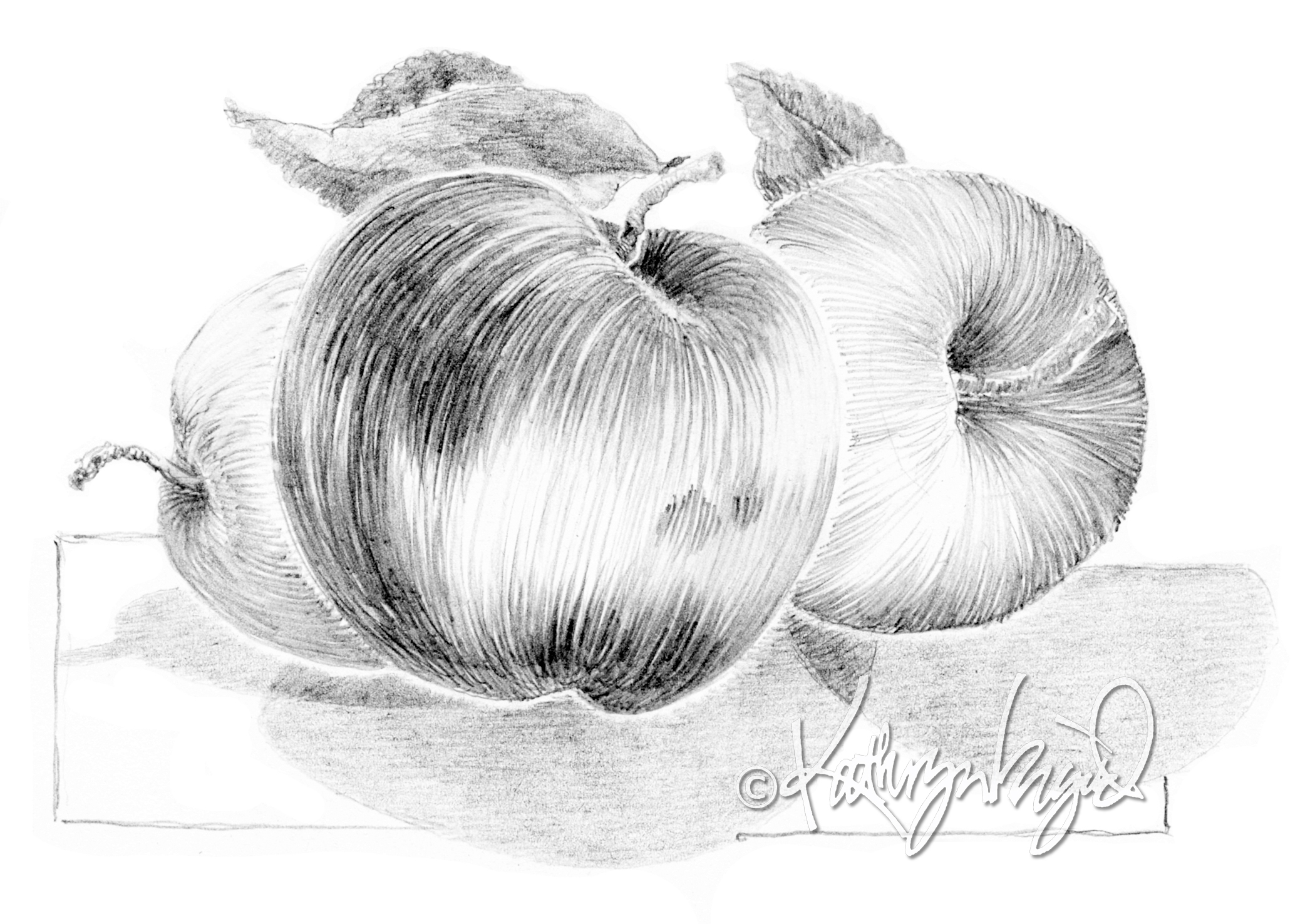
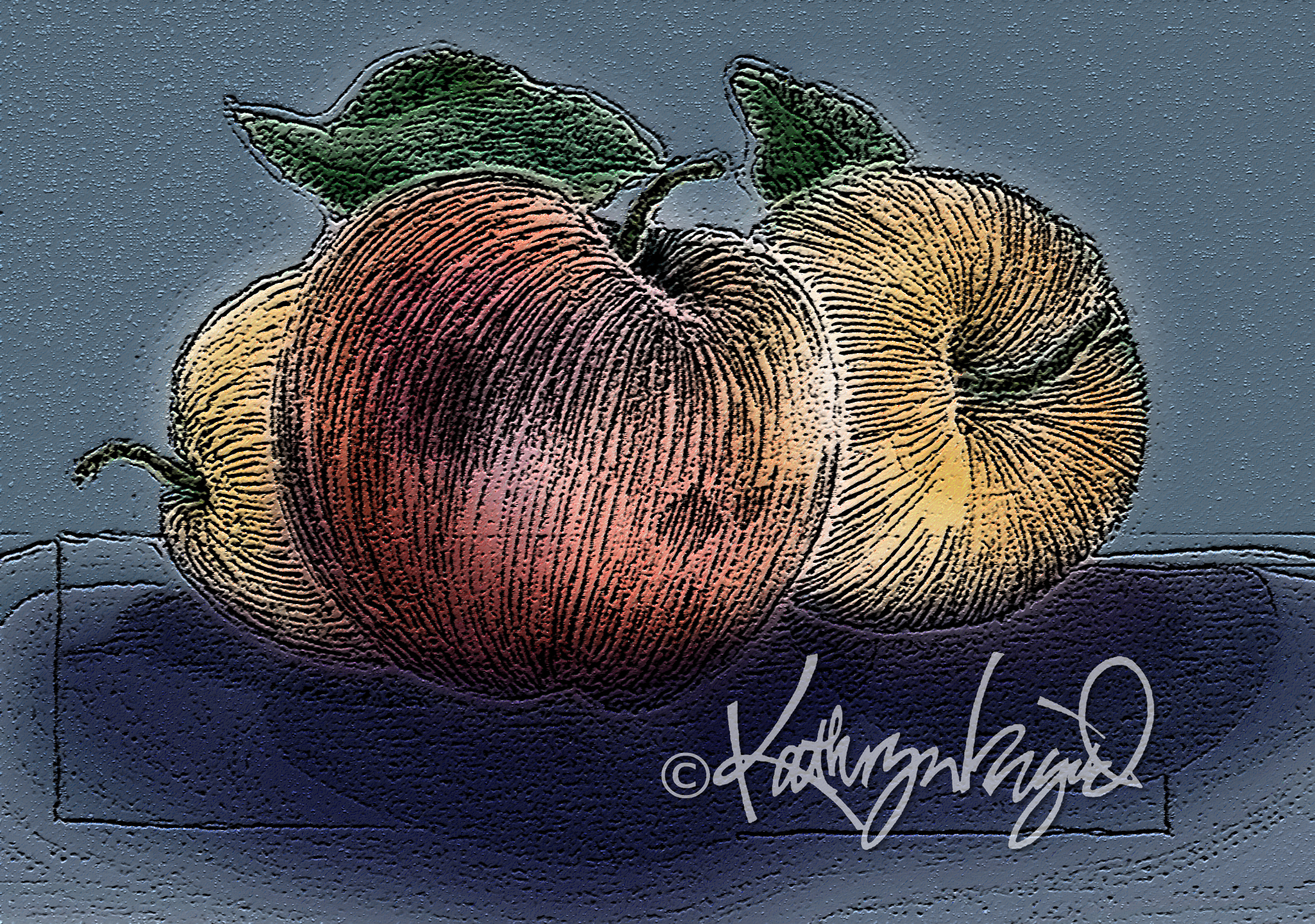
Better to sit down and tell myself soothing tales undergirded with lullabies, to draw myself a little old-fashioned still life arrangement in the calm unruffled grey of graphite, and breathe deeply without regard for the bustle and bash of the universe, if only for a moment or two.graphite drawing

Imagine, If You Will…

digital illustrationFantastic Phenomena

Rare as hens’ teeth, so they say,

the bird I saw the other day;

barely known, less often, seen,

and in the spaces in between,

not found but once, then flown away–

But rarer still, and here’s the thing:

that I should see it on the wing

and landing, perching in a tree

that most folk living never see,

abloom in Fall, as it were Spring–

For what I’ve learned is that this kind

of special magic that I find

can only happen if the heart

is open to the sort of art

where things are made so in my mind.

Anachronisms

There are advantages to being out of sync with the known, the planned and the expected. Nothing new, of course, can ever happen if someone or something doesn’t step out of line. Creativity and growth can only take wing if we allow anomalies and anachronisms. Learning doesn’t happen without forward movement and its inevitable mistakes.

So once in a while there has to be the duckling hatched in autumn or the crazy idea hatched at three a.m.

Great things are timely no matter when they occur.digital illustration

You are So Strange!

digital illustrationI don’t mean to be rude, but it’s hard not to recoil at the unknown. What?! No shoulder gills? How can you use your nose for smelling things if you’re busy using it to breathe at the same time? No horns? Oh, dear, where are your radar sensing structures housed? And my goodness, those awful, blind blue and brown orbs where your eyes should be! How in the world do you manage without proper infrared vision, you poor thing? What’s with having ears awkwardly positioned, so low and flat against the head that they can’t rotate and bend to follow every sound?

I realize that we’re not all made the same, but sometimes it shocks me that anyone so odd looking and freakishly ill-equipped as all you other sad creatures out there can survive at all. I don’t hate you because you’re pitiful, but still I can’t help being sad at your obvious plight. It’s difficult at times not to seem patronizing, disgusted and repulsed that you’re not all as sensibly made and beautiful in your correctness as I am. Please forgive my involuntary condescension. It’s not your fault that you weren’t born or trained to be as nearly perfect as me.