Eldest Child

It isn’t easy being the eldest child. You tend to be expected to carry the world on your shoulders for any kids that come after you. My older sister certainly had her hands (and shoulders) full when it came to the other three of us. Following her lead was the logical thing I expected to do from Day One, and she undoubtedly knew that her every word and act would be scrutinized and grasped as tightly as any life’s-mystery-solving clue could be.
Photo: The World on Her Shoulders

Unlike many, my elder sibling was neither empty-headed nor empty-handed when leading or hauling me through the years, however. I must assume that she was generally more conscious of what she led me toward or away from than I ever was, and whether there was a particular purpose regarding its effect on me or it was simply what she needed to do in her own life was as irrelevant as if I’d been a duckling following a duck, since after all, our parents didn’t go to school with me, play in the yard with me, or otherwise have anything like the minute-to-minute impact a sibling could have. I apologize, here and now, for whatever time and energy I stole away from my big sister that she ought to have been spending on herself alone! Strangely, she still likes me, though, so I take the liberty at the same time of assuming her forgiveness on that front.
Photo: Show Me the World

I certainly didn’t quit the hero-worshiping dependence when we were young, either. It was my sister who gave me the world. Our parents saw to it that we learned to read, and that is an enormous gift that can only be repaid in kind by handing it on to younger people as they come along, but it was and continues to be my older sister who blazes the path down every library aisle on earth (and a few in the ether, too) and inspired me to try to better my reading and writing. She always had astonishing verbal skills and a voracious appetite for all sorts of books, so she set the benchmark in reading and writing that I will always lag behind but continue to pursue.

If that cracking open of the world in the pages of books weren’t enough, there was always the lure of the tangible world as well. There, too, our parents paved the way for our ventures beyond home borders, both financially and with the encouragement to broaden our horizons beyond anything they were privileged to experience at our young ages. But again, it was at big sister’s beckoning that I took up the challenge given by Mom and Dad to take a semester off from my university studies, spending both the time and the money I’d have devoted to those on traveling Europe, instead, with my sibling. It was more education than I could possibly have crammed into the other three-and-a-half years of my undergraduate studies altogether, utterly worth all of the angst and expense it terrified my twenty-something soul to expend, and all happened under the tutelage of my sister, my intimidatingly fearless guide and hilarious friend.
Photo: I Wish You Ten Candy Stores

There’s nothing a sister can say or do to make up for all of the times I was a pain in the neck—or anatomical regions south thereof—to my older sister. Despite her admiration for all things chocolate, no amount of truffles and cakes and French Silk Pies will do. But I am grateful, and I do thank her, and I certainly wish her a wonderful birthday today and many more of them to come. I’ll just have to watch and see what she does in times ahead, so as to get inspired for how to handle the next such conundrum as they always do come along in life. That’s what elder siblings are for, it seems.

Industrious

My nature is just about the polar opposite of industrious. If there were a way to recline and remain immobile and mentally inactive without being in a completely vegetative state while still getting through daily life, I would probably have discovered it by now, but I manage to keep alarmingly close to it in spite of all urgings toward better things.
Photo: Skansen Factory

I have tremendous curiosity about and admiration of those who are, conversely, hard workers and the wonderful machinery that represents and supports them in their labors. But I have never progressed far beyond the stage of admiring these ‘rude mechanicals‘—human and otherwise—in the abstract. To me, they remain alien and magically artistic yet quite incomprehensible. Only when contemplated in the stopped state required for rest, repair, and refueling do they even register in my mind as real.
Photo: Red Engine

I will always admire and be immensely grateful for those people who do the work of the world, who keep it chugging on all cylinders and, indeed, invent and craft the machinery that does the chugging. I could not enjoy this life of privileged repose and ignorant ennui if it weren’t for being carried by the very machinations of these titans. I bow at their feet in humble gratitude and respect.
Photo: Vintage Helicopter

And while I’m down here curtseying, I notice that the floor looks quite comfortable and inviting indeed. If you should need me later, come back and look for me where I’ve stretched out on the rug in a slackly indolent heap. Don’t make too much noise, though, for I may be dreaming happy dreams of gears turning, flywheels whirring, and motors purring, and it would be a shame to interrupt them with actual action.

Postcard from the Edgy

Digital illustration from a photo: PostcardMy Mind Wanders & So Shall I

I want to wander

To traipse and travel

Or else I wonder

If I’ll unravel

Make expeditions

I may

I must

Or my brain could bust

From Wanderlust

Let me sally swiftly

Flying forth

No matter whether

South

Or North

For I might implode

In irksome itches

The way my

Passport

Ticks and twitches

Can’t pause to ponder

What’s yon

Or yonder

My heart

Yells START!

And I want

To wander—

Foodie Tuesday: Worth Getting Out of Bed

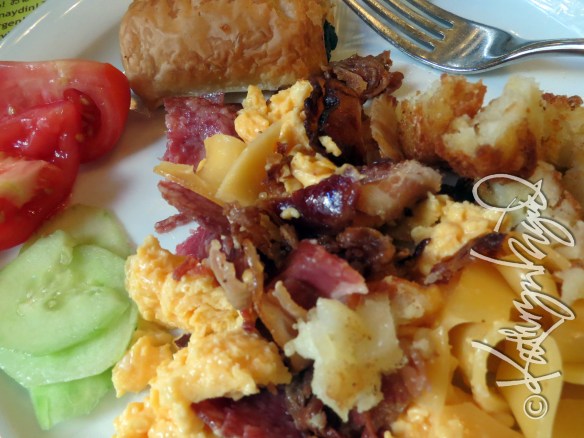
On some rare occasions, it’s actually worth getting out of bed before noon-ish. When the breakfast is that good, you know you’ve accomplished something, because I have no intention of cracking my eyelids open any earlier than I absolutely must. Sleep is the one thing I crave more deeply and often than food, and you all know how much I covet good eating, so it takes the prospect of great culinary splendor to drag me from the comfort of my bed one minute before I am good and ready to do so on my own.Photo: Breakfast in Budapest

Since I’m generally the one responsible for putting breakfast, if any, on my own plate, you can guess how often I’m likely to spring into action to see such a meal prepared and presented. I may have some lovely dreams about breakfast, but I prefer to enjoy them while still firmly ensconced in bed. When I do break my fast, it’s far more likely to be with brunch or even lunch than anything earlier, given my druthers.
Photo: Bulle med Kardemumma

I tend to make exceptions when I’m traveling. Often, the causes for the expeditions are beyond my hourly control, so if I have to be up before my internal alarm is interested in my arising, I will generally take advantage of any good food being offered by my hosts, whether they’re homeowners hospitably letting me invade their personal space or hotels with in-house breakfast accommodations. These pictures, for example, come from the summer’s travels and represent foods that went a long way toward ameliorating the agony of having to get out of bed before it seemed the rational thing to do. If anyone is to have half a hope of maneuvering me out of a comfy sleep any time before my body would grudgingly agree to that negotiation, it had better be, at the very least, with a magnificent cardamom roll (bottom photo, from Sandhamn, Sweden). Or perhaps the mind-bendingly gorgeous and seemingly endless spread offered in the palatial breakfast room (top photo) of our hotel in Budapest this summer. Otherwise, you can trust me when I tell you that it’s advisable to let sleeping dogs lie.

Sailing Ahead, Wherever That May Be

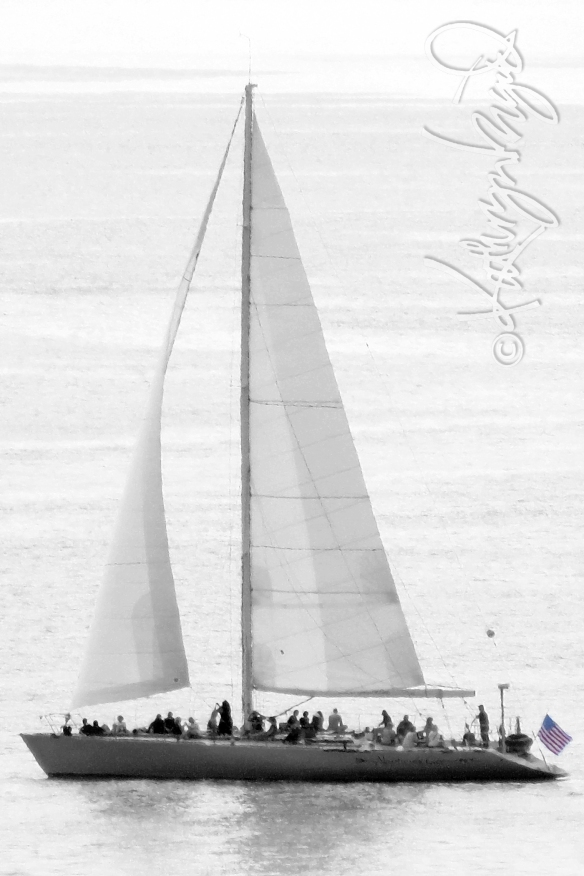
The only time I’ve ever been on a sailboat was to sleep. There’s a great Tall Ship converted into a youth hostel in Stockholm where my sister and I bunked for a couple of nights on our college gallivant across western Europe. [Which hostel appears to have been recently renovated, and very nicely, if any of you should be interested.] While there may have been the faintest of motion rocking us to sleep in our on-board berths, I doubt it replicated very accurately the sensation of actual sailing. My next opportunity was during graduate school when I got a fan letter (one of the very few in my life, as you can imagine!) from a stranger who’d liked a gallery art installation I made so much that he offered to take me out sailing to the nearby islands. I don’t think there was anything predatory about him, but besides my still having a grandiose case of social anxiety in those days, there is the fact that the art show in question was entirely a walk-through, life-sized illustration of an espionage thriller; while I am doubtful that was his inspiration, I didn’t take him up on the offer.
Photo: Adrift on the High Seas

But whenever I see a sailboat, I do think it’s a beautiful representation of a genteel form of freedom that captivates my imagination all the same. Yes, I know plenty of tales of grueling trials on the high seas, no matter the size of the craft; even some of my close friends and relatives have such stories to tell, thankfully, having survived them. And I know, too, the old joke about testing one’s real interest in boat ownership by dressing up in a rain slicker and standing under an ice-cold shower for a couple of hours while flushing hundred-dollar bills down the toilet. But I also know that a vast number of people who could jolly well choose to spend their money and time on less demanding, safer, and far less expensive pastimes still choose boating. There’s clearly a strong pull to counterbalance any such negatives.

I, too, have spent some happy times on boats, just not sailboats. As a coastal kid, after all, I grew up thinking time spent on the ferries was as much pleasure and sightseeing as it was commuting or transport. I have been fairly miserable on a North Sea ferry in stormy seas while I was recovering from the stomach flu, but it did not so permanently scar either my psyche or my stomach lining that I didn’t look forward to the next time I got to be on a slow boat cruising along the shore, or perhaps best of all, in a rowboat or canoe, dipping the oars or paddle in with the rhythmic soft splashing that accompanies my reveries.
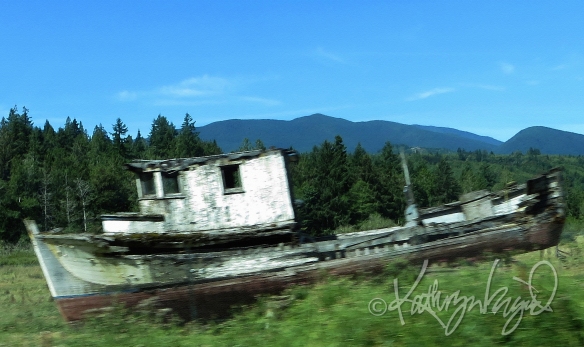
Photo: All Ashore

Living far from any natural body of water as I do these days, I am beached like an old craft whose hull is no longer seaworthy. But like those old boats I see, dry-docked on the beach or alongside the tumbledown barn or in a weedy field, I keep in my soul a firm and loving memory of every good time spent with the waves rocking me softly from below, telling me stories of their own and inviting me forward, ever forward, wherever that might take me.

FutuRetro

One of the things I so love about travel and touring is getting a much more powerful sense of history; standing in and on the places where events and lives long past have happened, whether grand or insignificant, utterly changes my understanding of those people and occurrences. My first trip overseas, that Grand Tour I was so privileged to take in college with my older sister, was an awakening I never expected. I hoped the trip would be a cure for my sophomore blues, and indeed it was, beyond anything I could have planned or dreamt before, but more than that I was startled by how connected I felt to history.

The drizzly and cold autumn day when we visited Canterbury Cathedral was atmospheric enough in its way, but I remember standing on stone steps worn into a soft bowl by the thousands of footsteps that had passed over them in the centuries of its existence, looking up into a palely gold ray from a lamp, seeing the motes of dust whirling in it, and feeling that time itself was floating down around me in delicate pieces, that the spirit of every person who had ever set foot on that same smooth hollow in the stone was present there with me in that very moment. It was almost as though I could hear their voices and see the scenes of the past play out in the faint gloom around me, all overlapping and yet perfectly present. I felt my own place in the whole of the human timeline in an entirely different way than I ever expected, tinier than ever, yet surprisingly more concrete and tangible.

This was reinforced later in the same journey many times, as we passed through or visited (not necessarily in this order) England, Italy, France, the Netherlands, Switzerland, Austria, Germany, Denmark, Sweden, Norway, Wales, Scotland, and Ireland and stood in the very footprints of many a person, going down the winding passages and cobbled side-streets that had seen multitudes of significant moments long since fled. As this was the first time I visited Norway, the rooting ground of my ancestors from every branch of my family tree, it is no surprise in retrospect that many of those potent realizations came to me in that place—but as usual, hindsight is ever so much clearer than was my youthful wisdom in those days. It was moving, more meaningful than I can express, to get to know the relatives in Norway with whom my family had maintained contact: my maternal grandfather’s sisters and brother-in-law, nieces and nephew. These were days before cheap telephonic long distance, let alone email and internet communiqués, so we had only briefly even met most of these people when they visited America once in my younger years, yet they not only took us in as visitors, Tante Anna and Onkel Alf kept my sister and me with them for a full month and took us to see the family’s two longtime farms, the graves where many of our ancestors were sleeping underfoot. This was incredibly touching, a genealogical history lesson, but the more so because it was taught by the eldest of our remaining family there.

What moved me the most, in fact, was when on arriving in Oslo at our mother’s cousin’s home before we even came down south to be with his parents, we explored the great city a little on our own during the days, while he was at work and his wife and children off having their own day of adventures. It was all so humbling and so magical to feel for the first time that I understood a tiny bit more of my own family lineage and how our people fit into the larger world. We did visit many of the obligatory and famous tourist sites, knowing that there was no direct link to our ancestors, only cultural ones. So I was quite stunned when we visited the Viking Ship Museum and, standing before these ancient vessels, I was absolutely electrified with a sense of shared history coursing through my veins. My forebears were undoubtedly humble subsistence farmers, not the bold and violent and adventurous Viking strain we know through film and television, never mind through the great Sagas—but I felt for the first time something connecting me to those long-gone people all the same.
Photo: Enter the Time Machine

By now I have traveled a fair amount more. I have been on this planet more than twice as long, and I think I might even be a little bit wiser through my experiences in that life than I was back then. But I approach every narrow stone passageway, every weathered door, every window with its rippling antique panes presenting everything that’s beyond them like a warped post-impressionist fiction of itself, I expect to learn something not only about what is there in front of me and around me, but what is inside me. And I know that I will learn something, too, about how I fit into that larger, and ever so mysterious, world if I am wise and patient and alert enough to notice it. So much has gone by. So much remains ahead, yet unknown.

Any Old Palace will Do

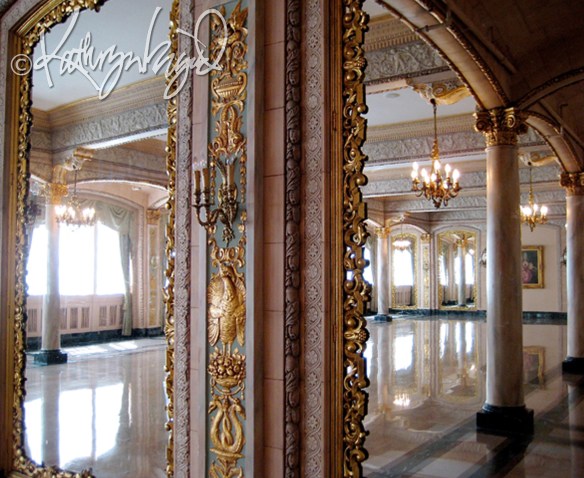
As self-crowned, self-proclaimed Empress of Everything (mistress of none), I have always enjoyed the ease and luxury due my supposed station. I eat well, travel relatively often, and keep the finest of company. It’s only appropriate that I should also live in the palace of my own choosing, or better yet, in various fantastic palaces in different fabulous parts of the world whenever I happen to be there. Of course, the locales and the company I keep in them determine my level of happiness far more than the buildings and their furnishings do themselves. Isn’t that always the way? No matter how plush it is, a glamorous structure is only a gilded cage if it allows no light of love and adventure into it and no correspondingly venturesome, happy soul out of it.
Photo: S:kt Jakobs

So far I’ve managed to establish my string of palaces remarkably well, along with fulfilling my many other requirements of that life of luxury I don’t necessarily deserve but am quite capable of desiring. I’ve stayed in, lived in, visited, and wandered through many a grand, gorgeous, impressive place. I’ve designed many on paper and in my mind that would knock the socks off of any person who saw them. Yet I still can’t understand the people who look at glorious, showy homes and think only of whether the places would genuinely suit as their own dwellings. If your energies are devoted solely to thinking that “this master bedroom is too small,” all I can think is that your imagination is too small, your life too tightly fitted around what you perceive as Impressive Enough, to allow you to find your palace in whatever motel room or suburban house with one bathroom your life lets you land in at the moment.
Photo: Davenport, Spokane

Many of the palaces I’ve inhabited I have done only as a passerby, a visitor, a tourist. And I have nothing against that at all. After all, wherever I close my eyes to sleep, even the most cramped bedroom with a creaky, narrow, deeply bowed bed where the very middle of the mattress is the only almost-level spot to rest, I can turn it into any one of the palatial places I’ve visited, or continue to invent my own. The roof I am under is irrelevant in determining the luxury of my existence, so long as it’s safe and not lacking a place to lie down without breaking anything (furniture or me; I prefer to keep both intact) and not hideously cold or hot or wet. In my dreams, I remain Empress, and there I can build and inhabit the most astounding of palaces if I choose to do it.

As such, I am also constantly grateful for the many wonderful places I’ve visited, stayed,  and/or lived, and especially for the extensive ranks of friends and family and acquaintances who have through their immense kindness consistently supported my ability to live—and feel—like royalty.

Ever Heard of Foodie Thursday?

Well, now you have.

It’s been a busy autumn chez Sparks. No excuses: in the flurry, I flat-out forgot to put up my food post on Tuesday. Sigh. I didn’t stop being food-obsessed, just being on schedule. So here we go, better late than never. I would give you a big silly grin, but yeah, my mouth is full again. Photo: Blue Bouquet

What I meant to say on that long-ago-seeming-day-which-was-Tuesday, was that I do like this time of year in particular for its masses of officially sanctioned excuses for partying. There are of course the big national and international celebrations of things spanning from Halloween/All Saints/Dia de los Muertos to Thanksgiving, Diwali, Christmas, Hanukkah, and the various New Years; in my family, five out of the six of us have winter birthdays as well. It’s not that my family and I are in any way averse to celebrating with a good meal, a party, or any other excuse for eating and drinking good stuff at the drop of a hat, but it’s extra nice when nobody else questions the need for such an occasion either.

My parents upped the ante this winter by both entering the glorious ranks of octogenarian excellence, so since my three sisters and I don’t all live close to them anymore, we’d long since all agreed it made sense to look toward next summer (2015) for a family get-together to mark their ascensions to this great new height. All the same, nobody in our clan has any respect for leaving an excuse for a party just lying there unused. So Sisters 1 and 3, who do live near Mom and Dad in Seattle, helped them plan a big party on Mom’s birthday weekend so that our parents could have their local siblings, nieces and nephews, and a few special friends together. I made up the digital invitations, since I could do that from my remote location, and because I’ve long done such design tidbits for family events as a way to be involved when I couldn’t otherwise be on hand to participate. But our Seattle sisters did the yeoman’s work on the whole thing.

We kids did up the ante a little, though. Sister 4 and her husband sent an email to the other three of us a couple of months ago, announcing that they had bought plane tickets to fly over from Norway for the November party and surprise Mom and Dad. We sisters were surprised, too! My husband, with three concerts and more rehearsals to conduct on either immediate side of the party date, couldn’t get away, but with a batch of saved air miles, I could, so I planned to fly up from Texas and join in the fun. Once all of our tickets were bought and the wheels set in motion, the real challenge was not only to see if there were any small things 4 and I could do from our bases of operation but to see if we and our partners could keep a secret for seven or eight weeks, a dubious probability at the best of times with our talkative bunch.Photo: Pink and Green Bouquet

We did. We let one of Mom’s sisters in on the secret so that she could help get our parents in the right place at the right time when the day arrived, and my spouse’s parents knew, because they were invited too, but despite a couple of close calls, nobody slipped up irrevocably. Part of the larger plan, once we’d decided to add in this surprise element, was that there would be an immediate-family-only lunch on Mom’s actual birthday at Sister 3’s house. Dad, Mom, Auntie and Uncle, and sisters 1 and 3 were to have a nice, low-key luncheon date to mark the day and wrap up any last-minute details for the bigger open house party the next day.

Sister 4 and her husband and I flew into Seattle on Thursday the 6th. It was wonderful to have a reunion of the four sisters, our first in at least a couple of years, and to convene a few other members of the immediate family—3’s husband and one son, with the other son flying in from college on Friday—that night and to laugh up our collective sleeves over our plot. In keeping with the family tradition of combining food with fun, this first evening was spent at 3’s house, slurping bowls of a beautiful, creamy winter sweet potato, kale, pasta, and sausage soup (based on Martha Stewart’s recipe) while taste-testing a couple of good single-malts the Norwegian contingent had picked up on a duty-free spree en route.

On the 7th, Mom’s birthday, we got lunch ready and in the oven and fridge and then spent a little while nervously skulking past curtained windows to escape any unexpectedly early arrivals’ discovery, and as the parental entourage at last approached, three of us ducked into the back bedroom, where we giggled like little kids and perched on the bed to avoid making the creaky hardwood floor give away our presence. Auntie got Mom settled into her favorite armchair so we wouldn’t have to explain her absence at the next day’s party as the result of an aneurism, and we finally strolled out to say Hello to our startled parents. Their faces remained in virtually the same blankly surprised expressions for a fairly lengthy, attenuated moment.Photo: Mom's 80th Birthday Lunch

Lunch broke that spell. We feasted on marvelously simple steak, lemon-dill oven-roasted salmon, salt-baked potatoes, green salad with a fresh blend of herbs and creamy lemony dressing, green beans, and buttered peasant bread. Classic, delicious, and with a handful of their kids on hand to help, an easy way to feed our parents well on a meaningful day. We worked a bit more on the details of Saturday’s open house event, but 1 and 3 had covered all bases so thoroughly that we were all able to make an early evening of it and rest up for the main event.

Sister 3 had found a wonderful venue, a community center run by the parks service in a beautifully renovated vintage power station right next door to the church where our dad had grown up. All five of Mom’s siblings and Dad’s only sib, his brother, and all of their partners, were on tap to come. So did some of the sibs’ kids, and even a handful of grandkids joined the gang; with the friends who came, we totaled just over fifty in attendance. We saw many relatives we’d not seen in years, many of them as surprised as our parents at seeing us there like long-distance apparitions. I think I can safely say that the party was everything Mom had wanted, that Dad was also happy, and that we all felt pretty chuffed at pulling off a great success, especially at not blowing the surprise.Photo: Birthday Buffet

But again, food was central to the grandness of the day, and once more, that was thanks to the wise planning and [literally] tasteful choices made by our Seattle sisters. The buffet spread’s main dish stars were ginger beef and sweet walnut prawns from our favorite local  Chinese restaurant, accompanied by a wide range of finger foods and sweets, many of them bought ready-made from various shops and stores. We had just about enough food on hand to feed 250 guests. So we kept up that family tradition, too. And we all left the tables full and fulfilled.

Who knows what we’ll get up to next summer. Only sure that it will include much eating and drinking. And probably lots of childish giggling and telling secrets, which I think are a mighty nice lagniappe for the whole meal, whatever it is.
Foodie Tuesday: When Cultures Collide

So many beautiful nationalities and ethnicities with so many fabulous cuisines! How on earth can I possibly choose when I’m about to fix a meal?

Then again, why choose? After all, the best of cuisines have borrowed (or stolen) from each other, been influenced by each other, and often gotten so intertwined that it’s hard to know for certain what the absolute baseline, source, or original version of any popular food or dish really was. Sometimes I think that half the fun of creating the menu for an occasion is figuring out how to play with commonalities and contrasts in the most delicious and interesting ways.

Multiply the possibilities of that original menu with my affinity for revising every ingredient or dish in its following appearances as a leftover, and you have one impressively complicated matrix of possible and tangential menus. Exponential recipe improvisation: that’s a kind of math that appeals even to a mathematical dullard like me.

There was that recent episode when I found an interesting-sounding ready-to-cook packet of mushroom risotto that had—unlike most prefab dishes of the sort—only about five or six ingredients, all of them actual foods, and thought it’d be an interesting basis for my dinner preparations. Even with pre-packaged items, it’s a virtual certainty that I will fail to prepare them exactly as proposed. I’m not talking about that silly thing where you buy a boxed frozen dinner and because it’s pictured on the box as set on a plate, the seller assumes you’re too stupid to know that you might need to remove it from the box and heat it in order to consume it, so it says in tidy type, “Serving Suggestion.” I’m talking about actual changes in the way the contents of the box are prepared or served.

So, first of all, being the perpetually lazy person I am, I thought the prospect of standing around stirring a risotto for eons was less appealing than seeing what would happen if I put the ingredients into my rice cooker with extra liquids and let it do the work. Ours is a low-tech oldie but goodie among rice cookers, with a chintzy looking removable aluminum pot insert, so I did toast the rice, with its spice and earthy little pieces of dried mushrooms and shallots in a generous pool of butter, setting that little aluminum canister right on the burner, before popping it into the rice cooker shell and pouring in a half and half mixture of homemade broth and water, slightly more than my usual doubling of quantity over dry (rice and other) ingredients, and a good dash of dry sherry. It may not have been a true risotto by a long stretch, but by golly, it was pretty darn tasty all the same. I served it topped with bacon pieces and alongside that, with some patties of slightly spicy chorizo, sauced thickly with lemony avocado cream and topped in turn with sweet grape tomatoes, all with a little green salad on the side.Photo: Risotto & Chorizo

It was a filling and nicely congenial combination, this meeting of Italian influenced risotto rice, Mexican style chorizo, and a very slightly French treatment of the avocado sauce.

Later in the week, this pseudo-risotto segued on down to Puerto Rico when I incorporated a big scoop of chipotle salsa, the rest of those thick-cut cooked bacon pieces from the previous garnish, and crumbled leftover chorizo into it, heated it through, and then let it crisp on the outside during a low and slow rest on the cooker to become a fair facsimile of the Mamposteao we fell in love with on our May visit to San Juan. With some of my sushi-ginger dressed coleslaw on the side, I think I managed to get the meal to span even further global miles than the first time, perhaps. In any case, it spanned from pots and pans to stomachs pretty neatly both times.

To Whom Much is Given

For unto whomsoever much is given, of him shall much be required.

That’s a passage from Christian scripture, but it’s a precept that I’ve read, heard and seen in the texts and teachings of other religions, and it’s commonly enough reflected in social policy and proposals for humane and ethical action in all sorts of places that it deserves more general notice and attention, I think. There seems to be an underlying assumption amongst many people of all kinds and cultures that if one of us has more than another and that other is in need, one ought to take some responsibility for her neighbor’s well-being and share the resources. It’s arguably a foundational principle of civility and hospitality everywhere.

Yet it’s practiced so much less often than is possible. For all of my love of time with friends and family, I also crave quiet and reclusive time, shutting out the world and curling into my own self, and that applies to all parts of my life. And I think that’s probably more common than not. Who does not prefer the company of her own self or her very small circle of kin and kind, especially when the workaday world has seemed particularly demanding and rest and retreat as hard to come by as clear water in the swamp? Who doesn’t covet the privileges she feels she’s chosen and earned for herself?

I was reminded of this particularly when we were in Hungary this summer and I had the privilege of going with a number of the touring choir members and my husband to visit the ancestral home of a hereditary Count and his wife the Countess. The Count himself made only a brief appearance at the end of our visit, his wife having participated with staff and supporters in the greeting of our group, speechmaking about their work with orphans and special needs children in the family-sponsored home on the grounds of the residence, and a small but lovely reception in the main public-room of the place, a large parlor filled with art and artifacts passed down through the lineage. The Count was charming and rather cheery when he did appear, but I sensed that he preferred his privacy as well.

The Countess, on the other hand, had a rather regal bearing and while she was generous in hosting us and very willing to share her home and thoughts with the group, I heard some quiet comments aside that she seemed a touch condescending or even a bit put out by our visit. I had been at the back of the room during her parlor commentary about the family history and the work of the orphanage, not able to see her over the number of people in the room, and her tone was very subdued, so I got the gist of the story, but didn’t see any of the expressions that might have influenced the commenters.

What I did hear was probably a fairly common tale among the nobility in Europe during the previous centuries: a privileged kinship, whether by their own efforts or honors conferred upon them by royalty, this family had done as they were both able and expected to do with their wealth, which was to live quite elegantly and surround themselves with art and beautiful landscaping and magnificent homes. At the same time, they saw themselves very much as caretakers of the larger community, responsible for the well-being not only of the people who staffed their private holdings but those living in proximity as well. This is of course the story of noblesse oblige, a practice of good that may have been at its core a defensive move but served the purpose in any event. Like many noble families, the one we visited had essentially founded a town around themselves over the generations, supporting educational or healthcare or other needed resources and, in this instance, building a magnificent basilica where the town could worship and where, not coincidentally, the touring choir were performing on the evening of our visit in a benefit concert for the children’s home.

Also like so many other noble families, this one had gradually seen its fortunes decline in the years between the World Wars, and on advent of German action in the region in World War II, was ousted from their land and holdings and fled for safer places. Their palatial home first became military headquarters during that war (in which the Hungarians quickly and brutally learned that their alliance with Germany was a general pretext for annexation and Nazi rule), and then was used for Communist offices in the years after. It wasn’t until just a few decades ago that the Count and Countess were able to return to his family property and renew their residence in the place. The good news was that there had been no interest on the occupying military’s part in redesigning the buildings, nor any money for the Communists to do so, so the architecture remained for the most part intact. The bad news was born of the same circumstances, though: the military’s disinterest in redesign and the Communists’ lack of funds extended to any concern for maintenance. Naturally, the park in which the palace stood, the palace and outbuildings all fell into a state that even in their heyday the real owners could probably have scarce afforded to mend, and it all added to the sorrow that the art and fabulous book collections had been heavily looted.

This is a long way of saying so, but on the day we visited there, I stayed after the others had left that once-elegant parlor, pausing to thank the Countess and to ask her a couple of questions about what I understood were the Count’s and her attempts to resurrect some of the property, if only for the appreciation of the locals and the young wards and their caregivers now living in closer quarters with these two owners. Her tone, perhaps because she was no longer addressing a whole roomful of people, or maybe because she felt she didn’t have to represent her husband’s whole heritage anymore, not acting in any official capacity at the moment, softened greatly, and I sensed mostly melancholy. There was sorrow for what had been lost, yes, but after we spoke about that and the enormity of the restoration needs for a moment or two, I simply asked her in the middle of that once-glamorous hall if she had a personal favorite artwork in there.

It was almost as if she became for a moment the young bride who had come there with the Count before the war, a little in awe of his family and the wealth that surrounded them, the power and the weight of the name upon her shoulders seeming rather immense even in the midst of her happiness. I can’t say she became suddenly shy, though it seemed to me that there was the slightest hint of it as she walked across the room and, instead of choosing one of the showy ancestral treasures or superb museum-quality portraits but this moderate-sized, unrestored and slightly bleary, painting of peasant girls dancing around in an Impressionistic meadow, and said simply, “This one.” I asked her what made it so, and she did little more than offer a soft comment that it was pretty and it made her happy.

Digital artwork from a photo: The Countess's Favorite

This is my digitally painted version of the Countess’s beloved artwork, which besides being in great need of restoration was under glass and hard to see without much maneuvering. But even in its retouched state here, I think you can catch a glimpse of what filled her with such longing: a sense of sweetly carefree innocence that must seem now like a distant, faded dream.

And I thought that perhaps what had been asked of her, she who had had quite a lot at one time and might even be seen in town nowadays as a bit of a remnant of things past, was her innocence. It must have been a long, sorrowful journey from being a young lady inducted into the nobility by marriage and impressed, if not overwhelmed, by the lavish life and the heavy weight of what was expected of her in her new role, to the life she knows now. However she and her husband might work to regain a place in the community through their labor and largesse, the world has changed, and they with it.

What must it have been like, as she moved through the war and later years in exile, knowing that everything tangible she had known at home might well be gone? On returning long after, though she saw that it wasn’t demolished, her happy ease was clearly broken and irretrievably changed. Finally, settling into her new role as figurehead of a still somewhat nebulous but ambitious attempt to find a way to make all that was left have real meaning again, looking into that painting must have become rather like looking into a mirror at her past self, not as a dancing peasant girl but as a naïf who thought the world was simple and clean and kindly and that all she had to do was make the best of what had been given to her in order to be happy in it.