Foodie Tuesday: Something Completely Different

It’s not just a trademark Monty Python phrase; sometimes in cookery it’s worthwhile and enjoyable to veer off and say it’s time for Something Completely Different. I’m not talking about molecular gastronomy, because I have neither the knowledge nor the patience to imagine and execute anything quite so transformative, but it can certainly be useful and even tasty to rethink the what-I’ve-always-done approach from time to time.photoMaking broth as often as I do, I’m regularly faced with the aftermath of it in the form of tiny meat scraps, softened bones and mush-cooked vegetables and think it a pity to waste anything that might be salvageable. So a little while ago I got intrigued by seeing what I might do better with this stuff than merely throwing it out.

First thought was that bones are bulky yet biodegradable objects that, in a landfill, will take up a hunk of space there a lot longer than, say, those of a decaying creature left to the elements would do. And that, coincidentally, a soil amendment and critter-control element often required for good gardens is bone meal. So I dried out the bones thoroughly and set them out in a safely remote corner of the yard where the compost heap lives. Waste not, and all that.

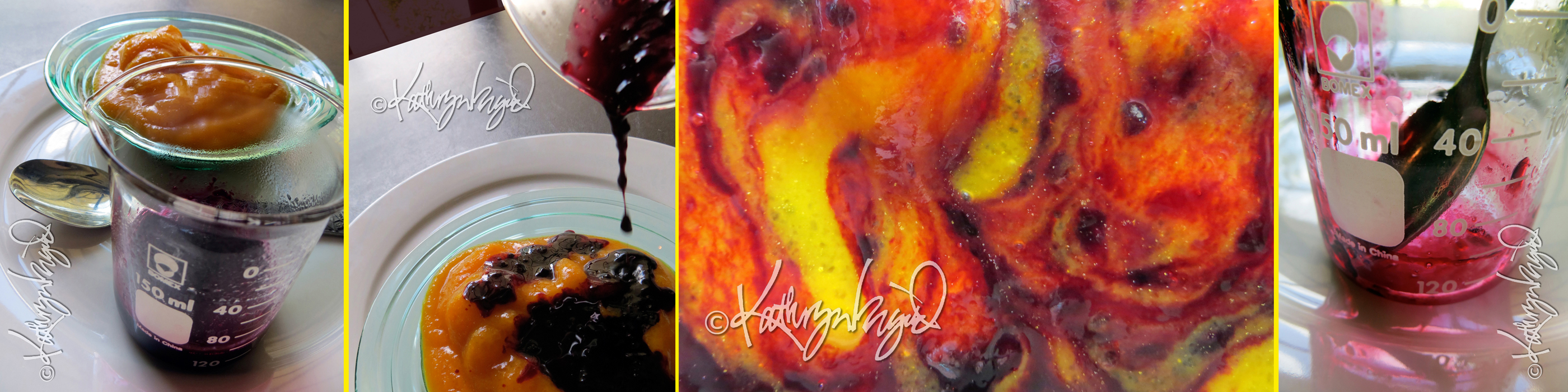
More to the culinary point, I thought it silly to toss out all of the vegetable leftovers of the process when, though they will certainly have given up some of their nutrients to the broth, will probably also have gained some back from their fellow ingredients along the way, so they oughtn’t to have lost all of their nutritional worth in the cooking. The carrots are the only members of the party that haven’t mostly melted to nothingness in my usual broth process and can be individually retrieved, so I picked them out of the strained ingredients, along with a few small pieces of celery and onion, and pureed them with just a touch of added broth and a pinch of salt, and had a nice, faintly savory pudding.photoAdding some juice-packed mandarin orange segments (reserving the juice for later use elsewhere) made it into a really tasty little side dish of comfort food with very little effort. Warming some black raspberry jam and drizzling it on top of the pudding or swirling it in made it into an even jazzier little light dessert. The contrast of the punchy colors was matched by the contrasts in savory and sweet, in the soft pudding and bursting orange sections and the tiny crunches from the berry seeds.photo montageAll that was left for reinvention from the broth straining was the marrow and meat that, while not enough to make a meal alone, still filled a bowl with beefy goodness. It was clearly too soft to be especially attractive as a pot roast sort of thing, let alone a plated slice of anything recognizable as meat. Paté came to mind. Heck, I’d already had the stick blender busy to make my carrot pudding, so why not put it to further use on the day? The beef bits, along with a couple of hefty tablespoonfuls of butter, a half teaspoon or so of salt, and a little broth to make it workable, got pureed into a smooth, buttery spread that waits in the freezer for the time when it will be thawed, chilled in a ramekin, and served with crackers or toast, cornichons and cocktails, just as though I were an ideal 1960s magazine housewife. Well, I grew up in the ’60s and I’m a homemaker; close enough.

photo

It may not look like much, but as a poor-man’s fois gras it’s dreamier than you might think. I like to think of myself in a similar fashion, ’60s housewife or not. Wink-wink.

Foodie Tuesday: Orange Foods for Your RDAF*

[* Recommended Daily Allowance of Fun]

I guess you know by now that I have a Thing about orange. Among the many orange-obsessions in my color-hungry psyche, and far from least, is the love of orange foods, whether naturally that way or made that color by virtue of their preparation or combined ingredients. Oranges, tangerines and kumquats, for example, have the advantage of already being that eye-catching hue, as do carrots and cantaloupes, peaches and apricots and a long list of other vegetable and fruit delights. Then there are the lovely delectables tinted with turmeric, annatto, saffron, onion skins and other strong yellow dyes combined with various companion colorings to create all of those edible paints that make cheeses and egg dishes and breads and cakes and so many other desirable comestibles burst out in alluring orange flame. It’s often a bonus attraction of particularly succulent foods that they call to us first with this beacon of color.photoMirepoix, for example, is not only a magnificent contributor of flavor and texture to a vast palette of palate pleasers but brings the come-hither warmth of the carrots’ orange to add visual appeal to those dishes. It takes very little besides to make, for example, a simple omelet or frittata both delicious and pretty, and they can be further customized with many ingredients that will further both the orange coloration and the flavor with a happy boost, as in the case of the one seen here that added only a pinch of dill and a toss of finely diced summer sausage (a.k.a. beef stick), whose fat when heated usually oozes with orange glory.photoMany orange-colored foods are not only intensified in flavor but also in their punch of sunny hue by the concentration of the drying process. Dried apricots benefit in both ways from gentle dehydration. The brand of boxed chocolates I grew up enjoying (See’s), includes in its roster of stellar treats a juicy little bite called Apricot Delight that is so good it actually deserves a place in a box of chocolates–and you know my religious beliefs about chocolate: that’s a massive concession–so recently I bethought myself to attempt a sort of replication of its goodness. I think I did a pretty fair job, but will leave it to you to decide. I think these could be made by hand mincing, crushing and chopping, but by far are best made in a food processor or powerful blender.photoApricot Slice Candies

Equal parts of plump dried apricots, toasted sweetened, shredded coconut and roasted and salted pistachio nut meats–in this instance, about a cup of each–go into the processor with about 2-3 tablespoons of butter (or, if you prefer, solid coconut oil) and a handful of candied citrus peels. Whirled together until the solids become a coarse sandy mixture, they should have enough butter in them to become a tender but malleable dough (add more butter if needed) that can be formed into a log (about 2 inches in diameter), rolled into parchment and refrigerated until serving time. To serve, simply slice the chilled dough into 1/8 inch thick coin slices. I found these addictive enough as they were, but surely there would be no harm in adding candied ginger to the peel or throwing in a pinch of cayenne, a little splash of rose- or orange-blossom water or almond extract, or some sesame seeds, to name a few possibilities. Why, even some dark chocolate mini-chips thrown in after the blending or melted to coat the coins might not be amiss and could conceivably satisfy the diehards who mightn’t be as forgiving as I’ve been about finding these beauties in the box of chocolates, but I’m content to let them shine in all of their orange cheeriness, after all.photo

Foodie Tuesday: The Daily Grind Need Not Grind Us Down

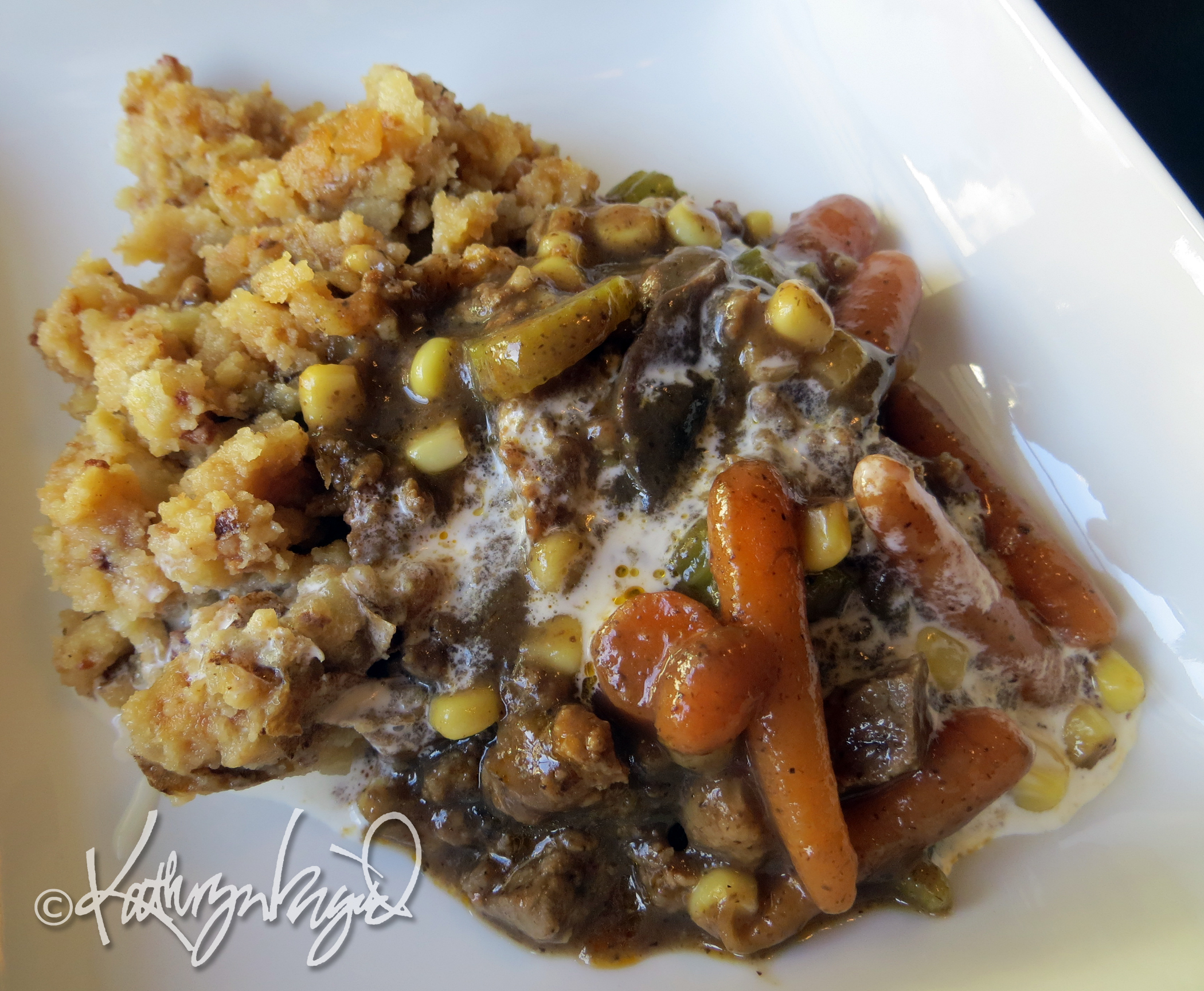
When I did a bit of checking on it, the name of my variant of Shepherd’s Pie seemed to be, by rights, ‘Pastel de Carne y Patatas’–but you know me, I can’t stick to proprieties very well. So I named it the more mellifluous sounding ‘Pastel al Pastor’, thinking as I do that shepherds get very short shrift in this day and age and can use a little flattering attention. What the dish is calls for it anyway, for it’s a rustic Mexican-tinged take on the comfort-food standard Shepherd’s Pie. In any event, like many longtime popular recipes, it got its start partly by using ground or minced meat, a hallmark of well-fed poor people’s diets since the cheaper cuts of most meats can become tenderer and allow much more expansive fillers and the disguise of plenteous seasonings in order to be palatable while still being relatively affordable.

Rustic and comforting it may be, but the simplicity of the end result in this recipe belies the multifaceted process by which it’s made. Don’t let that put you off, though, because it can be made in large quantities and frozen in smaller batches between times, so it can easily become a quick-fix dish after the first preparation. Shepherd’s Pie, in the vernacular, derives from the longtime concept of Cottage Pie, which in turn originated when cooks began more widely using potatoes to stretch those more expensive ingredients of the meal, the meats. Typically, these pies (and there are versions of them in an enormous number of countries, cultures and cuisines) are simply meat dishes, often made with the ‘lesser’ cuts or a mixture of leftover meats, with a potato crust. Probably the most familiar of them here in the US is the minced meat (and often, vegetable) mixture topped with mashed potatoes that is served in many a British pub and home kitchen and that we co-opted in our own American ways.

Mine, on this occasion, was to veer as I often do toward Mexican seasonings and enjoy my own little twist on the dish.photoPastel al Pastor

Seasoned minced or ground meats, topped with vegetables and mushrooms and gravy and served over smashed potatoes make altogether a hearty and countrified dish, not at all difficult to make but taking a little bit of time because of its individual parts. I make this in a generously buttered baking dish both because it’s easier to clean afterward and because–you guessed it–I love butter.

The bottom layer of the dish is made by frying a mixture of equal parts ground beef, pork and lamb, seasoned freely with salt, black and cayenne peppers, chili powder, smoked paprika and lots of cumin. Those without supertaster spouses will likely want to add some garlic powder as well, though it’s not essential. A splash of rich chicken broth or a spoonful of good chicken bouillon adds a nice layer of flavor, if you have it. Next, add a heaping spoonful of tomato paste and enough good salsa to make the meat mixture very slightly saucy, and just as the meats begin to caramelize, you’re done. [My go-to, if I’m not making my salsa by hand, is Pace’s mild Chunky Salsa with a prepared chipotle en adobo blended in thoroughly–I see on their web page that they’re reintroducing their chipotle salsa, so that’s probably fine too.] Drain the fat from the meat mixture and spread it in the bottom of your baking dish.

While the meat’s cooking, you can be preparing the vegetable-mushroom layer. I mixed about equal amounts of small cut carrots, sliced celery and sliced brown mushrooms, covered them with some of my ubiquitous chicken broth and cooked them until tender. Then I pureed half of them with a stick blender, adding a heaping tablespoon each of chipotle en adobo (that’s about a half a pepper), unflavored gelatin and potato flour for flavor and texture, mixed that with the remaining vegetables, and poured it all over the meat. I topped this with a cup or so of frozen sweet kernel corn and got ready for Potato Happiness.

Today’s version of this meal, Ladies and Gentlemen, was potato-fied with leftovers. I had half a baked potato and about a cupful of good french fries in the fridge, and they worked wonderfully when warmed with some cream and a touch of salt and smashed roughly. It would have been just fine to do the typical Shepherd’s Pie treatment of spreading the potatoes over the meat-and-veg before heating the dish through in the oven, but since this was all concocted of things I had around (taco meat I’d made and frozen, salad vegetables and leftover potatoes), on this occasion we just put nice heaps of mash on our plates and spooned the rest over them like meat-and-vegetable gravy.

For the more normal approach, I’d roast, boil or bake potatoes, season with salt and pepper, and combine with cream for the mash and then top the casserole, possibly adding some nice cheese either on top before browning it in the oven (a mix of shredded cheddar and Monterey jack, for example) or as a fine garnish, a serving-time crumble (cotija on top, anyone?). But ‘normal’ is overrated, and the dish was mighty, mighty tasty even deconstructed in this way. And it’s still flexible–yes, even a dish concocted of multiple leftovers has variety left in it, my friends. Add some peas (so many tasty cottage pies have peas in them), cauliflower, green beans, or any number of other vegetables. Make it spicier. Soup it up into a stew, with potato pieces incorporated. Change the seasonings to Indian and make it a post-Colonial curried version. You get the drift.

Thing is, of course, that this is precisely how the dish was conceived: as a loose general structure into which any number of variables could successfully be introduced, depending upon what was on hand. Save time, save labor, save money. Eat delicious potatoes and whatever flavorful wonders you can afford and imagine to combine under them.

Well, get along with you now, you know how it works. And you can be pretty sure that it’s going to taste good. That’s how folklore ‘recipes’ survive–on flexibility and reliability. Oh, yeah, and great fillers.

Even chicken, which sometimes gets short shrift when it comes to minced meat dishes because it’s left too unseasoned or cooked in ways that make it too dry, can make lovely ground meat dishes with a little effort. In the latest instance, I chose to precook mine in a sort of meat loaf sous vide, keeping the juices and additions in and on it until it was fully plate-safe, but this could easily be chilled in its loaf form, sliced and pan-fried without the intervening hot bath, I’m sure. And a food processor makes the loaf prep a snap, but it can be done with a knife and a pair of hands for mixing, too. In any event, I veered more toward Italy this time with my glorified chicken meatloaf concoction.photoCotolette di Pollo e Pancetta

[About 6 servings.] Mince and mix together the following and shape into a compact loaf: 6 boneless, skinless chicken thighs (dark meat stays moister), 3 ounces pancetta, 1/4 cup shredded Parmesan cheese, 1 teaspoon thyme, 1/4 teaspoon ground black pepper, 1/8 teaspoon powdered lemon peel, 2 eggs, 4 tablespoons cold butter and 1/2 teaspoon minced dried shallot. Wrap and chill the loaf until ready to fry it, or do as I did: vacuum pack it, cook it sous vide like a confit (low and slow–I let it go overnight), and then refrigerate until ready to use.

When it’s time to fix the meal, cut the loaf into slices about 1/4 inch thick and fry them over medium heat until lightly browned. With a well seasoned iron skillet or a nonstick pan, the butter in the loaf is quite sufficient to keep the slices from sticking, and they get a nice little lightly crispy crust outside their tender middles. I served mine with slices of fried cheese (any slow-melting mild cheese would do for this after-the-fact application, or you can top the meat slices with faster-melting sorts like mozzarella or provolone as the meat cooks) and a simple sauce cooked down from jarred passata (simple tomato puree–I like the Mutti brand passata I used, pure tomatoes with a little salt) mixed with the loaf’s excess juices, salt and pepper and oregano to taste. On the side, little ramekins of rice and buttered green beans are plenty, though of course there’s always room for invention on the plate. The whole assembly, since I’d put up both cooked rice and the confited loaf in the refrigerator beforehand, took not more than fifteen or twenty minutes to prepare.

¡Buen provecho! Buon appetito! Now, stop mincing around and get eating!

Foodie Tuesday: Best of the Wurst


photoLong before anyone imputed a less well-mannered meaning to the phrase ‘sausage-fest’ there were plenty of people who appreciated the finer points of delicious minced and seasoned meats in casings (or patties) enough to not only dine upon them but celebrate them as well. Among those people, families and cultures where sausage is known and admired, it may begin in early childhood with tasty little links at breakfast or frankfurters, better known in much of the US as hotdogs, served up for lunch or supper, and from there it’s off to the races.photoWhat goes with sausage? What doesn’t? But I have to ask as well: does good sausage really have to have anything go with it? Okay, maybe it’s got to have an accompanying drink to be at its best, and a good beer is hard to beat as a way to wash down a good sausage, whether it’s a fine adult beverage or an outstanding root beer. All ages covered by serving different versions of one libation!photoNow, if I’m hungry for a good southern-style sort of sausage, say perhaps a savory hunk of Andouille or a juicy smoked Texas sausage, a piece of skillet-baked cornbread is a perfect taste to enjoy on the side and ideal, too, for sopping up the sausage’s drippings. Did I say smoked Texas sausage? Oh, yeah, maybe a whole bucketful–nothing like a classic Tejas BBQ joint with a tub full of smoky rings of hickory-scented sausage to get the salivary juices flowing just as fast as the hot-links‘ juices.photoOf course, the American south is far from the only place on earth producing miraculously delicious kinds of sausages. I have devoured plenty of fantastic ones on foreign turf, and gladly. Another accompaniment that nearly always appeals is the ever-welcome potato. From plain boiled, baked or mashed potatoes to crisps and chips and all sorts of fried ones, there are endless wonders that can be wrought from potatoes to enhance to beauty of sausages. One of my favorites, both in the German-speaking lands and at home, is Rösti, a crispy-tender variant of what we know as hash browns in the States, and since it’s so quick and easy to fix and sausages are too, it’s not an uncommon meal hereabouts.photoSometimes having an exclusively meat-and-potatoes meal isn’t entirely enough, and a bright vegetable addition becomes a delightful contrast in texture and flavor and a palate cleansing lightener of the occasion as well. Often, a simple, quick salad like a melange of Mandarin orange segments and cut sugar snap peas, toasted sliced almonds and pine nuts, and light lime-honey-ginger vinaigrette makes just the right complement to the fat happiness of sausages and starch.photoAnd sometimes the sausage is most welcome incorporated into a well-loved main dish. It might be Italian sausage in a classic red sauce; could be chorizo in a glorious paella; may be a welcome casserole of Cassoulet. Last week, it was Gumbo loaded with minced ham, crawfish tails and both pork and beef sausages all playing along nicely with the okra, corn, carrots, celery, onions and bell peppers cooked for a long, low, slow simmer in homemade bone broth and store-bought fire-roasted tomatoes and a bottle of Czech beer, seasoned with bay leaf, cloves, black pepper, cumin, smoked paprika and premixed Cajun spice and thickened at the last just a little further with the traditional filé (sassafras powder) before being spooned over broth-cooked rice. Next week, it might be time for bangers and mash, kielbasa and noodles, or possibly just some marvelous eggs, scrambled until custard-like and served with sage-scented breakfast sausage.photoAnd no, all of this goodness is not reserved for those of the manly persuasion (slangy phrases notwithstanding). This here girl-type person, for one, will fight for her share of the feast, so I guess it doesn’t qualify as a total sausage-fest, if you know what I mean.

Foodie Tuesday: Clean Hands and a Cooked Chicken


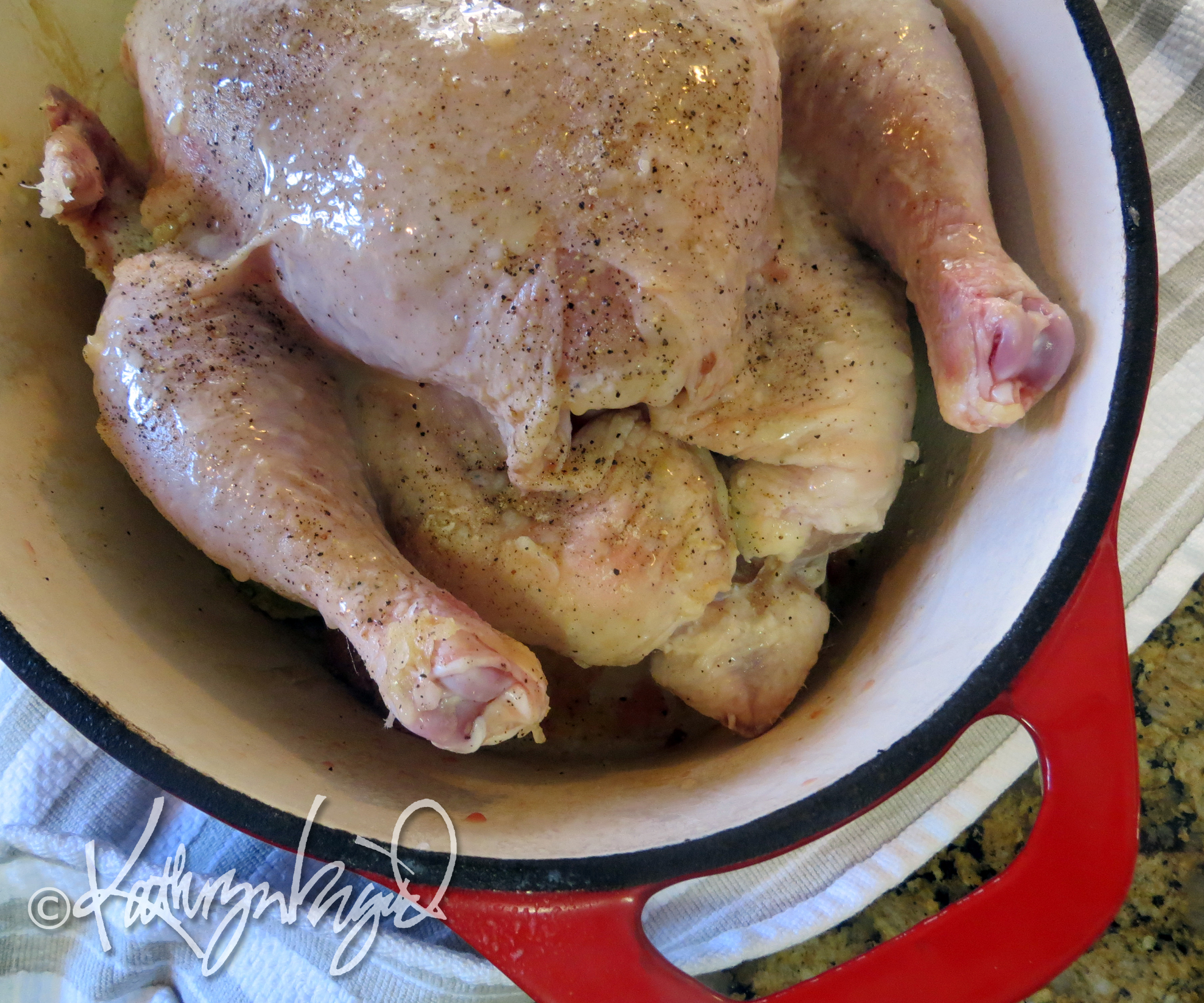
photoNo fingers must be licked for chicken to be considered notably delectable. Still, being no stickler for any particular sort of manners, I am not averse to slurping at any remnants of good food stuck to my fingers no matter what they are or, possibly, where I am. And I find that some of the appeal of eating chicken is that it lends itself to an enormous range of edible iterations that are a pleasure in the making, in the dining, and in the finger-licking aftermath of it all. Chicken plays such a lovely supporting role to any number of costars among the pantheon of possible flavorings and ingredients that it’s never difficult to imagine yet another wondrous way to enjoy a chicken dish. Add to that the potential for re-imagining the chicken in numerous follow-up dishes if there should happen to be any left over from dinner, and you’ve got one fine, fine companion in the kitchen.photoOur friendly chicken on this occasion, a handsomely fat-breasted creature of purportedly wholly organic origins (and who am I to argue), was gently consigned, in a Dutch oven larded with a generous quantity of sweet pastured butter, and wearing a good dusting of homemade lemon salt and pepper, to lie on a bed of neck and giblets, celery chunks and quartered limes that suspended it above the cupful or so of white wine pooled underneath. The oven, set at about as low a temperature as it could sustain below the mere warming of its interior light could generate, brought the chicken up to moist-cooked interior temperature over a long, slow afternoon before being brought out from under its protective lid for browning under the broiler at the last moment. Not the fast food version of ‘finger-lickin’ good’ but rather a lengthily slow-cooked bit of tenderness that deserves hand-cleaning after the fact all the same.photoThe simple sequel to this supper can come from any number of inspirations. On the latest occasion it was pairing the chicken with some crisp-tender hash browns, along with warming some leftover marinara sauce, butter-cooked mushrooms and herbs together to create a facsimile of Chicken Parmigiana. Rather than create the breaded cutlets in the traditional style, I simply layered the slices of moist chicken next to the potatoes, spooned on some mushroom marinara, sprinkled on some shredded Parmigiano, and melted the cheese just a little to round out its flavor. Far from the heights of authentic Italian culinary art, but let me tell you, it wasn’t hard to eat all the same. Might be having some again soon, since there’s still more of that nice chicken that I cut up and popped in the freezer after roasting it the other day. Of course, I could veer off toward some Tikka Masala . . . or chicken noodle soup . . . or quesadillas con pollo. photo

Foodie Tuesday: In Small Doses

Another lunch, another assortment of dishes. I’m not much on trying to unravel what magical single dish or small group of dishes will satisfy every person at the table when I’m serving them lunch, so as always, when I had a few friends over a few days ago, I opted for my usual ‘safe’ approach of a larger number of smaller dishes. As I so rarely use actual recipes, I do tend to make up a menu in the form of simple notes, lists of ingredients, combinations, that sort of thing. Here we go. Imaginary eating is sometimes half the fun!

For the occasion, a bunch of my friends became the LADIES WHO LUNCH.
*‘Virgitarian’ Green Punch
* 1 small honeydew, cubed
* 1 cup finely sliced celery
* 1/2 apple
*1 whole cucumber
* 1 cup water
* 1 bunch of fresh mint
* Juice of 1 small lemon, 1 lime
* 3 cups Stirrings Simple Mojito mix

photo    * Quinoa with browned butter and myzithra
   * Cornichons, Membrillo and fried shallots

photo    * Tomato Apricot Jam as ‘relish’
* 1/2 cup grape tomatoes
* 1/2 cup dried apricots
* 1/4 cup Cabernet
* 2-3 T Balsamic vinegar
* 2-3 T honey
photo    * Beef & Rice Stuffed Portobellos
* 2 large Portobello caps
* 1 cup broth-cooked rice
* 3/4 cup minced roasted beef
* 2 T cooked/thickened beef jus
* 1/2 cup whole milk yogurt
* 1 T sweet-hot or Dijon mustard
* 2 T sliced pimiento-stuffed green olives
* 1/4 cup finely grated Reggiano
*2 T (2 ‘butter pats’) sharp white cheddar
* (Optional: top with crumbled fried sage leaves)
photo    * Braised Kale in Tomato Sauce
* 1 bag (ca. 4-5 cups) of washed, cut kale
* 1/4 cup chopped celery
* 2 T butter
* couple of small pieces of Parmigiano-Reggiano rind
* 1-1/2 cups fire roasted tomatoes
* 1/2 cup orange or tangerine) juice
* Pinch of sugar
photo    * Mixed Potato Gratin
* 1 Russet and two sweet potatoes, scrubbed and thinly sliced
* EV olive oil
* Alder smoked salt
* Ground black pepper
* Sprigs of fresh rosemary
* 1 cup heavy cream
photo    * Marinated Green Beans & Radishes (serve hot or cold)
* 2 cups lightly steamed cut green beans
* 1 bunch of radishes, cleaned and sliced
*1/2 cup cider vinegar
*1/4 cup mild oil (I used canola)
* Sugar to taste
* 1 tsp ground mustard
*1 tsp dried dill
* 1 tsp brown mustard seeds
* Salt and pepper to taste
* Black sesame seeds for garnishphoto
 * Tangerine & Fresh Strawberry Frozen Mousse & TJ’s caramel-sea salt chocolate

Foodie Tuesday: *Arroz* by Any Other Name

It is conceivable that by now you have figured out that I am mightily fond of Mexican, Tex-Mex, Mexican American and Mexican influenced foods and flavors. Having grown up in rich farm country where the migrant workers not only settled eventually but brought a veritable second-town of family and friends to join them over time, I was blessed to be fed by a number of eateries in our area run by the fantastic chefs all trained by one little lady in their hometown. By rights, she should have a whole county in Western Washington named after her at the very least, though I might suggest a shrine as more appropriate, because thanks to her a whole lot of us have faithfully eaten exceedingly well on both roots food from her teachings and wonderful inventions and innovations based on them.

Having moved to Texas might even be considered a logical next culinary or at least dietary step in my lifelong love of La Cocina Mexicana.

In any event, I will keep today’s post simple but say that once again I was influenced by that saintly lady’s culinary offspring when I entered the kitchen to begin dinner prep. I had intended to make something with the big gulf shrimp I had tucked into the freezer, but until it was really dinnertime I wasn’t sure but that I’d repeat the recent quick, hot-weather meal of the previous week, where I simply poached the cleaned shrimp and served them as part of a sort of deconstructed Louis or Cobb salad cousin.photo

Which would’ve been fine.

But, you know, I opened the refrigerator and saw a carton of leftover broth-cooked rice and suddenly I got all faint and dreamy-eyed and (cue theremin music and wavy-screen fantasizing-fade here) thought with longing of one of Our Lady of Mexico‘s disciples’ lovely Arroz con Camarones–that beloved combination of rice and shrimp favored by all of the Latin coastal cultures–this one a favorite version I miss from back in Tacoma.

So this day’s shrimp were coarsely chopped and kept on hand with a finely-slivered slice of leftover ham (to add some bacon-y goodness, and to help clear out the fridge) while I sautéed about a scant cup each of julienned carrots, sliced celery and chunky-cut mushrooms in some flavorful bacon fat just until crisp-tender with a little black pepper and some cumin, added the freshly squeezed juice of one big orange and about a cup of slightly drained crushed tomatoes (I used Muir Glen‘s fire-roasted tomatoes, since I like the flavor spike they add) and cooked the vegetables and sauce until slightly thickened, adding the prepared shrimp and ham just long enough to lightly cook the shrimp through. Served over the warmed rice, and with a dollop of whole yogurt to stand in for the absent crema, it was almost as good as I remembered.photo

I did have to add the hovering Abuelita in imagination to complete the effect.

Foodie Tuesday: Getting a Menu Transplant

photo

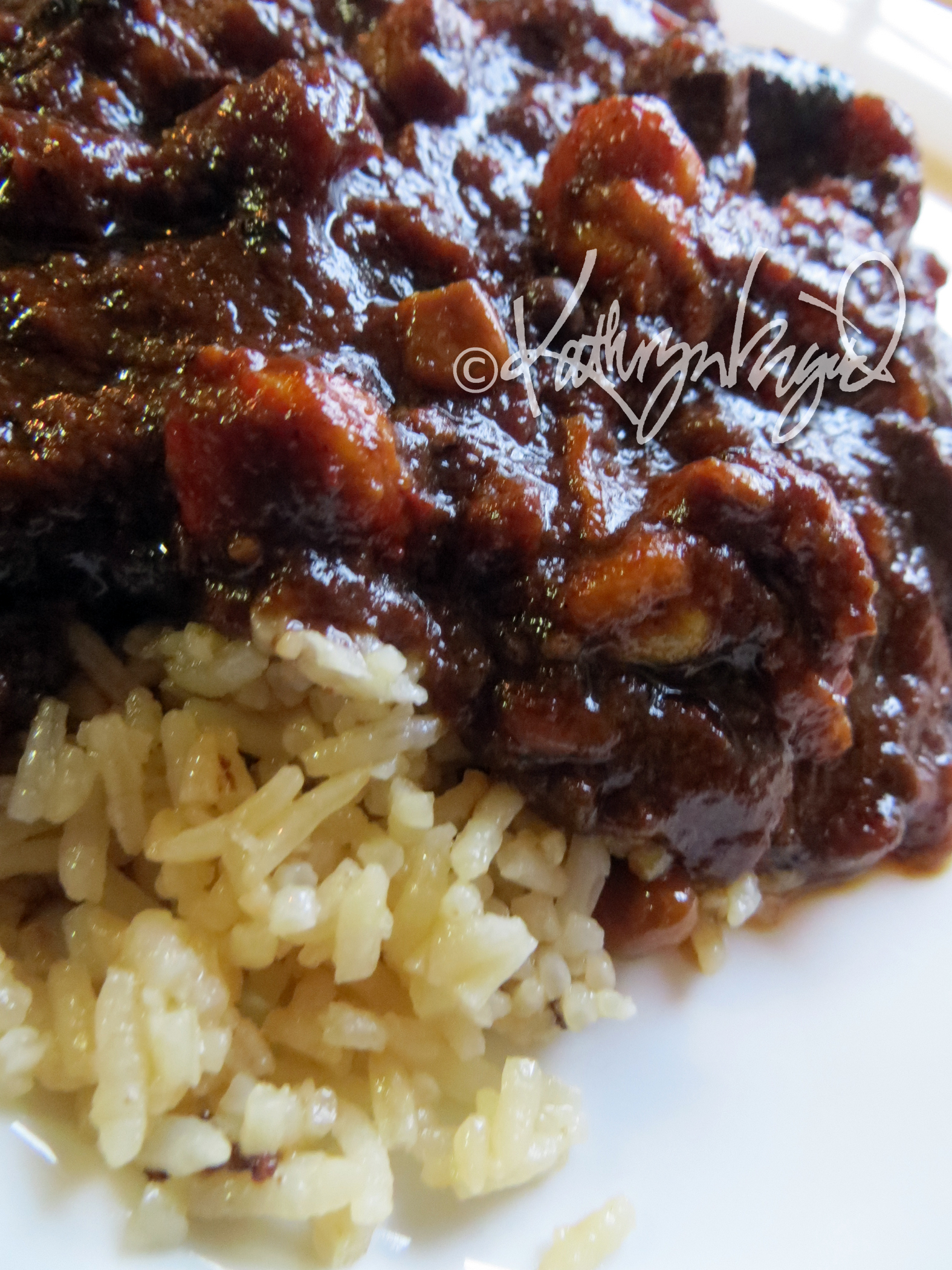
Sticking to my ribs, yes, but maybe with the barbecue sauce twisted into a (Southern) peach chutney style to suit the Basmati rice alongside . . .

It’s not what it used to be, moving to a different place. The world is so much smaller than it once was! We talk via computer and cell phone as though we were sitting right next to each other–and sometimes when we’re sitting next to each other. Language and culture and history are all getting a good mash-up in this shrinking world where we live.

One genuinely wonderful aspect of this not-entirely-perfect scenario of homogenization is that we have access to so much that was once unreachable to everyone but the most extremely far-flung intrepid explorers and have commonalities that our ancestors could never have dreamed remotely possible. Not least of all, we can indulge in the joys of cuisines and ingredients from places we can’t even pronounce, let alone afford to visit.

Most of these regional, national, racial, cultural treasures, by virtue of being intermingled with and sampled by so many others to such a degree that sometimes it seems something learned from the Chinese by the Dutch traders and then passed along to their colonial outposts in the south seas, who in turn brought it along when they immigrated to North America, well, these ideas and arts and recipes have been so transformed along the way that they, like the initial message in the old game of Telephone, are utterly new inventions by the time the Chinese ever experience them again. And yet, in a happy twist, we who create and share the first iteration often fall in love with it and repeat and refine it until it becomes part of who we are, so it’s not wholly lost in the translation, either.

For someone who grew up in one part of the vast American patchwork of a country and experienced East Coast specialties, Southern cooking, Midwest traditions, and Southwest cuisine as being no less foreign in their ways to my Northwestern experience and palate, it’s always been a pleasurable study to try out the fabled deliciousness of Other Places. So while I’ve long loved Chinese and Dutch and Polynesian and Italian and German and Thai and Indian and North African foods of various kinds, it’s no less exotic and thrilling and delicious to sample the comestible culture of different regions of my own homeland.

photo

Fajitas today, quiche tomorrow . . .

photo

. . . but you only have to switch from a Coronita to a Trappist ale to suit the occasion, right?

Still, it’s been an entertaining and tasty part of the adventure of moving from Washington state to Texas that I’m experiencing Tex-Mex and Southern and cowboy cuisines in places of their origins and that’s mighty rich learning and dining, too. So I’m more than happy to indulge in all of those special items here anytime I can. But you know me, y’all: rarely do I go into the kitchen without bringing my own machinations and deviations to the party, so I am more than likely to emerge bearing platters and bowls filled not only with classic Texan foods but also with Texan foods as filtered through Washingtonian hands, perhaps with a hint of Chinese cookery here, Dutch baking there, Polynesia and Italy and Germany and Thailand and India and North Africa and all of my other palatable favorites making inroads and appearances whenever I see fit.

photo

A Texas-sized pork chop can also be cooked sous-vide, even if it’s getting classic Southern sides like bacon-sauteed sweet corn and coleslaw . . .

photo

. . . and if you want to shake things up a little in a more cosmopolitan way, you can always make the slaw a variant of Waldorf Salad while you’re at it by adding chopped apples and celery and sliced almonds . . .

Foodie Tuesday: From GM to GF without Prejudice

photoYou know I’m not a vegetarian, let alone a vegan, nor do I on a regular basis obey or enforce any dietary edicts in my kitchen regarding the consumption of meats, fish, dairy, eggs, or practically anything else in the edible universe. But since I do respect the lives, health and right to believe what they believe about foods that other people have–even if the belief is patently ridiculous, like one that would, say, eat anything but my cooking (okay, there may be fine reasons for that one, too, come to think of it)–well, it means that I do think about what I eat. Surprising though that may be to anyone who has seen me hunched over my food like a half-starved grizzly just because I like it so much. Aside from the notion that I don’t mind being associated with a creature bearing (please bear with me) the wonderfully mellifluous and magical name of Ursus arctos horribilis, I can’t really make that claim. My body does express its likes and dislikes more clearly as I age.
This means that despite my blissful youth of eating every triple-scoop of ice cream that appeared before my glistening eyes without experiencing a noticeable twinge on my elastic waistband, I now find myself questioning whether a single scoop ‘every so often’ might threaten me with an equal and opposite seismic event should I waver too close to any fragile chairs or ice-covered ponds. That a stick of butter should probably no longer be considered an after-school snack. (Well, I thought about it, I’m sure.) Maybe even that the dreaded concept of Portion Control might in fact be a useful, if not lifesaving, one, particularly when applied to foods with calorie counts exceeding the sum total of my age, my IQ, plus my life savings in number. I’ll leave you to contemplate which of these numbers alone is the highest or lowest. And don’t tell me your conclusions, thank you.

Meanwhile, back in my kitchen, I stand contemplating yet another set of conundrums. I’m not convinced that a dramatic decrease in my intake of genetically modified foods is going to wildly affect my remaining lifespan or health, unless foods marked GM are in fact made by General Motors as engine lubricants and exhaust system cleaners. I’ll leave it to the more medically fragile and environmentally astute to deal with those concerns if I must. But I certainly think that if I have a reasonable choice between things grown with or without gene alteration and chemical additives and other forms of production hocus-pocus, I’ll opt for the less adulterated versions. And my gut tells me (this, more literally than might be delicate for full discussion here; suffice to say that I’m talking about both digestion and the expansion of my middle acreage) that wheat is not entirely my friend anymore, if it ever was. This is expressed primarily in a recognition that most of the wheat-based eating I have most loved over the years is also full of (mostly processed) sugar and rather high in not-so-nutritious calories and is therefore wonderfully addictive to me. I just plain eat more of what’s less good for me because it creates further cravings.

Well, let’s get to the cheerier part of this equation, at long last. Dessert again, if you will.photo

I’m gradually working to go gluten-free, or approach it more closely than I ever have before anyway, to see what cutting down on wheat or just plain cutting it out of the diet might do to simplify this one aspect of my food-related health and happiness. I’m learning to work with a number of ingredients that fill most wheat gaps in my taste, and I’m finding new stuff to like. Or is that bad? New foods to like, when I’m so ancient that I can’t just eat willy-nilly and know that there will be no consequences?photo

Here’s a simple little dinner that arose out of the experiment just recently. Small, tender (erm, check out the torn one, damaged by soft pieces of cheese) crepes made of egg, water, a touch of vanilla and a pinch of salt, folded over an uncomplicated filling of cubed roasted chicken warmed with sautéed celery and red capiscum and a whole lot of sliced brown mushrooms, all seasoned lightly with the bacon fat and butter in which they were mingled, a splash of broth, a freckling of black pepper, and a dash of Worcestershire. My beloved dinner companion was not desirous of anything further in his, so mine was the only crepe that had the queso fresco added. I think it works pretty decently either way.photo

For another easy little breath of fresh air besides merely leaving the little bit of flour out of the crepe mix, I varied our frequent-flying slaw addendum to try out a slightly different salad. Thinly sliced celery, shredded carrots and sliced almonds. A spoonful of ginger preserves, the juice of half a lime, and a couple of tablespoons of macadamia nut oil. Crunchy and clean and fresh, and a strong contrast to the soft textures and savory warmth of the crepes.photo

I’m not sure of it, but I think perhaps the meal was satisfying enough that it removed one iota of my natural craving for an actual dessert to follow it immediately. One iota, mind you. I can still envy those who can eat all the floury goodies they want without serious guilt or consequence. But there will be dessert. Many and many a time to come. It’s just that the desserts will be smaller than a triple scoop of yummy scrummy ice cream. And contain lots less wheat, I’m guessing. We’ll just see how all of this goes.photo

Foodie Tuesday: Once Cooked for Eight Equals Four Times Prepped for Two

photo

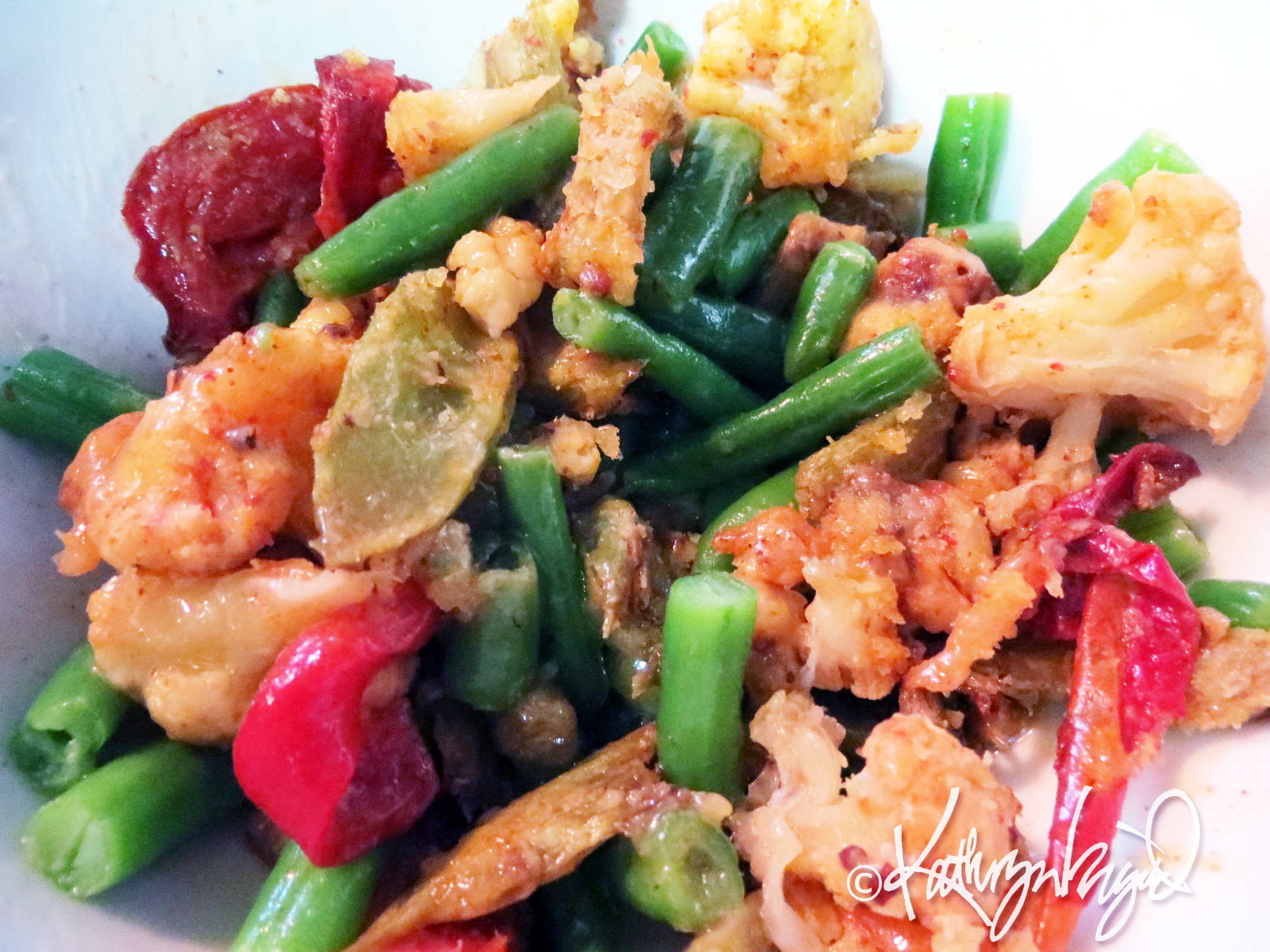
Roasted cauliflower and red capiscum, sautéed celery, steamed green beans–what do they have in common? A new ‘recipe’ for dinner’s vegetable dish, apparently . . .

The complication, if there is any, of having a household of two (or one) is that so many foods, dishes and meals are easier to prepare in larger quantities than are appropriate or even desirable for a single meal. It’s very easy, if planning isn’t finely tuned, to have things spoil and go to waste before we’ve plowed through them at our own pace. The upside of this very problem, though, is that if I do plan reasonably well (and have a little luck as a side dish) I can make several meals out of little more than one prep.

I do this, in part, via the method of complexification and conglomeration. The one or two elements remaining after one meal get combined with each other, with some new element or ingredient from the next meal’s intended menu, or both. Yes, it’s quite possible and even sometimes preferable to simply repeat a dish as-is, especially if it’s already its own elaborate concoction. But often, things seem a little less tired and tiresome if they appear in new guises each time so as to stimulate the palate, if not the imagination. So the small amounts of leftover vegetables from lunch and dinner the last couple of days may find themselves married in a new mixed-veg medley with a little sauce or seasoning that helps them play together as nicely as possible and suddenly, they’re not just two spoonfuls of This and a handful of That but an actual, sort of, recipe.

photo‘Mains’–the central or focal items on the meal’s menu–are seldom hard to incorporate into some new iteration of a main dish. Even when they have already been prepared with a hard-to-ignore or -disguise sauce or presentation, they can find new playmates on the plate next time they head to the table. Roasted chicken, for example, whether homemade or grabbed ready-roasted on a busy day as one flies through the grocery store, is a truly marvelous ingredient when it comes to flexibility. Once seasoned or sauced distinctively, it can pose a slightly more complicated puzzle for renewal, but even then, if the dish is well liked once it’s pretty likely to be popular on a second visit.

So the chicken, whether it was already dressed in the satay-like peanut sauce–I took a shortcut with a pre-made one this time–or not–we liked it well enough to use the same pre-made sauce at the second meal even though it was not already on the chicken–can be reincarnated as a different dinner altogether simply by changing its context. One day, it’s served with a very simple wedge salad dressed with citrusy vinaigrette and a tangle of Pad Thai style rice noodles seasoned lightly with rice vinegar, a squeeze of lime juice and a splash of soy sauce and sprinkled with black sesame seeds.

photoNext day’s ‘satay’ is served with butter-steamed green beans, fresh cold apple slices and fried rice made from–yes, you guessed it–the fridge stash of jasmine or Basmati rice previously cooked up in broth and now pan-toasted until almost crisping with Persian lime olive oil, soy sauce, a touch of raw honey and a handful of chopped sushi gari (pickled ginger, if you somehow haven’t yet noticed, is one of my favorite seasonings for practically everything!). A sprinkling of white sesame seeds, just for a little visual contrast with yesterday’s offering, and there’s Chicken Pseudo-Satay 2.0 ready to be eaten.

And while there’s certainly nothing that says dessert is a required part of every meal, some of us kind of think of it as a specific food group, so even for dessert it’s nice to have some fine ‘recyclable’ ingredients for whipping up something to finish the day’s eating nicely. One of the things that very regrettably can go to waste far too often in a small household is fresh produce, and when I’ve a beautiful batch of fresh fruit on hand I can’t bear to think it will spoil before we can reasonably eat it all. So a large ‘find’ of sweet fresh strawberries, though it was far too great a quantity for two people on the day it was at its peak, got cleaned, sliced and frozen until the other day when it beckoned to me, siren-like, and I blended it thoroughly with a little whole-milk yogurt, splashes of vanilla and rosewater, a tiny pinch of salt and a bit of honey, poured it into a flat sealable container and froze it until it became a brightly fruity semifreddo or granita of sorts for later consumption.

photoNo matter what the small tidbit, most leftovers that are not on the edge of spoiling really do beg for a kindly reinterpretation before we give up on them. Once I get fully in my Friendly Frankenstein mode and think hard about how to zap new life into worthwhile remaindered ingredients, it’s only a matter of letting the locals trade their pitchforks for dinner forks and we can all remain good friends without fear of monstrosities. Good eating!