Abundance and Gratitude

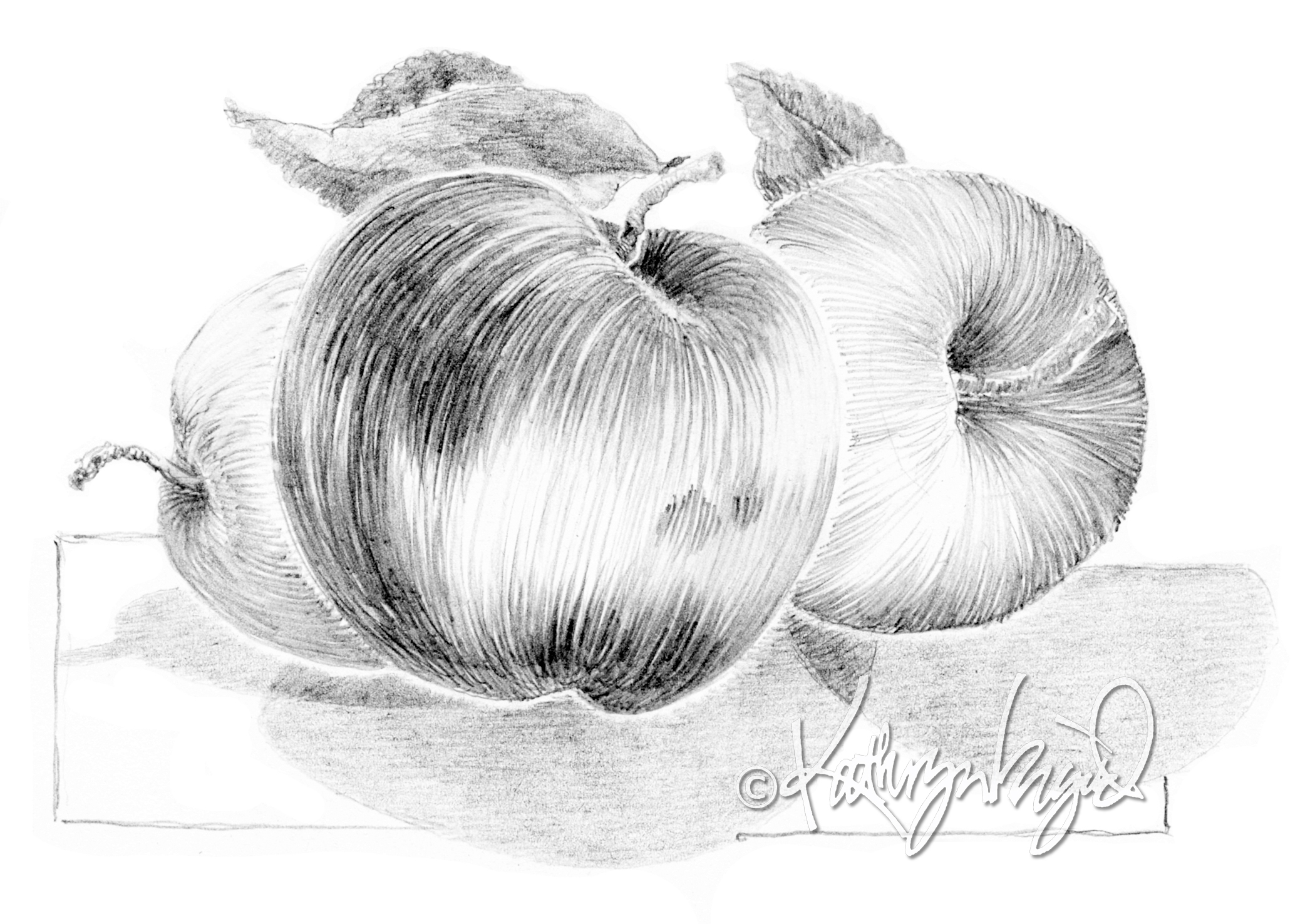
graphite drawingAmong the essentials for a happy life, I consider the above named items some of the most meaningful. But I am often, rightly, reminded that these are as much matters of attitude as anything. Much easier, both of them, to qualify than to quantify.

Abundance, as experienced and demonstrated by many people I’ve known and seen who would be considered below a desirable economic level, is seen as having enough to survive, and just a touch to bring a guest to the table as well. That this means the main family’s subsistence is so much the sparser while a guest is on hand means little, except that the gift is commensurately so much the more generous.

For those of us with more considerable resources, I think the same attitude is worth the attempt. I should think through the difference between my actual needs and my wants, live within my means, and delight in the ability to share what I have with others. I’m not always nearly as good at this as I’d like, but think it a practice worth pursuing and improving over a lifetime.

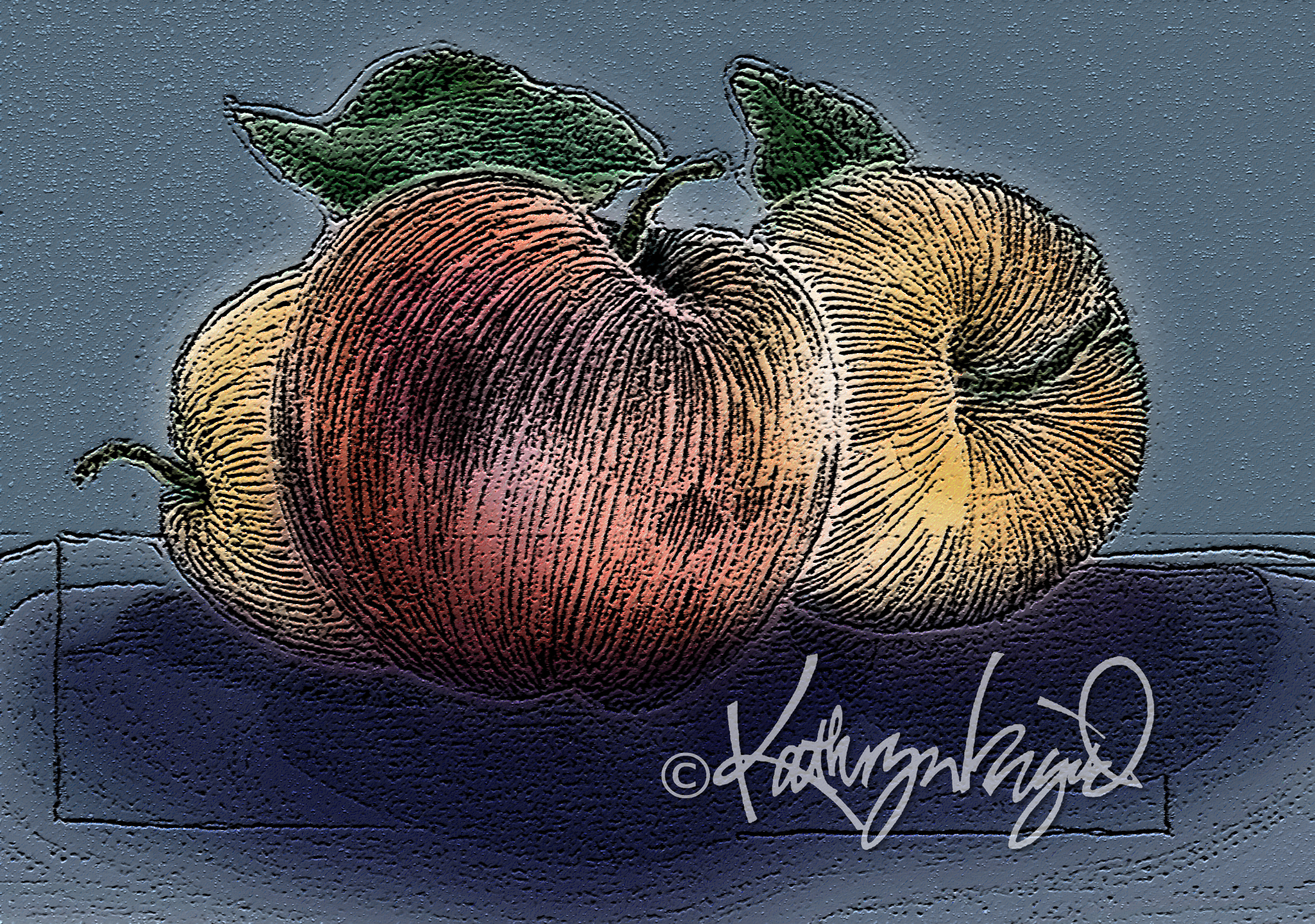
Gratitude needn’t be limited to feeling I’m in the center of abundance, anyway. There’s no reason I shouldn’t be thankful for any and every good thing in my existence, even when the tenor of the times is set in a sparer and more trying mode. This, too, is simply a survival tactic on my part, as giving in to my dark instincts at bad times has no logical outcome but that I’d lie down and die. By choosing to actively and attentively seek out and recognize whatever kernels there are of goodness and light, I take away my focus from what lessens me and give myself a chance of relief. Better, I may see the glint of otherwise forgotten abundance, and that always makes me more grateful.digital illustration
Hey! Over Here!

photo

My skills of salesmanship are nothing to crow about. If I try to show off too much I’m far more likely to end up eating crow.

Self promotion is a gift. Some people are born wheeling and dealing or have inborn salesmanship, and others are born artists. Okay, that’s an unfair generalization, to be sure, but as an artist myself, and one admittedly devoid of any sort of business acumen or PR skills, I also know a ton of other artists of all stripes who, left to their own devices, would or will forever work, then die, in obscurity. I am glad and relieved that there are people for whom the promotion of others is an interest, skill set and/or gift.

If it weren’t for the practitioners of good business, whether as active promoters of artists’ work or more indirectly as patrons (buyers or spouses, for example), lots of us in the arts would either have to give up our artistic vocations or starve in the legendary garrets of the unsuccessful, regardless of talent or commitment.

There’s no obvious solution to this perennial artists’ dilemma, since being self-promotion-challenged so often includes being confused and intimidated by even knowing how to find and secure an able and supportive agent to carry the weight. What a conundrum.

This post, as you would naturally guess, is not a how-to. If I had the answers, any of them, I probably wouldn’t be here talking to you or even cognizant of this puzzle at all. This is, instead, a note on my own perpetual wrestling with the questions of what to do with my creative impulses besides rambling around with them towing me by the heartstrings. I may forever stand in mystified awe and envy of those who know how to crow.photo

Self-Annihilation

P&I drawingWhat does it mean to repress or suppress others? We humans have found so many awful and horrific ways to abuse and torment each other, to subjugate and enslave, belittle and diminish and depersonalize them, that homicide and genocide seem afterthoughts, if not almost a mercy at times.

What do we demean or demolish when we do so to other people? Community. Diversity. Complexity. All of those things that enrich our own lives. Things, indeed, that make our survival possible. We become trees hacking at our own roots and branches, all the while drinking toxic rain and poisonous streams.

If we lessen or lose one life, the whole tribe hangs in the balance. If we lose one tribe, we risk the loss of all humanity.

Persistent Admirers

digital illustrationLeave the Help at Home

Off she went to see the market, basket full of goods and greens,

And the fond companions with her came to see the market’s scenes,

Prancing, dancing, baying, barking, nipping at her head and heels;

By the time they neared the city, all beset by crowds and wheels,

She her petticoats beribboned had all stained and soiled and torn;

Hat askew and heels unbuckled, basket broken, cob and corn

Strewn, her lettuces and flowers flung amain, and so she sat

In the rutted road’s dry scours, in the dust, and that was that–

No point now to going onward to the market if she would,

Dog and pony show now ended (at the least, that part was good)–

Then the animals felt sorry for the chaos and the mess,

Made a show to make her cheery, give her back her happiness.

Nothing mended for the market, recompense for not a sou,

But she smiled at how they capered, no more anger and to-do,

And they picked up, swift and swishing, tails and coattails all a-sway,

Backward home, though she was wishing it had gone another way;

To the market back, tomorrow, she would go to sell her wares,

But avoid her current sorrow,

Locking up those pranks of theirs!

Peter Pan vs. Mother Earth

Maturity is a hard concept to nail down. So few of us would willingly embrace the larger idea of maturity after all: the implication is too much doused with the odor of aging and the loss of innocence, playfulness and joie de vivre.

But if I can move away from those irksome, unflattering aspects of maturation, there is a whole world of better and more admirable traits awaiting me. To refuse to grow up, as so famously done by Peter Pan, one has to reject all of those pleasures and opportunities afforded only to those willing to submit to the passage of time.

I will continue to avoid becoming ensnared in the traps and trials of aging as long as I can get away with it, and probably further. Who wants to become exclusively serious, constantly responsible or particularly predictable? Not I! Age may force me to slow down my physical pace or even make me willing to concede that there is such a thing as a skirt too short or heels too high or a blouse too fitted to be quite seemly for my years, never mind that choosing certain forms of entertainment or places to go or goals to achieve are not particularly well suited for me anymore.

But I am also glad to let down the barriers to other aspects of maturity, and to embrace my aging with a certain relief when it comes to those. I care less and less, for example, about whether I look fashionable or impressive, so the heels and hems can be whatever altitude suits my comfort and mood. I’m happier in my own skin with every year spent getting to know and define and design it.

That, my friends, is the greatest gift of aging: I am freer from the worries, demands and expectations of the world around me and can work at shaping who I am, what I want, and how I feel more deeply and contentedly than when I thought there was a greater need to conform. Youth is not nearly so unfettered as we idealize it as being; so long as more mature people own our territories of home, school, work and even play, they also rule our lives. So long as we concern ourselves with comparison, competition and popularity, we let others have the power as well. When we learn to fit in and find community by being our truest selves, it changes the tune entirely. This is the richness, ripeness and harmony–within and between–conferred by true maturity.digital illustrationAnd while I’m thinking about musical metaphors, I really must give you a link to my husband’s latest YouTube appearance, conducting the beautiful and magical Monteverdi Vespers of 1610 with the Collegium Singers and Baroque Orchestra of the University of North Texas, with some tremendous guest artists singing and playing alongside the artful student and faculty musicians. This production was the premiere performance of the new edition of the Vespers that was developed by UNT professor Hendrik Schulze and ten of his graduate students, and among the instrumentalists playing on marvelous period instruments were some of the greatest players now gracing the halls and stages of the Early Music genre. Enjoy!

Imagine, If You Will…

digital illustrationFantastic Phenomena

Rare as hens’ teeth, so they say,

the bird I saw the other day;

barely known, less often, seen,

and in the spaces in between,

not found but once, then flown away–

But rarer still, and here’s the thing:

that I should see it on the wing

and landing, perching in a tree

that most folk living never see,

abloom in Fall, as it were Spring–

For what I’ve learned is that this kind

of special magic that I find

can only happen if the heart

is open to the sort of art

where things are made so in my mind.

Anachronisms

There are advantages to being out of sync with the known, the planned and the expected. Nothing new, of course, can ever happen if someone or something doesn’t step out of line. Creativity and growth can only take wing if we allow anomalies and anachronisms. Learning doesn’t happen without forward movement and its inevitable mistakes.

So once in a while there has to be the duckling hatched in autumn or the crazy idea hatched at three a.m.

Great things are timely no matter when they occur.digital illustration

You are So Strange!

digital illustrationI don’t mean to be rude, but it’s hard not to recoil at the unknown. What?! No shoulder gills? How can you use your nose for smelling things if you’re busy using it to breathe at the same time? No horns? Oh, dear, where are your radar sensing structures housed? And my goodness, those awful, blind blue and brown orbs where your eyes should be! How in the world do you manage without proper infrared vision, you poor thing? What’s with having ears awkwardly positioned, so low and flat against the head that they can’t rotate and bend to follow every sound?

I realize that we’re not all made the same, but sometimes it shocks me that anyone so odd looking and freakishly ill-equipped as all you other sad creatures out there can survive at all. I don’t hate you because you’re pitiful, but still I can’t help being sad at your obvious plight. It’s difficult at times not to seem patronizing, disgusted and repulsed that you’re not all as sensibly made and beautiful in your correctness as I am. Please forgive my involuntary condescension. It’s not your fault that you weren’t born or trained to be as nearly perfect as me.

Haunted Youth

digital illustration from a photoThat House on Our Street

The doorway was a toothy maw, the casement was an eye,

and all the children crept in awe each time they must pass by,

regardless what they heard or saw; they knew that they would die

if anything at all should draw them in, no matter why,

For bogeys, fiends and ghastly ghouls inhabited the place,

entrapping and devouring fools, and set on them apace;

those children who had left their schools and homes without a trace

now lay decaying in deep pools as dark as outer space,

Dug in the basement deep below, a catacomb of holes

filled up with youth who’d tried to go into this cage of souls

and found, not fun adventures, no, but rather, evil moles

of spirit-kind hid here–and so, for them the town bell tolls;

Lost children wail twixt yonder walls at night while moonlight creeps,

and roam like mists down endless halls while all around them sleeps;

no knowing parent ever calls again; the mansion keeps

its secrets tight, and silence falls, far as the deepest deeps;

At least, the children’s fears said so; the legend kept in thrall

the children thereabouts, who’d go timidly past it all

at anxious speed along the row, lest they lose their recall

to safety. As grownups all know: life’s scary when you’re small!

Something Fishy about That Girl

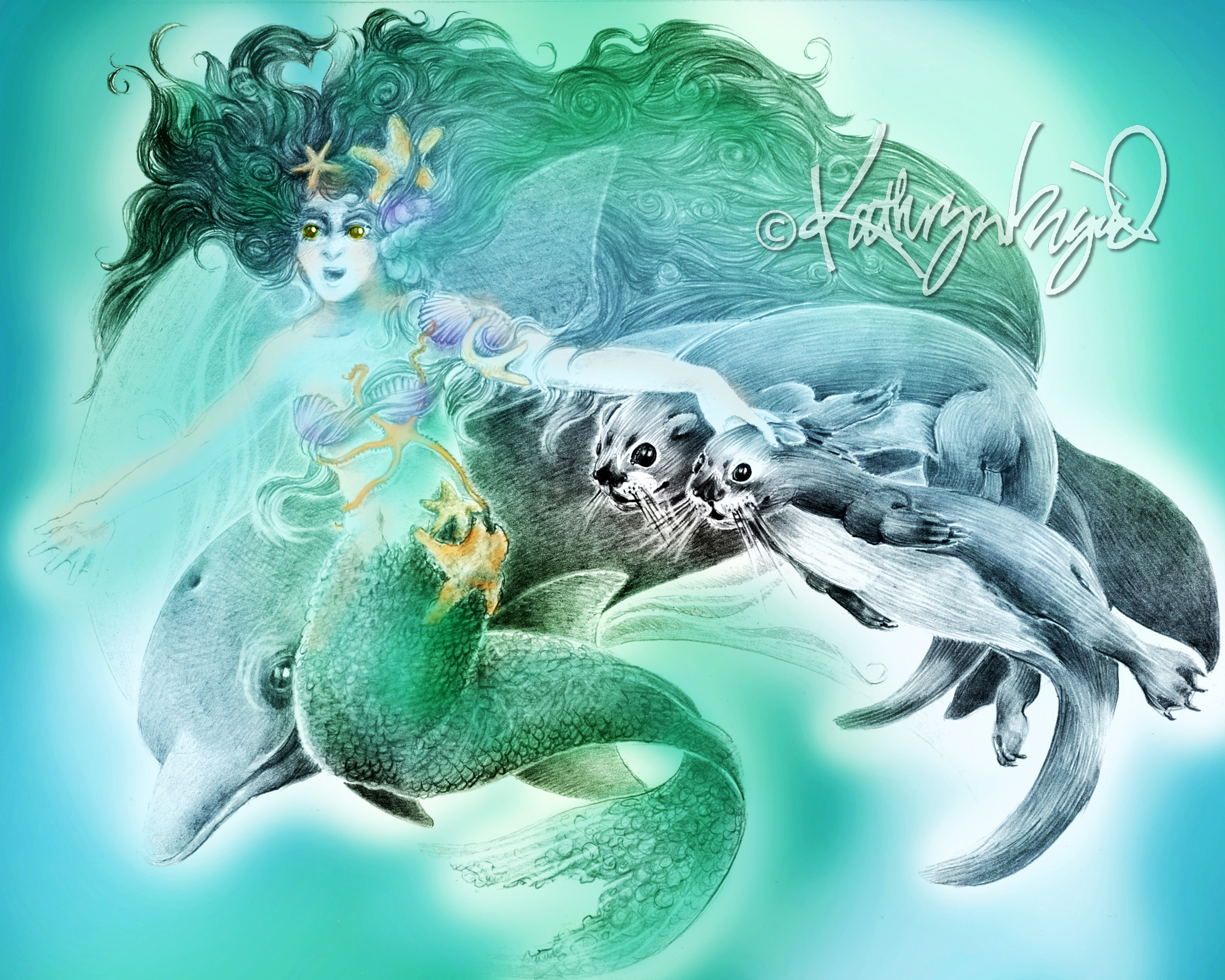
digital illustrationThe Return of Dorinda Beecher

Restless sailors far from shore seek in the stars, and furthermore,

In deepest seas, hoping to sight some change to break the endless night,

The ceaseless day, the infinite long year’s dull drone, for what’s in it

To charm the man who’s been abroad and has forgot his native sod,

Who knows no home and has no friend, just sailing, sailing to the end

Of Earth, the seven seas, the Known? Yet one such sailor, one alone,

Found in the foamy waves that dream the others sought, caught in a beam

Of phosphorescent, moonlit flash: the slightest bubbling roll and splash

Betrayed the presence of a maid; he started, would have leapt to aid

Her but that she was smiling wide, dolphin and otter at her side

Bearing her up in playful bounding swoops. He did not make a sound,

But smiled back, struck by her grace; and when she saw this on his face,

She beckoned gently, drew him on. Another splash! The sailor’d gone

And dived into the depths to meet this mystery, so grand, so sweet.

Could he? Would she? He fell in love, quite literally, from above

Her water empire, and he went full willingly, no accident

Of fate or fearsome, deathly wish: he’d rather fade among the fish

Than risk to lose this chance he’d seen to meet and mate his mermaid queen.

Once in the water, swift he sank, quite full of joy, and glad to thank

His lucky stars; he saw her swim in swiftest darts to rescue him;

She laid a soft hand on his brow–he thought it felt quite different now–

And gazed on him, and in her eyes, he saw reflected, with surprise,

That he’d become an otter, too. Yet not affronted with this view,

He thought their states a pleasant match; his mermaid queen was quite a catch.

Off, then, they swam, mermaid and men, her willing slaves not seen again.digital illustration x2This post is especially for Lindy Lee, who requested on Dorinda’s first appearance here long ago [see the link in the post title] that she might revisit us sometime.