Foodie Tuesday: The Drinks are On Me

photoCold Water

There was a lovely icy drink

Of water, saved my life I think,

One dusty day of heat and dirt

And sweat that soaked right through my shirt,

And if that day should come again

I’ll pray for more ice water then!digital illustration from a photoMeanwhile, there’s so much more to be imbibed as well!

photoIt need not be a special occasion for [metaphorical] immersion in a magnificent drink to slake the spirit as well as the thirst. A pretty glass is reason enough. A dry palate, of course, demands it. Good company makes it lubricate the conversation, whether by dint of mere moisture or by the companionable pleasure of the drink itself.

And Now, to Retire to the Dining Chamber

Let us retire, old friend of mine, and hie to find us there a

Couple sublime cold cocktails on the gold-baked Riviera,

A sunset stroll off-season on the warm Amalfi coast

Accompanied by pork pâté on points of brioche toast;

Perhaps in Brighton lolling near the breezy, rocky beach

With fish-and-chip perfection and a Guinness within reach,

Some spa-time simmering upon the languid Baltic shore

With sparkling water and a plate of pastries, six or more;

At any rate, though I am pleased as Punch to go retire,

I wouldn’t want to spend it only lounging by the fire

Unless something’s a-roast on it, and pleasure in a glass,

For that’s what flavors years and hours with beauty as they pass

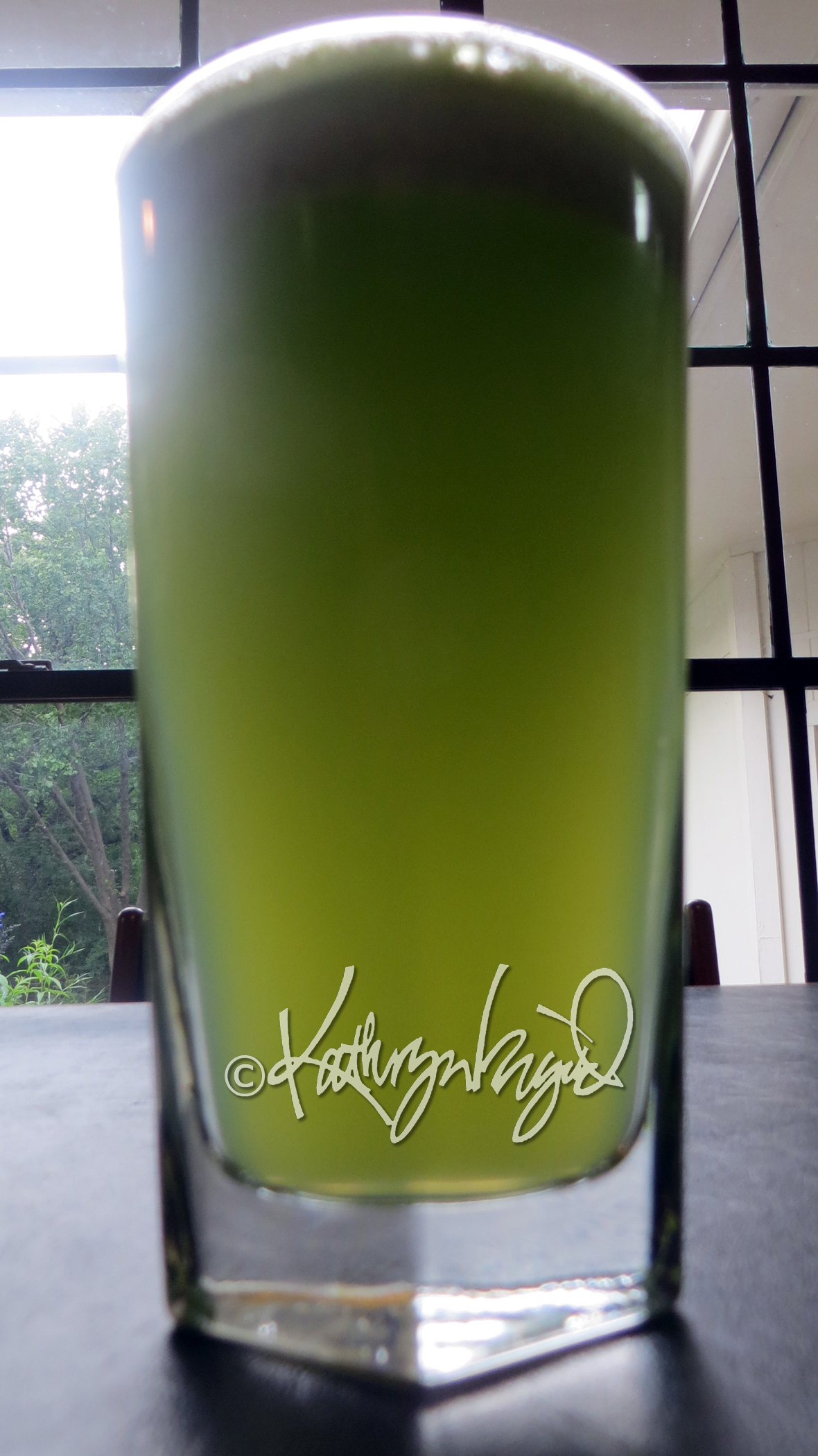
Refreshment can easily be whipped up in a swift, quenching cocktail, or it can just as easily be a thirst-slaking alcohol-free cooler. Today’s has alcohol in it, but a negligible amount, and it can just as easily be left out or substituted for with another ingredient. Drink blends are just as flexible as food recipes can be, and this one scores high for garden-fresh taste and simplicity.photoGarden & Orchard punch

1 bottle Granny Smith hard apple cider (omit or substitute unfiltered plain apple juice to de-alcoholize the punch) (12 oz)

1 bottle Sidral Mundet Manzana Verde (green apple) soda (12 oz)

1 bottle Mr. Q Cumber soda (7 oz)

Pour these together in a gallon pitcher (they make just under 4 cups together) and add (4 cups) fresh limeade to fill. Put a handful each of fresh basil, cilantro and mint leaves into a blender, pour in a cup or two of the soda-juice mix, and blend thoroughly, then strain the liquid back into the gallon pitcher and stir or shake gently. Pour over ice or just chill it in the fridge before serving, and dream happy dreams of shady woodland gardens, birds singing and gentle spring rain. Wet, tasty rain.photo

photoOh, and I happen to know that this punch goes very nicely with Smoked Tuna Dip, vegetables and chips as a light lunch or supper. All it takes, besides the veg and crisps (or crackers) is to fork-blend a tin of smoked tuna (I like Tuna Guys‘) with a big spoonful of Avocado-Roasted Tomatillo salsa (I used Arriba!), a smaller spoonful of mayonnaise, and a touch of dill. Add salt, to taste, if the chips or crackers aren’t salty enough. You’ll always have that nice, juicy punch to keep you hydrated.photo

Foodie Tuesday: Make Believe Meals

I’m generally in favor of good nutrition, in theory at least. But let’s be honest: I’m neither an actual nutritionist nor so dedicated to good health and sensible behavior that I will go to any particular lengths to insure that what I’m eating is always appropriate. You may, just possibly, have noticed that even before I stated it so shamelessly. Yeah, I’m a little kid.*

So if I can make entrees and side dishes that have any value as sustenance and taste enough like dessert so as to make myself feel I’m misbehaving a bit, so much the better. The particular good news in this is that with a whole lot of tasty ingredients, it’s not all that tough to accomplish the task. I mean, if you can take advantage of the Maillard reaction and make sweet caramelization happen to cruciferous vegetables and, yes, even meat, that’s proof enough for me that we are meant to enjoy dessert as any course of a meal. Sexy seared chops and steaks and fish filets, here I come! Succulent Brussels sprouts? But of course! Life is good.photoAnd why limit myself to drawing out the sugars in seemingly non-sugary foods when I can embrace the vitamins in vegetables and, what the heck, throw more sugar and spice on top just because I can. Rather delightful, if you ask me, to occasionally set aside the usual mashed potatoes in favor of what is essentially pie filling. So with those juicy sweet chops, I might give in to the urge to treat them and myself to a scoop of deconstructed dessert thus:

Sweet Potato Pie Mash

Take one peeled sweet potato or yam and an equal amount of carrots, and put both raw vegetables into a food processor or heavy-duty blender with a few friends and blend the whole concatenation into fluffy oneness. My choice last time of company for the two cups’ worth of aforementioned sweet spud and carrots: 2 tablespoons butter or coconut oil, half a teaspoon of salt, half a teaspoon of ground cinnamon, a splash of vanilla, one egg and, for added sugar, half a cup of ‘natural’ (handmade) small marshmallows. Because I had them around. Because I have a slight sweets addiction. Because, and I may have mentioned this before*, I’m a little kid. Last move with this mash is to heat it up–just bake or microwave it in a greased heat-proof dish long enough to heat it through fully, and it makes a delightful pie-like accompaniment to practically anything, including, well, a plain old spoon. Candy, I tell you. But chock full of vitamins. Or close enough to encourage me to absolve myself of any misdeeds until the next over-the-top meal.

photo

Yes indeedy, I *did* pour a little cream on the mash, too, because it tasted so much like pie. But then again, I have been known to put crisped bacon or (as here) chicken cracklings on top for a savory finish. Am I a dietary lost cause? Perhaps. But a happy one.

Foodie Tuesday: India Calling

Who needs call centers in India, I ask you. India calls me all the time, without any help from batteries of trained phone service representatives, using only its myriad delicious foods. Works all the time!photoFor a recent sit-down, for example, I was lured by the siren song of Tikka Masala. Too short a lead time for cooking on the occasion meant I’d need to doctor up some ready-made sauce, and there are certainly plenty on the supermarket shelves, so I picked out a jar and took it home to sauce some leftover roasted chicken and serve over leftover chicken broth rice. On tasting, the sauce proved to be a bit insipid and not quite what I had in mind, but it served as a fair base for a good dish with just a few little additions.  A bit of tweaking with cloves, cardamom and cayenne got it going slightly more brightly. A toss of coconut is seldom amiss, so yeah, I threw that on top.

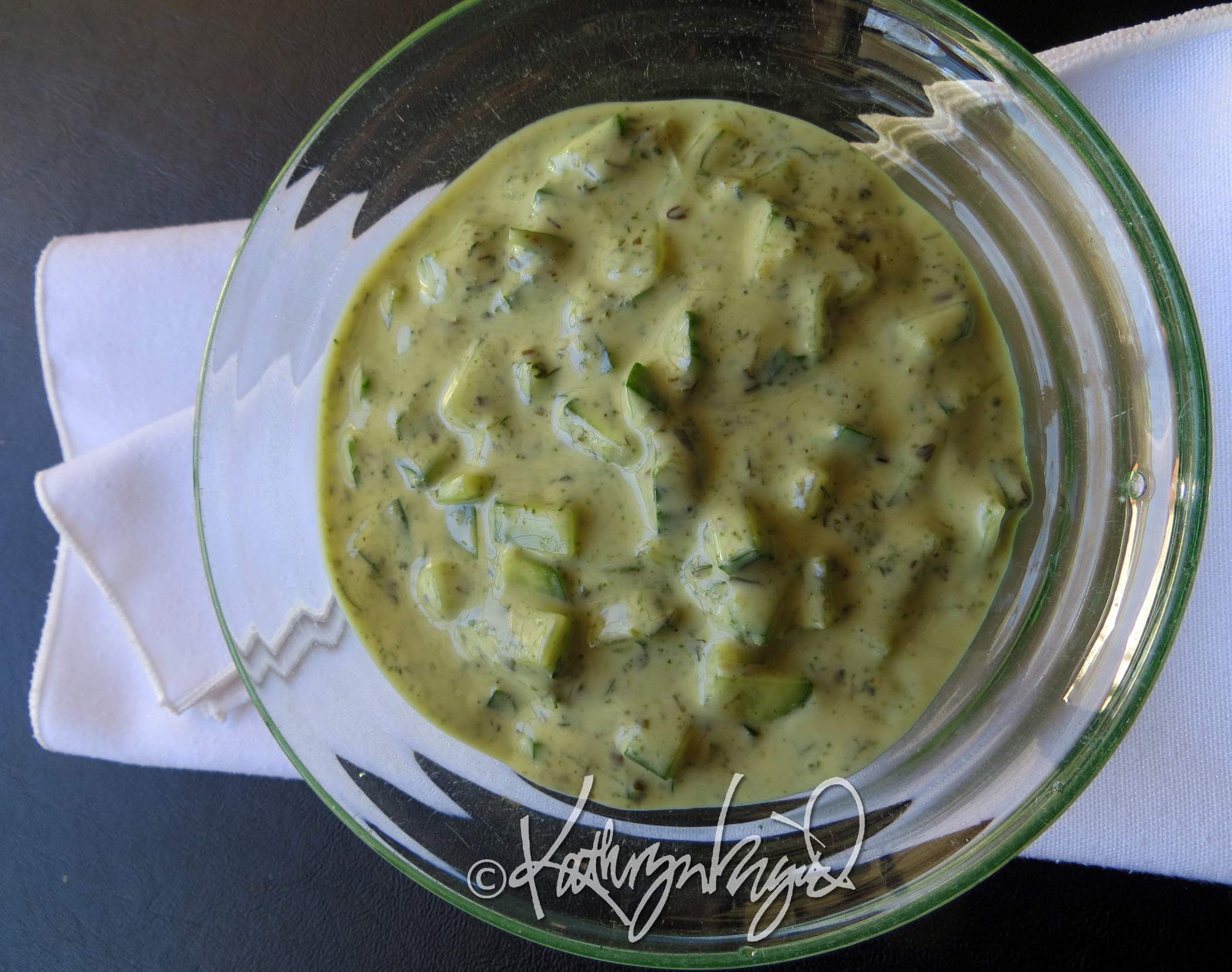
Buttery peas, freshly cooked pappadums and a spoonful of raita rounded out the meal. I was delighted to discover that ready-to-fry pappadums from the grocery could be easily prepared in the microwave, of all things, which made my dinner’s trip over from India just that much shorter, a good thing indeed. Raita is such a grand condiment, jazzing up many a different dish or meal with its cool and refreshing blend of plain yogurt with a few flavor enhancers like, in this instance, finely diced cucumber, dill, fresh mint and a touch of salt and pepper.photoThe leftovers, since the raita was eaten and gone after the first day of this batch of Tikka Masala and there wasn’t a lot of chicken left in it either, got further doctoring. I added some plain yogurt directly to the dish, and a good sprinkling of my favorite homemade curry powder along with some brown mustard and black sesame seeds. I didn’t want to fix or add more chicken at the moment but wanted to expand the dish enough to fill me up, so I thought I’d love some palak paneer alongside. I love that spinach puree with farmer’s cheese in it, but, erm, it’s hard to make when there’s no spinach around. And no actual paneer, either, it turns out. So I took the similarly slow-melting cheese I did have on hand and cubed it directly into the sauce along with the chicken and peas. I’m pretty sure that this iteration of mine departed so far from true Tikka Masala dishes that it would be virtually unrecognized by any real Indian cook (no matter how far the true Indian versions vary, from what I’ve heard), so I guess India can’t be blamed for what I have perpetrated. But then again, the inspiration, the motivation–that’s all India’s fault.photoAnd I, at least, thank her.

Foodie Tuesday: The Peas that Refresh Us

digital illustration/textThis post may require some appeasement on my part. I do, however, excuse this peas piece by saying that I genuinely love eating good sweet peas. Raw or cooked, cold or hot, plain or in a well prepared recipe, green peas are a treat no matter how they tickle my funny bone. That they have nutritive value is merely a bonus.

photo

Smashed Green Peas make a smashing spread when lightly steamed, mixed with butter, orange zest and juice and a touch of salt and cayenne. Of course if you want them to be truly smashed you can add a dash of orange liqueur, too. If you drink most of the liqueur yourself it is *you* who will be smashed.

Foodie Tuesday: Orange Foods for Your RDAF*

[* Recommended Daily Allowance of Fun]

I guess you know by now that I have a Thing about orange. Among the many orange-obsessions in my color-hungry psyche, and far from least, is the love of orange foods, whether naturally that way or made that color by virtue of their preparation or combined ingredients. Oranges, tangerines and kumquats, for example, have the advantage of already being that eye-catching hue, as do carrots and cantaloupes, peaches and apricots and a long list of other vegetable and fruit delights. Then there are the lovely delectables tinted with turmeric, annatto, saffron, onion skins and other strong yellow dyes combined with various companion colorings to create all of those edible paints that make cheeses and egg dishes and breads and cakes and so many other desirable comestibles burst out in alluring orange flame. It’s often a bonus attraction of particularly succulent foods that they call to us first with this beacon of color.photoMirepoix, for example, is not only a magnificent contributor of flavor and texture to a vast palette of palate pleasers but brings the come-hither warmth of the carrots’ orange to add visual appeal to those dishes. It takes very little besides to make, for example, a simple omelet or frittata both delicious and pretty, and they can be further customized with many ingredients that will further both the orange coloration and the flavor with a happy boost, as in the case of the one seen here that added only a pinch of dill and a toss of finely diced summer sausage (a.k.a. beef stick), whose fat when heated usually oozes with orange glory.photoMany orange-colored foods are not only intensified in flavor but also in their punch of sunny hue by the concentration of the drying process. Dried apricots benefit in both ways from gentle dehydration. The brand of boxed chocolates I grew up enjoying (See’s), includes in its roster of stellar treats a juicy little bite called Apricot Delight that is so good it actually deserves a place in a box of chocolates–and you know my religious beliefs about chocolate: that’s a massive concession–so recently I bethought myself to attempt a sort of replication of its goodness. I think I did a pretty fair job, but will leave it to you to decide. I think these could be made by hand mincing, crushing and chopping, but by far are best made in a food processor or powerful blender.photoApricot Slice Candies

Equal parts of plump dried apricots, toasted sweetened, shredded coconut and roasted and salted pistachio nut meats–in this instance, about a cup of each–go into the processor with about 2-3 tablespoons of butter (or, if you prefer, solid coconut oil) and a handful of candied citrus peels. Whirled together until the solids become a coarse sandy mixture, they should have enough butter in them to become a tender but malleable dough (add more butter if needed) that can be formed into a log (about 2 inches in diameter), rolled into parchment and refrigerated until serving time. To serve, simply slice the chilled dough into 1/8 inch thick coin slices. I found these addictive enough as they were, but surely there would be no harm in adding candied ginger to the peel or throwing in a pinch of cayenne, a little splash of rose- or orange-blossom water or almond extract, or some sesame seeds, to name a few possibilities. Why, even some dark chocolate mini-chips thrown in after the blending or melted to coat the coins might not be amiss and could conceivably satisfy the diehards who mightn’t be as forgiving as I’ve been about finding these beauties in the box of chocolates, but I’m content to let them shine in all of their orange cheeriness, after all.photo

Foodie Tuesday: The Daily Grind Need Not Grind Us Down

When I did a bit of checking on it, the name of my variant of Shepherd’s Pie seemed to be, by rights, ‘Pastel de Carne y Patatas’–but you know me, I can’t stick to proprieties very well. So I named it the more mellifluous sounding ‘Pastel al Pastor’, thinking as I do that shepherds get very short shrift in this day and age and can use a little flattering attention. What the dish is calls for it anyway, for it’s a rustic Mexican-tinged take on the comfort-food standard Shepherd’s Pie. In any event, like many longtime popular recipes, it got its start partly by using ground or minced meat, a hallmark of well-fed poor people’s diets since the cheaper cuts of most meats can become tenderer and allow much more expansive fillers and the disguise of plenteous seasonings in order to be palatable while still being relatively affordable.

Rustic and comforting it may be, but the simplicity of the end result in this recipe belies the multifaceted process by which it’s made. Don’t let that put you off, though, because it can be made in large quantities and frozen in smaller batches between times, so it can easily become a quick-fix dish after the first preparation. Shepherd’s Pie, in the vernacular, derives from the longtime concept of Cottage Pie, which in turn originated when cooks began more widely using potatoes to stretch those more expensive ingredients of the meal, the meats. Typically, these pies (and there are versions of them in an enormous number of countries, cultures and cuisines) are simply meat dishes, often made with the ‘lesser’ cuts or a mixture of leftover meats, with a potato crust. Probably the most familiar of them here in the US is the minced meat (and often, vegetable) mixture topped with mashed potatoes that is served in many a British pub and home kitchen and that we co-opted in our own American ways.

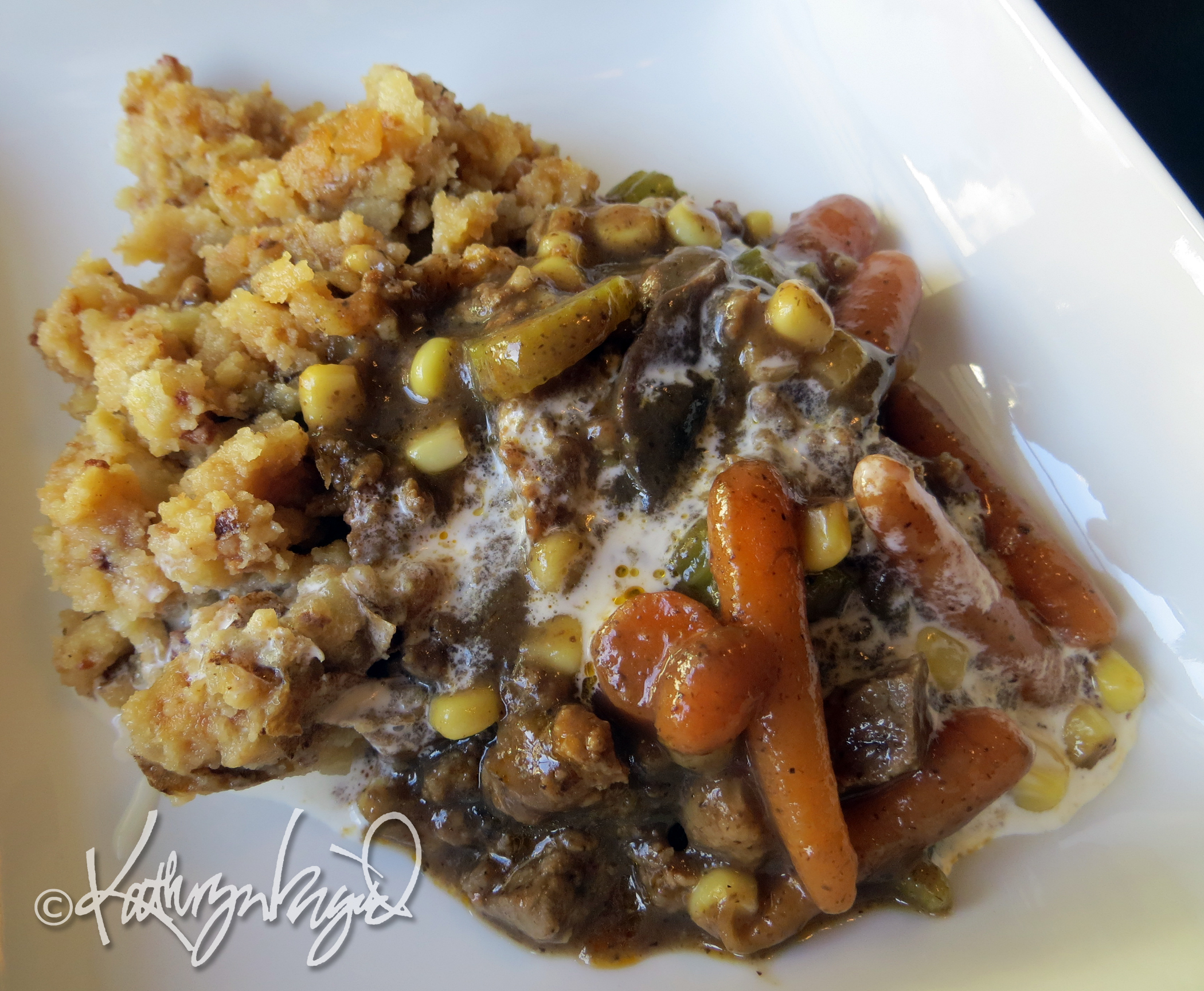
Mine, on this occasion, was to veer as I often do toward Mexican seasonings and enjoy my own little twist on the dish.photoPastel al Pastor

Seasoned minced or ground meats, topped with vegetables and mushrooms and gravy and served over smashed potatoes make altogether a hearty and countrified dish, not at all difficult to make but taking a little bit of time because of its individual parts. I make this in a generously buttered baking dish both because it’s easier to clean afterward and because–you guessed it–I love butter.

The bottom layer of the dish is made by frying a mixture of equal parts ground beef, pork and lamb, seasoned freely with salt, black and cayenne peppers, chili powder, smoked paprika and lots of cumin. Those without supertaster spouses will likely want to add some garlic powder as well, though it’s not essential. A splash of rich chicken broth or a spoonful of good chicken bouillon adds a nice layer of flavor, if you have it. Next, add a heaping spoonful of tomato paste and enough good salsa to make the meat mixture very slightly saucy, and just as the meats begin to caramelize, you’re done. [My go-to, if I’m not making my salsa by hand, is Pace’s mild Chunky Salsa with a prepared chipotle en adobo blended in thoroughly–I see on their web page that they’re reintroducing their chipotle salsa, so that’s probably fine too.] Drain the fat from the meat mixture and spread it in the bottom of your baking dish.

While the meat’s cooking, you can be preparing the vegetable-mushroom layer. I mixed about equal amounts of small cut carrots, sliced celery and sliced brown mushrooms, covered them with some of my ubiquitous chicken broth and cooked them until tender. Then I pureed half of them with a stick blender, adding a heaping tablespoon each of chipotle en adobo (that’s about a half a pepper), unflavored gelatin and potato flour for flavor and texture, mixed that with the remaining vegetables, and poured it all over the meat. I topped this with a cup or so of frozen sweet kernel corn and got ready for Potato Happiness.

Today’s version of this meal, Ladies and Gentlemen, was potato-fied with leftovers. I had half a baked potato and about a cupful of good french fries in the fridge, and they worked wonderfully when warmed with some cream and a touch of salt and smashed roughly. It would have been just fine to do the typical Shepherd’s Pie treatment of spreading the potatoes over the meat-and-veg before heating the dish through in the oven, but since this was all concocted of things I had around (taco meat I’d made and frozen, salad vegetables and leftover potatoes), on this occasion we just put nice heaps of mash on our plates and spooned the rest over them like meat-and-vegetable gravy.

For the more normal approach, I’d roast, boil or bake potatoes, season with salt and pepper, and combine with cream for the mash and then top the casserole, possibly adding some nice cheese either on top before browning it in the oven (a mix of shredded cheddar and Monterey jack, for example) or as a fine garnish, a serving-time crumble (cotija on top, anyone?). But ‘normal’ is overrated, and the dish was mighty, mighty tasty even deconstructed in this way. And it’s still flexible–yes, even a dish concocted of multiple leftovers has variety left in it, my friends. Add some peas (so many tasty cottage pies have peas in them), cauliflower, green beans, or any number of other vegetables. Make it spicier. Soup it up into a stew, with potato pieces incorporated. Change the seasonings to Indian and make it a post-Colonial curried version. You get the drift.

Thing is, of course, that this is precisely how the dish was conceived: as a loose general structure into which any number of variables could successfully be introduced, depending upon what was on hand. Save time, save labor, save money. Eat delicious potatoes and whatever flavorful wonders you can afford and imagine to combine under them.

Well, get along with you now, you know how it works. And you can be pretty sure that it’s going to taste good. That’s how folklore ‘recipes’ survive–on flexibility and reliability. Oh, yeah, and great fillers.

Even chicken, which sometimes gets short shrift when it comes to minced meat dishes because it’s left too unseasoned or cooked in ways that make it too dry, can make lovely ground meat dishes with a little effort. In the latest instance, I chose to precook mine in a sort of meat loaf sous vide, keeping the juices and additions in and on it until it was fully plate-safe, but this could easily be chilled in its loaf form, sliced and pan-fried without the intervening hot bath, I’m sure. And a food processor makes the loaf prep a snap, but it can be done with a knife and a pair of hands for mixing, too. In any event, I veered more toward Italy this time with my glorified chicken meatloaf concoction.photoCotolette di Pollo e Pancetta

[About 6 servings.] Mince and mix together the following and shape into a compact loaf: 6 boneless, skinless chicken thighs (dark meat stays moister), 3 ounces pancetta, 1/4 cup shredded Parmesan cheese, 1 teaspoon thyme, 1/4 teaspoon ground black pepper, 1/8 teaspoon powdered lemon peel, 2 eggs, 4 tablespoons cold butter and 1/2 teaspoon minced dried shallot. Wrap and chill the loaf until ready to fry it, or do as I did: vacuum pack it, cook it sous vide like a confit (low and slow–I let it go overnight), and then refrigerate until ready to use.

When it’s time to fix the meal, cut the loaf into slices about 1/4 inch thick and fry them over medium heat until lightly browned. With a well seasoned iron skillet or a nonstick pan, the butter in the loaf is quite sufficient to keep the slices from sticking, and they get a nice little lightly crispy crust outside their tender middles. I served mine with slices of fried cheese (any slow-melting mild cheese would do for this after-the-fact application, or you can top the meat slices with faster-melting sorts like mozzarella or provolone as the meat cooks) and a simple sauce cooked down from jarred passata (simple tomato puree–I like the Mutti brand passata I used, pure tomatoes with a little salt) mixed with the loaf’s excess juices, salt and pepper and oregano to taste. On the side, little ramekins of rice and buttered green beans are plenty, though of course there’s always room for invention on the plate. The whole assembly, since I’d put up both cooked rice and the confited loaf in the refrigerator beforehand, took not more than fifteen or twenty minutes to prepare.

¡Buen provecho! Buon appetito! Now, stop mincing around and get eating!

Foodie Tuesday: Savory, then Sweet

Dinner and then dessert. That’s the way I was raised, and I think a zillion other people had the same, despite the urge most children I know have always had to eat dessert first–and possibly, to stop there. Now that I’m wonderfully old, I can do that, and don’t hesitate to indulge now and then. But along with my well-known love for combining the sweet and savory together, whether it’s merely by adding a bit more salt to desserts or it’s designing a meal to have a wider range and greater balance between the savory and the sweet, there are plenty of times when a semblance of conformity to the old norm is perfectly satisfying to both my empty stomach and my sweet tooth.photoThere is much that I love about the simplest of meals, not only because it pleases me that they’re easy to prepare but because they also allow–nay, invite–the savoring of their few and uncomplicated parts. A chicken-and-noodles dinner, for example, can be barely more than those two ingredients and fill me comfortably and contentedly. Chunks of roasted or baked or fried chicken tossed in with fresh fettuccine that has been cooked in rich chicken broth (this time until the broth was thickened to sauce, but other times, just as a dandy bowl of chicken & noodle soup) need little but a helping of vegetables or two alongside and they become both welcome nourishment and a little trip down memory lane. My hunger is sated and I am reminded of many a happily simple meal gone by.

But then I succumb, more often than not, to thinking that if this meal is a little like those my mother made, why then it ought to end in dessert as well. And as citrus so complements chicken in nearly any guise, why not make a citrus dessert to follow a chicken dinner? I could certainly opt for the ever-lovely lemon bars that brighten many a table, yet I am not exactly known for coloring inside the lines when it comes to an entire menu, so on the most recent chicken-noodle dinner occasion, I took a slight deviation from that norm. I made what you could callphotoSimply Lime-Coconut Bars

[I took my first cue from a recipe for ‘instant’ lime curd made in a Vitamix so I could skip the slow and attentive cookery most curd recipes require. Our household blender is nothing so sophisticated–or expensive–as a Vitamix and doesn’t reach that machine’s level of heat, but since I was using the curd mostly for these cookie bars where it would subsequently be baked (and because I have no fear of eating raw eggs anyway), I went ahead with the blender I have. Needless to say, besides my alteration of the process I changed the ingredients to the point that you’re now getting my recipe, not that lovely published one I found elsewhere.]

Lime-Coconut Curd (Makes 6 servings.Theoretically.)

In the blender, whiz 3 whole eggs until frothy, adding ½ cup sugar + 1 hefty pinch of salt and ½ teaspoon of vanilla as you go; add ½ cup melted, very hot coconut oil in a thin stream, followed by a stream of ½ cup fresh lime juice, and keep blending it until it’s good and smooth or you think your blender and you will both swoon from overheating.

Set the curd in the refrigerator if you’re taking very long to prepare the rest of the cookie bar recipe, but if you’re like me, it’ll already be in the fridge from a couple of days ago when you made a double batch and spooned out a few helpings of the curd, plain, to snack on between times. As one sometimes must do. And I think you do know what I mean. Meanwhile, let us return to our cookie bar recipe.

Lime-Coconut Bar Cookies

[I am told I will be a complete failure as a human being if I don’t add the curd to a warm, just-baked crust layer, so I conform to the Rules at least that far. And I lined the bottom of the 9″ x 13″ pan with a single piece of baking parchment so that I could easily lift out the bars when ready.]

photo

Okay, I can’t resist adding a dash of additional crunchy salt on top some of the time. Whether I eat them in any particular order or together, I do love both the savory and the sweet.

To make the crust, blend 1 cup flour (I used gluten-free flour), 3/4 cup coconut flour, 2/3 cup confectioners’ [powdered] sugar, 1/4 cup cornstarch, 3/4 teaspoon salt, 1/4-1/2 teaspoon ground cardamom and 1/4-1/2 teaspoon almond extract. Cut 3/4 cup [yes, really! What, you think I’d lie about adding lots of good fat?] of cold salted butter into this dry mix until it becomes a crumbly, sandy blend and then press it evenly into the pan. Refrigerate this for 30 minutes. Preheat the oven to your equivalent of 350°F [as you know, my oven has its own ideas about what that means, so I adjust accordingly]. When the crust has chilled, pop it into the oven for about 20 minutes or until it’s beginning to brown lightly. Out of the oven it comes. Reset the oven to 325°F, stir up the curd

, spread the curd over the crust, and pop the pan right back into the oven, for about 20 minutes or until the curd has set when gently touched. Almost done, now. Turn off that oven of yours before you forget, let the pan cool on a rack for about another half hour, and then you can take a quick swipe around the perimeter of the bars with a knife tip to loosen any stuck things before lifting them out in their parchment sling. These, like any citrus curd topped bars, are pretty to serve with a final dusting of powdered sugar on top, but any you’re saving for later should get dusted directly before serving, as it’ll absorb into the bars in the meantime. If, however, you’re going to devour the entire pan in one sitting, who am I to blame you? Powder up, my friends. Life is short and dessert is long-awaited.

photo

Or there could be pomegranate and pistachio, for a change . . .

The second time around, I decided to try the bars with a little north-African influenced twist: substituted salted, roasted pistachios (ground to flour) for the almond flour in the crust, decreasing the added salt to 1/2 teaspoon; made the curd with pure pomegranate juice and butter instead of the lime juice and coconut oil, and because the curd wasn’t quite as bright in either flavor or color as the original recipe, made a little layer of zing from 1/4 cup each of pomegranate juice and ginger preserves, pureeing them together completely and softening a tablespoon of gelatin in them to thicken slightly, and finally topping the bars with whole pistachios and a dusting of powdered sugar and edible glitter for a dash of, well, dash. Messy, yes. Edible? Oh, yes. You people do know how I like my variations on a theme! And if we’re going to have dinner first, then I’m not opposed to two desserts to make up for the waiting . . .

Foodie Tuesday: Restaurant Food = Leftover Heaven Too

photoLest you think I’m so thrifty, what with my numerous posts regarding the delights of leftovers, hashed and rehashed, that I’m not equally overindulgent when it comes to food freshly prepared, I could just refer you to all of the other Foodie Tuesday posts regaling you with proof positive of the opposite. Wherever, whenever and however I can get my choppers on it, I love good food. But of course if someone else has done the preparation, it’s often that much more to be–no pun intended–relished. Who doesn’t love having somebody else do all the work, I ask you.

So when I do go out to dine, I’m very pleased if it turns out there’s more to the meal than can be eaten at one sitting. Good once, good twice. In fact, good twice can = good at least three times, as in a recent casserole-like conglomeration of leftovers from eating out more than once upon a weekend. Convenient to the occasion, I had picked up a small carton of ready-made Parmesan tuiles (yes, I do know how to make them by hand, but there they were staring right at me in the store) and had also just taken it into my head to also make a sort of onion jam, so I already had good companions to side the dish. The ‘jam’ was simply two large yellow onions all sliced up thinly, three modest sized navel oranges (cut segments plus the peel of about a quarter orange, chopped), a half cup of butter and a half cup of dry sherry, a big pinch of salt and a couple of tablespoons of honey, all cooked down together for about 24 hours in my slow cooker until fully caramelized. The tuiles were of course prepared by the even more complicated method of Open Packet, Place Contents on Plate variety.photoIn spite of such ridiculous ease, the simplicity of preparing the ‘casserole’ was its rival in that regard. I chopped up and stirred together these leftovers from my weekend restaurant peregrinations: 1 chicken paillard, grilled with Italian seasonings and heaped with diced ripe tomatoes and parsley; 1 handful of hand-cut french fries made in beef tallow; about a cup of deep-fried zucchini, light breading and all. I seasoned them with a little smoked paprika, mixed them with about a half-cup of plain yogurt and a quarter cup of shredded Parmesan cheese, heated the whole thing in a covered casserole until it melted and melded together, and voilà! Instant main dish happiness. That it all came together with so little effort on my part only added to its savor. ‘Cause that sort of lazy success is exactly what appeals to this person who is mighty thrifty with her kitchen time.

Foodie Tuesday: Like, Totally Fried

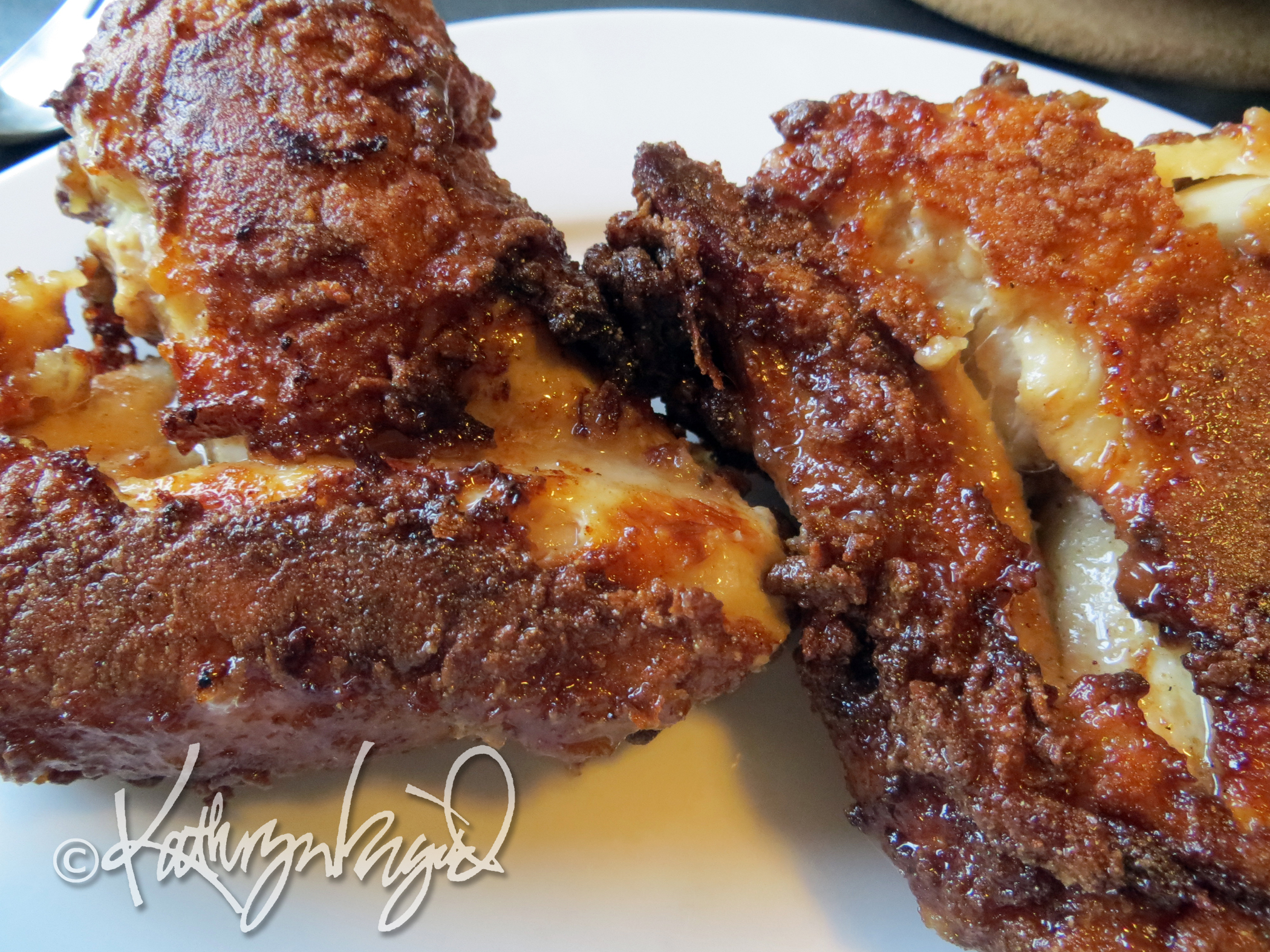
A natural outgrowth of loving fat as I do is loving fried foods. There is a bit of truth in the claim that Texas is the heartland of all-things-deep-fried, and not only at the state fair (though that event lays a credible claim to being the epicenter of glorious fry-dom) but right on through this great and glorious state. Logically, living in this state should keep me in a state of bliss. As it happens, there are less than perfect and even somewhat horrendous fried foods (including at the State Fair of Texas, forgive me O sainted Big Tex), but there really are a whole lot of goodies that, no matter how swell they are from the beginning, get just that much better by virtue of bathing in hot fat until crispy.photoMy state of residence is far, far from the only place where recognition (or worship) of the marvels of frying food dwells. There is, of course, a long and respected tradition of such wonders, well documented in the great cuisines, from elegant tempura to calamari fritti (thank you, Chicago John!) and arancini, chiles rellenos and those magical Vlaamse Frieten of Belgian dreams. If it can be cooked, it has a good chance of being fry-able. Why, there are a number of foods that are treated to the process more than once, not least among them the ever-popular twice-fried tostones and Chinese green beans and leading up to such modern classics as that Southern inevitability, chicken fried bacon. Beyond that are the infinite possibilities of frying that the scientists of food never fail to pursue with great delight: long before state fairs all across the US got so seriously competitive about frying, to the point where they don’t even bother with any fatuous titular attempts to disguise the degree of culinary craziness and just come right out and call their recipes Deep Fried Butter and Deep Fried Sugar, there were pioneers of the art dunking candy bars, haggis, Twinkies [aficionados of the famed snack cake will be relieved that despite the demise of its American parent company the Canadian distributor appears to continue production] and pickled eggs into the hot oil at Scottish chip shops.photoDespite all of the fantastic and phantasmagorical delights possible in the whole fried world, there are times when simple is grand enough. Think of oven fries–julienned Russet and sweet potatoes tossed with half olive oil, half melted butter and seasoned with lemon pepper and salt and chili powder (and rosemary, if nobody green-phobic is dining with you) and roasted in a medium oven until toasty and browning nicely–they go with practically anything, and are easier than easy to make. Then again, there are some of the classics that are well worth the mess and fuss. Fried chicken, for example. Coat it in buttermilk (or if you, like me, haven’t any on hand, in yogurt) seasoned with salt, pepper, cinnamon and cayenne and soaked for a couple of hours; shake off all of the excess yogurt or buttermilk and coat the pieces in a mixture of 1 part cornstarch, 2 parts fine masa, and 2 parts potato flour, seasoned with salt, pepper and chili powder. Fry until golden and finish in a medium oven–conveniently enough, the temperature used for oven fries works pretty nicely for such purposes. And coincidentally, one fried food (oven fries) tastes rather yummy when paired with, say, another one (fried chicken). Or so I’ve heard.

Foodie Tuesday: A Touch of the Sun

Mediterranean-style foods bring with their ingredients and flavors a joyful dose of the sun that nurtured them into being. Eating Mediterranean-inflected foods almost makes me feel I’m giving my insides a solar power retrofit. I rather wish that this meant I would become the human equivalent of a ray of sunshine, but at least I hope there’s a noticeable mood enhancement in the short term when I indulge in such deliciousness.

A characteristic I’ve seen in the foods of sunny climes is that many of their indigenous cuisines have built-in traditions of hors-d’oeuvre style dining. Given warm temperatures, lighter meals of smaller portions can often be a grand way to ward off feeling overcooked as an eater. Many of these same food cultures are characterized by wonderfully intense flavors, and somehow the right combination of heightened spicy, zingy, smoky or, say, tomato-y tastes tends to make foods seem slightly more-ish to an extent that the nibbles make a perfectly fulfilling and lovely whole meal.

The treats of this occasion light up with some of that bright, vivid deliciousness and make for a nice nibble or snack, or when combined with a few more of their kind, a pleasant summery version of complete dining. No matter what the season or the weather.

A good sunshiny plate-full:

Stuffed grape leaves (homemade would undoubtedly be grand, but I’m not above choosing ready-made ones as I did here), marinated artichoke hearts, pimiento-stuffed green olives, sun-dried tomatoes rehydrated in red wine, and soft boiled egg, with a dip made of whole-milk yogurt seasoned with lemon pepper, dill and salt to taste.photoSparked-up Three Bean Salad:

Three bean salad is a longtime favorite of American picnickers and lunchers, and there is a fairly classic style of making it: green and wax beans and kidney beans combined in a lightly sweet vinaigrette, sometimes with minced onion and even, occasionally, with added chickpeas–and often, using all canned beans for convenience and the traditional texture. There’s no law, however, that this already delicious old recipe can’t have a few surprises added. My latest combination was the simple three-bean version with only two small additions, canned (not marinated) baby corn, and for a contrasting splash of sweetness, some more of that minced sun-dried and red wine rehydrated tomato. The sun is inherent in the salad, but if I’m going to tweak it anyway, I couldn’t resist garnishing it with the first tender dandelion sunbeams that came my way.photoEven adding any of these individual items to a menu can heighten the flavors of the other foods in the meal and bring some of the same cheering pizzazz to the occasion. Think of serving the pickled-tasting salad alongside a deeply roasted leg of lamb, or trimming a magnificent platter of rosemary-scented pork roast with the plate-full at the top of the post, and adding a few fat-roasted potatoes; methinks there might be a whole number of diners that would feel sunlight pervading their innards and their spirits when presented with such taste treats. I know I wouldn’t mind even just repeating this part of the menu, and you never know when the rest might follow.