Abundance and Gratitude

graphite drawingAmong the essentials for a happy life, I consider the above named items some of the most meaningful. But I am often, rightly, reminded that these are as much matters of attitude as anything. Much easier, both of them, to qualify than to quantify.

Abundance, as experienced and demonstrated by many people I’ve known and seen who would be considered below a desirable economic level, is seen as having enough to survive, and just a touch to bring a guest to the table as well. That this means the main family’s subsistence is so much the sparser while a guest is on hand means little, except that the gift is commensurately so much the more generous.

For those of us with more considerable resources, I think the same attitude is worth the attempt. I should think through the difference between my actual needs and my wants, live within my means, and delight in the ability to share what I have with others. I’m not always nearly as good at this as I’d like, but think it a practice worth pursuing and improving over a lifetime.

Gratitude needn’t be limited to feeling I’m in the center of abundance, anyway. There’s no reason I shouldn’t be thankful for any and every good thing in my existence, even when the tenor of the times is set in a sparer and more trying mode. This, too, is simply a survival tactic on my part, as giving in to my dark instincts at bad times has no logical outcome but that I’d lie down and die. By choosing to actively and attentively seek out and recognize whatever kernels there are of goodness and light, I take away my focus from what lessens me and give myself a chance of relief. Better, I may see the glint of otherwise forgotten abundance, and that always makes me more grateful.digital illustration
Feed the Birds

I loved the movie Mary Poppins when I was small, and surely will still love it whenever I see it again. The charm of the story combined with such a well-cast ensemble and the magic of cinematic technology are hard to surpass. I loved the sweetness and buoyancy of the tale and its jolly playfulness and the marvelous escapism of it all. Those were surely the characteristics the filmmakers intended to capture children’s hearts and attentions.

But perhaps more than any other thing about that movie, I think, I loved the song Feed the Birds. It seemed such a small thing in the scope and scale of the whole production, but that, in fact, may be precisely what makes it still stand out in my mind. That, of course, must have been part of the grand plan as well. Clearly, it worked on me. As little and secondary as it may have appeared in the grand scheme of the cinematic version of the story, that song’s piquant minor melody and, especially, its very allusion to the importance of the seemingly insignificant stay with me and move me even when little else of the film’s specifics remain in my memory. I’ve read that this was precisely the intent of the piece and its inclusion in the film. Clever, that Mr Disney and his professional storytelling cohort.

Clever, and they weren’t wrong either.

The beggar urging passersby to trade their tuppence for her packets of bird seed, as well as the birds hungering for it in the hardscape of the city are both easily avoided, neglected or despised by the better fed citizens who might rather brush them off than admit to their existence. That little vignette reminds us, and rightly so, just how much those persons, creatures and events we’d often prefer to ignore or deny really mean.

Their loss or abandonment creates a much more profound emptiness than their seemingly small stature could possibly imply. It’s the barrenness of spirit, of humaneness and hospitality, of compassion and grace in the rest of us, that is the real cost of failing to tend to the weak and small. And it can be the smallest gesture, tiny as a handful of bird seed, that opens the way for healing and humanity and hope.photo

Above and Beyond

digital illustrationSky Candy

Stars, sun, comets, moon and planets; rain and lightning, clouds and mist;

Birds and butterflies and rainbows; dragonflies by morning kissed:

What a sparkling declaration of the minutes passing by,

What a joy, this constellation of sweet treasures in the sky!

Though I hunger in the silence of shut-in days, sleeping, blind,

I keep constantly the radiance of these jewels in my mind,

Hoping, dreaming, moving, soaring–real, or the internal, eye

Loves the beauties so alluring of sweet treasures in the sky!

It’s Still Life

Little is as desirable in day-to-day life as peace and quiet. Rest, respite, calm–I crave them. There’s so much invitation and welcome in the sweet marvels of time off, time out and down time that I never feel I have too much of, well, not-too-much.

But busyness is ever so much more common in our everyday existence in this century, certainly in this household. It’s no still life, to be sure; any silence found in this way of living is more of the deafening sort. But yes, it’s still life.

So I have to manufacture or steal my moments of rest and relaxation. Isn’t that how most of us end up finding our tiny increments of space and time and sanity anyway? I have to learn how to tune out the white noise, hide from the constant demands and burrow into hidden corners when and wherever I can, to choose deliberately to decompress and unwind. If I don’t make room for my own peace of mind, who’s going to give it to me? The world may rattle on around me at a furious and eardrum-shattering rate and all I know may change in the ten minutes I’ve stolen to renew myself, but I will return to those realities soon enough, and hadn’t I better do so in a fortified state than otherwise?

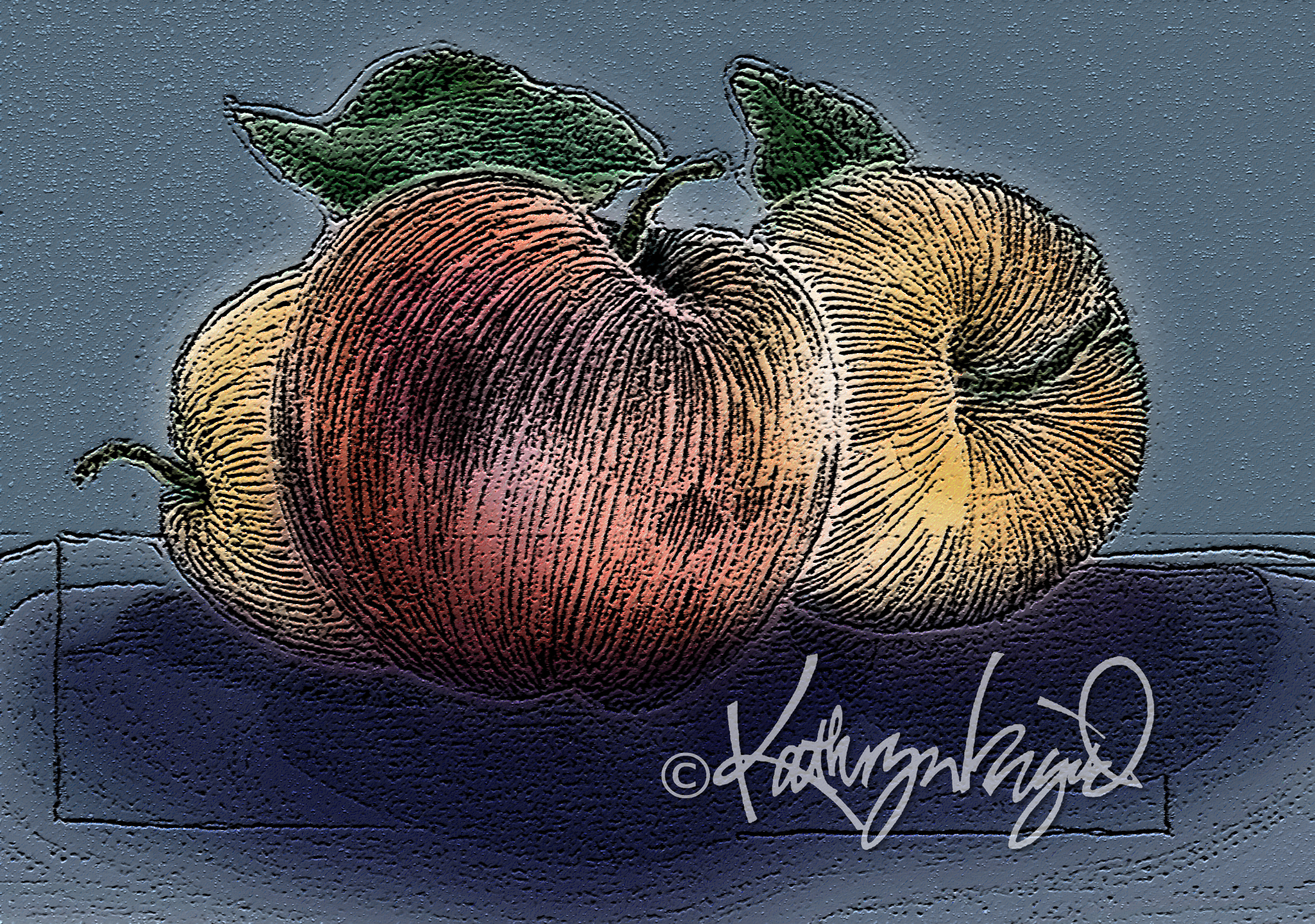
Better to sit down and tell myself soothing tales undergirded with lullabies, to draw myself a little old-fashioned still life arrangement in the calm unruffled grey of graphite, and breathe deeply without regard for the bustle and bash of the universe, if only for a moment or two.graphite drawing

The Garden Rejoices

photo montageRespite is the thing we all crave at times. Too much of a good thing is still, when all’s said and done, too much. Having spent the majority of my life in climes of plentiful cloud and rain, I was quite pleased to experience the practically perpetual sunshine of north Texas, but learned that with it can come garden-blighting and spirit-dampening heat and even drought, so when it rains, as much as it might make a few things more inconvenient or messy, it can also make my heart glad.

And the way that the leaves plump up, flowers loosen and uncurl their fists and stalks and stems stretch instantly taller toward the sky, it’s also easy to see that the garden rejoices. It’s as though all of nature around me is sighing and relaxing every tensed-up, coiled tight thing with grateful relief.

A moment of quiet in the heart of a rushed day or a busy week is rain for my spirits as well. Whatever the cause of the busyness, however pleasurable the things that do clamor for my attentions, I find that a brief pause to lower the speed of thought, to quiet the relentless insistence of life’s siren calls and cool the heat of its demands–this one small thing–has wonderful power to relieve and renew me, too.

This is how I remember the kindness of the rain in the midst of unyielding heat, the shelter of low clouds that break the relentless glaring sun. And I look for my tiny bits of solace in a meditative mode, feeding my roots and encouraging me to let go, expand, release the tensions I am in and carry on, better able again to bloom and grow.

Night’s Benison


photoNight into Day
In the sinking stillness of the evening,
After birds have ceased to flit and call,
Silence comes to rest as day is leaving
And dark draws down the shade where night will fall;
The smallest breath of wind stirs from its sleeping,
For after dusk another world takes flight,
A world with gleaming secrets in its keeping
That give the constellations dazzling light,
Fill up the moon with shining opalescence,
Fill up the heart with dreaming of the day
And how its powers overcome senescence
When sun returns to chase the night away.photo

Angels of Mercy

graphite line drawingThere are a lot of distinguishing features that we associate with Goodness, in the general sense of that construct. There are the usual ethical and even moral qualities we impute to a person or action or event in our humanist or religious ways: honesty, justice, kindness, compassion, hospitality, wisdom, patience and other such characteristics are almost universally recognized as positive and admirable. And while we can sometimes recognize these things in our fellow mortals, many of us find it easier to represent them in our minds’ eyes as some kind of super-beings that transcend human limitations, because it’s hard to imagine much of this happening or being sustainable in the hands or lives of mere people.

So we have our superheroes and our faeries, our special agents and goddesses, avatars and angels. But we’re still either too limited in our mental vocabularies or perhaps simply a little bit too insecure and egocentric to imagine or depict much that is Good without giving it a recognizable hint or ten of humanness. We make our gods in our own image, unable to picture them as truly different enough from ourselves to be genuinely Other and unique. We need to feel a concrete connection if we’re to make any sense of our own ideals.

And there’s nothing wrong with that, to my mind. How can I talk about the sweetness of a ripe pear with someone who has no sense of smell or taste? What it feels like to stand mid-stream in an icy creek with someone who has no legs or is a lifelong quadriplegic? How could I hope to discuss a complex topic with a deaf person from another country? We have to have some little commonalities, at least ones that we perceive as such, for us to have any kind of relationship, including the philosophical or emotional or spiritual.

So we, thankfully, have our Helpers, our unseen supporters and caretakers and watchers and guides, and we give them features that help us to understand and trust them. The other day when I was drawing I was thinking of a friend who, as I write this, is undergoing cancer treatment. Many friends and relatives and acquaintances have done so in times past, and many will yet again, and I think of them in their times of need and send, in my own way, my love and hope and concern, but most of them cannot use anything tangible that I have to offer. I think for cancer patients, my versions of angels would most certainly be beautifully smooth-headed creatures.

I am no surgeon, healer, scientist, caregiver or therapist of any sort. If you live close enough you might get some homemade chicken soup from me, or an armful of flowers from my home meadow, or a little note, but I have no cure to offer, have not even enough encouraging wisdom of my own to get you through the day better. What I do have is my own vision of what I would hope to have at my bedside or hovering around me as I tread any dangerous paths, a sort of gracious, singing, laughing and–when I need a modest and quiet companion who understands the sorrow of it all–gently embracing angel of mercy. And my particular versions of such beings work in force, and also make house calls, so I will gladly send regiments of them in all their shining, vaguely human, terribly purposeful Goodness to watch over all.digital illustration

What We Can Learn from Dogs

So it’s Monday. All. Day. Long. One of those times when you can easily believe in the purported accursedness of the day; one unlucky, frustrating, impossible thing after another and not a coffee break in sight. We’ve all had ’em. Rotten, rotten Mondays, no matter what day of the week in reality, are the bane of humankind.

Dogs, however, rarely let a Monday take their essential doggy happiness away. It takes, in fact, quite a lot of horribleness to take the equanimity and enthusiastic canine capering down to a level recognizable as sad, and once cheered up again, dogs are remarkably good at forgiving and forgetting. Barring ill-treatment or illness, every day is the greatest day ever to your average dog.

photo

Why lie around counting the time until your human will take you walking farther, when you can back-scratch your way headfirst right down the hill?

It’s not that dogs are stupid. Far from it; some dogs I’ve known would beat some people I’ve known at any IQ test, and the average dog is a pretty clever problem solver and able to perform all sorts of magnificent deeds, accomplish numerous astounding feats. It’s more that dogs, simply, seem to have a highly developed power for living in the moment, finding the good in the small and ordinary and letting unpleasantness drift past them as quickly as the turning of the world will allow. They’re not much on sulking, self-pity, or wallowing and very rarely hold grudges–and these, as far as I’ve seen, only when pressed to it by persons or events truly deserving of their scorn.

What dogs seem to hold among their many fine and useful instincts is the one that tells one to be thrilled when a maple seed helicopters out of a tree in his path, to slurp lustily at a handy puddle of water when thirsty, and to leap into the air rather than toddling through the weeds when crossing the parking strip to get to the park for a romp. The wisdom to nuzzle the hand that pets him, to lie like a shaggy, comforting blanket on the cold feet of a human companion when he’s sad and to shoot across the house like water from a fire hose when the other human gets home from her long day at the office. All of this is noble work, and keeping as busy at it as any good dog does makes him far too busy to mope and snarl and bemoan his bad fortune. Even on a typical Monday.

photo

It’s a good day to be a dog!

As It Fades from View

We are not alone in our finitude. All of nature conspires to whisper this solemn truth in our ears if we will only listen. Everything we know will one day die and dissipate like a summer morning’s mist. Why should we grieve our own mortality?digital artwork from a photoIf we love life, it’s only natural that we would regret to leave it, and yet…digital artwork from photos…how much loveliness is in the fluttering-down exhalation of decay! Without that poignant and exquisite sigh, what would feed the roses of next year? I’m in no rush to die; I hope there’s plenty of time ahead for me to have a lively, fruitful life. But I think, too, that my last task is to renew, to bring my modest tenure here to a far more fruitful end, and to leave space and time and love and life to all the generations of our heirs. I’ve no children of my own, but my niece and my nephews, my students’ children, my friends’–and all of the people yet to come–shall, if I have my way, have their summers of long life, and have their roses, too.

Urbanity

There is a huge difference between the merely impressive and the expressive when it comes to modern cities. Rotterdam, once one of the glories in the European architectural crown, was bombed to dust in WWII and, given the poverty of post-war resources, was rebuilt in the following decades as a horrifyingly soulless, boxy blot of concrete on the face of the Netherlands. There is no comfort in knowing that the firestorm that destroyed the city was probably not planned as it happened but resulted from a perfect storm of another kind in miscommunications; the horrors of war are a long testimony to the potential for such devastation. In any even, it took Rotterdam ages to be revitalized into the place of energy and beauty that it is today. Why? What made it such a heart-stopping graveyard of a place when it had once been full of life and loveliness, and how could it ever come back to be something gracious and potent again?

There is no obvious single word that can express the massive destructive toll the bombing took on that city; annihilation is perhaps a close approximation, since it’s clear even from faded photos that the thoroughness of the attacks left very little evidence there had ever been a Rotterdam. I find it nearly impossible to imagine even when staring at proof. When my spouse and I visited the city for a conference even less than fifteen years ago it was still a sad shadow of its former glory, still dominated by 1950s-vintage blocks of affordable and utilitarian harshness that made me want to scream when I saw them in juxtaposition to the few tiny remnants of the beautiful architecture that had once filled the place.

The main reason that Rotterdam is beautiful once again, and that many other cities have, and some have never lost, such beauty is simple: architectural thought and distinction. Building what is cheapest and easiest to construct is a poor solution to lack of structure anywhere. Places that have never experienced the ravages of war, urban decay and other forms of damage and neglect in such extremes can retain the beauty and patina of urbane culture in their urban settings far more easily. Take Boston, Massachusetts, a city that has seen its share of ups and downs over time, but as one of the older cities in a young and generally untouched-by-war country, still has many of its older–even oldest–and most prized, elegant, distinctive buildings. Despite the expected problems of social unrest, economic up- and downturns, spots of urban blight and misdirected city planning that Boston has faced like any modern city, the knowledge that the architectural strengths it does have are worthy of protecting and preserving means that it was built as more than mere indoor space in the first place and that the character of the structures has as much value in shaping the city’s identity as do its great denizens.photoIt should be obvious to those of us wishing to see all of the world housed and sheltered in humane and useful structures and towns and cities that simply throwing up whatever is cheapest and most readily available is hardly more useful, in the long term, than just plain, well, throwing up on people. If we want others to live educated, healthy and therefore productive and admirable lives, we can’t stuff them into trash bins of buildings that, even if they don’t collapse under their own flawed ugliness, will never encourage their occupants and users to flourish. If we don’t intend to fill others’ lives with the vomitous garbage we ourselves would reject and flee, we must find ways to make good, practical, appealing design a mandate and not an afterthought or an unaffordable dream.

That approach not only makes living and working in tolerable shelter possible but nurtures the human spirit and pushes us all to better ourselves, our cities and our world. photo