A Plague on All Our Houses

Even the most steadfastly unquestioning among believers in various versions of mainline religions will allow that, if their deity cares for them as a shepherd cares for sheep, their own religions, yes, even their own temples, mosques, and churches, sometimes harbor wolves in sheep’s clothing. Partisans of every political and philosophical school of thought have seen the unmasking of many such monsters that have hidden behind the guise of goodness and faithfulness, selflessness and judiciousness, or at least experienced the dire effects those have on the lives of the truly committed. There are reasons most languages have such large inventories of words like heretic and traitor, infidel, apostate, renegade, impostor, infiltrator, double agent, betrayer, and hypocrite.
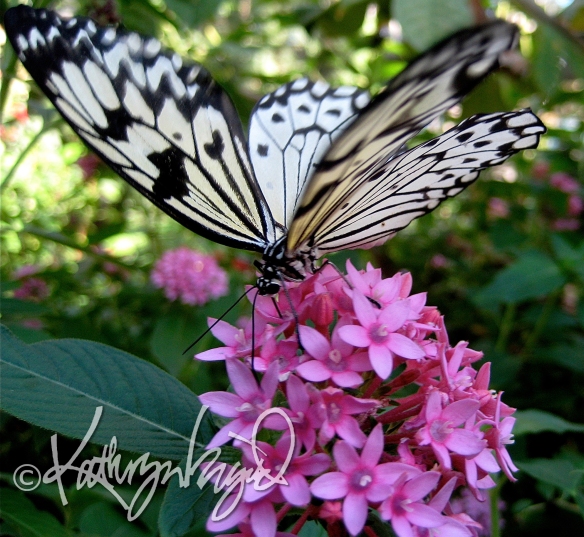
Digital illustration: A Pox on Both Your Houses!

So it astounds me every day that such experienced, otherwise reasonable people are either afraid, or simply refuse, to regularly and thoroughly question and examine the sources of their information, whether they are people or inanimate forms of evidence. Even among the most dedicated, wise, and well-meaning persons the human flaws we all bear cause mistakes and missteps. The most widely accepted proofs of truth may have come about by means of equally imperfect human study and the telephonic accidents of human transcription and translation. No matter how inspired the origin of the wisdom, it can’t be guaranteed to get to the page and from hand to hand, meeting to meeting, one end of the surprisingly not flat earth to the other, without sometimes being misinterpreted or co-opted, whether it’s by the false sheep in the flock or by our own good intentions.

All I can say is that if such stubbornness against rigorously examining our beliefs and every source of them is at its roots a terror of self-examination, we are doomed. We will forever repeat the grim side of human history, by acting out of doubt, cowardice, and ignorance, assumptions that have as much chance of being incorrect as not, and hidebound inability to see the wolves in our very midst for fear of discovering our own culpability. Circling each other with rapiers drawn and fighting to uphold traditions or beliefs or codes that we have so ingrained that they are unquestioned no matter how wrong, we will only deserve the curse of Shakespeare’s Mercutio—who, by the way, may or may not have said “A plague a’ both your houses,” in the original text, but various scholars over the years have guessed at such a reconstruction of it. Even Shakespeare, that demigod of English literature, is only as reliable a source as the many readers and interpreters since his time can determine, assuming that there was one playwright and poet of that name and not, as some believe, some cadre of the great literary minds of that era. Don’t get me started.

I will say right out that I know full well that I am guilty of being poorly or misinformed on a host of topics, and a stubbornly slow learner on top of that. I am trying, however I may stumble along the way, to grow beyond such ossified thinking. If only we could all begin with the premise that the fault might be not in our stars but in our selves, I think we might discover that our reliance on incomplete or incorrect information puts us constantly at risk for inner and outer conflicts we ought to have laid aside or, better yet, avoided altogether. The Other Guy might in fact deserve a listen, and acting first, asking questions later is not a conversation but is likely instead to end in swords crossed and lives lost. Acting in haste or acting in hate, the result may be the same because we were ill prepared to ask the right questions, let alone come to a wise and humane conclusion as a result. There are, sadly and unquestionably, baddies among us. But even so, if we all insist on clinging to our own versions of the truth without regularly and rigorously questioning their verity, then the attack we are all under begins inside, not from any external enemy, real or imagined.
The Gilding of the Gliding

That magical time known as the Golden Hour seems to give everything, not just color, an extra fillip of beauty. Colors do, indeed, become warmer and more saturated when the sun is at such a low angle to the horizon as its place near dawn and dusk, but there is so much more to the mystical powers of those fleeting moments that it is a great treasure to be still in them and let the wonder fill me. At such times I feel more connected to nature and everything around me seems more in tune, better adjusted, and I feel that I am, too.
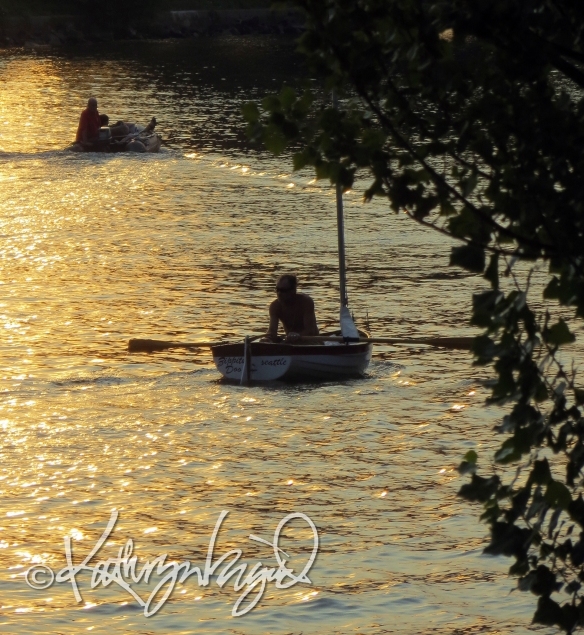
Photo: The Golden Hour

How can the mere angle of the sun turn a scrubby lawn into finely cut velvet? The touch of gilt on the scene makes every ounce of it seem that much more precious and valuable. The bejeweled day, in turn, makes the simplest action in it take on significance it never had before: the chattering of birds in the trees becomes a miniature angelic choir; the dipping of oars in the water turns from a quiet splashing to the whispering of poetry; the evening breeze that gently stirs shore grass becomes a delicate communiqué from the harmonic internal logic of the universe, and I am at one with it all. As the golden hour ripples through my environs and begins to permeate me, I almost feel as if I am gliding along their silky way right in sync with the rowboats nearby, waving fluidly as the grasses on the verge, tipping my wings with the evening birds to slide onto the branches of the trees. I am at peace with the world, and the world, with me. That is golden indeed.

It was Only a Dream…

Photo: Waking UnderwaterA short meditation: The Oarsman

When I opened my eyes, I saw a cedar boat ahead, a craft of sleek and patinated wood; I was ashore, looking, watching without knowing why, standing on the verge with the clear salt sea touching my feet and on its cold breath casting up an offering of tide-polished stones and shells moved into patterns like a prayer shawl.

The cedar boat drew near, and in the boat, a man whose solemn joy preceded him and made my thoughts lie still.

Only the scent of cedar broke the salty air. I waded out to catch the prow and saw the oarsman watching me, and I was humbled but not afraid. He said nothing. I didn’t think to say a word, myself, but caught the boat and slowly pulled it ashore.Photo: The Scent of Cedars

The oarsman wore a long superlative braid that rose and fell on his breast; I made fast the boat to a spike of driftwood at the verge, tying the painter in a braid as like his own as I could make it.

When he stepped from the boat, the oarsman put his broad hand on my head, wordlessly, and I felt, too, his solemn joy.Photo: Solemn Joy

Washed in Light

The sunlight that pours in, falling over the sash like crisp, clear water, washing the walls, spilling over the coverlet and floor, refreshes like no rain has in years. I acknowledge the need for, even the longing, sometimes, for rain, but nothing comes close in rain, at certain other times, to giving me the reviving strength I find in showers of sunlight.Photo + text: Nearing Heaven

Be that Light

Photo montage + text: Mirror for Contemplating Possibility

Photo + text: Toward Light

Photo + text: Solrosbarna

Photo montage + text: Solrosbarna 2: Greatest Gift

The Strangest Kind of Strangers on a Train

The old tale of complete strangers meeting in transit, discovering they have identical problems, and “solving” the problems by trading crimes to eliminate the people they see as the root of their unhappiness, makes for a striking mystery drama, in fiction. Ask Patricia Highsmith and Alfred Hitchcock fans! But I was reminded recently that we give too little credit to our commonalities as a positive solution to our problems, and end up missing crucial opportunities as a result.

The filmic version takes as its thesis that the two strangers who meet can find not other, or at least no better, solution to the problem of having bad relationships with inconveniently incompatible people than to murder them, and by ‘exchanging’ murders with each other they hope to escape detection by each having no apparent connection to, or a motive for killing, the other’s nemesis.

While this makes for startling and even compelling imagined mystery, it’s horrific if imagined in real terms. Yet we do similar things all the time in this world, don’t we? Because I tend to agree with a particular point of view in general, say, a specific philosophy or political party’s policies, or my country’s traditions, does that mean it’s wise or humane or practical or generous to follow along without question, no matter what my group, party or nation says and does? We mortals are remarkably good at noticing and magnifying our differences, as genuine and large as they may be. But we’re frighteningly weak, in opposing measure, when it comes to recognizing, focusing on, and building upon our true kinship. This, I believe, easily outweighs in both quantity and importance, our separating characteristics. Digital illustration from a photo: Opening Doors

The recent train outing in Sweden that reminded me so pointedly of this also confirmed my belief that it’s an area where youth is wiser than experience. In a railcar where a young father, not a local or a native speaker of the language, was keeping his fifteen-month-old daughter occupied and contented during the trip by helping her practice her tipsy walking, she made her way with his help to where another family, also foreign but not of the same culture as father and daughter, was sitting together. That group was of two adult sisters and their four or five school-age children. The toddler was naturally attracted to the friendly and spirited older children, and as soon as they saw her, they too were enchanted. What followed was perhaps twenty minutes of delighted interaction between them all, with occasional balance aid from Papa and photo-taking by the Mamas. And barely a word was spoken, much less understood by any of the participants, during the entire episode.

The greatest among the many beauties of this endearing one-act was that the conversation essentially began, continued and ended with the kids reaching toward one another with open hands, waving and gesturing and generally putting on an elaborate pantomime together, and above all, giggling and chortling with peals and squeals of ecstatic laughter.

Needless to say, all of us adults in the railcar grinned, giggled, chortled and otherwise became happy kids right along with them. Resistance was an impossibility and a pointless attempt, at that. And isn’t that an excellent lesson for all? Adults are too busy being territorial and fearful and downright feral to remember that the open hand of welcome and sharing is as quickly reciprocated as any gesture, and a smile of greeting and acceptance is contagious beyond any language, age, or cultural barriers. We can nurse our terrors of the unknown as supposed adults, or we can choose to laugh together like children.Digital illustration from a photo: As If in a Mirror

For Love of Singing

Digital illustration from photos:  I Sing for JoyI Sing for Love

I sing for love of singing, For music, sweet and strong

That carries me from joy to joy, Amending every wrong—

To hear clear voices ringing Across the dawn of day

Makes purest gold, without alloy, My every waking way—

As day approaches evening, A lullaby, at last,

Gives night delight, believing As I do that in the vast—

Infinite—constellation Of voices in the night,

I will find deep communion With the song that sets me right—

I sing for love of singing, For in the choir’s heart

Is all the song of blessing That I longed for from the start.

If My Song could Last Forever

Photo: Well Seasoned 1Hours into Seasons

There’s a sweetness in the morning when the sun has yet to rise

And the blooms lie, still unopened, under sleeping butterflies;

When the stars still wink and glimmer, while the frogs yet softly sing—

There’s a sweetness in the morning that is like the breath of Spring.Photo: Well Seasoned 2

There’s a graciousness at midday when, amid the racing streams,

All arise and put in motion yesterday’s profoundest dreams;

When the past its chains has loosened on the race of all alive,

That in joyful forward motion we, like Summer, grow and thrive.Photo: Well Seasoned 3

There’s a calm amid the evening when the birds come to the trees’

Respite from the day of flying, echoed by our evening ease;

When the cares of noon have lessened as the dusk swept into place—

There’s a calm amid the evening, peaceful as the Autumn’s grace.Photo: Well Seasoned 4

There’s a beauty to the nighttime, glorious and peaceful bliss,

Treasured for the kind renewal of the souls that rest in this

Cradling darkness and this languor, in this place of mending rest

That, like Winter’s dormant healing, lets us wake refreshed and blessed.Photo: Well Seasoned 5

I would take these hours’ presents as my guide through seasons long,

Through a lifelong path that’s pleasant as a choir’s finest song;

I would be a seasoned traveler, happy above everything,

If my song could last forever,

Summer, Autumn, Winter, Spring.Photo: Well Seasoned 6

Communal Keeping

Digital Collage: What Light is ThisWhat Light

What gleaming and pellucid light is this

That dances from the darkness into view,

As gently kind and tender as a kiss,

Drawing the violet warmth out of the blue—

What is this gracious, guiding, welcome light

That, numinous, its blessing shines on me

And bids me then, so warmed and kindled bright,

In turn to shine? ‘Tis Hospitality.

What, then, the lantern lighted as we part

To guide and keep us as we wander on,

No longer cold and dark as at the start,

Though time find us all yet asunder, gone—

What is the lamp that makes each soul a sun

And lights the path to gather us anew

From ends of earth, that beckons everyone

Back home? It’s Love that lights the whole way through.

There’s comfort in the midst of darkest night

Where Love and Hospitality alight.

Remembering Them All

Memorial Day is a US holiday begun after the American Civil War to recognize and honor the service and sacrifices of soldiers killed in the line of duty.

I have an immeasurable horror of war and every single thing associated with it.Photo: Memorial Day 1

But on our recent visit to Puerto Rico, as we were walking around the museum ruins of  a fortress in San Juan, the Castillo San Felipe del Morro, looking at the remains of its heavy battlements, at its cannons and their tracks in the gunneries, at the sparse quarters of the soldiers who served there, and at the museum signs telling the stories of El Morro’s past, I remembered too that the vast majority of the people who are involved in wars hate them as much as I do. War is chosen and declared by a tiny minority in even those bands or nations that instigate the wars. The rest, soldiers included, pretty much have it thrust upon them, and I can’t imagine anyone who dies in battle had any desire to do anything other than to defend or capture whatever or whomever he or she was sent to defend or capture, and go home peacefully. Even some of those who declare the wars and enlist willingly to fight in them probably often have done so with a sense of rightness, if not righteousness, in the cause.Photo: Memorial Day 2

I looked around the Castillo and, for all of its historical interest and the beauty of its locale and weathered stone walls, the birds and iguanas and wildflowers decorating it quaintly, what I saw was a memorial to the many lives lost, soldiers and civilians, natives and outsiders, adults and children, the good and the bad alike. All because humans aren’t famously good at sharing their world with each other and resolving conflicts without violence. I will always have a horror of war and all the loss of life that it brings.Photo: Memorial Day 3

But I am, honestly, grateful to those who have—willingly or not—paid with their own lives for the lives and welfare of others, and I remember them not only on this designated day but every time I pause to reflect on the high cost of peace for our oxymoronically named species, man-kind. Seems to me that there’s no better way to honor soldiers for their service and sacrifice than to end the potential for any more such work and eliminate all wars forevermore.Photo: Memorial Day 4